When Quentin Tarantino‘s favorite movies get revealed, people tend to pay attention. As one of the most acclaimed filmmakers working today, his unfiltered opinions on cinema carry a lot of weight. He’s not just a filmmaker, he’s an obsessive student of film – a true cinephile.
In 2009, Tarantino sat down with Sky Movies to unveil his favorite films of every year from 1992, the year he released his debut movie, Reservoir Dogs. In 2025, that list has been updated, and instead of going by year, he has reeled off his top 20 movies from the time period. So, let’s break them down.
20. West Side Story (2021)
Tarantino may be iconic (or infamous) for the level of violence he puts in his movies, but his #20 pick shows that he has a well-varied taste when it comes to watching films. Anyone who has heard him talk about cinema would know that he has a soft spot for love stories, and Steven Spielberg‘s 2021 remake of West Side Story leans into the Romeo and Juliet aspect gleefully. Tarantino stated that the movie showcased that Spielberg still “has it”, and compared him to Martin Scorsese, who he claimed hasn’t displayed such a spark in the last century.
19. Cabin Fever (2002)
Tarantino and Eli Roth are good friends and collaborators – Roth acted in Inglourious Basterds and also directed a trailer segment for Grindhouse called Thanksgiving. However, this doesn’t cut Roth any slack – we all know that Tarantino doesn’t mince words and wouldn’t say he liked something if he didn’t. His genuine enthusiasm here feels authentic, not obligatory.
He actually calls out the film’s tonal shift from tense horror to genuinely funny chaos in the final act. While this may not have been Roth’s grand plan, it was the element that drew Tarantino in, showing he values filmmakers who take risks with tone. His admission that Hostel might technically be Roth’s best film, but Cabin Fever is his personal favorite, reveals something important: Tarantino’s list isn’t about objective “greatness” – it’s about personal connection and rewatchability.
18. Money Ball (2011)
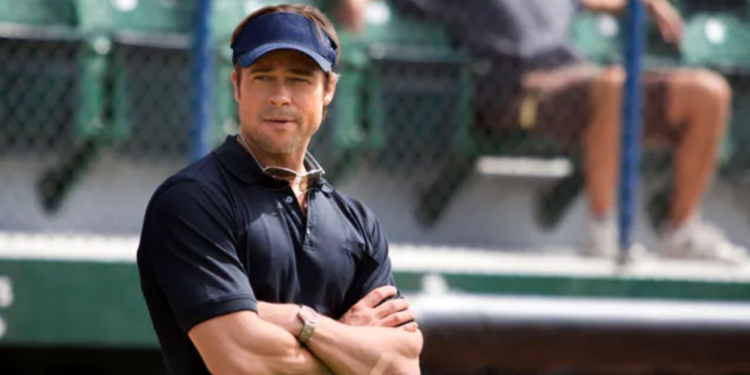
Although he had already worked with Brad Pitt by this point, the A-list megastar’s acclaimed rendition cemented the notion to Tarantino that he is a true “movie star”, and not only that, but why star power like this still matters in cinema. At its core, Moneyball is about an outsider challenging conventional wisdom. Why does this resonate so much with Tarantino? Well, Billy Beane’s data-driven approach to baseball parallels Tarantino’s own iconoclastic approach to filmmaking. Both men succeeded by trusting their instincts and ignoring both the naysayers and the big wigs with the money.
17. Chocolate (2008)
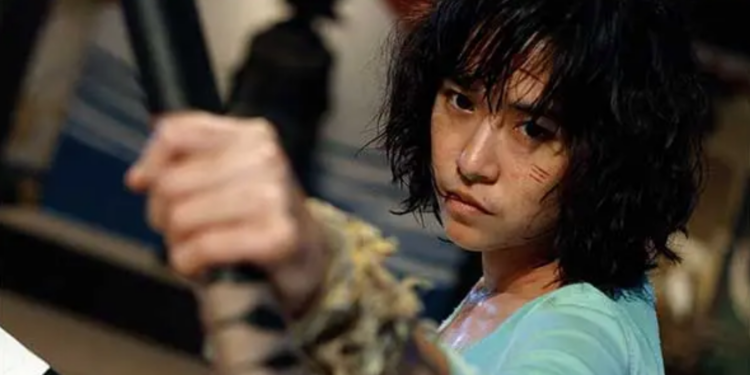
This Thai martial arts film is the deepest cut on Tarantino’s list. His excitement about the fights – “some of the greatest kung-fu fights I’ve ever seen in a movie” – and the story of training a 12-year-old girl for four years to star in it speaks to his love of extreme commitment to craft. The film represents the kind of international action cinema that influenced Kill Bill. QT has always championed Asian action films that American audiences overlook, and Chocolate exemplifies that missionary work. “People getting f**ked up in the most spectacular of ways” is pure Tarantino enthusiasm for on-screen violence, choreography and stunt work.
16. The Devil’s Rejects (2005)
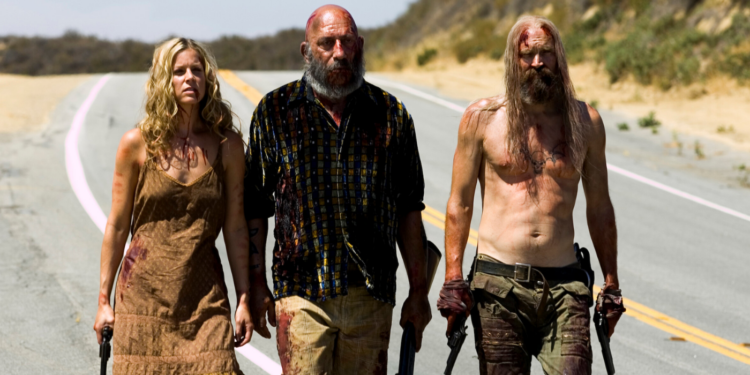
A shockingly violent movie making its way onto Quentin Tarantino’s favorite movies list doesn’t sound so surprising. However, his appreciation for Rob Zombie‘s voice is about recognizing and championing originality. This makes total sense as here was a man pushing the boundaries with something viscerally raw and captivatingly unique, completely reminiscent of when Tarantino burst onto the scene in 1992.
“This rough Peckinpah-cowboy-Manson thing — that voice didn’t really exist before, and he refined that voice with this movie. Peckinpah wasn’t part of horror before this. He melded it with sick hillbillies, and it’s become a thing now. You can recognize it across the street, but that didn’t exist before.”
15. The Passion of the Christ (2004)
This is the entry that calls for the most explanation. Tarantino’s reaction to Mel Gibson‘s brutal depiction of Christ’s crucifixion – laughing throughout – seems provocative until you understand his point. He’s not laughing at suffering; he’s laughing at the absurd extremity of the violence. When filmmakers push that far beyond reality, it crosses into dark comedy for him. His conversation with Gibson – who looked at him like he was “a f**king nut” – perfectly captures the disconnect between Tarantino’s lens and how most audiences experience film. However, die hard fans of Tarantino would know where he’s coming from as he has often described his own violent movies as dark comedies.
14. School of Rock (2003)
Tarantino’s description of School of Rock being as “as close to Bad News Bears as we ever got” is certainly high praise. The film represents the perfect storm of Jack Black‘s manic energy, Richard Linklater‘s naturalistic direction, and Mike White‘s sharp script. It’s crowd-pleasing without being cynical, funny without being mean-spirited. His emphasis on what a “fun, fun, fun screening” it was reminds us that communal theatrical experience matters to Tarantino. This isn’t a film that demands deep analysis, nor a film that was ever going to win any Oscars, it’s simply pure entertainment executed at the highest level, and that’s enough.
13. Jackass: The Movie (2002)
Many would argue that Jackass: The Movie doesn’t belong on a list like this as it’s technically not cinema. Others would be offended at the fact that it is ranked higher than critically acclaimed films. However, Tarantino goes to the movies for a good time, and he certainly got that with this absurd classic. Therefore, to him – it’s a movie. And one of his favorites.
“This was the movie I laughed at the most in these last 20 years. I don’t remember laughing from beginning to end like this since Richard Pryor. As I was making Kill Bill, I thought this movie was so f**king funny I had to show it to the crew. So we found a print, watched the movie, and just died.”
12. Big Bad Wolves (2013)
Here’s a movie packed with masculine energy, boasting shocking moments, a bleak story, and echoes of dark comedy. So, there’s no wonder Tarantino digs it. This Israeli thriller shares thematic territory with Denis Villeneuve‘s Prisoners, but Tarantino praises it for going where the American film wouldn’t dare. His comment – “they handle it with guts and balls—you know the American movie wouldn’t do that” – speaks to his frustration with Hollywood’s tendency to pull punches. Until now, it was somewhat of a hidden gem. Now that Tarantino has put his stamp of approval on it, it could well garner a second wind.
11. Battle Royale (2000)
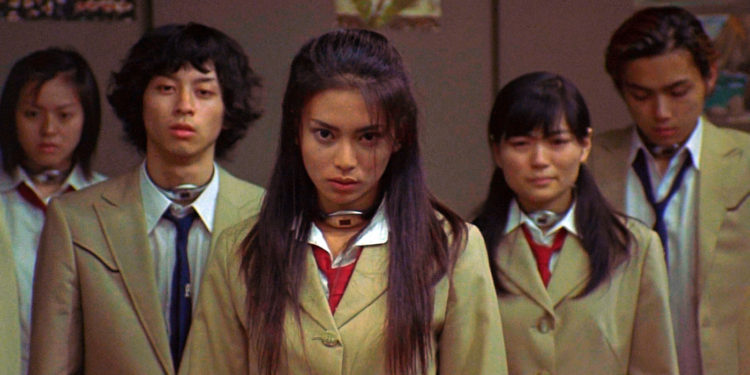
Given its blatant influence on Kill Bill, Tarantino’s inclusion of Battle Royale is by no means surprising. The film’s premise of students being forced to fight to the death on an island pushed boundaries in ways that clearly resonated with Tarantino’s own approach to cinematic violence. His comments about The Hunger Games “ripping off” Battle Royale are characteristically blunt, but he’s certainly not wrong about the similarities. The intensity of his criticism – “I do not understand how the Japanese writer didn’t sue Susan Collins for every f**king thing she owns” – reveals how seriously he takes originality in storytelling.
10. Midnight in Paris (2011)
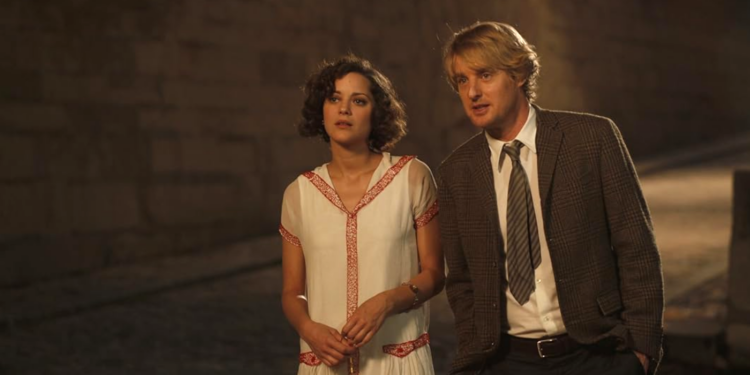
Tarantino has evolved as a film critic. He has slowly learned to separate his views on talent from the movie itself. He still has a way to go (which we will explore with his #5 pick) but his inclusion of Woody Allen‘s Midnight in Paris showcases his willingness to put snobbery aside and fully delve into the cinematic offering.
“I really can’t stand Owen Wilson. I spent the first time watching the movie loving it and hating him. The second time I watched it, I was like ‘ah, okay, don’t be such a pr*ck, he’s not so bad.’ Then the third time I watched it, I found myself only watching him.”
9. Shaun of the Dead (2004)
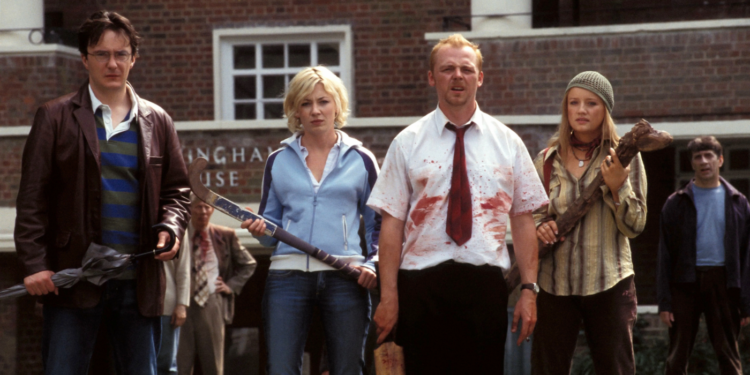
Shaun of the Dead is another movie made by one of Tarantino’s good friends. However, QT and Edgar Wright didn’t become acquainted until after Shaun of the Dead was released, and by this point, Tarantino was already a huge fan of the film. The distinction he makes – “it’s not a spoof of zombie movies, it’s a real zombie movie” – is paramount. Wright’s film works as both comedy and horror, never winking at the audience or treating the genre as beneath it. Also, as a master of sharp dialogue, the film’s quotability matters to Tarantino.
“The script is really terrific, it’s one of the most quotable films on this list, I still quote the line ‘the dogs don’t look up.’”
8. Mad Max: Fury Road (2015)
Tarantino’s initial resistance to the film – “in a world where Mel Gibson exists, and he’s not playing Max?” – is characteristically stubborn. But his eventual capitulation screams to the film’s undeniable power. George Miller‘s commitment to practical effects and his willingness to push action choreography to its absolute limits clearly won Tarantino over. The film represents everything Tarantino loves about cinema: a director with a singular vision, unlimited resources, and the guts to make something genuinely original within a franchise format.
7. Unstoppable (2010)
By the time Tony Scott brought his True Romance screenplay to life, Tarantino was already a huge champion of his work. That adoration never faded and when he talks about Unstoppable, the joy in his voice is infectious. Calling the runaway train “one of the greatest monsters of our time” and comparing it favorably to Godzilla shows his appreciation for genre filmmaking that fully commits to its premise. His comment about this being “one of my favorite last movies of a director” is touching, especially given his friendship with Scott. All in all, the film represents Scott’s action aesthetic in its purest form – kinetic, intense, and unrelenting – all things Tarantino has gifted cinema with after years of taking inspiration from such filmmakers.
6. Zodiac (2007)
Quentin Tarantino‘s favorite movies of the 21st century list goes to show that sometimes the best movies are the ones that you need to watch a few times before it really resonates with you. His description of Zodiac as a “mesmerizing masterwork” he revisits “every six or seven years” as a “luxurious experience” suggests this is a film he treats like a fine wine – something to savor slowly.
David Fincher‘s obsessive attention to detail and his willingness to let scenes breathe clearly resonates with Tarantino. The film’s unconventional structure – a mystery that doesn’t neatly resolve – shows Tarantino values filmmakers who trust their audience to stay engaged without traditional payoffs. This explains why Tarantino has trusted Fincher with his next screenplay, The Adventures of Cliff Booth.
5. The Will Be Blood (2007)
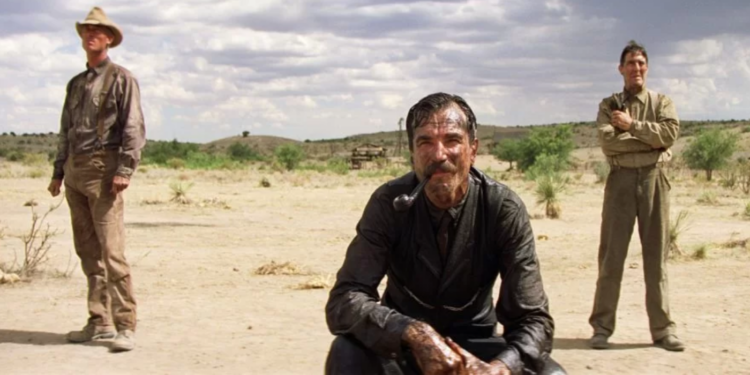
Tarantino’s praise for Daniel Day-Lewis and the film’s old Hollywood craftsmanship is effusive – but then comes the brutal honesty about Paul Dano. Calling him “weak sauce” and “the weakest f**king actor in SAG” is vintage Tarantino bluntness, and it kicked up a lot of fuss in the industry. However, many top names did come forward to support Dano.
Tarantino’s obscure point about Austin Butler potentially elevating the film shows he’s always thinking about casting as a crucial element of filmmaking. Despite this major reservation, the film still ranks #5. This tells you how much he admires everything else about it, and how he is sometimes willing to put his hang-ups aside and pay attention to the story at hand.
4. Dunkirk (2017)
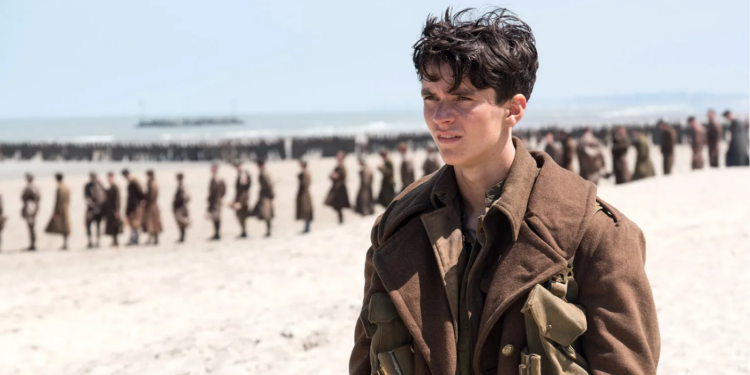
Dunkirk is another film that initially swamped Tarantino’s cinematic senses, requiring multiple viewings to fully appreciate. This pattern reveals something important about his viewing habits – he’s not the type to form instant judgments. He revisits, reconsiders, and allows films to grow on him. Christopher Nolan‘s experimental approach to time and his commitment to practical effects clearly appeal to Tarantino’s love of pure cinema. The fact that he watched it “again and again and again” until it “blew him away” suggests he respects directors who challenge audiences rather than spoon-feeding them.
3. Lost in Translation (2003)
Tarantino’s movies aren’t just about carnage and bloodshed. Typically, his films are rather laid back, focusing on character development until the violence hits you like a ton of bricks. However, films like Jackie Brown and Once Upon a Time… in Hollywood are often labelled “hangout movies”, a genre Lost in Translation falls into as well. So, it’s easy to see where his affection for the film comes from.
“I spoke to Pedro Almodóvar about this, and we both agreed it was such a girlie movie, in such a delicious way. I hadn’t seen such a girlie movie in a very long time, and I hadn’t seen such a girlie movie like that be so well done.”
2. Toy Story 3 (2010)
Tarantino calling an animated Pixar film the “greatest end of a trilogy” speaks volumes about his range as a cinephile. His emotional reaction to the final five minutes – admitting he’d get choked up just describing it – shows he’s not the violence-obsessed provocateur some imagine him to be. The comparison to The Good, the Bad and the Ugly is revealing. Both films represent the pinnacle of their respective trilogies, achieving something rare: a third instalment that doesn’t disappoint.
1. Black Hawk Down (2001)
Tarantino’s choice for the top spot might surprise those expecting something more eccentric, but it reveals his deep appreciation for pure filmmaking craft. Ridley Scott‘s intense depiction of the 1993 Battle of Mogadishu keeps tension at a fever pitch for nearly three hours – a feat Tarantino clearly admires, describing it as the only film to achieve an Apocalypse Now-level sense of purpose and visual impact. What’s notable here is Tarantino’s admission that the film initially overwhelmed him. It took multiple viewings for him to fully appreciate its mastery, suggesting yet again that he values films that reward repeated watching – much like his own work.
“It keeps up the intensity for 2 hours 45 minutes, or whatever it is, and I watched it again recently, my heart was going through the entire runtime of the movie; it had me and never let me go, and I hadn’t seen it in a while. The feat of direction is beyond extraordinary.”
Read Next: Every Quentin Tarantino Film, Ranked By Box Office Earnings
 Follow Us