Few television franchises have proved as durable as Law & Order. Dick Wolf‘s original police-and-prosecutor formula has survived cancellations, revivals, cast overhauls, international adaptations, streaming shifts, and more than three decades of changing television habits. Some spinoffs barely lasted a season. Others became institutions large enough to rival the show that created them. What keeps the universe alive is its ability to alter the point of view while preserving that unmistakable rhythm of investigation, argument, and consequence.
This ranking covers the major English-language Law & Order franchise shows that have actually aired, including the British and Canadian adaptations. To reach 10 without pretending the never-produced Law & Order: Hate Crimes belongs here, the official nonfiction franchise spinoff Crime & Punishment is also included. Longevity helps, but it does not decide everything. Cast chemistry, cases, writing, distinctiveness, consistency, and how successfully each series found a reason to exist beyond the original formula carry more weight.
10. ‘Crime & Punishment’ (2002)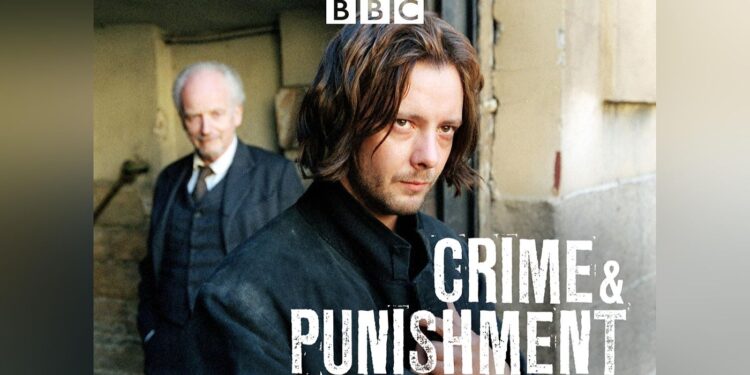
Crime & Punishment took the franchise’s fascination with prosecutors and removed the fictional layer entirely. Created by Bill Guttentag, David Kanter, and Wolf, the NBC reality series followed actual deputy district attorneys in San Diego County as they prepared and prosecuted real criminal cases. The familiar procedural DNA remained, but actors and scripted verdicts disappeared. Viewers instead watched prosecutors deal with genuine witnesses, imperfect evidence, uncertain juries, and cases that had real consequences for everyone involved.
The concept lasted three seasons and 26 episodes, making it much more than a one-off experiment. Its greatest strength is unpredictability because actual cases refuse to fit the satisfying structure of a conventional network procedural. That realism also limits the character continuity that makes the franchise’s strongest scripted dramas so addictive. There is no long-running detective partnership or prosecutor viewers can follow for decades. As a documentary extension of the franchise, though, it remains a fascinating attempt to show what the fictional shows had been dramatizing since 1990.

9. ‘Law & Order: LA’ (2010)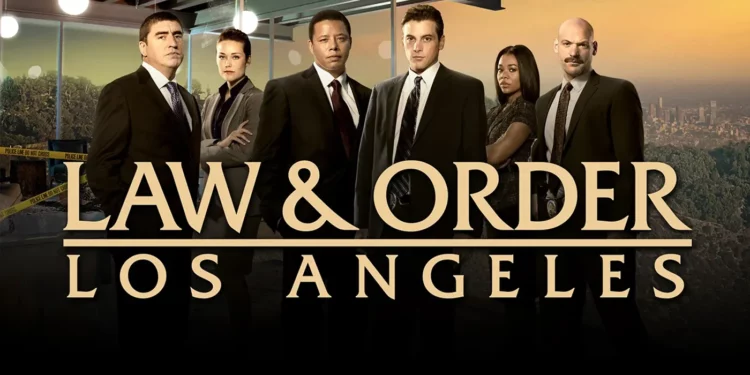
Law & Order: LA tried to prove that the basic formula could leave New York and retain its identity in Los Angeles. Skeet Ulrich initially led the police side as Detective Rex Winters alongside Corey Stoll as Detective TJ Jaruszalski. Alfred Molina and Terrence Howard handled major parts of the prosecution side, giving the series an unusually accomplished cast for a spinoff that would ultimately survive only one season.
The problem was constant reinvention. Ulrich departed during the run, Molina’s Ricardo Morales moved from prosecutor to detective, and the show effectively rebuilt itself while audiences were still trying to understand what version they were watching. Stoll was particularly strong, and the Los Angeles setting offered opportunities that could have separated the series from its New York relatives. Twenty-two episodes never gave those ideas enough time to settle. The ingredients were promising, but the series feels like a procedural being repaired in public rather than one that had discovered a confident identity.
8. ‘Law & Order: Trial by Jury’ (2005)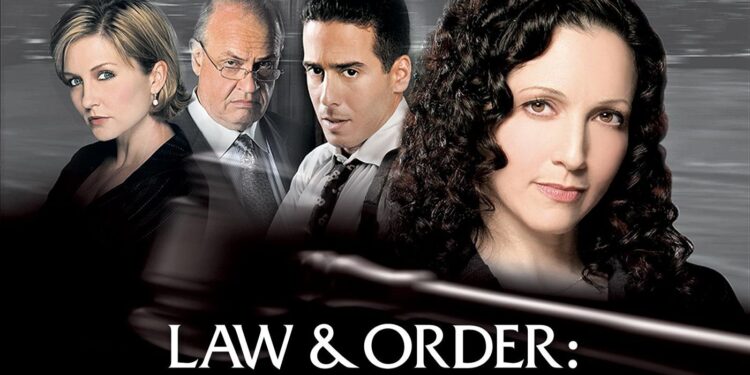
Law & Order: Trial by Jury shifted attention toward everything that happens after an arrest. Bebe Neuwirth led the series as homicide bureau chief Tracey Kibre, while Amy Carlson played ADA Kelly Gaffney and Kirk Acevedo appeared as DA investigator Hector Salazar. Instead of dividing every episode neatly between investigation and prosecution, the show spent more time on witness preparation, defense strategy, plea negotiations, jury selection, and the tactical decisions that can determine a case before closing arguments begin.
The series also carries an especially emotional place in franchise history because Jerry Orbach returned as Lennie Briscoe after leaving the original show. He appeared in only two episodes before his death in December 2004. The courtroom-heavy premise genuinely distinguished the spinoff, and Neuwirth had exactly the authority needed to anchor it. Thirteen episodes offered only a glimpse of what the concept might have become. A longer run could have allowed the show to explore the legal side of the franchise with considerably more depth.
7. ‘Law & Order True Crime’ (2017)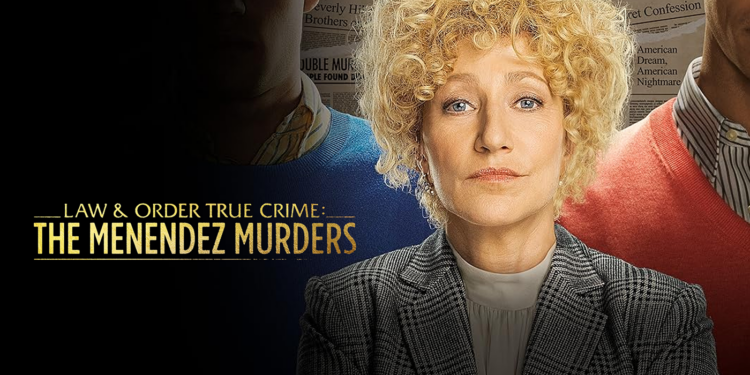
Law & Order True Crime: The Menendez Murders abandoned the case-of-the-week structure for an eight-episode dramatization of the prosecution of Lyle and Erik Menendez. Edie Falco played defense attorney Leslie Abramson, while Miles Gaston Villanueva and Gus Halper portrayed Lyle and Erik. The limited format allowed the series to spend much more time on legal strategy, family history, media pressure, competing narratives, and the cultural spectacle surrounding the trials than an ordinary procedural episode ever could.
Falco is the main reason the experiment works. Her performance gives Abramson enough aggression, intelligence, and emotional conviction to dominate the courtroom material without flattening the real person into a television archetype. She earned an Emmy nomination for the role. The show arrived during a major true-crime television boom, which sometimes makes it feel less distinctly connected to the franchise than its title suggests. Still, the eight episodes demonstrate how successfully the brand can function when one case receives an entire season instead of 42 minutes.
6. ‘Law & Order Toronto: Criminal Intent’ (2024)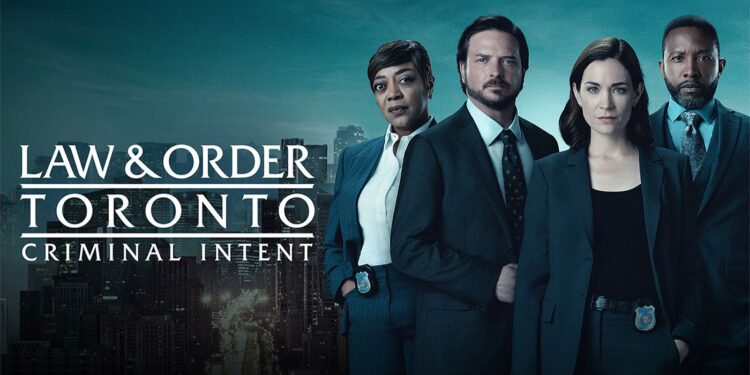
Law & Order Toronto: Criminal Intent takes the psychological structure of the American Criminal Intent and rebuilds it around Canadian politics, institutions, wealth, and social tensions. Kathleen Munroe established Detective Sergeant Frankie Bateman as the show’s central investigator, while Season 4 introduced Luke Kirby as Detective Sergeant John Darcy. The Toronto setting functions as part of the storytelling rather than interchangeable scenery, with cases frequently connected to the city’s particular institutions and power structures.
By 2026, the Canadian adaptation had reached its fourth season and established itself as a genuine success rather than a temporary international experiment. Darcy’s arrival gives the latest season a new investigative dynamic without forcing the series to imitate the eccentricity that defined Robert Goren in the American version. The show understands what made the original format compelling while allowing its detectives and cases to develop their own personality. Its relatively young age keeps it below the franchise’s established classics, but its trajectory suggests it could continue climbing.
5. ‘Law & Order: UK’ (2009)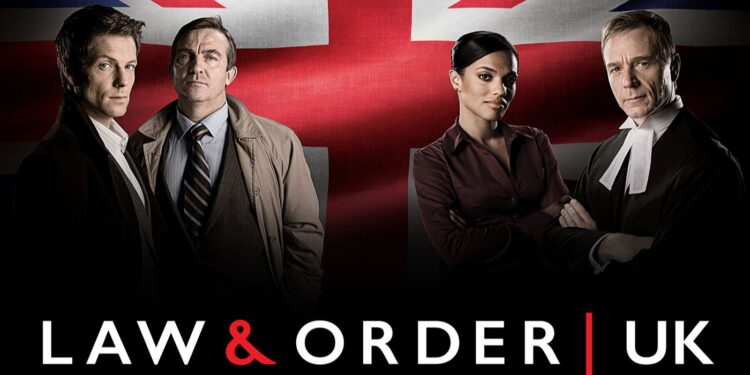
Law & Order: UK transferred the original structure to London and discovered that differences in policing and prosecution could make familiar stories feel surprisingly fresh. Bradley Walsh became the show’s most enduring presence as DS Ronnie Brooks, while performers including Jamie Bamber, Freema Agyeman, Ben Daniels, Harriet Walter, Peter Davison, and Georgia Taylor moved through the police and Crown Prosecution Service teams during its run.
Many episodes adapted stories previously used by the American series, but the changes in legal procedure, terminology, culture, and performance style created a different dramatic texture. Walsh became the essential ingredient. Ronnie’s weariness, humor, and accumulated experience made him feel like someone who had spent a lifetime around difficult cases. Across eight British series and 53 episodes, the adaptation proved that the franchise formula could travel without becoming a hollow imitation. Its best episodes feel like familiar machinery operating inside an entirely different legal culture.
4. ‘Law & Order: Organized Crime’ (2021)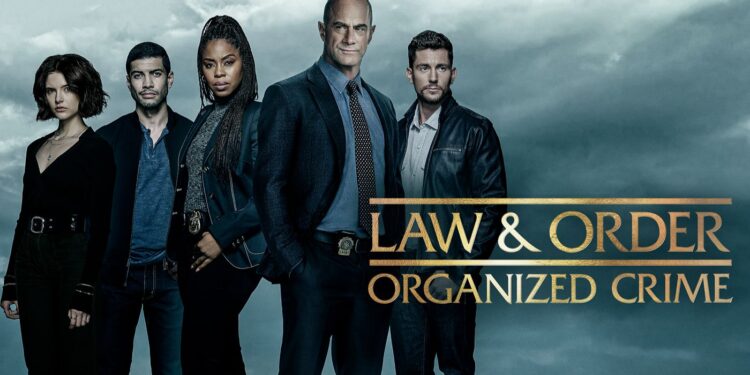
Law & Order: Organized Crime brought Christopher Meloni back as Elliot Stabler after nearly a decade away from the franchise. The character returns older and carrying much more emotional damage, joining an organized-crime unit led by Ayanna Bell, portrayed by Danielle Moné Truitt. Longer criminal arcs distinguish the series immediately. Villains can remain in Stabler’s world for multiple episodes, allowing personal grudges, undercover operations, family consequences, and shifting alliances to develop far beyond a single investigation.
The serialized approach produced some of the franchise’s most ambitious storytelling, though consistency became a recurring problem. Frequent creative changes made it difficult for the series to maintain the same tone from one season to another. Its first four seasons aired on NBC before Season 5 moved to Peacock, and NBCUniversal canceled the show in April 2026 after five seasons. Even with that uneven history, the willingness to abandon the familiar procedural rhythm gave Stabler a genuinely different second act instead of simply recreating the series he had left years earlier.
3. ‘Law & Order: Criminal Intent’ (2001)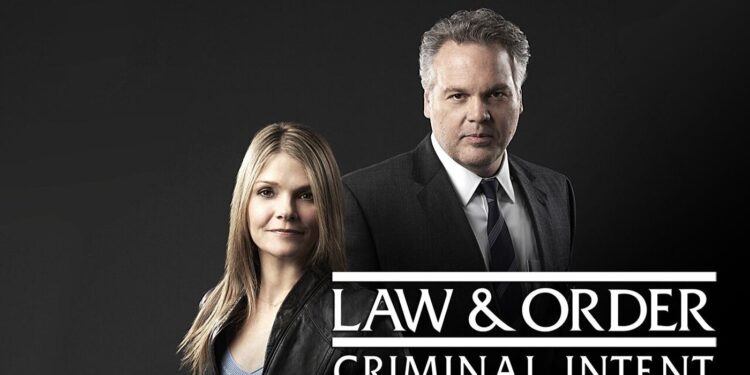
Law & Order: Criminal Intent changed the franchise by making the offender’s psychology almost as important as the investigation. Vincent D’Onofrio turned Detective Robert Goren into one of its most distinctive characters, playing him as brilliant, invasive, empathetic, obsessive, and occasionally unsettling. Kathryn Erbe provided the ideal counterweight as Detective Alexandra Eames, whose restraint kept the partnership grounded whenever Goren’s methods became increasingly unconventional.
The show often lets viewers understand the criminal early, shifting the suspense toward how Goren will expose the motive, contradiction, or emotional weakness that breaks the case open. Later seasons experimented with other investigative teams. Chris Noth returned to the franchise as Mike Logan, while Jeff Goldblum eventually joined as Zack Nichols. Those changes produced mixed results, yet the Goren-Eames years remain exceptional. Across 10 seasons, the series created a version of the franchise driven less by procedure and more by the intellectual battle between investigator and suspect.
2. ‘Law & Order’ (1990)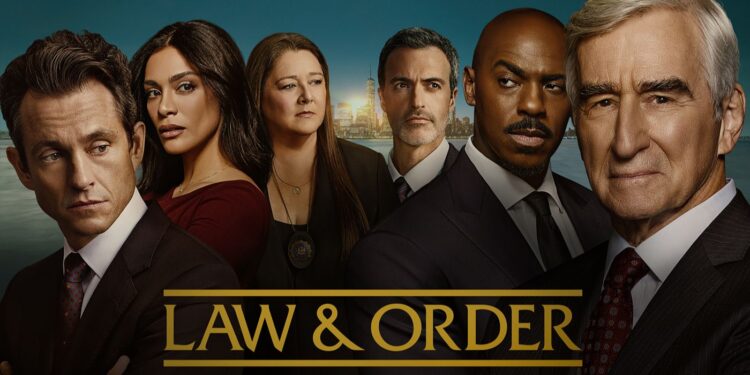
Law & Order created the structure every later entry had to either preserve or challenge. Detectives investigate a crime during the first half, prosecutors inherit the evidence during the second, and the shift changes the nature of the conflict without abandoning the case. Orbach made Lennie Briscoe one of the franchise’s defining detectives, while Sam Waterston, S. Epatha Merkerson, Steven Hill, Jesse L. Martin, Benjamin Bratt, and Angie Harmon became part of an enormous rotating ensemble that allowed the institution itself to remain the central character.
The original series ran for 20 seasons before NBC canceled it in 2010, then returned in 2022 after a 12-year absence. Season 26 premiered in October 2026, demonstrating just how durable the underlying machinery remains. The revival has its own identity, but the show’s greatest years established a procedural language that television still imitates. The opening narration, location cards, famous sound effect, rotating detectives, courtroom arguments, and morally uncomfortable conclusions became cultural shorthand. Every other series here exists because this format was strong enough to survive the departure of almost anyone who appeared in it.
1. ‘Law & Order: Special Victims Unit’ (1999)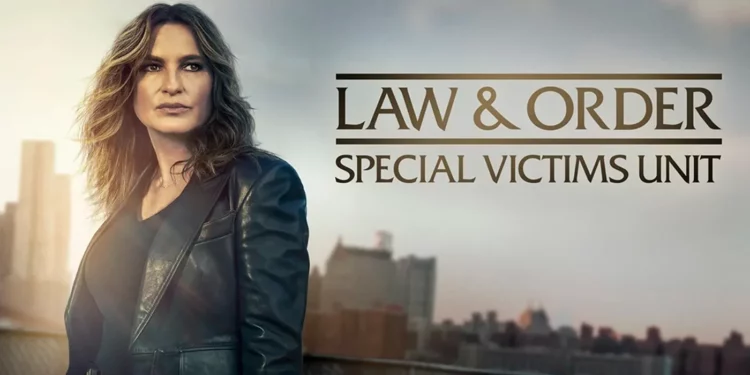
Law & Order: Special Victims Unit took the franchise framework and gave its central detectives something the original intentionally minimized: long-term emotional memory. Mariska Hargitay has played Olivia Benson since the 1999 premiere, allowing viewers to watch her grow from detective to captain across decades of personal and professional change. Meloni’s Elliot Stabler formed the original central partnership, while Ice-T as Fin Tutuola, Richard Belzer as John Munch, Dann Florek as Donald Cragen, and Stephanie March as Alexandra Cabot helped define different eras of the ensemble.
Season 28 premiered in October 2026, extending the show’s extraordinary run and its status as the longest-running primetime live-action drama in American television history. Longevity alone does not earn the top position. Benson became one of television’s most durable dramatic characters because the series allowed cases, partnerships, trauma, leadership, and relationships to accumulate rather than disappear when an episode ended. Some seasons are much stronger than others, but the emotional continuity gives the procedural framework a dimension the original deliberately avoided. That combination of franchise durability and character investment puts Special Victims Unit at No. 1.
 Follow Us


