Twenty years after Dexter premiered on Showtime, the serial killer who hunts other killers remains one of television’s most fascinating and frustrating antiheroes. His story has survived a divisive original finale, a revival that tried to provide closure, a prequel exploring his earliest murders, and another continuation that brought him back from the brink of death. Each installment has approached Dexter Morgan differently, with varying degrees of success.
The franchise currently includes four full-length scripted television series. This ranking considers character development, suspense, performances, memorable antagonists, emotional impact, consistency, and how successfully each installment handles Dexter’s increasingly complicated history. The animated Dexter: Early Cuts webisodes are excluded from the main television-series ranking. With the second season of Dexter: Resurrection having just premiered, its position is based primarily on its completed first season.
4. ‘Dexter: New Blood’ (2021–2022)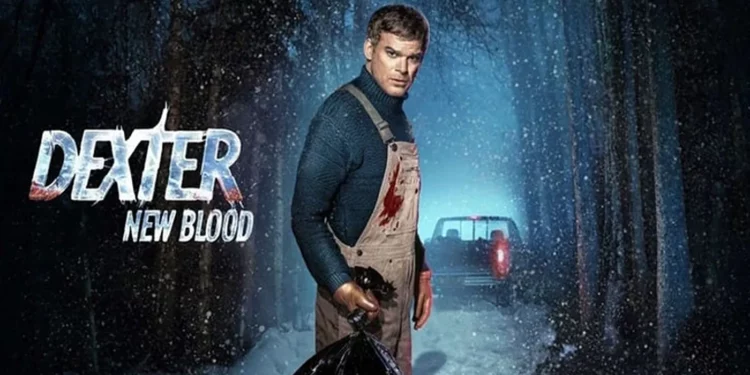
Dexter: New Blood initially seemed like the revival fans had been demanding since 2013. Michael C. Hall returns as Dexter Morgan, now living under the name Jim Lindsay in the fictional town of Iron Lake, New York. He works at a sporting-goods store, dates police chief Angela Bishop, played by Julia Jones, and has seemingly managed to suppress his murderous urges. That fragile existence collapses when his estranged son Harrison, played by Jack Alcott, arrives unexpectedly. Meanwhile, local businessman Kurt Caldwell, portrayed by Clancy Brown, emerges as a terrifying antagonist whose disturbing secrets give Dexter a compelling reason to return to his old habits.
For most of its 10 episodes, the revival works remarkably well. Brown makes Kurt a genuinely unnerving villain, the snowy setting creates a completely different atmosphere from Miami, and Harrison’s growing anger forces Dexter to confront the damage he has caused as a father. Unfortunately, the finale undermines much of that progress. Dexter’s murder of Sergeant Logan, played by Alano Miller, feels especially abrupt, while Harrison shooting his father attempts to resolve years of moral contradictions in a rushed confrontation. The much-anticipated possibility of Dexter meeting Angel Batista again also goes unrealized. The season contains some excellent suspense and character moments, but its conclusion becomes another frustrating ending for a franchise that desperately needed a satisfying one.

3. ‘Dexter: Original Sin’ (2024–2025)
Dexter: Original Sin returns to Miami in 1991, where a young Dexter Morgan, played by Patrick Gibson, is beginning his career at Miami Metro while learning to channel his murderous impulses. Christian Slater plays Harry Morgan, the adoptive father responsible for teaching Dexter his notorious code, while Molly Brown portrays a younger Debra. The supporting ensemble includes Patrick Dempsey as Captain Aaron Spencer, Sarah Michelle Gellar as Tanya Martin, James Martinez as Angel Batista, Christina Milian as Maria LaGuerta, and Alex Shimizu as Vince Masuka. Hall also returns to provide Dexter’s internal narration, giving the prequel an immediate connection to the original series.
The prequel’s greatest achievement is making familiar characters interesting even when viewers already know where their lives are heading. Gibson captures Dexter’s awkward curiosity and emotional detachment without simply impersonating Hall, while Slater gives Harry a more visibly exhausted and conflicted personality. The early Miami Metro scenes are especially enjoyable, offering a younger version of the workplace that made the original series so entertaining. The central kidnapping mystery provides genuine tension, and Dexter’s first attempts to follow Harry’s code are frequently messy and unpredictable. Some continuity details invite scrutiny, and the heavy reliance on recognizable characters occasionally makes the world feel smaller than it should. Still, the 10-episode season proves far more entertaining than its premise initially suggested. Its cancellation after an announced renewal leaves a disappointing sense of unfinished potential.
2. ‘Dexter: Resurrection’ (2025 )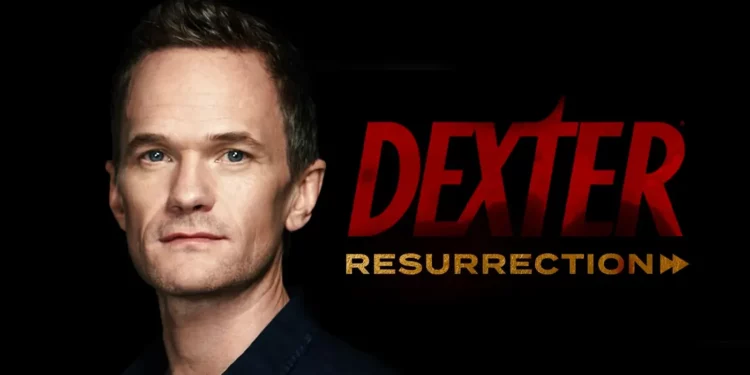
Dexter: Resurrection brings Dexter back after the events of New Blood, placing him in New York City as he searches for Harrison and attempts to repair their damaged relationship. The new setting immediately gives the franchise fresh possibilities, particularly when Dexter becomes entangled with billionaire Leon Prater, played by Peter Dinklage, and his fascination with serial killers. Uma Thurman joins as Charley, Prater’s formidable associate, while David Zayas returns as Angel Batista. James Remar also returns as Harry Morgan, once again representing Dexter’s internal conflicts and inherited code. The expanding ensemble surrounds Hall with performers capable of making even the show’s strangest developments entertaining.
The completed first season rediscovers much of the energy that made the original series addictive. Dexter navigating a crowded city full of dangerous strangers creates opportunities for dark comedy, close calls, and elaborate investigations, while Prater’s obsession with serial killers gives the story a particularly twisted sense of humor. The relationship between Dexter and Harrison finally receives room to develop beyond the resentment that dominated New Blood. The return of Batista also confronts Dexter with consequences that have followed him since Miami. Season 2 premiered on October 30, 2026, introducing further threats, including the New York Ripper, played by Brian Cox, and the Five Borough Killer, played by Dan Stevens. The latest season still has much to prove, but the first delivers one of the franchise’s strongest comebacks and successfully restores the appeal of watching Dexter operate under pressure.
1. ‘Dexter’ (2006–2013)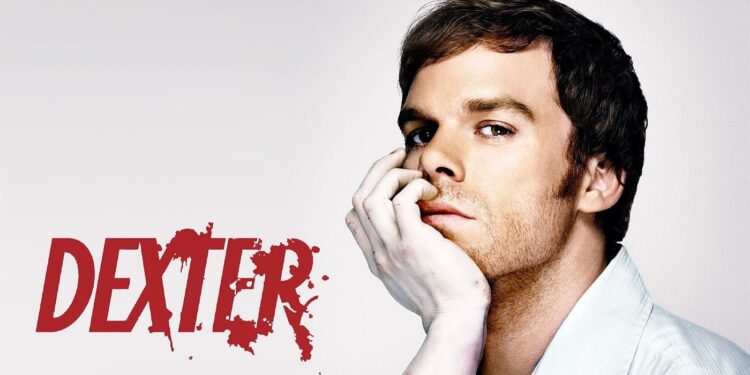
The original Dexter remains the franchise’s defining achievement, particularly during its first four seasons. Hall’s performance makes Dexter Morgan simultaneously charming, disturbing, socially awkward, and frighteningly capable of rationalizing almost anything. His work as a blood-spatter analyst at Miami Metro places him among detectives investigating murders while he secretly hunts criminals according to Harry’s code. Jennifer Carpenter gives the series its emotional center as Debra Morgan, while Julie Benz brings warmth and vulnerability to Dexter’s relationship with Rita Bennett. The supporting cast, including Erik King as James Doakes and Zayas as Angel Batista, creates a workplace full of characters whose suspicions, loyalties, and personal struggles become essential to the story.
Its greatest stretch of episodes remains extraordinary television. The Ice Truck Killer storyline turns Dexter’s childhood into a devastating mystery, Season 2 makes Doakes’ growing suspicions almost unbearable, and Season 4 introduces Arthur Mitchell, the Trinity Killer, played by John Lithgow. Lithgow’s performance is terrifying precisely because Arthur appears capable of maintaining the ordinary family life Dexter desperately wants for himself. That season’s finale remains one of the most shocking moments in the entire franchise. Later seasons struggle with repetition, increasingly implausible decisions, and an ending that angered countless viewers. Yet the original’s strongest years deliver a combination of suspense, black comedy, complicated relationships, and psychological horror that none of its successors has fully matched. Eight seasons and 96 episodes established everything the franchise has spent the following decade exploring. The original Dexter still deserves the top spot.
 Follow Us


