Vince Gilligan has spent most of his television career making bad decisions feel terrifyingly logical. His best characters rarely wake up intending to destroy their lives. They justify one compromise, survive the consequences, and discover that the next compromise comes easier. That obsession has followed him from conspiracy comedy and network procedurals to crime dramas and science fiction, even when the worlds surrounding those characters could not be more different.
For this ranking, the focus is on scripted television series Gilligan created or co-created rather than every show he has written, directed, or produced. That distinction matters because his résumé also includes major work on series created by other people. Five shows qualify, and even the one sitting at the bottom has enough personality to make its cancellation frustrating. Ranked from weakest to strongest, these are the TV shows that carry Gilligan’s name at the creator level.
5. ‘Battle Creek’ (2015)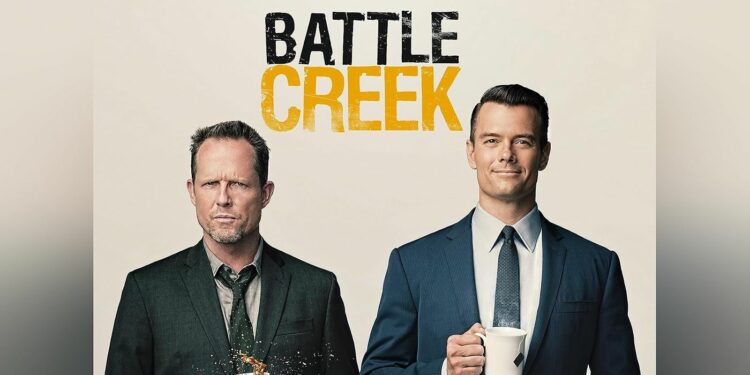
Battle Creek follows cynical Michigan detective Russ Agnew (Dean Winters), whose underfunded police department suddenly has to share space with polished FBI agent Milton “Milt” Chamberlain (Josh Duhamel). Russ trusts suspicion, improvisation, and the ugly reality of local policing; Milt arrives with federal resources, charm, and methods that somehow seem to work without making him miserable. Their cases turn that personality clash into the engine of a procedural that Gilligan originally conceived years before his biggest television success, with David Shore eventually serving as showrunner.
There is nothing embarrassing about the 13 episodes CBS produced. Winters and Duhamel have real chemistry, the cases often find clever angles, and the show clearly wants to complicate the assumption that Russ’ cynicism makes him wiser than everyone around him. What keeps it at No. 5 is how rarely it feels completely singular. Gilligan’s greatest shows create a world that could only belong to them within an episode or two. Battle Creek spends much of its only season looking like a very good network procedural that is still searching for the stranger, darker identity hiding underneath it.

4. ‘The Lone Gunmen’ (2001)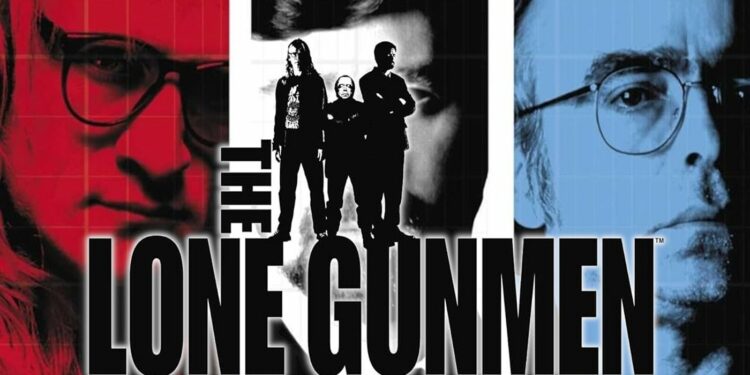
The Lone Gunmen takes three conspiracy obsessives from The X-Files and lets them investigate government schemes, corporate crimes, surveillance, technology, and assorted weirdness without Mulder and Scully around to carry the hour. John Fitzgerald Byers (Bruce Harwood), Melvin Frohike (Tom Braidwood), and Richard “Ringo” Langly (Dean Haglund) run their underground newspaper while repeatedly stumbling into stories far bigger than their resources. Gilligan co-created the spinoff with Chris Carter, Frank Spotnitz, and John Shiban.
The series only lasted 13 episodes, and that short run exposes both its charm and its biggest weakness. The Gunmen are genuinely funny together, especially when their grand theories collide with how unglamorous their actual lives are, but the show never fully settles whether it wants to be paranoid drama, broad comedy, or something balancing both. There are episodes where that instability becomes part of the fun and others where the tone feels undecided. Still, Gilligan’s affection for outsiders, elaborate plans, and technology getting people into trouble is already everywhere. It feels like an early sketchbook for instincts he would later control much more precisely.
3. ‘Pluribus’ (2025)
Pluribus centers on Carol Sturka (Rhea Seehorn), a deeply unhappy novelist who finds herself among the very few people unaffected after humanity is transformed into a peaceful collective consciousness. The new world is cooperative, cheerful, and desperate to make Carol comfortable. She responds by treating universal happiness like a threat that needs investigating. The nine-episode first season gives Gilligan a completely different sandbox from crime television while preserving his fascination with people who refuse to behave the way everyone around them expects.
Seehorn makes the premise work because Carol’s anger never feels like a gimmick. Her misery is abrasive, funny, lonely, and strangely useful once almost everyone else has accepted the new reality. Gilligan also resists racing toward easy answers; the pleasure comes from watching Carol test the rules and discover what this apparently harmonious world costs. Its No. 3 placement has less to do with a weakness than with unfinished business. Apple ordered a second season before the first premiered, and one completed season cannot yet compete with two dramas whose endings are part of what made them extraordinary. The ceiling here remains enormous.
2. ‘Better Call Saul’ (2015)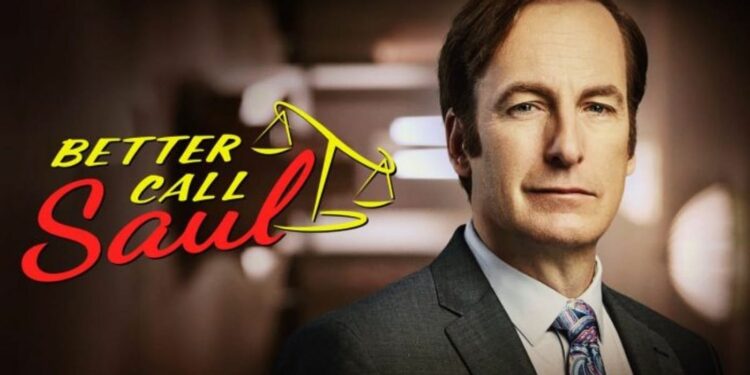
Better Call Saul begins with struggling Albuquerque lawyer Jimmy McGill (Bob Odenkirk) trying to build a legitimate career long before he becomes the criminal attorney audiences know as Saul Goodman. Co-created with Peter Gould, the series surrounds Jimmy with Kim Wexler (Rhea Seehorn), Mike Ehrmantraut (Jonathan Banks), Chuck McGill (Michael McKean), and eventually the cartel world that will define his future. The destination is known from the beginning. The heartbreak comes from discovering how many opportunities Jimmy had to become somebody else.
Six seasons turn that transformation into something far richer than a prequel explanation. Jimmy does not become Saul because of one betrayal or one terrible afternoon. He gets there through hundreds of choices that are understandable individually and devastating when stacked together. Kim becomes just as essential, particularly once her attraction to bending rules stops looking like something Jimmy alone brought into her life. Even the black-and-white Gene material, which initially seems like an epilogue, becomes essential to the question underneath the whole series: after adopting enough identities to escape himself, is there still a Jimmy McGill left? Putting this at No. 2 feels almost unfair.
1. ‘Breaking Bad’ (2008)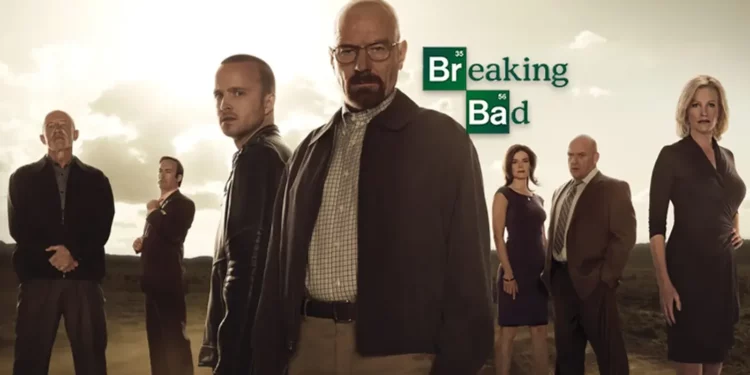
Breaking Bad follows Albuquerque chemistry teacher Walter White (Bryan Cranston), who learns he has cancer and begins manufacturing methamphetamine with former student Jesse Pinkman (Aaron Paul) so he can leave money for his family. That explanation initially sounds almost noble. Then Walt keeps receiving opportunities to stop. His wife Skyler White (Anna Gunn) becomes trapped inside the consequences, Jesse absorbs increasingly horrific damage, and Walt discovers that being feared satisfies something his old life never did.
That is why the five-season series still takes the top spot. Gilligan’s masterpiece never cheats Walter’s transformation by pretending a mild teacher suddenly becomes a different human being. The ego, resentment, brilliance, and capacity for cruelty were already there; power simply gives them room to breathe. Gus Fring (Giancarlo Esposito) raises the stakes without turning the show into empty spectacle, Jesse grows into its wounded conscience, and every clever escape creates another consequence waiting down the road. By the finale, nearly every important thread feels earned because the series spent 62 episodes refusing to let actions disappear. Plenty of television dramas have chased its antihero blueprint. Very few have matched the control with which Breaking Bad watches one man’s excuses become his identity.
 Follow Us