Ambiguous movie endings are bittersweet. While they can leave you feeling confused, they excel above other movies that serve up traditional “Hollywood endings”. Instead of everything being tied together nicely with a pretty bow, you leave the movie theater analysing what you just watched, discussing it with your friends, mulling it over – sometimes for years.
However, there’s a fine balancing act at play. The best ambiguous movie endings don’t leave you completely baffled, but force you to get creative and come up with the answers yourself. Most of the time, filmmakers want you to draw your own conclusions. But occasionally, there is a definitive answer – the director just keeps it under lock and key. So, here are 5 shining examples of ambiguous movie endings that demand your interpretation.
5. Krampus (2015)
The ending of the 2015 festive horror film Krampus is a classic example of an ambiguous finale, leaving viewers with two primary, duelling interpretations. After Max is seemingly thrown into a fiery pit by Krampus, he wakes up in his bed on Christmas morning, discovering his entire family is alive and well, enjoying a harmonious Christmas. It appears to have all been a terrible dream. Before it falls into an over-used and lazy ending, we are thrust back into terror when Max opens one last present to find the same Krampus bell that the demon gave him the night before. However, after setting their sights on the bell, the family all have quick but vivid flashbacks of the horrors they experienced, breaking the illusion of a simple nightmare.
A common yet rather bleak interpretation is that the family is trapped in a kind of personalized hell or purgatory, forced to relive an idealized Christmas while being subtly aware of their grim fate. The snow globe is their eternal prison, and Krampus collects families who have lost the Christmas spirit. For the optimists out there, a widely hypothesised alternative theory is much more aligned with traditional Christmas cautionary tales like A Christmas Carol. The notion here is that Krampus has granted Max’s wish for his family back and given them a second chance, with the snow globe serving as a surveillance device or a portal, allowing Krampus to keep a watchful eye on them.
4. Birdman (2014)
Alejandro G. Iñárritu‘s Best Picture Oscar winner Birdman serves up an audacious, character-driven story that weaves in magical realism. Riggan (Michael Keaton) is an actor battling an existential crisis as he attempts to rid himself of his most iconic character, Birdman. In an attempt to revive his fading career and prove himself as a talented artist, he writes, directs, and stars in a Broadway production, all the while trying to reconnect with his daughter Sam (Emma Stone). As we endure Riggan’s heartache and panic, we witness him use a plethora of superpowers. Only, no one around him notices them – leading us to question his sanity.
The final shot of Birdman gives rise to perhaps one of the most ambiguous movie endings of the last decade, with the angle of Sam looking up into the sky being the crucial point of ambivalence. Iñárritu purposefully left the ending open to interpretation. By injecting magical realism throughout the film, he deftly blurs the line between reality and Riggan’s delusions. A common theory is that the entire movie builds a case for his internal fantasy life, but the final moments shift the perspective. When Sam looks down first, she sees nothing – no fallen body. Then she looks up and smiles, sporting a look of awe and wonder – almost like she has had an awakening. So, perhaps she is finally seeing her father the way he sees himself – as the empowered, free-flying “Birdman” character she once mocked. This could be a visual metaphor for Sam forgiving and accepting Riggan, or a literal way to show the audience that he did indeed have superpowers all along.
3. No Country for Old Men (2007)
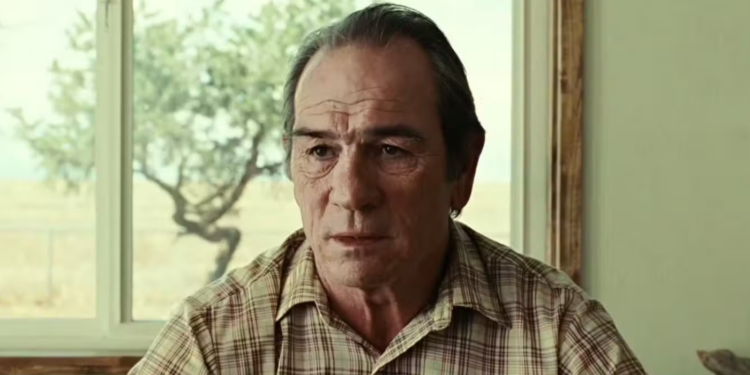
No Country for Old Men is a glistening example of a simple story made utterly enthralling. On the surface, it’s a cat and mouse thriller, but really it’s a rich character study of people on both sides of the law and how their life choices affect them and those around them. Central to the story is Sheriff Ed Tom Bell (Tommy Lee Jones), the Texas lawman who is trailing the aftermath of a botched drug deal as opportunist hunter Llewelyn Moss (Joh Brolin) is relentless pursued by the psychotic Anton Chigurh (Javier Bardem).
As Bell investigates, he continues to feel overwhelmed by the viciousness of the situation. No traditional Hollywood ending is offered, instead, Bell arrives when it is too late. Moss has been killed and Chigurh has escaped. To some, it felt like an anti-climax, but really the Coen Brothers were leaning into reality. Law and order isn’t always straight cut. The film closes out with Bell recounting two dreams to his wife, neither of which provide a clear resolution to the events of the film, particularly the fate of the killer Chigurh. The ending is a meditation on mortality, the changing nature of violence, and the feeling of being overwhelmed by the modern world, which Bell feels is a “country for old men” no longer.
2. Inception (2010)
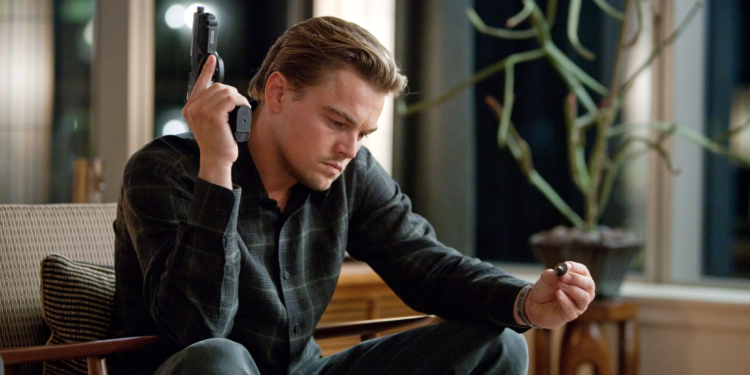
One of the easiest twists a movie can offer is the cliched “it was all a dream”. Christopher Nolan‘s mind-bending epic Inception toys with this trope in a totally unique way. Throughout the picture, we are thrust in and out of dream states to the point where it starts to feel muddied. Just when we think we have gotten our thoughts in order, a curveball pelts us.
The central question is whether Cobb (Leonardo DiCaprio) is in reality or still dreaming in the final scene, as the movie cuts to black just as his spinning top totem begins to wobble. Nolan has indicated that the point is Cobb no longer cares, having achieved emotional peace and a reunion with his children regardless of the reality. However, some interpretations note he is not wearing his wedding ring in the final scene, a detail present in all dream sequences, suggesting it is reality. The fact that over a decade later people still debate this cements Inception as having one one of the most ambiguous movie endings of all time.
1. Once Upon a Time in America (1984)
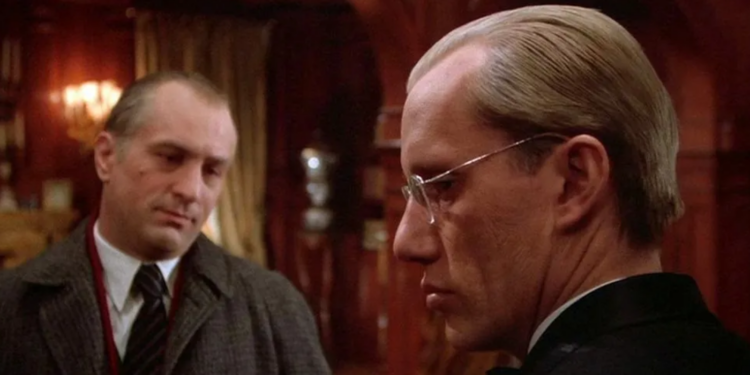
People often credit Quentin Tarantino as the innovator of non-linear storytelling. However, one of his favorite movies, Once Upon a Time in America, utilised this narrative choice eight years prior to Tarantino’s first cinematic offering. Told through a lens that switches in and out of time periods, Sergio Leone‘s mammoth-length, sweeping crime drama focuses on a group of Jewish hoodlums in New York who rise up the ranks and become respected gangsters. At the core of the tale is Noodles (Robert De Niro), a man riddled with guilt after believing he caused the deaths of his friends. Returning to the city 35 years later, he receives an invite to a party only to learn his best friend Max (James Woods) is alive with a new identity. His proposition? For Noodles to put him out of his misery and take his life to escape a career scandal.
The final encounter with Max, now the corrupt Secretary Bailey, ends with Noodles declining his offer and Max disappearing behind a garbage truck, leaving his fate uncertain. However, the movie is interlaced with segments in a Chinatown opium den in 1933, the second of which shows a smiling Noodles high on the drug. This framing device suggests that the entire narrative that follows – including his return to New York decades later and confrontation with his past – could be a hallucination or fantasy, allowing him to escape the guilt of his actions. Leone has never given a definitive answer and James Woods has stated he himself doesn’t know whether Max jumped into the garbage truck to take his own life, or simply returned to the party.
Read Next: 6 Long Movies That Don’t Actually Feel Long – A Masterclass in Pacing
 Follow Us