Most casual viewers imagine that horror movies are all about monsters with chainsaws, creepy guys in masks, even creepier dolls that suddenly come to life, and haunted houses that groan every time someone opens a door. For the most part, that formula has worked. Pretty much every horror movie features at least one of them. Recently, the angle has quietly shifted to nature and the environment being the biggest threat to human survival.
Netflix’s The Last House is one of the most recent examples of this trend, and one of the most successful. It hit number one on the platform on opening weekend and follows a family trapped in their home as nature stages a slow-motion siege on everyone outside. It’s the latest sign that streaming audiences want horror pointed at the planet instead of masked men in the dark.
The Last House Turns Climate Anxiety Into a Home Invasion Nightmare
Unlike the traditional hometown invasion horror flicks, the Delgados aren’t being held hostage by a masked weirdo who found his way into their home for sustenance. Mother Nature herself holds them hostage, with rain as her willing agent. Jason (Wagner Moura), the family patriarch, is out fishing when a strange-looking storm rolls in. By the time he gets home, every door and window at home seals shut for good. What’s more, his family isn’t the only one affected. Every neighbor on the block experiences the same thing.
This isn’t a rough weekend, either. The family stays sealed inside for five years with Ruth (Riley Chung, then Emma Ho, voiced as an adult by Arden Cho) and Graham (Noah Alexander Sosnowski, then Gabriel Barbosa) ageing into teenagers onscreen (the roles are recast partway through to show it). Jason rigs a trap through a busted chimney to catch small animals. His wife, Ann (Greta Lee), who’s also the family’s resident green thumb, rips up the living room floor to grow vegetables in the mud beneath the house, because someone has to keep the family fed.
It’s strangely sweet watching two parents figure out how to keep their family alive with nothing but scavenged supplies and sheer will. But the gender roles they fall into? Not exactly groundbreaking. Director Louis Leterrier told Tudum the film turns the family home into a place “where survival demands unity,” and sure, they’re united. They’re just doing it in a way that a 1950s household would recognize.

Why “Nature Fighting Back” Is Replacing the Haunted House as Horror’s Go-To Premise
Horror fans are gravitating towards eco-horror for one simple reason: there’s a real fear that the planet is dying and that nature has started fighting back with disasters that keep getting worse every year. M. Night Shyamalan tried the whole “nature fighting back” storyline in 2008 with The Happening, and was mocked for even suggesting that such a thing could be possible. Now it just looks like he was simply ahead of his time.
Film scholar Kendall Philips made a similar point to NPR years ago. He argued that the natural world has essentially taken over the haunted house’s old job of playing something that finally got sick of the people living in it. Haunted houses scare viewers with the past (a murder or a secret buried). Eco-horror is scarier because it’s playing out right now before everyone’s eyes, in the news and documentaries. And it’s not like anyone can fix a melting glacier or widespread wildfires with a séance.
What These Movies Are Really Teaching
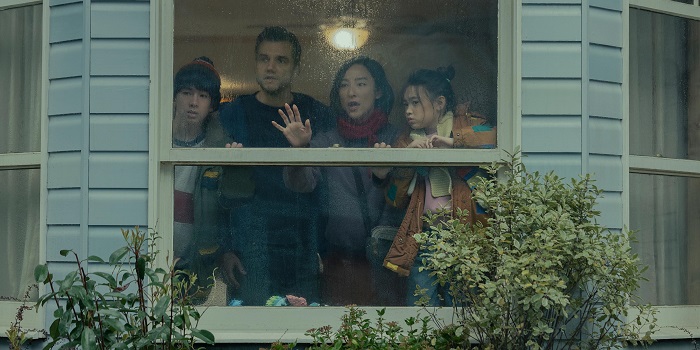
Critics hated The Last House’s ending, but not because the creatures weren’t explained. Ruth theorizes early on that the visitors are ancient ocean dwellers rather than aliens, and Leterrier confirmed as much to Tudum. Humans overfished, polluted, and warmed the oceans until something pushed back. The real complaints, including one from The Hollywood Reporter, were that the answer shows up late, and the emotional payoff feels rushed after years of slow-burn dread.
That dread lands hardest with Susan (Audrey Anderson). She’s the neighbor caught outside when the rain first hits. She then survives alone outside for weeks before showing up at the Delgados’ window to warn them, only to be killed by a creature right in front of the family. It’s the scene that finally convinces Jason and Ann that Ruth wasn’t imagining things.
Five years later, when Jason finally corners one of the creatures for good, it’s Ruth that talks him out of killing it. That show of mercy is what gets the family out alive. The creature opens the door, calls off the others, and lets them go. So the real fear here was never really about monsters. It’s whether people can change their relationship with a planet they’ve spent generations wrecking before that planet stops giving them the choice.
 Follow Us