Quentin Tarantino is widely regarded as one of the greatest filmmakers of all time. With two Oscar wins to his name and close to $2 billion in box office sales, it’s safe to say he’s legendary. Outside of filmmaking, he has also become known as an important film critic and analyser.
Being so respected in the film industry, Tarantino’s words have a lot of weight to them. People are often curious to hear his take on movies both old and new. In fact, he even has a podcast dedicated to film analysis, called The Video Archives Podcast. However, it was while guesting on a fellow film buff’s podcast where Tarantino said something that shocked and perplexed many in Hollywood and beyond.
Quentin Tarantino’s Unique View on Cinema

Quentin Tarantino immersed himself into cinema from a very young age. With his mother giving him free rein to watch pretty much whatever took his fancy, he was a true cinephile by the time he was a teenager. What’s refreshing about him is how he has never lost his love for other people’s movies even when he became one of the biggest filmmakers in the world.
Tarantino’s take on cinema differs sharply from traditional film criticism. He delves into details that most would skim over, and studies from the perspective of both a filmmaker and a total enthusiast. When disclosing his top 20 films of the 21st century, he gave plenty of intriguing insights, but also said something that sent shockwaves through the industry.
How Tarantino Found Comedy in The Passion of the Christ
Quentin Tarantino is unlike any of his peers or predecessors. His films changed the landscape of the crime genre, equipping his characters with not just weapons, but slick dialogue. He has become a master in making bad people look good, or at the very least, making them captivating to watch. No doubt about it, his films are violent – some are shockingly violent. However, he is on record for saying that there’s “a comedy aspect” to everything he has ever made. With that in mind, it doesn’t sound totally crazy that he found Mel Gibson‘s The Passion of the Christ to be “funny”.
When sitting down with Bret Easton Ellis to disclose his top 20 movies, The Passion of the Christ came in at number 15. For context, this is a film that depicts the final 12 hours of Jesus Christ’s life with unflinching brutality – the scourging, the crucifixion, the unrelenting physical torment, Gibson doesn’t shy away from any of it. This 2004 epic was notorious for its graphic violence, with scenes so viscerally intense that audiences walked out of theaters calling it “nauseatingly gruesome.” This wasn’t action-movie violence designed for thrills; it was deliberate, prolonged suffering meant to convey religious sacrifice. Yet somehow, Tarantino watched this harrowing depiction of Christ’s final hours and found humor in it.
Here are his exact words: “I was laughing a lot during the movie. Not because we were trying to be perverse, laughing at Jesus getting f**ked up — extreme violence is just funny to me — and when you go so far beyond extremity, it just gets funnier and funnier. We were just groaning and laughing at how f**ked up this was. Mel did a tremendous directorial job. He put me in that time period. I talked to Mel Gibson about this and he looked at me like I was a f**king nut.”
It’s Not Sadism – It’s Spectacle
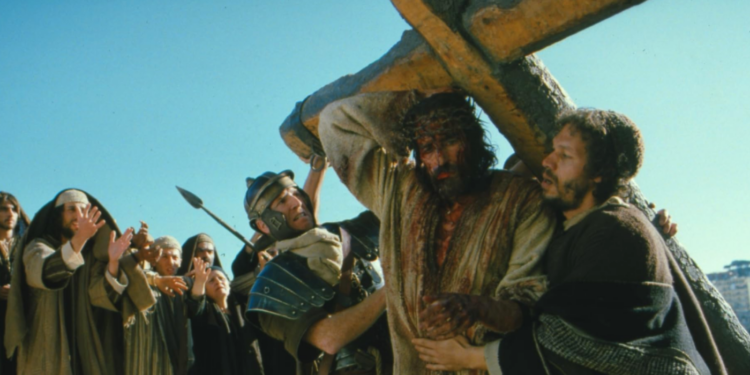
Quentin Tarantino’s favorite movies of the 21st century reveal that he is a man of many tastes. However, violent movies take precedence. If Mel Gibson looked at Tarantino like he was a “nut”, it’s fair to say many others are now thinking the same thing after reading his comments about The Passion of the Christ. Yet, his reaction isn’t about revelling in suffering – it’s about recognizing when violence crosses into such extreme territory that it becomes surreal, almost cartoonish.
Nervous laughter is certainly a real thing, but that’s not what Tarantino is driving at here. When he describes extreme violence as “just funny,” he’s not laughing at pain itself, but at the sheer absurdity of how far filmmakers push the boundaries of what can be shown on screen. He’s essentially saying that when something is so over-the-top and utterly disturbing to watch, it detaches from reality and falls into a dark comedy territory.
There’s also an argument that perhaps Tarantino has become de-sensitized to such levels of violence in movies. However, this is the lens through which Tarantino watches cinema. His top 20 list is populated with films that embrace extremity without apology – Cabin Fever, The Devil’s Rejects, Chocolate – movies that don’t shy away from gore and visceral intensity. For Tarantino, Gibson’s willingness to go that far, to commit so fully to depicting every brutal moment of the crucifixion, is both impressive filmmaking and inadvertently comedic in its relentlessness. It’s the audacity of it that makes him laugh, not the suffering itself.
Read Next: Why We May Have To Wait a Long Time for Quentin Tarantino’s Final Movie
 Follow Us