Long movies can get a bad rap. However, if you look at some of the most iconic films of all time, many of them have a runtime of over 3 hours. With the average motion picture running for around 90 minutes, perhaps it is seasoned moviegoers who resonate better with long movies.
However, some of the best long movies weren’t just a hit with critics, they got butts in seats as well. So, with Paul Thomas Anderson serving up a mammoth tale in 2025 that has gone down a storm, let’s take a look at exactly what makes long movies so compelling when they are pulled off right. Here are 6 of the very best.
6. One Battle After Another (2025)
For a 2025 release to already earn a spot among the best long movies, it must use every minute wisely. By now, many have come to expect a long movie from PTA. However, when word got out that he was making an action film, people were not expecting it to clock in at 161 minutes.
One Battle After Another tells the story of Bob (Leonardo DiCaprio), a former revolutionary who has spent the last 16 years of his life in hiding with his daughter Willa (Chase Infiniti). However, their peace is shattered when the racist zealot Colonel Lockjaw (Sean Penn) hunts them down. On the surface, this sounds like a cat and mouse thriller, and while those traits exist, Paul Thomas Anderson elevates the picture with both heart and humor. The runtime never feels drawn out as it essentially mirrors the characters’ constant vigilance. When the action does kick in, it’s elongated but in a way that feels authentic. For example, the film’s car chase sequence isn’t over-the-top and filled with crashes and explosions, it’s slowly-paced and anxiety-inducing. By focusing on deep character studies, PTA allows us to care for these characters, and even feel oddly captivated by the morally ambiguous ones. Thus, One Battle After Another is a shining example of slow-burn tension done right.
5. The Green Mile (1999)
Widely considered to be one of the greatest Stephen King adaptations, The Green Mile is also the longest at 189 minutes. For a movie mostly confined to a prison block, Frank Darabont executes his long runtime with precision and grace. The film explores themes of guilt, trauma, suspension of disbelief, and the passage of time. While dark subject matters are examined, the movie’s heavier moments are quickly lifted by touching moments and even subtle comedy here and there.
The framing device of an elderly Paul Edgecomb recounting his past immediately hooks viewers, transforming the lengthy runtime into a captivating story within a story. This narrative structure keeps audiences invested as they anticipate how his experiences on death row led to his present-day revelation. Every scene on The Green Mile feels purposeful, gradually building toward the emotional weight of Paul’s final chapter. The deliberate pacing mirrors the slow passage of time in prison life itself, making the 189 minutes feel earned rather than excessive.
4. JFK (1991)
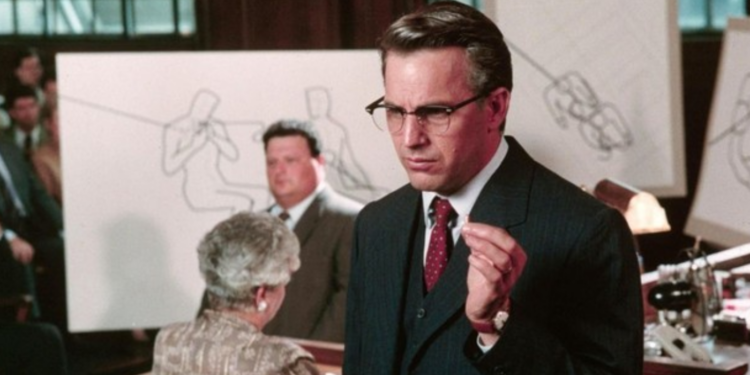
Rather fittingly, Oliver Stone has become known as a filmmaker who leaves no stone unturned. With this approach to intricate storytelling, his movies can become long. However, JFK – which clocks in at 189 minutes – is a mystery drama that executes the pacing of a thriller. While public intrigue around the Kennedy assassination certainly drew audiences to theaters, it’s Stone’s relentless investigative energy that keeps them glued to their seats for over three hours. Thus, the film feels like a documentary of largely-unknown facts but with the power of some of Hollywood’s finest actors at the forefront: Kevin Costner, Joe Pesci, Tommy Lee Jones, Jack Lemmon, Gary Oldman, John Candy, to name a few.
The film unfolds like a cascading series of revelations, with District Attorney Jim Garrison (Kevin Costner) peeling back layer after layer of conspiracy. Stone employs rapid-fire editing, archival footage, and multiple perspectives to create his now iconic documentary-like urgency. Rather than feeling overwhelming, the constant barrage of information mirrors Garrison’s own obsessive quest for truth, making the runtime feel necessary rather than indulgent. From this movie, it’s easy to see how he so effortlessly took a swerve to documentary filmmaking later in his career.
3. Magnolia (1999)
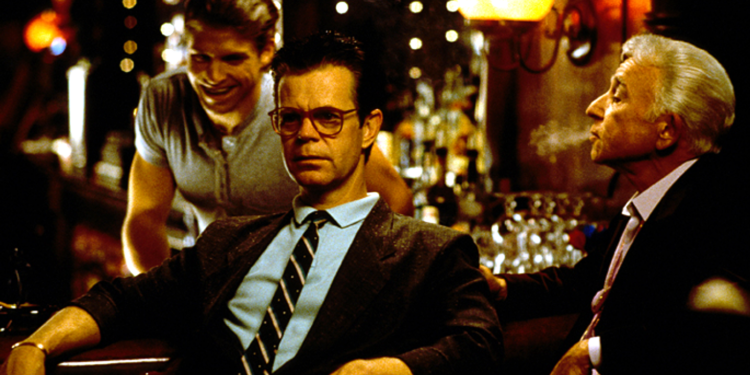
The best long movies tend to be those that involve a plethora of characters. However, the problem here is that often this can lead the audience to feel overwhelmed and unable to form a solid connection with any one character. At only 29 years of age, Paul Thomas Anderson had an understanding of human frailty akin to a man with decades and decades of life experience. This is why his third feature film Magnolia felt so powerful and poignant.
Magnolia is a multi-layered film of nine separate storylines that intertwine. Each story is simple, however, the way in which they intersect takes the film to the “epic” territory. Never for a second does this mammoth movie of 188 minutes feel muddled or incoherent. As we are slowly drip-fed more information about each character, our opinions evolve. The characters we were unsure of begin to make more sense. The ones we didn’t like slowly reveal their wounds that led them to where they are. And the characters we felt sorrow for make us question whether it is really true that everyone deserves a second chance. PTA doesn’t keep our attention with action or shock and awe, but with the captivating allure of the complexity of human beings.
2. The Godfather Part II (1974)
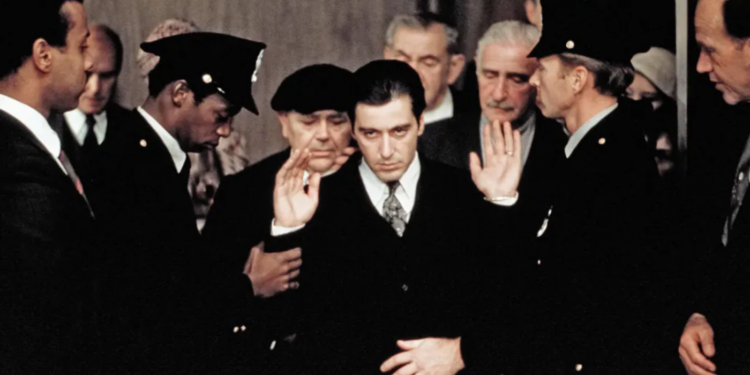
The journey to The Godfather being made in 1972 is one marred by countless setbacks, controversies, and even dangers. While the real-life mob had issues with the film, the studio’s main qualm was that it was too long. However, when the film was a box office hit, they realized their view that people would not want to sit through the entire film was totally erroneous. So, when The Godfather Part II landed in cinemas in 1974, it clocked in at 3 hours and 22 minutes – that’s 27 minutes longer than the first movie.
The Godfather Part II is widely regarded as the strongest picture in the trilogy. By focusing on two separate storylines – a young Vito (Robert De Niro) rising to power and Michael (Al Pacino) struggling with his position as the family boss – viewers were given the chance to witness the tragic irony of the Corleone legacy. As we watch Vito build his empire through calculated decisions and genuine community respect, we simultaneously see Michael inherit that same empire only to become increasingly isolated and ruthless. The parallel structure allows Coppola to explore how power corrupts across generations. We understand the crushing weight on Michael’s shoulders because we’ve seen what his father sacrificed to create this life. The extended runtime doesn’t just tell two stories – it creates a dialogue between them, making every scene of Michael’s moral descent hit harder as we contrast it with Vito’s more principled rise.
1. The Wolf of Wall Street (2013)
Martin Scorsese is another filmmaker known for making long movies. Over the years, he has tackled an array of genres but is most renowned for his crime dramas. Typically, these films are based on real-life figures, so there is a lot to unpack. With a runtime of exactly 3 hours, The Wolf of Wall Street is one of Scorsese’s longest pictures. However, it flows like a 90 minute movie that leaves you wanting more.
The movie follows the ascent and decline of stockbroker Jordan Belfort (played by Leonardo DiCaprio), who amasses a sizeable fortune in the 1990s through deception and corruption. Where the thrill comes in is with Belfort’s desire for excess – drugs, sex, and increasingly rash criminal activity – which all catapults alongside his ridiculous wealth. The three-hour runtime flies by thanks to Scorsese’s relentless pacing and energetic editing that mirrors Belfort’s chaotic lifestyle and mindset. DiCaprio delivers a powerhouse performance, but he’s surrounded by a dazzling ensemble including Jonah Hill, Margot Robbie, and Matthew McConaughey, each bringing electric energy to every scene. Most crucially, Scorsese uses dark comedy to transform what could be disturbing, hard-to-watch sequences into moments of absurdist spectacle. This comedic lens doesn’t excuse the behavior – it makes the moral bankruptcy more palatable to witness while still condemning it.
Read Next: 7 Times Leonardo DiCaprio Collaborated With Martin Scorsese in Film
 Follow Us