No one likes a bully, be it a tough guy at school or a company that pushes its employees to their limits. The latter is what this redditor had to deal with, resulting in a case of ‘Pro Revenge’ that they recently discussed with fellow netizens.
The OP saw an employee being bullied into quitting right after they started working there. Little did they know back then that it would happen to them, too. But when it did, the redditor sought revenge, eventually bringing the company 8-figure losses.
Bored Panda has reached out to the OP and they were kind enough to answer a few of our questions. You will find their thoughts in the text below.
No one likes to be treated poorly, especially undeservingly so

Image credits: Garakta-Studio (not the actual image)
This person’s former workplace would bully employees into quitting when they didn’t need a certain someone around
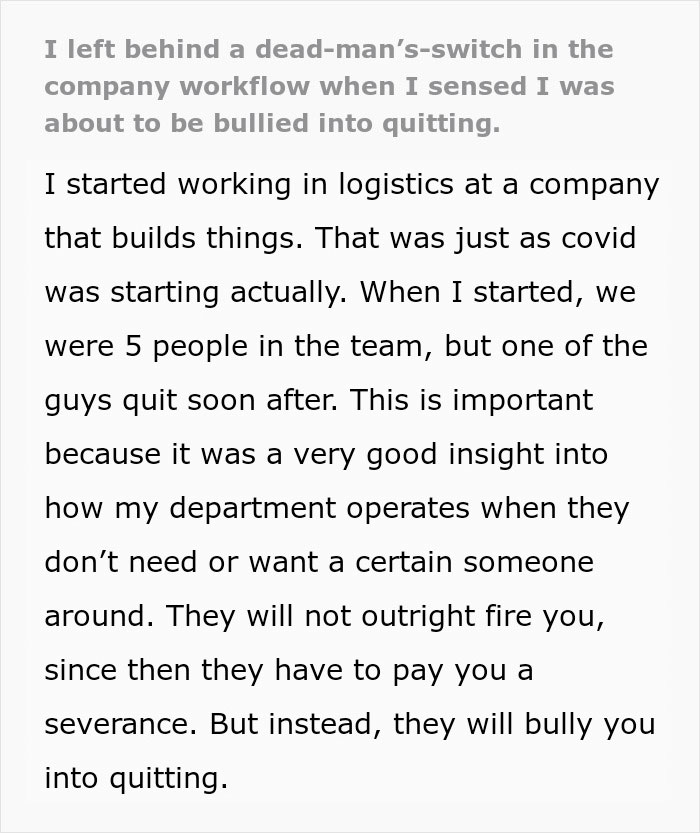
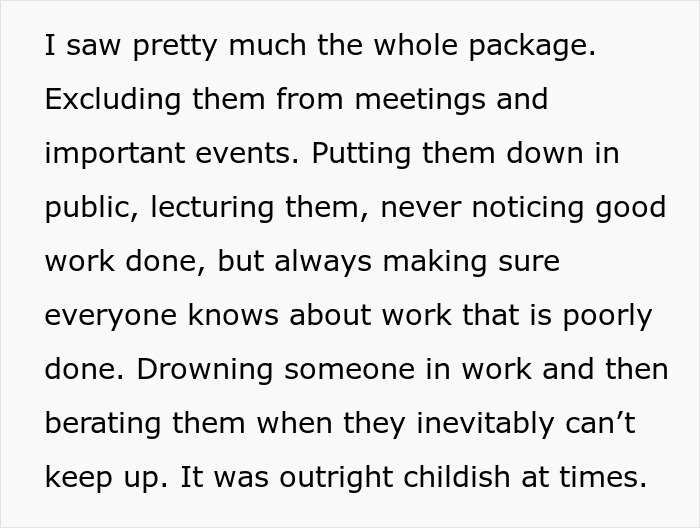

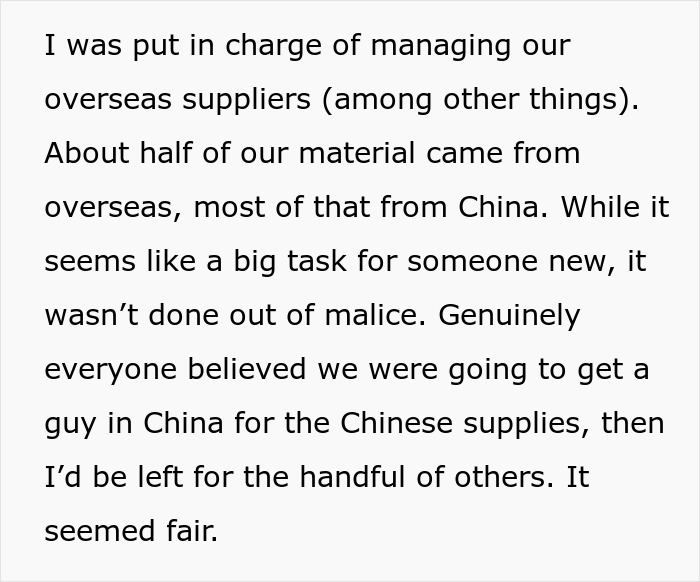


Image credits: Tiger Lily (not the actual image)


Image credits: Jules Amé (not the actual image)

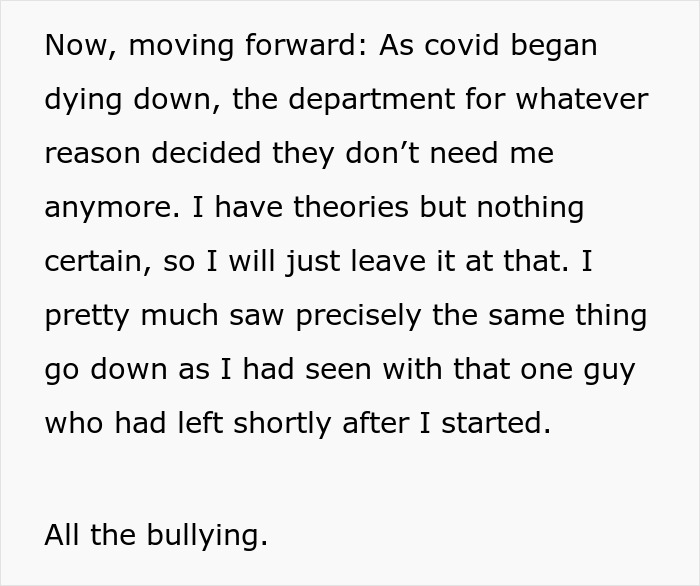


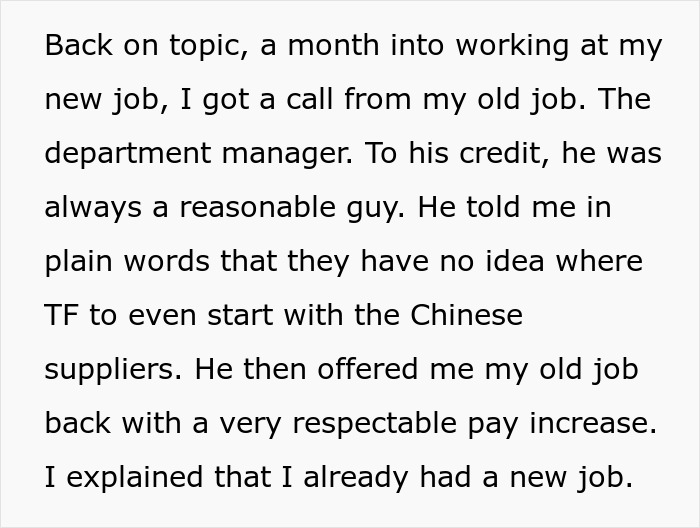
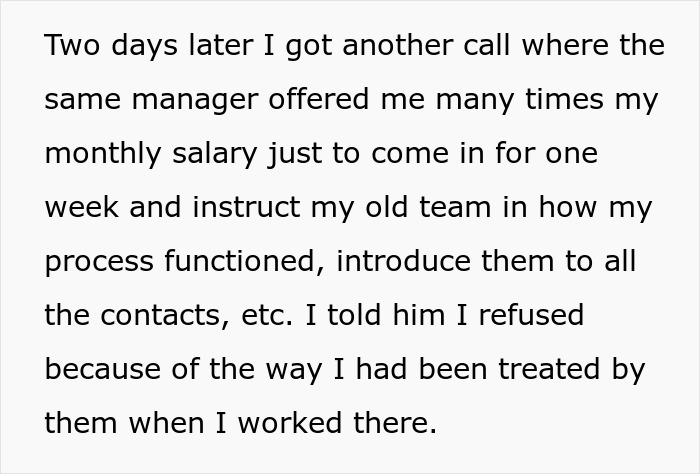

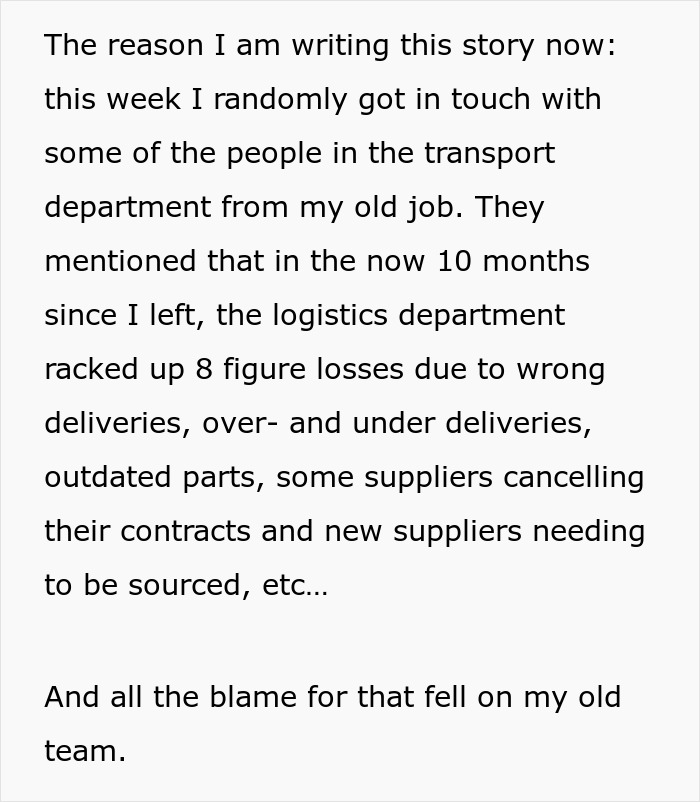
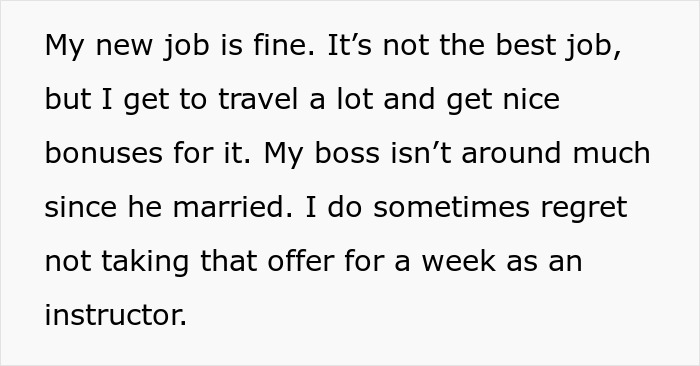
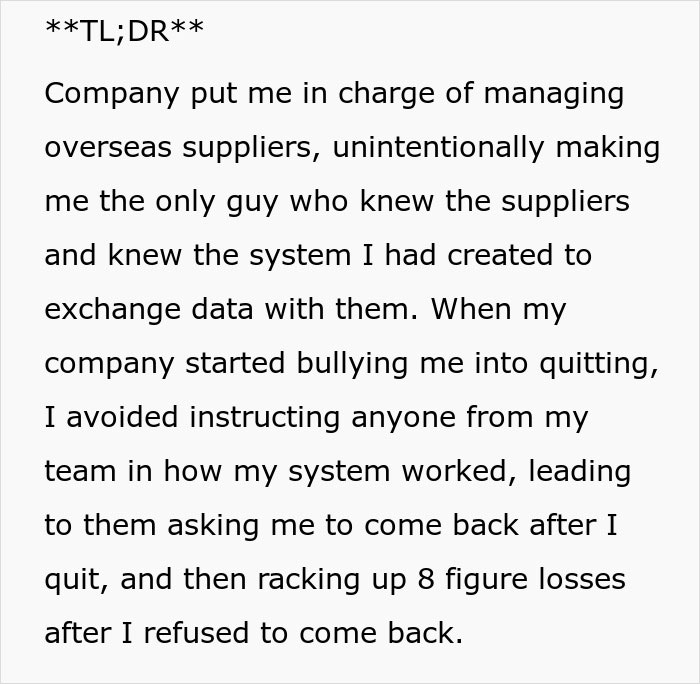
Image credits: r/ProRevenge
Working on creating a more positive company culture can have numerous benefits
The OP shared with Bored Panda that the thing that upset them the most was lack of proper communication. “There was no word said about how ‘we don’t need you anymore’ or that ‘we think you are doing badly or are a bad fit for the company’,” they said in a recent interview.
The redditor pointed out that not all people care for communication or corporate culture to the same extent; some don’t care at all, but the redditor was among the ones who do. “When you actually interact with your coworkers—like I did—it influences you a lot,” they shared.
Positive company culture is essential for the prosperity of the business and the well-being of the employees. According to the Arbinger Institute, working on creating a positive company culture has numerous benefits, increased productivity being the one that is influenced the most. It is followed by improved employee retention and engagement respectively, as well as other psychological and financial benefits for both employees and the company.
Company culture can play an important role when it comes to the wellbeing of both the employees and the business
Encompassing shared company values, attitudes and norms, company culture works like a glue, as Forbes put it, that binds the team together and shapes the way things are done within the organization. It reports that, based on recent studies, employees understood and felt their company culture the most through its missions and values, recognition and celebrations, and the company’s approach to employee performance.
That is why it’s no surprise that poor corporate culture can negatively affect the company’s workflow as well as its employees. For instance, according to TeamStage, better corporate culture, especially in regards to recognition, would encourage nearly 70% of employees to work harder. It could also save the organizations some money—and, more importantly, spare the employees’ mental health—as poor corporate culture might involve harassment or bullying, which account for around a quarter of compensation claims.
According to a recent survey by the American Psychological Association (APA), quite a few employees have seemingly had to deal with poor company culture. To make matters worse, nearly one in five of them would even call it toxic.
Quite a few people are familiar with what it’s like to work in a toxic environment
APA’s chief executive officer, Arthur C. Evans Jr., referred to the number of people who work in a toxic environment without protection from harm as troubling. “No one should feel fear at work. It is clear there is much work to be done to foster a positive work environment for all workers in the nation,” he told the American Psychological Association.
The APA survey also revealed that quite a few places of employment deal with discrimination-related issues, as roughly 15% of employees have experienced it and 22% have witnessed it in their workplace. In addition to that, more than one in five employed Americans have reportedly witnessed someone receiving negative slights, insults or jokes.
Such treatment or any other forms of bullying, for that matter, can surely be enough for a person to seek the nearest exit, which the OP eventually did; but not without taking revenge on the company for mistreating their employees.
Refusing to instruct people at the former workplace wasn’t done out of spite, though. “It felt a little weird towards the new company, if I’m being honest. I only just started working for them and now wanted to leave for a week to instruct the people at my old job? Didn’t come off right in my head. It wasn’t really done out of a lust for revenge,” the redditor told Bored Panda.
The OP provided more details in the comments


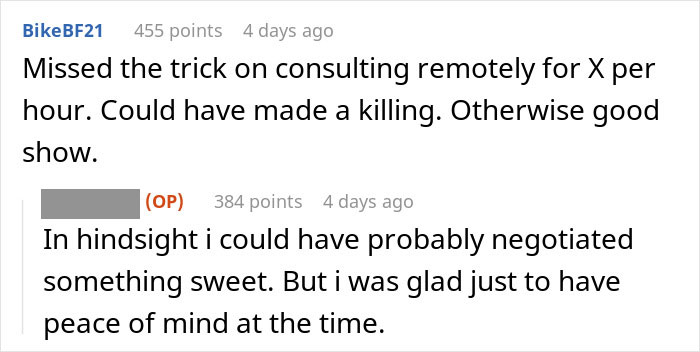
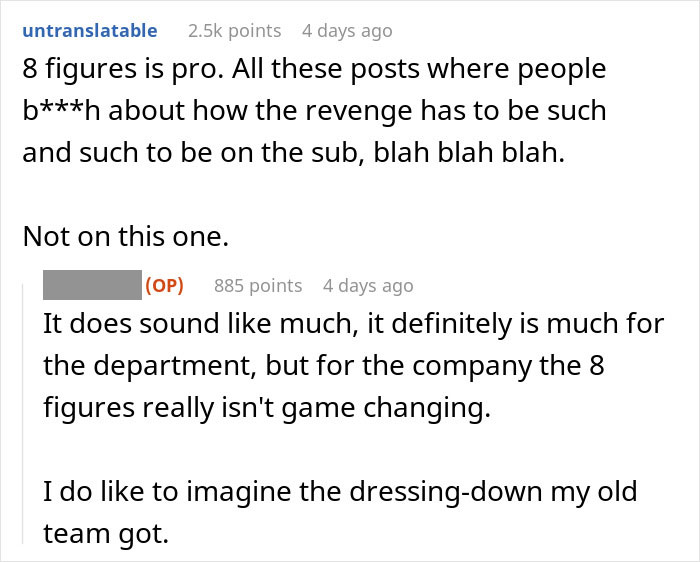
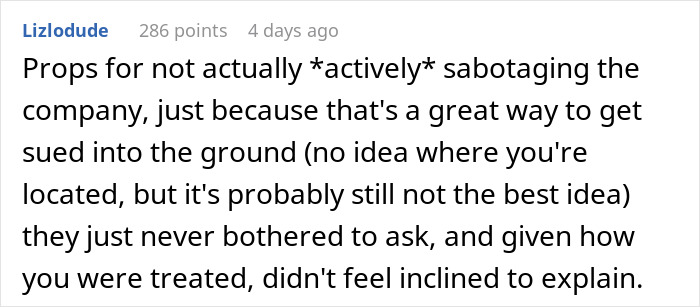
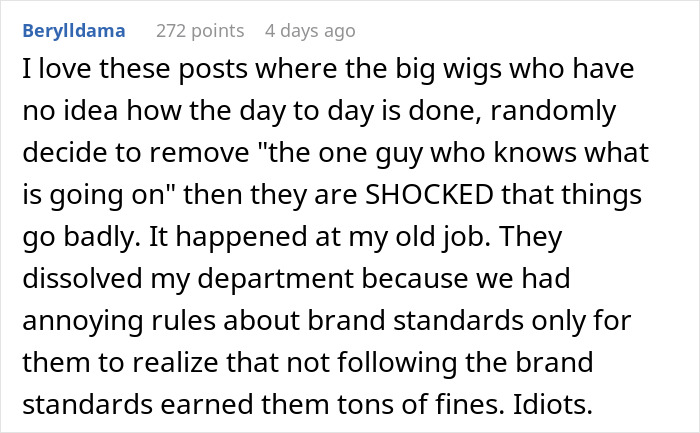
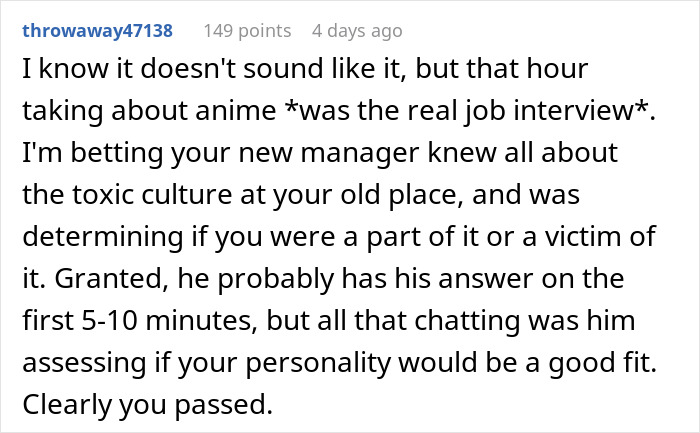
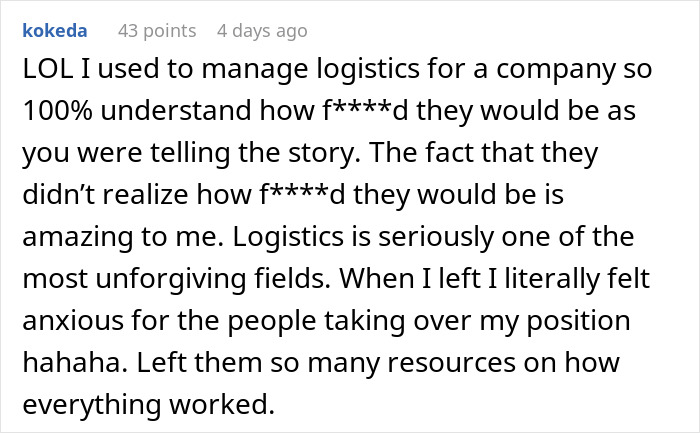
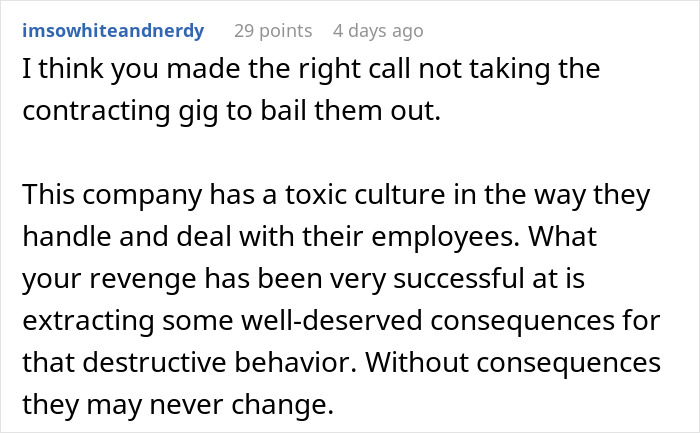
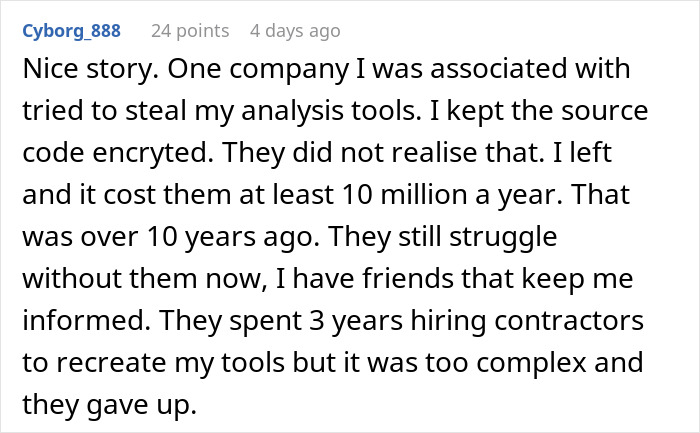
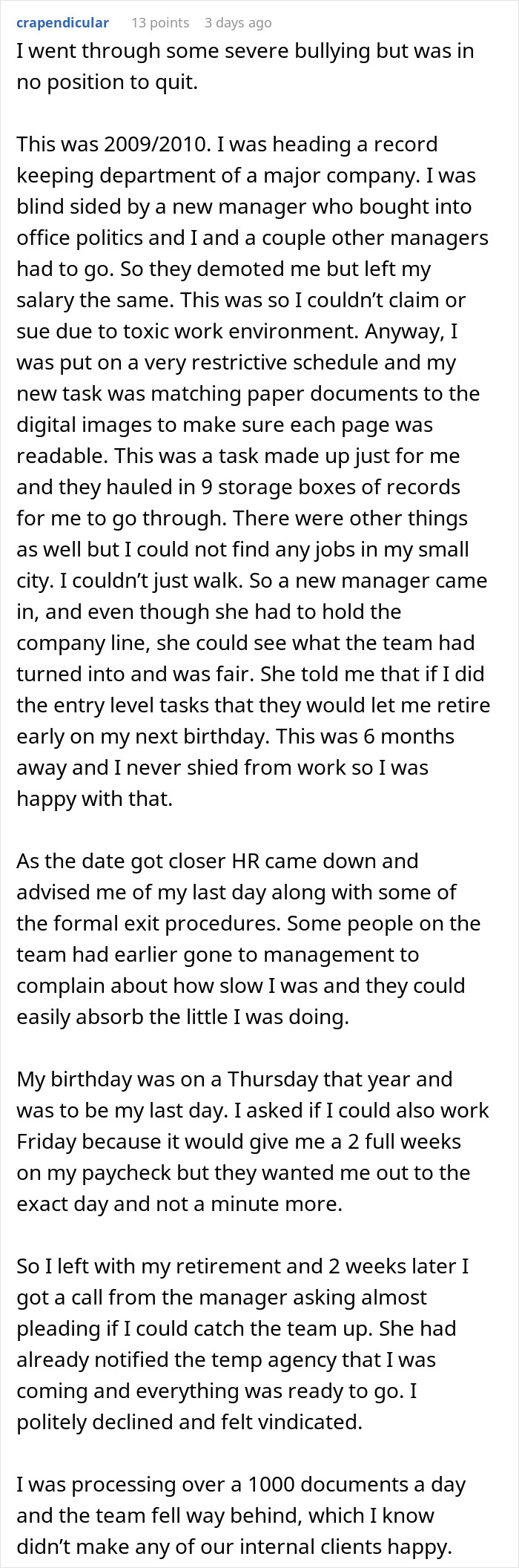
People shared their opinions and stories, some seem to have gone through similar situations

 Follow Us