Noah Hawley has become one of television’s most distinctive storytellers, building a career around morally complicated characters, elaborate mysteries, surreal imagery, and plots that rarely unfold the way audiences expect. His breakthrough came with Fargo, but his television work stretches back to two short-lived ABC dramas that already displayed his fascination with strange people and unconventional storytelling. Since then, he has explored the Marvel universe, brought the terrifying world of Alien to television, and established himself as one of FX’s most important creative voices.
Five television series have premiered with Hawley credited as a creator, co-creator, or developer. His earlier writing and producing work on Bones falls outside that group, while projects still in development are excluded. This ranking considers writing, originality, performances, character development, consistency, emotional impact, and how successfully each series delivers on its premise. From a forgotten network drama to one of the greatest crime anthologies ever made, here is every Noah Hawley TV show ranked from worst to best.
6. ‘My Generation’ (2010)
My Generation follows nine former classmates from Greenbelt High School in Austin, Texas, who were filmed for a documentary before graduating in 2000. Ten years later, the documentary crew returns to discover how differently their lives have unfolded. Michael Stahl-David plays Steven Foster, a former high-school overachiever whose adult life has taken an unexpected direction, while Kelli Garner plays Dawn Barbuso and Mehcad Brooks portrays Rolly Marks. The ensemble also includes Jaime King, Daniella Alonso, Julian Morris, and Keir O’Donnell. Hawley developed the American series from the Swedish drama Blomstertid, using a documentary format to explore the distance between teenage expectations and adult reality.
The premise has potential, particularly because the decade between graduation and the reunion allows real-world events to shape the characters’ lives. September 11, the wars that followed, and the economic uncertainty of the 2000s all influence the choices these former classmates have made. Unfortunately, the show struggles to make nine interconnected lives equally compelling while constantly moving between the past and present. ABC canceled it after only two episodes aired in September 2010, although six additional produced episodes were subsequently released online. The format occasionally reveals the character-focused ambition that would define Hawley’s later work, but the execution feels crowded and uneven. Its premature cancellation also prevents the relationships from developing into anything particularly memorable.

5. ‘The Unusuals’ (2009)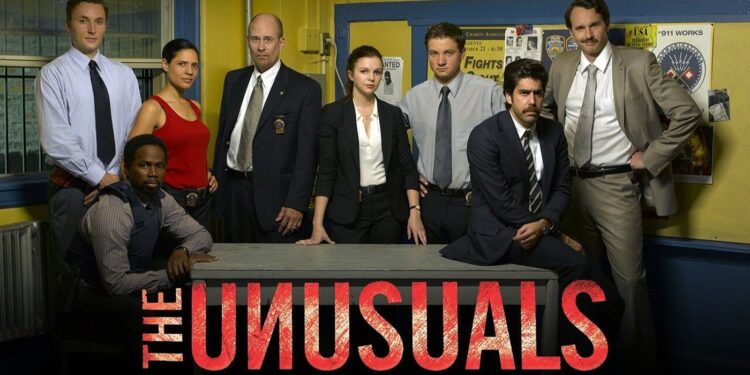
The Unusuals takes place inside a fictional NYPD homicide precinct where almost every detective is hiding something strange. Amber Tamblyn stars as Casey Shraeger, a detective transferred from vice who discovers that her new colleagues are considerably more complicated than they initially appear. Jeremy Renner plays her partner Jason Walsh, while Harold Perrineau portrays Leo Banks, a detective terrified of dying, and Adam Goldberg plays Eric Delahoy, whose sarcastic personality conceals serious personal problems. The supporting cast includes Joshua Close, Monique Gabriela Curnen, and Terry Kinney, giving Hawley an eccentric ensemble to build his police stories around.
The show’s greatest strength is how thoroughly it embraces the absurdity of its characters without abandoning the seriousness of the crimes they investigate. Banks’ obsession with avoiding death provides an endless source of dark humor, while Shraeger’s wealthy family background creates tension between her public identity and private life. Renner and Tamblyn develop convincing chemistry, and Goldberg is especially entertaining whenever Delahoy’s personal problems threaten to overwhelm his professional judgment. The series lasted only 10 episodes, leaving several character arcs unresolved, including Delahoy’s increasingly troubling circumstances. Yet its combination of crime, comedy, psychological secrets, and eccentric personalities already feels recognizably Hawley. It is considerably more confident than My Generation and offers a glimpse of the unusual storytelling instincts he would later perfect.
4. ‘Alien: Earth’ (2025)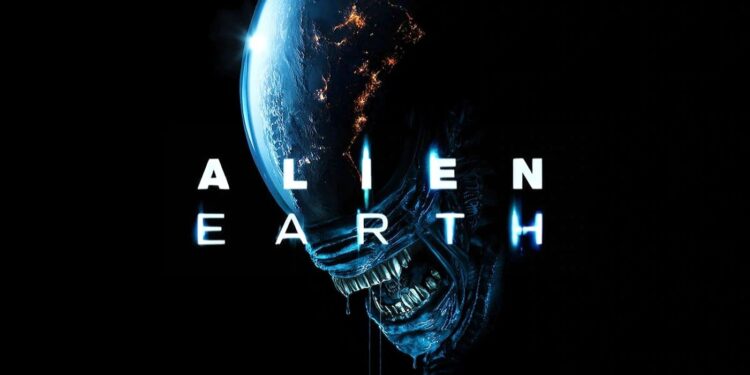
Alien: Earth brings the iconic science-fiction horror franchise to television with a story set in 2120, two years before the events of the original film. Sydney Chandler plays Wendy, a synthetic body containing the transferred consciousness of a terminally ill child, whose existence represents a major technological breakthrough for the Prodigy Corporation. When the Weyland-Yutani research vessel USCSS Maginot crashes on Earth carrying dangerous extraterrestrial specimens, Wendy and the other experimental hybrids become entangled in a terrifying struggle involving competing corporations, artificial intelligence, and alien life. Timothy Olyphant plays Kirsh, the synthetic responsible for training the hybrids, while Samuel Blenkin portrays Boy Kavalier, the brilliant and dangerously immature billionaire behind Prodigy.
Hawley makes the first season fascinating by exploring the franchise’s most disturbing questions about consciousness, corporate power, and humanity’s willingness to create things it cannot control. Wendy’s relationship with her brother Hermit, played by Alex Lawther, provides an emotional foundation, while the extraterrestrial specimens produce some genuinely unsettling sequences. The series also benefits from Babou Ceesay as the formidable Weyland-Yutani security officer Morrow, whose determination makes him one of the season’s most compelling characters. Some stretches spend so much time developing philosophical ideas that the immediate horror loses momentum, and the eight-episode first season leaves several major conflicts unresolved. Nevertheless, its unsettling creature designs, ambitious world-building, and willingness to challenge the franchise’s familiar formula make it an impressive achievement. FX renewed the series for a second season, with production underway in London during 2026.
3. ‘Bones’ (2005–2017)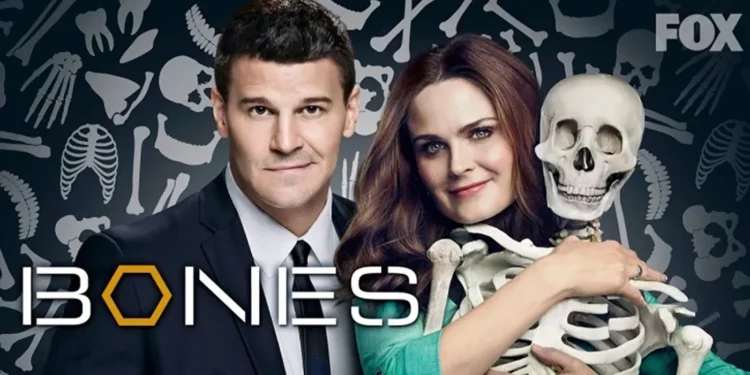
Bones follows forensic anthropologist Temperance Brennan, played by Emily Deschanel, as she works with FBI Special Agent Seeley Booth, portrayed by David Boreanaz, to investigate murders involving human remains. Created by Hart Hanson and inspired by the work of forensic anthropologist and novelist Kathy Reichs, the series combines scientific investigations, police procedure, workplace comedy, and a long-running romantic relationship. Michaela Conlin plays Angela Montenegro, T.J. Thyne portrays Jack Hodgins, and Tamara Taylor joins the ensemble as Camille Saroyan. Hawley worked on the series during its early seasons, contributing scripts and serving in story-editor and co-producer roles between 2005 and 2008. His writing credits include episodes such as “The Man in the Cell” and “The Knight on the Grid.”
The show’s greatest strength is the relationship between Brennan and Booth. Their contrasting approaches to solving crimes provide an almost endless source of conflict, humor, and emotional development, while the Jeffersonian team becomes increasingly important as individual personalities and relationships evolve. Scientific details give the cases a distinctive foundation, and the series frequently balances disturbing discoveries with warmth and comedy. Twelve seasons and 246 episodes demonstrate how successfully the formula connected with audiences. The later years become increasingly dependent on familiar relationship problems and elaborate criminal conspiracies, but the strongest seasons remain excellent procedural television. Hawley’s involvement was concentrated in the early part of the run, making Bones an important chapter in his professional development rather than a series he personally created or controlled. Its longevity, memorable ensemble, and consistent entertainment value nevertheless earn it a deserved place among his strongest television credits.
2. ‘Legion’ (2017–2019)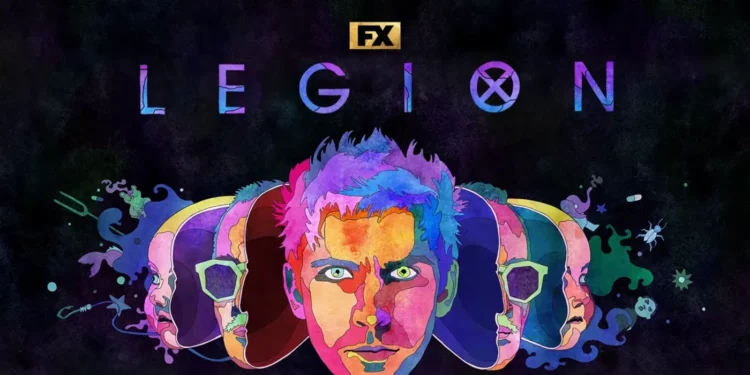
Legion begins with David Haller, played by Dan Stevens, a young man who has spent much of his life receiving psychiatric treatment for what he believes is a severe mental illness. His understanding of reality changes after meeting Syd Barrett, played by Rachel Keller, whose unusual abilities suggest that David’s experiences may be connected to extraordinary mutant powers. Aubrey Plaza delivers one of the show’s defining performances as Lenny Busker, while Navid Negahban later takes on the role of Amahl Farouk, the Shadow King. Based on a character from Marvel Comics, the series allows Hawley to explore a superhero story through unreliable memories, fractured timelines, disturbing visions, and psychological manipulation.
Few superhero shows have ever looked or behaved like Legion. Its first season is particularly remarkable, combining retro production design, elaborate musical sequences, unsettling soundscapes, and unexpected visual experiments into something that feels genuinely unpredictable. Stevens is extraordinary as David, gradually exposing the arrogance and danger underneath a character audiences initially want to protect. Plaza repeatedly steals scenes, particularly as Lenny’s identity becomes entangled with the Shadow King’s manipulation. The second season occasionally becomes so consumed by its own symbolism that the story loses momentum, but the third brings the central conflict toward a carefully planned conclusion. Across 27 episodes and three seasons, Hawley challenges the assumptions viewers normally bring to stories about superheroes and their enemies. Its visual ambition and complete creative identity make it one of the most original Marvel television adaptations ever produced.
1. ‘Fargo’ (2014)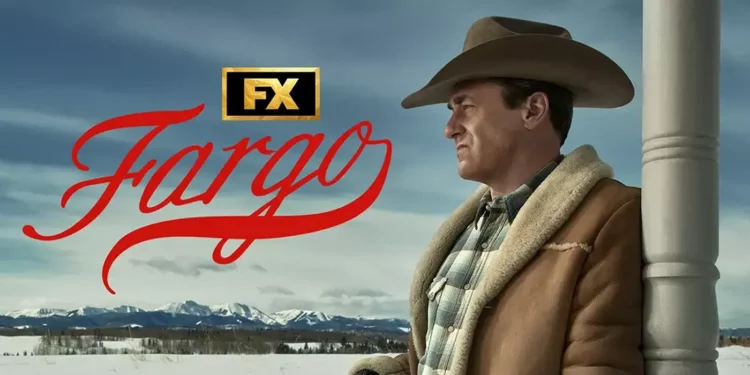
Fargo takes the bleak humor, sudden violence, and ordinary Midwestern characters associated with Joel Coen and Ethan Coen‘s 1996 film and expands them into a crime anthology with its own remarkable identity. The first season introduces Lester Nygaard, played by Martin Freeman, whose encounter with the terrifying Lorne Malvo, portrayed by Billy Bob Thornton, unleashes a chain of murders and increasingly desperate lies. Season 2 shifts to the 1970s, where Kirsten Dunst and Jesse Plemons play Peggy and Ed Blumquist, a married couple whose involvement in a violent crime draws them into a gang war. Later seasons introduce entirely different casts and conflicts, including Ewan McGregor in dual roles during Season 3, Chris Rock as Kansas City crime boss Loy Cannon in Season 4, and Juno Temple as the resourceful Dot Lyon in Season 5.
The anthology format allows Hawley to reinvent the show without losing its central fascination with greed, coincidence, desperation, and ordinary people making catastrophic decisions. The first season remains one of the finest crime stories of the 2010s, with Thornton’s Malvo turning nearly every conversation into an unpredictable threat. Season 2 expands the scale through the Sioux Falls conflict, while Season 3 transforms a family feud into an unsettling exploration of wealth, manipulation, and truth. The fourth season struggles with an overcrowded narrative, but Season 5 delivers a major return to form, particularly through Temple’s performance and Jon Hamm as the terrifying Sheriff Roy Tillman. Five installments have produced an extraordinary collection of characters, scenes, and moral dilemmas, earning the series major Emmy recognition along the way. Hawley’s other shows demonstrate his creative range, but Fargo remains his most complete accomplishment. Its combination of extraordinary writing, memorable performances, black comedy, and sudden brutality puts it comfortably at No. 1.
 Follow Us


