After 2025 boomed with horror movies, the genre is back on the mainstream map. Horror movies that explode at the box office don’t always land well with critics. However, what we are seeing now is a trend where prestigious award ceremonies like the BAFTAs and the Oscars are acknowledging crowd-pleasers when selecting their picks to give the coveted nod.
This hasn’t always been the case. Often times, critical bashing of a horror movie can deter audiences from heading to the movie theater to check it out. Other times, horror movies can be showered in critical praise but moviegoers don’t flock to the cinema. Many films we now consider “holy grails” of the genre were, upon their release, considered commercial disasters that threatened to end careers. So, let’s explore five horror movies that failed the box office test but totally passed the test of time.
5. Event Horizon (1997)
Led by Sam Neill and Laurence Fishburne, Event Horizon centers on a rescue crew investigating a spaceship that vanished seven years prior, only to discover it has returned from a dimension of pure chaos with a malevolent consciousness. The film’s commercial failure may have started long before it hit the silver screen as production was notoriously troubled. Rushed by Paramount to fill a gap in their schedule, director Paul W.S. Anderson was forced to cut the film drastically.
With a budget of roughly $60 million, it grossed only $42 million world-wide. Many critics at the time dismissed it as “gore-soaked” and a “Solaris rip-off.” However, the saving grace came when the film absolutely exploded on home video. Fans became obsessed with the lost footage that was finally given the light of day – the legendary, ultra-violent scenes of the crew’s descent into madness that were cut for the theatrical release. Its mix of Gothic horror and hard sci-fi has since influenced everything from Dead Space to Interstellar.

4. The Frighteners (1996)
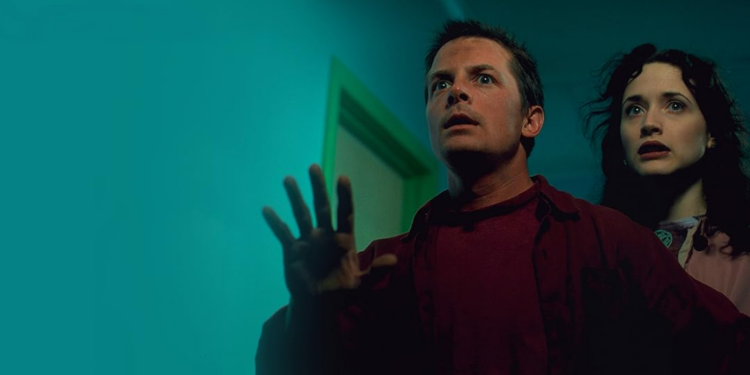
Before he ventured off to Middle-earth, Peter Jackson explored the quiet yet spooky suburbs. The Frighteners tells the story of Frank Bannister, a conman who uses his ability to see ghosts to exorcise houses he’s actually setting up the haunting of. When a real, soul-reaping entity appears, he soon finds himself out of his depths.
Despite being backed by Robert Zemeckis and starring Michael J. Fox in the lead role, the film was a marketing nightmare. Universal didn’t know whether to sell it as a comedy or a horror. It cost $26 million and barely recouped $29 million worldwide, failing to even crack the top five on its opening weekend. But as Peter Jackson’s star rose with The Lord of the Rings, fans traced back through his eclectic filmography to find not only a unique horror movie, but a visual effects marvel. The Frighteners is now celebrated for its kinetic energy and its perfect balance of slapstick humor and genuine dread, standing as a high-water mark for 90s horror-comedy.
3. In the Mouth of Madness (1994)
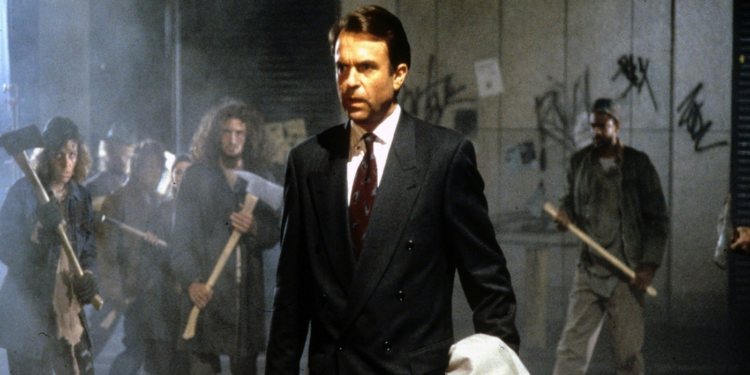
For Sam Neill, In the Mouth of Madness stands as another horror movie bomb that garnered an intense second wind years after the fact. The plot revolves around an insurance investigator (Neill) who tracks down a missing horror novelist, only to find that the author’s Lovecraftian stories are literally rewriting reality. John Carpenter’s final instalment in his unofficial “Apocalypse Trilogy” was met with a big shrug by 1994 audiences who were pivoting toward the teen-centric “slasher-lite” era.
It grossed a dismal $8.9 million against a $10 million budget and was labelled as “confusing” and “too meta” for the general public. However, decades later, that very “meta” narrative is exactly why it’s worshipped by diehard horror fanatics. In an era of elevated horror, Carpenter’s exploration of fandom and the power of fiction feels prophetic. It is now widely cited as the best cinematic adaptation of H.P. Lovecraft’s cosmic dread, even though it isn’t based on a single Lovecraft book.
2. Near Dark (1987)
Near Dark is a stylish vampire flick that doubles as a road trip movie, focusing on a young man who is bitten by a drifter. From here, he is forced to join a nomadic family of bloodsuckers as they travel across the American Midwest in a blacked-out van. Directed by a then largely undiscovered Kathryn Bigelow, this avant-garde slice of cinema suffered out of the gate as it had the misfortune of being released just months after The Lost Boys.
While the latter was an MTV-style hit, Near Dark was gritty, dirty, and grim. It grossed just $3.4 million and its distributor, De Laurentiis Entertainment Group, was filing for bankruptcy at the time, leaving the film with almost zero promotional support. The film was rescued by the “Midnight Movie” circuit. Its neo-Western aesthetic and the powerhouse renditions of Bill Paxton and Lance Henriksen turned it into a gritty alternative to the more aesthetically pleasing vampire vehicles of the 80s. It’s now regarded as one of the most polished and influential vampire films ever made, with director’s like Quentin Tarantino still singing its praises.
1. The Thing (1982)
However hard it may be to believe today, John Carpenter’s 1982 remake of The Thing was a catastrophic failure. Released in the same summer as Steven Spielberg‘s E.T. the Extra-Terrestrial, the majority of audiences opted for “friendly” aliens, not a creature that turned dogs into blossoming tentacles. The plot centers on an American research team in Antarctica who become hunted by a shape-shifting alien that can perfectly imitate any living being.
The Thing earned $19.6 million on a $15 million budget, but this wasn’t classed as a win. Once marketing and theater cuts were taken, this number then represented a heavy loss. Reviews were vitriolic, with some calling it “junk” and “the most hated movie of all time.” This definitely couldn’t have helped get butts in seats. However, eventually horror fans ignited their free-thinking and gave it a shot. Thanks to the VHS era, The Thing underwent possibly the greatest critical re-evaluation in cinema history. Rob Bottin’s practical effects are still considered the gold standard, and the film’s atmosphere of unrelenting paranoia has made it a permanent fixture on “Greatest Horror Film” lists worldwide.
Read Next: 5 Underrated Horror Comedies That Deserve More Recognition
 Follow Us