Everyone has at least one habit that makes other people pause and quietly think, “There’s no way I could live like that.” For some, it’s surviving on energy drinks and late-night snacks. For others, it’s meal prepping, waking up at sunrise, and casually treating movement like it’s a daily mission.
Most of the time, those differences stay harmlessly amusing until someone decides to turn curiosity into a test. One woman learned that the hard way after daring a relative to prove that their daily walking routine was actually “too much.”
More info: Reddit
Some habits seem perfectly normal to the person doing them, but make no sense at all to everyone else
Image credits: Old Youth / Unsplash (not the actual photo)
That was the case in this story, where one person committed to walking 20,000 steps a day as a lifestyle choice
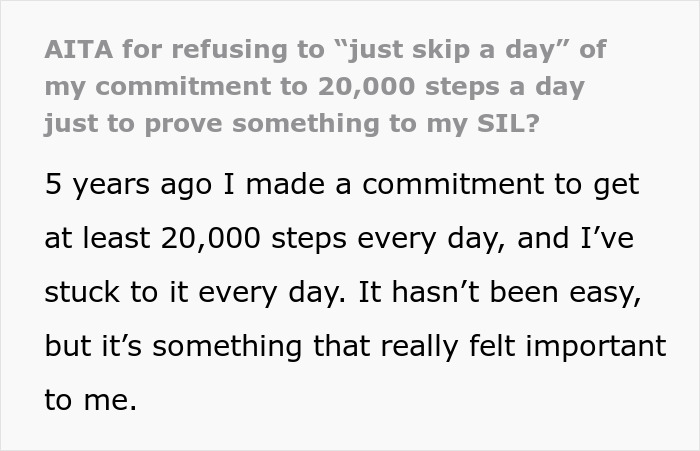
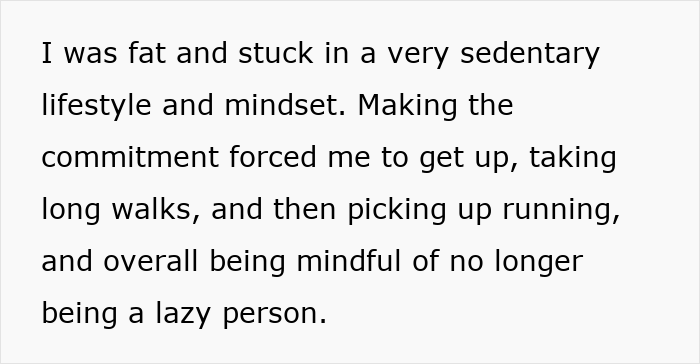
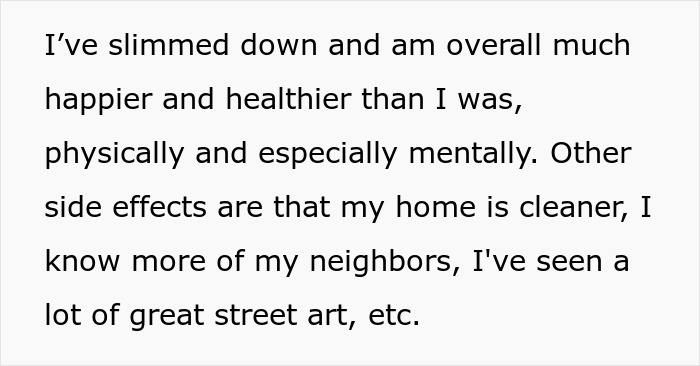
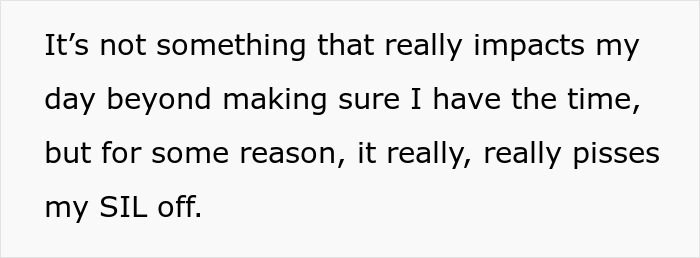

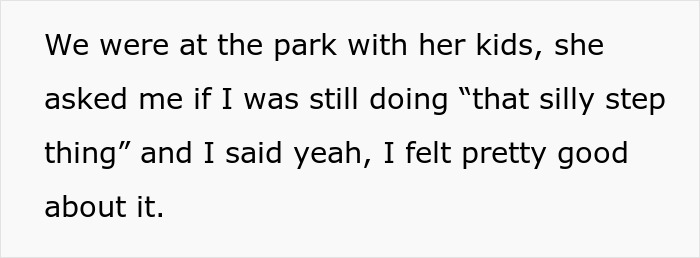

Image credits: Igor Rodrigues / Unsplash (not the actual photo)
To them, it felt completely reasonable and doable, but their sister-in-law didn’t see it that way
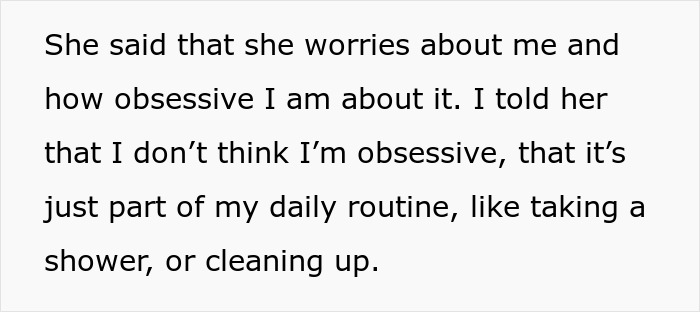
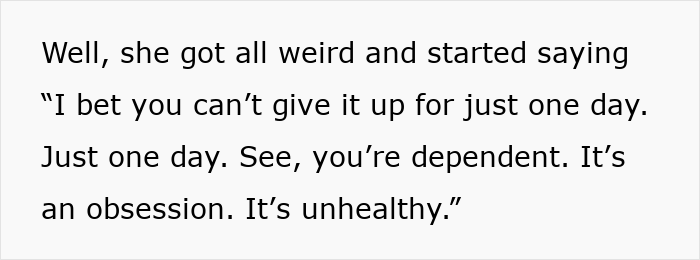

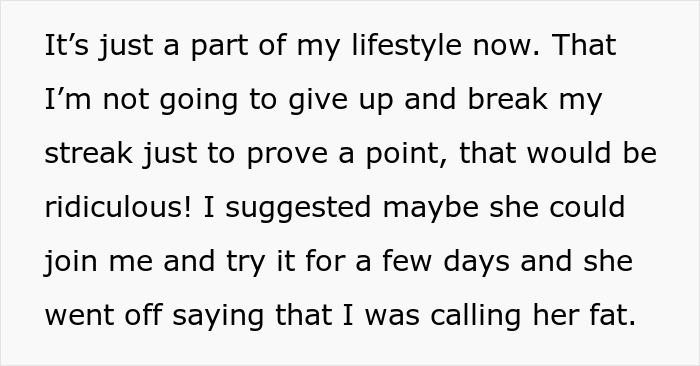

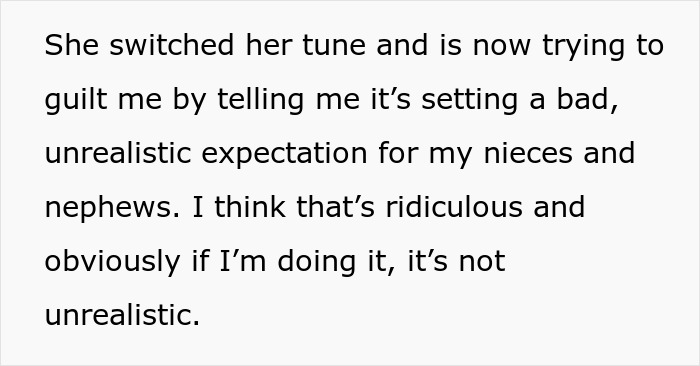

Image credits: Getty Images / Unsplash (not the actual photo)
She kept complaining about it and even labeled the habit an “obsession”
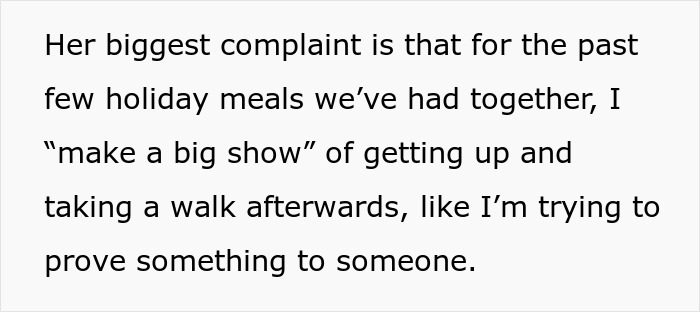

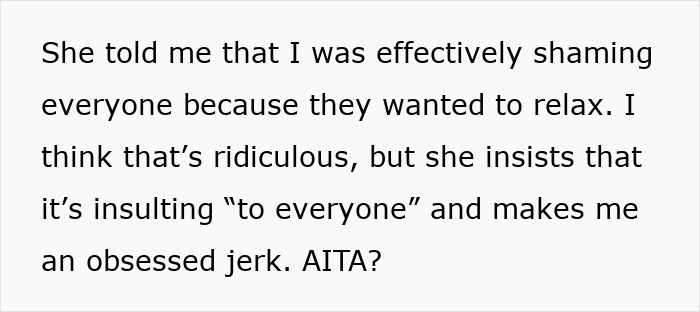
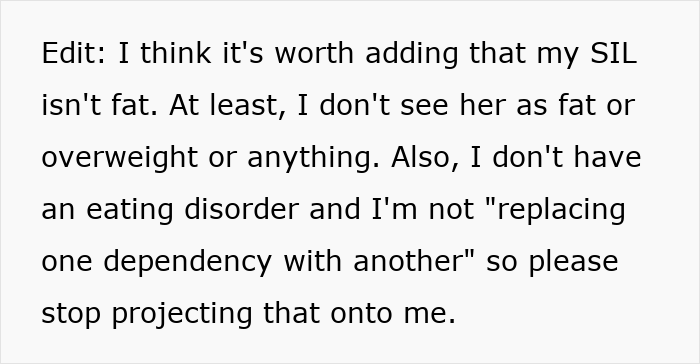
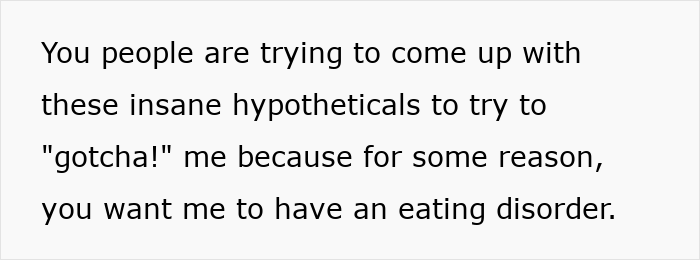
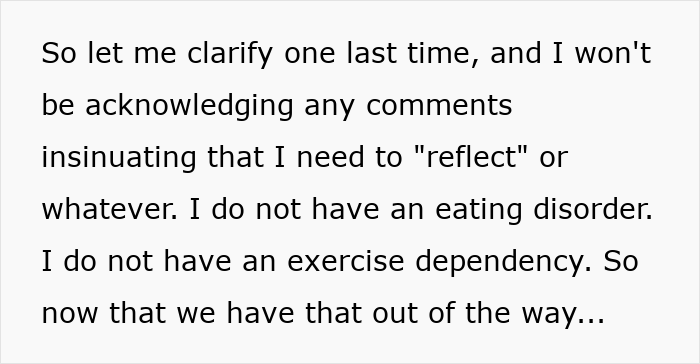
Image credits: 20000stepsaday
Things came to a head when she challenged them to “give it up for just one day,” which they flat-out refused, finding the request ridiculous
Some time ago, the OP committed to getting at least 20,000 steps every day and stuck to it every day. They felt that it was very important to them to get out of a sedentary lifestyle, to lose weight, and to stop being a lazy person. And it worked – they became happier and healthier.
While 20K steps might seem like they would impact one’s day a lot, the original poster says it doesn’t for them. Who it impacted was their sister-in-law – she can’t stand the fact that they have this habit. Them fulfilling it even after the meals during the Holidays and such drives her even more mad.
So, she makes sure to let her annoyance be known, calling it a “silly step thing” and telling the person how obsessive they seem with it. In fact, one day she even dared them to give it up for one day, to prove that they’re not “obsessed.”
The OP started arguing that they’re not obsessed or dependent on it, it’s just a part of their lifestyle now, and so, they won’t be partaking in any “giving it up for one day” challenges, as they found it ridiculous. After all, 20K steps isn’t that astronomical a goal.
Well, when the topic of step count throughout the day comes up, probably the most often we hear the number 10,000. Such a claim has rather interesting origins. You see, some believe that it might have originated in Japan in the run-up to the 1964 Tokyo Olympics.
Image credits: SkelDry / Freepik (not the actual photo)
Basically, at the time pedometers rose to popularity, and one company came out with a device called a manpo-kei, which means 10,000 step meter. As Catrine Tudor-Locke explained to the BBC, it was something like a business slogan, along the lines of Nike’s “Just Do It,” and it resonated so much with people that it became like common knowledge of fitness.
Yet, the recommendation doesn’t really come out of thin air. Here, back in 2022, a meta-analysis of 15 studies concluded that most adults should aim for 8,000-10,000 steps per day for general fitness. Such a limit is essentially a low-impact exercise that can help people improve or maintain their physical and mental health.
It improves muscle strength, blood flow, flexibility, joint stiffness, mood, and sleep, to name a few things. In the long run, all of these things help a person to manage their weight, prevent dementia, lower the risk of cardiovascular and chronic diseases, and increase energy, mood, and mental alertness.
Granted, the exact number of steps a person should walk on average depends on many factors. For example, a person’s age, current health and fitness level, their goals, and things like that. Some experts even say that aiming just for 7000 steps can be enough, as such numbers can provide the mentioned benefits, especially when compared to 2000 steps or less.
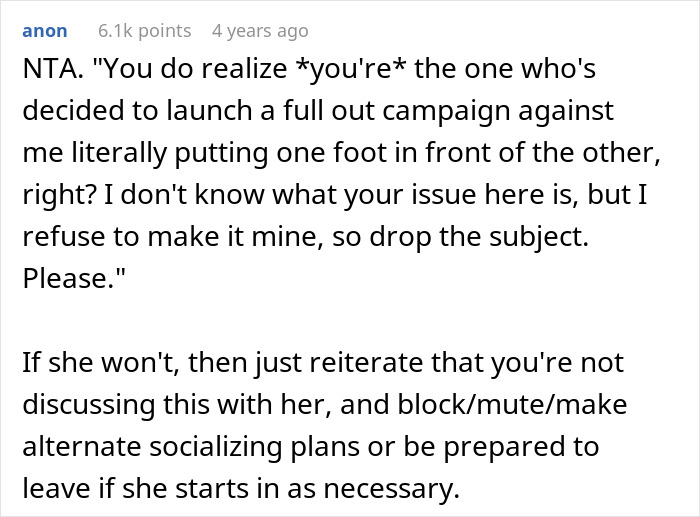
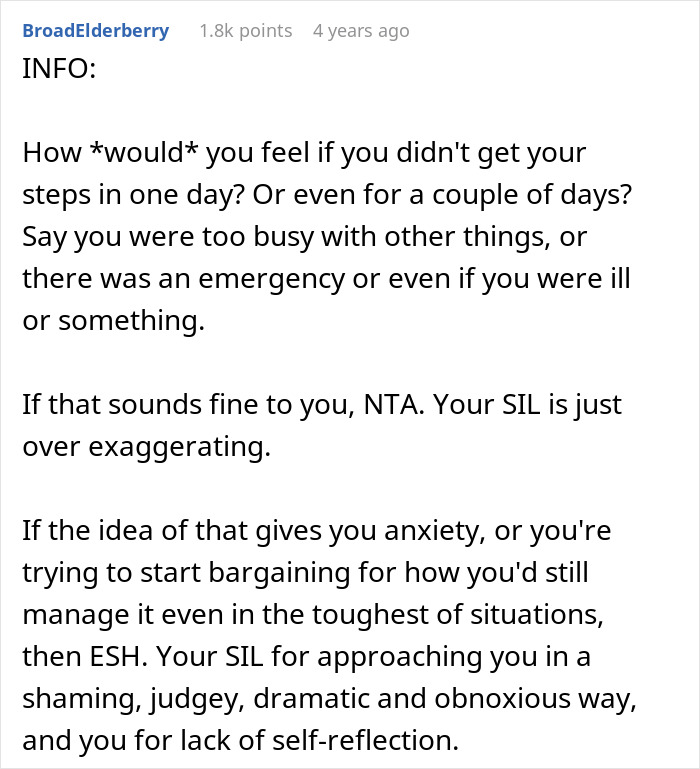
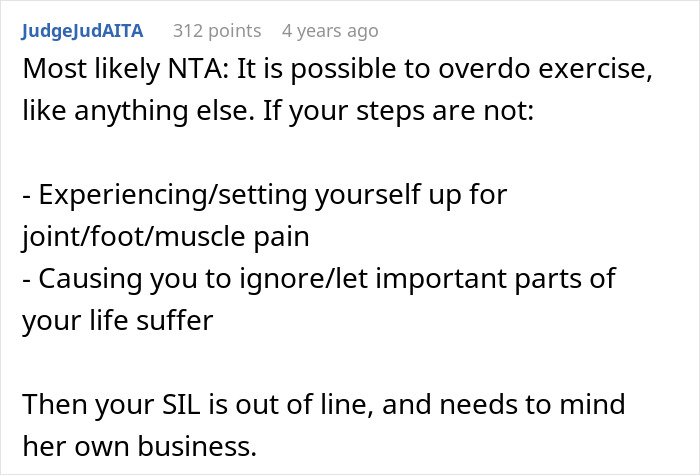
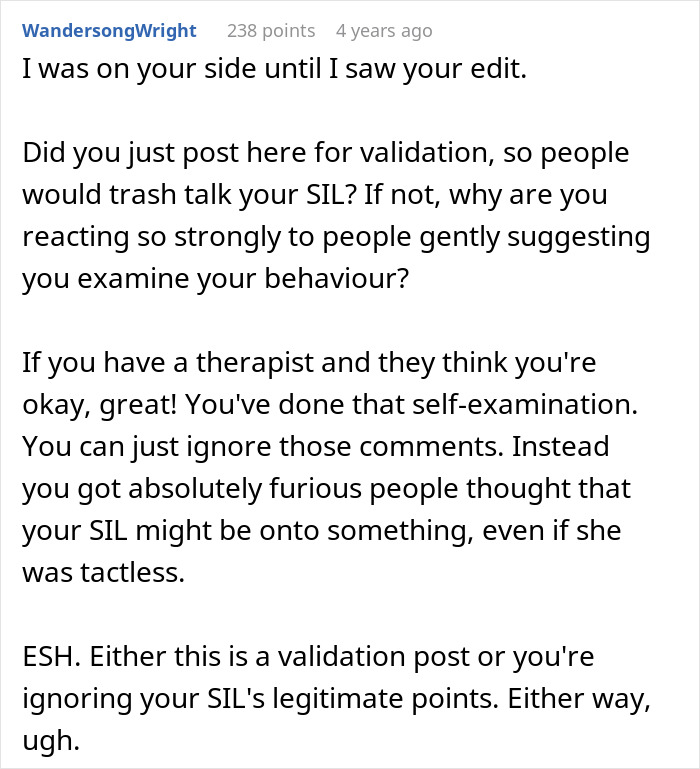
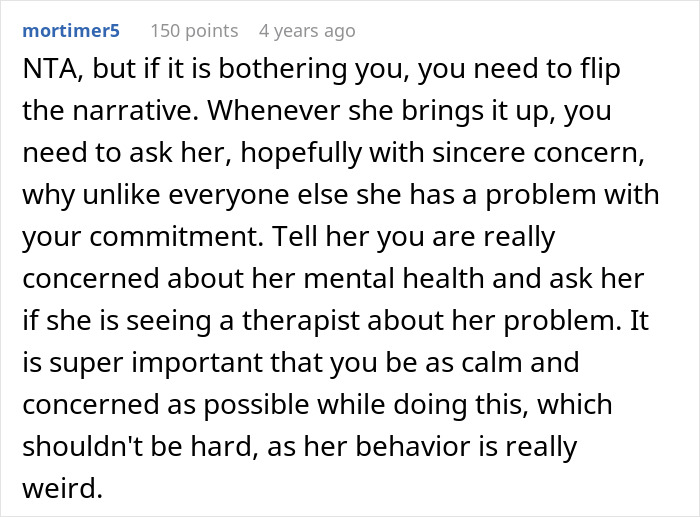
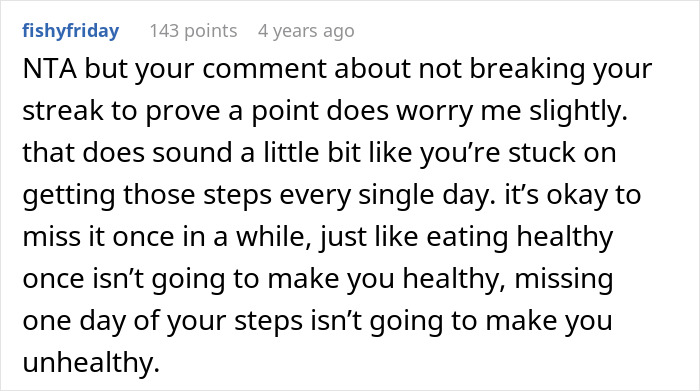
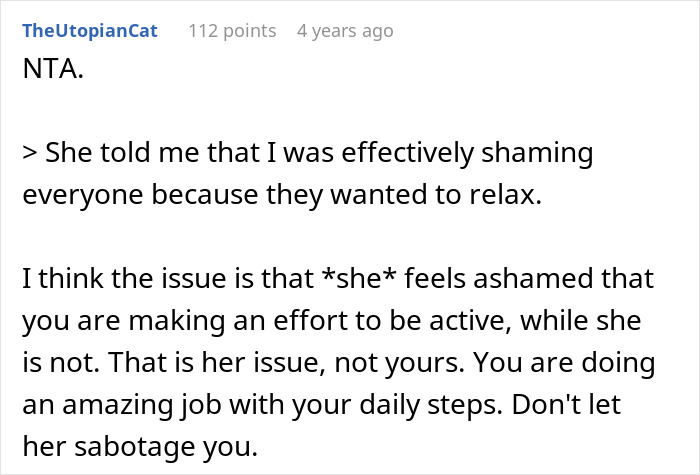
So, knowing all of this, it’s not surprising that the OP wants to reap all the benefits – it’s a low effort, high impact habit. And so, just as netizens said, SIL simply seems jealous of their commitment to this, and so she lashes out, which makes the author not a jerk to refuse her “challenge.”
Do you agree with netizens? Or is your view on this whole thing different? Please, share!
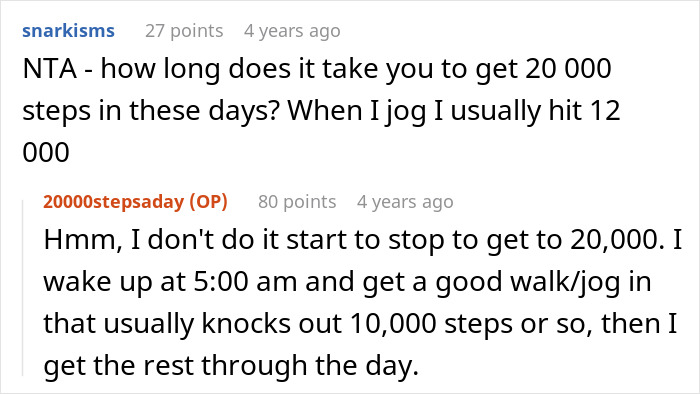
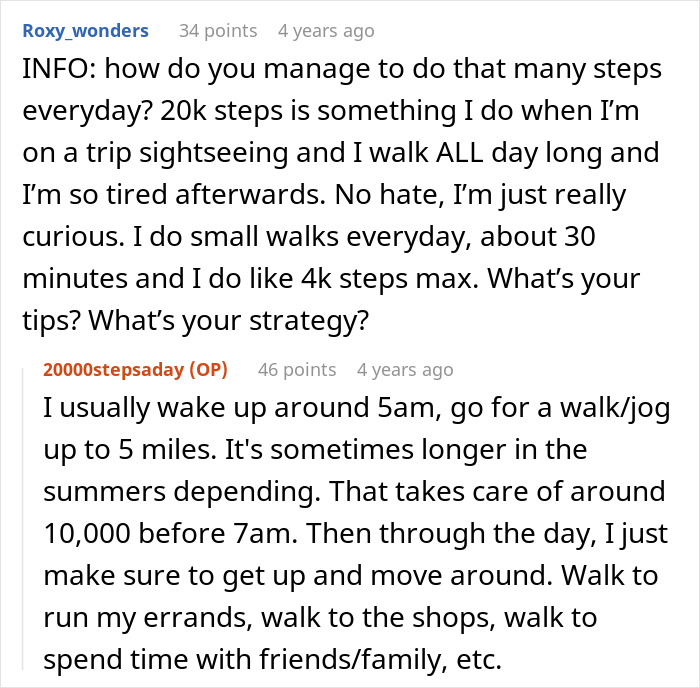
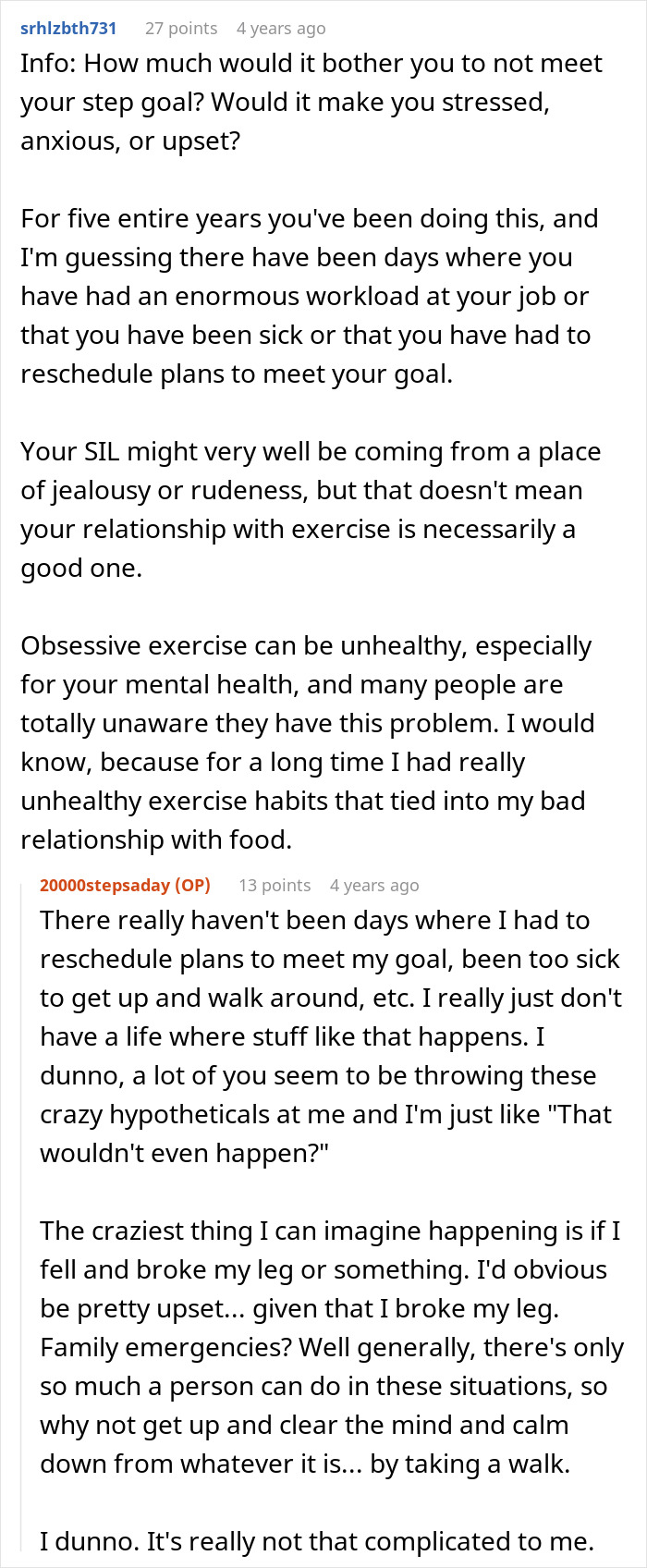
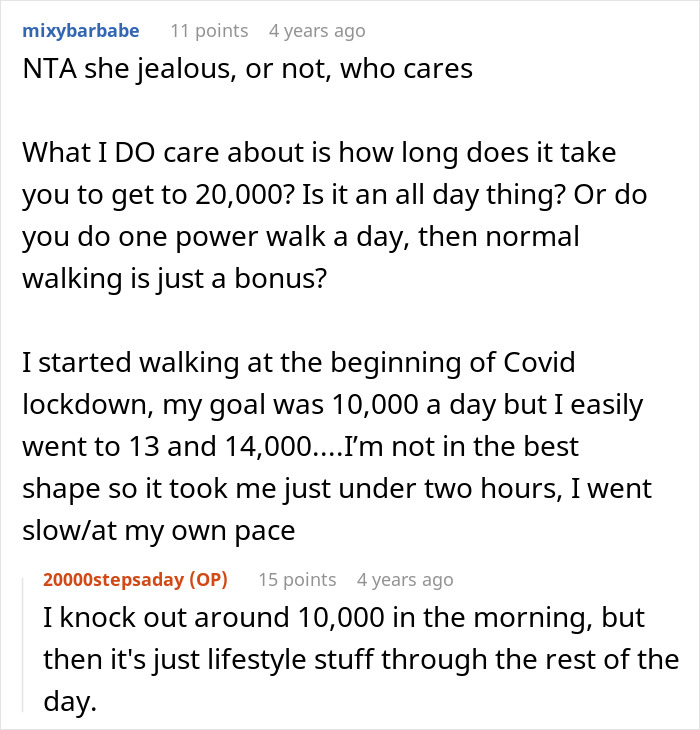
Netizens largely agreed with that decision, saying the sister-in-law just seemed jealous because she couldn’t stick to something like that herself

 Follow Us