Some family gatherings are awkward, some are downright chaotic, and then there are those that make you question the very concept of celebration. Imagine showing up to a “birthday party” that isn’t really a birthday party, only to realize that your nephew’s gifts are technically banned, but everyone else brought presents anyway.
Sounds confusing, right? However, this was the reality of today’s Original Poster (OP) whose Jehovah’s witness sister-in-law invited her for her son’s party. When she insisted that it was definitely a “birthday party”, her sister-in-law’s reaction left her wondering if she was wrong.
More info: Reddit
Some things in life are a bit like trying to eat your cake and still have it too

Image credits: Ivan S / Pexels (not the actual photo)
The author’s sister-in-law, became a Jehovah’s Witness, causing tension in her marriage with her husband, who chose not to convert, and leading her to avoid holidays and gifts
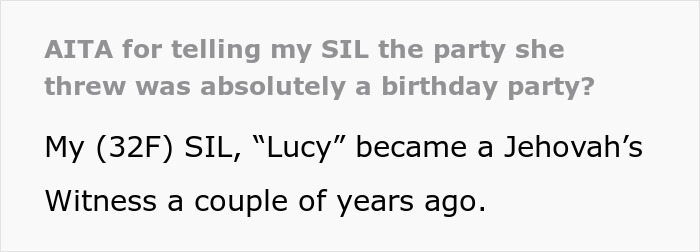
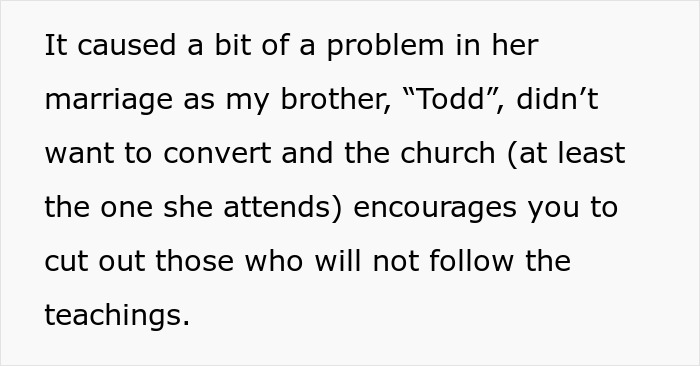

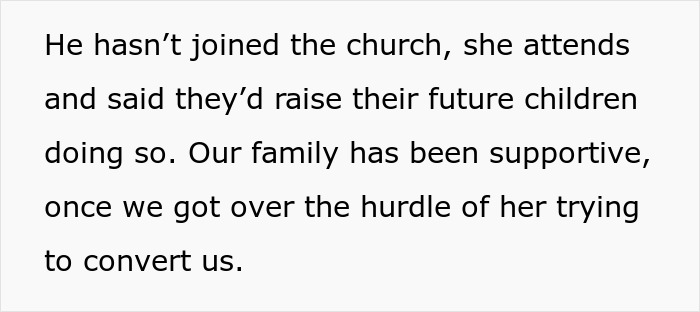
Image credits: Lanky_Lingonberry_31

Image credits: prostock-studio / Freepik (not the actual photo)
The family tried to respect her beliefs, including not giving her gifts and allowing her to skip celebrations, while still maintaining their own traditions




Image credits: Lanky_Lingonberry_31

Image credits: freepik / Freepik (not the actual photo)
Their son turned one, and they held an “I love you” party on his birthday, explicitly banning gifts due to the religious rules
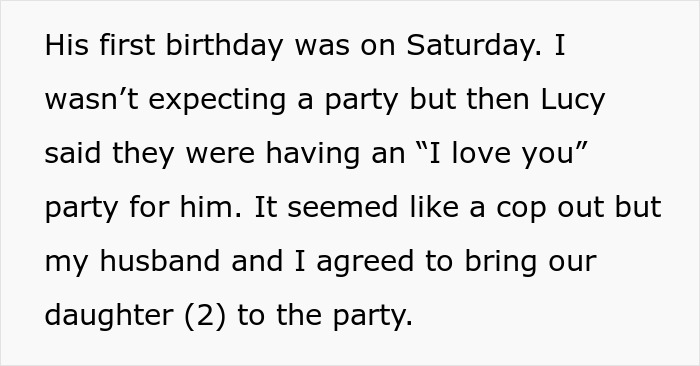
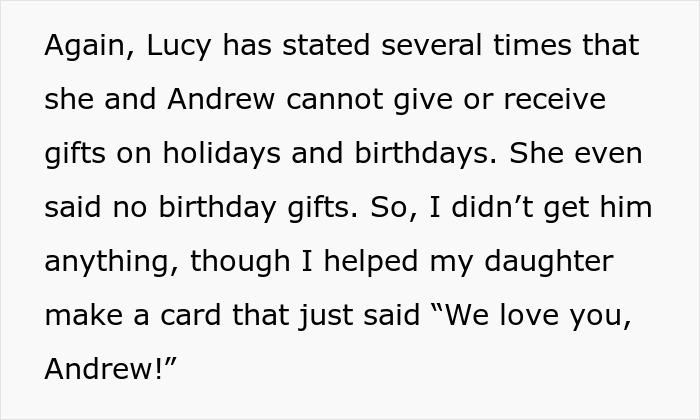
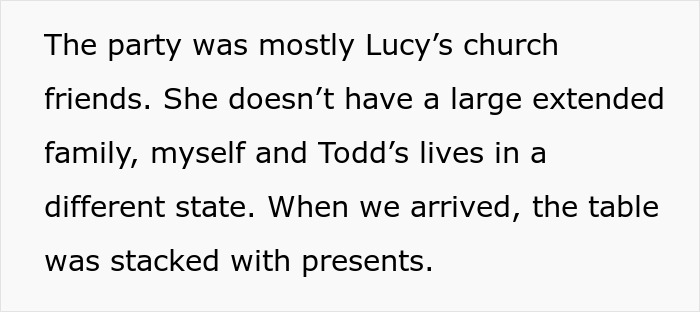
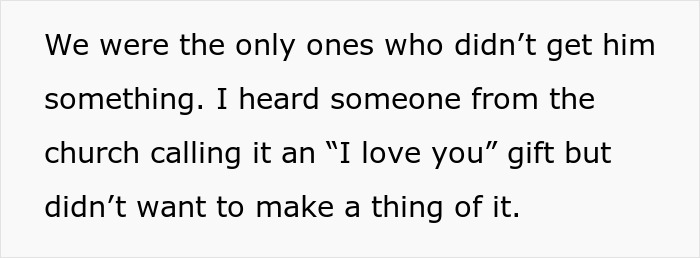
Image credits: Lanky_Lingonberry_31

Image credits: freepik / Freepik (not the actual photo)
Most attendees, mainly church friends, brought presents anyway, leaving the author and her family as the only ones without gifts
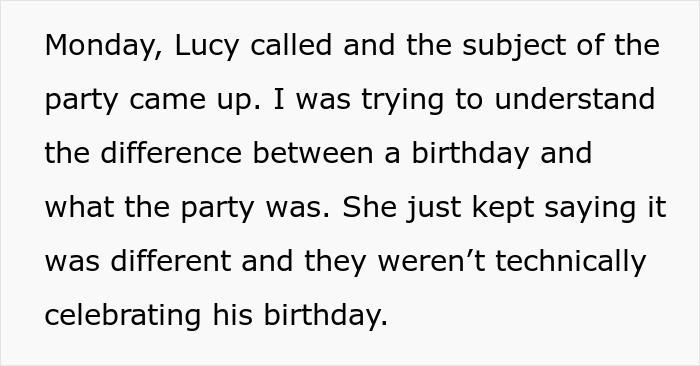
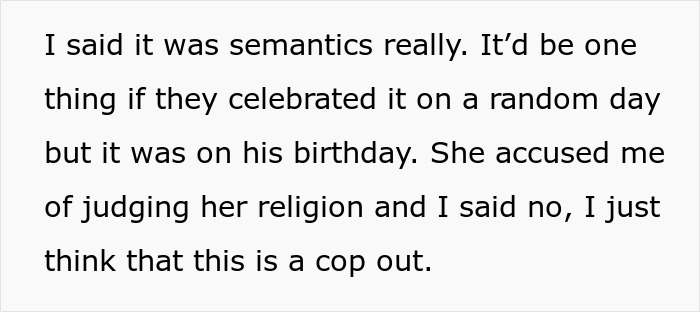
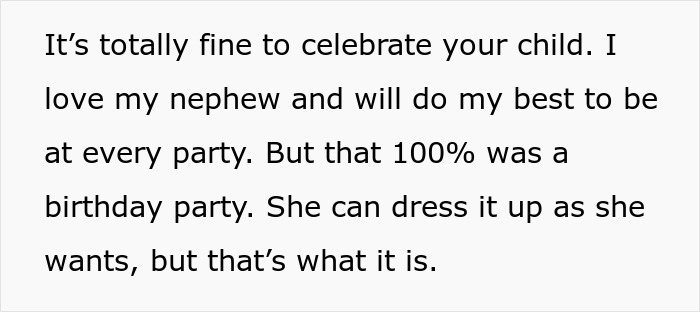

Image credits: Lanky_Lingonberry_31
When she questioned the semantics of calling it an “I love you” party instead of a birthday, the sister-in-law accused her of being judgmental
When the OP’s sister-in-law joined the Jehovah’s Witnesses a few years back, it reshaped every gathering, holiday, and tradition her in-laws were used to. Her husband didn’t convert, which already put some strain on things, yet the family tried genuinely to adapt. No holiday invitations were pushed on her, and when she declined attending celebrations, they accepted it.
However, it became clear that expectations weren’t always consistent. The sister-in-law didn’t want to be invited to holiday gatherings yet felt upset when her husband went without her. The sister-in-law’s first birthday rolled around, and although the OP’s family wasn’t expecting any celebration, she proudly announced an “I Love You” party.
The OP and her husband showed up with their toddler, bringing only a handmade card because the sister-in-law had reminded them that they didn’t give or receive birthday gifts. However, on the day of the party, the OP noted that there were gift bags everywhere and soon realized she was the only adult who didn’t being gifts.
Days later, the OP casually asked her sister-in-law what exactly made the event not a birthday party if it was held on the birthday, had guests, had presents, and had a theme centered entirely around the child. The sister-in-law insisted it was “different”, while the OP noted that it felt more like semantics. The sister-in-law then accused her of judging her religion and even hung up on her after cussing her out.

Image credits: Liza Summer / Pexels (not the actual photo)
In the story, the sister-in-law’s decision to follow Jehovah’s Witness beliefs directly impacted family traditions, such as birthdays and gift-giving. Home explains that Jehovah’s Witnesses generally avoid celebrating birthdays or traditional holidays, viewing them as having pagan origins or lacking biblical support.
Such changes, however, can place a strain on family relationships. Malak Psychology highlights that adopting a new religion often shifts shared beliefs, values, and daily routines, which can lead to tension, misunderstandings, and emotional distance.
Experts suggest that navigating these challenges requires deliberate communication and empathy. LMFT Emily Schupmann notes that families experiencing conflicts over differing beliefs can benefit from understanding one another’s perspectives and setting clear, respectful boundaries.
This might include agreeing on off-limits topics during gatherings or holding regular family meetings to establish discussion ground rules. Such strategies allow family members to maintain their integrity while promoting harmony, preventing small disagreements from escalating into major conflicts.
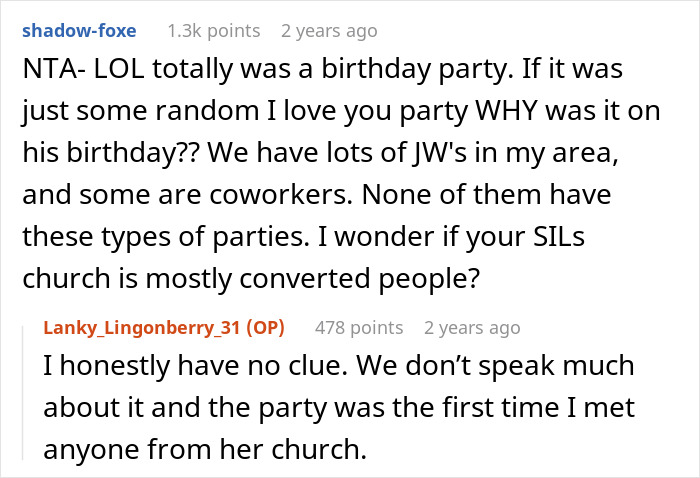
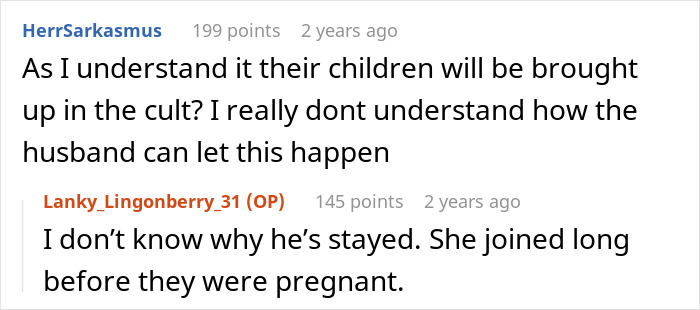
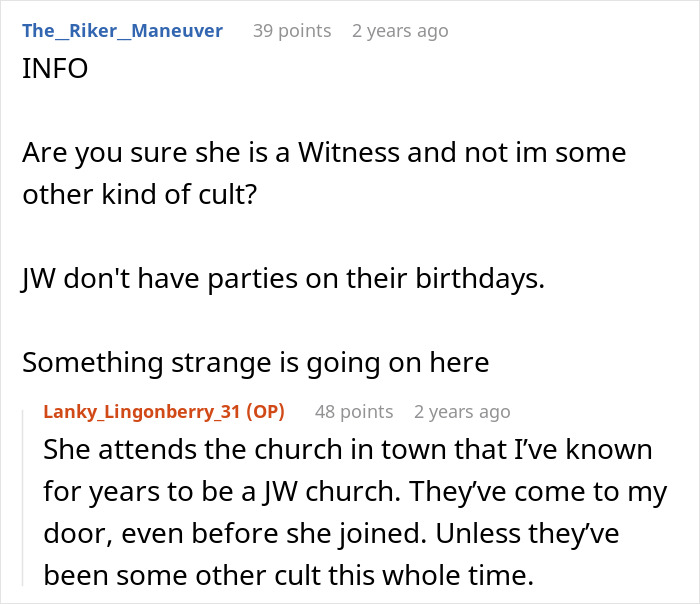
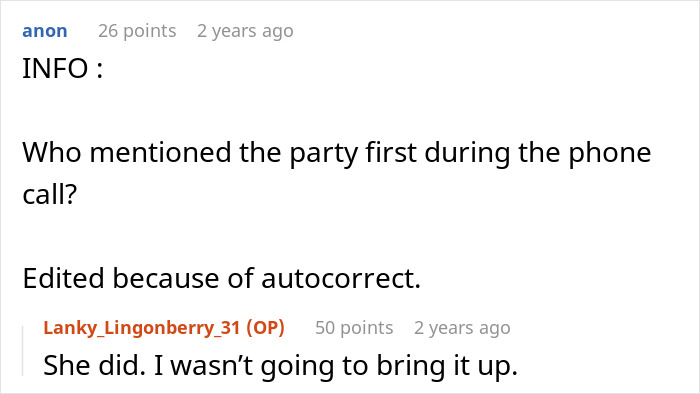
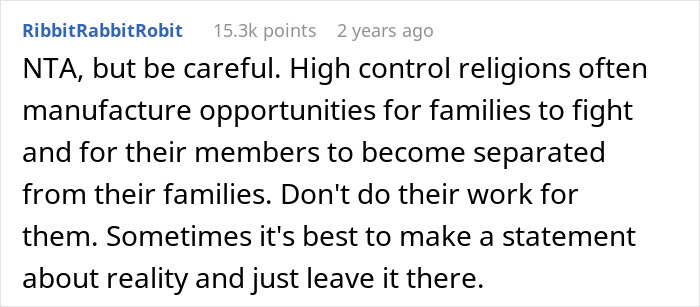
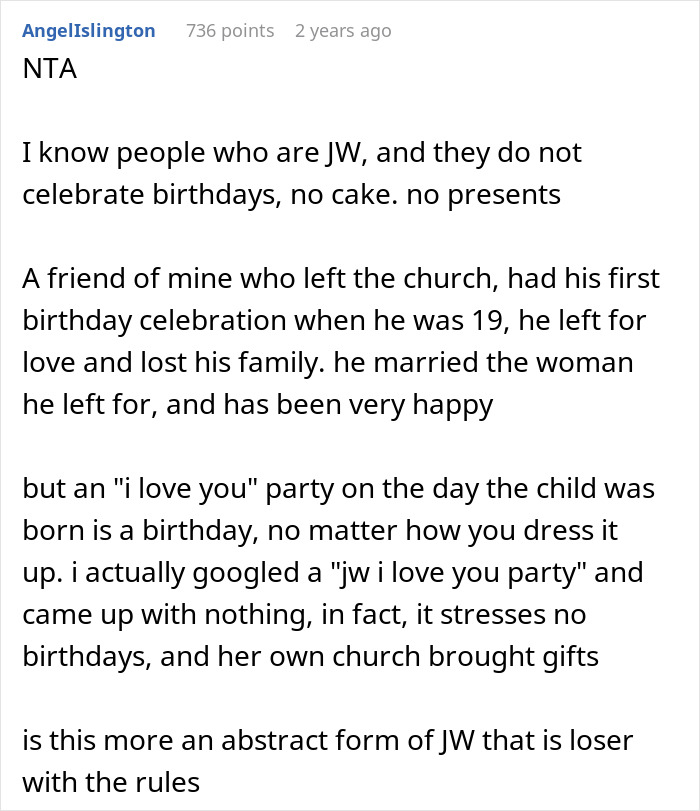
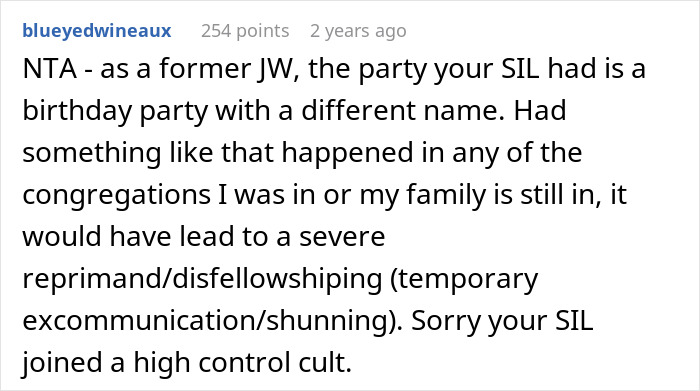
Netizens agreed that the party was undeniably a birthday celebration, no matter what label the sister-in-law tried to use. They pointed out the contradiction, and also noted that traditional Jehovah’s Witness doctrine does not allow loopholes like “I love you” parties, making her behavior seem inconsistent even within her own religion.
If you were in the OP’s shoes, would you have spoken up or stayed quiet? We would love to know your thoughts!
Netizens agreed that the author was not in the wrong and that the party was undeniably a birthday celebration, no matter what label the sister-in-law tried to use


 Follow Us