Lending a personal item, especially something valuable like a car, can feel straightforward in theory, but the truth is that it often tests trust, boundaries, and responsibility. When clear rules are set, people typically expect borrowers to respect them, yet even small lapses can cause conflict.
Take today’s Original Poster’s (OP) story as a case in point. After lending her car to a friend under a few conditions, the friend managed to break one rule. The situation quickly became a question of accountability, boundaries, and the limits of friendship.
More info: Reddit
Lending someone something you care about is honestly half of you being kind, and the other half expecting that it comes back undamaged and treated with the same care you would give it

Image credits: defstock / Freepik (not the actual photo)
The author lent her car to her friend, with rules involving no drive-thrus, no sketchy lots, and absolutely no letting anyone else drive
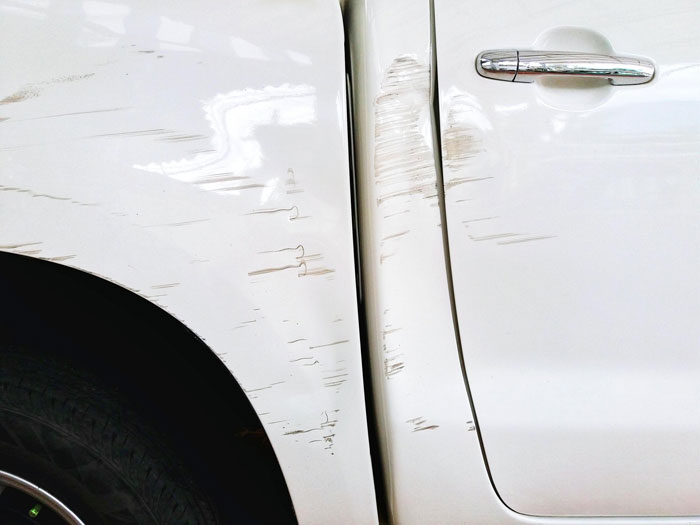
Image credits: nattasak2004 / Freepik (not the actual photo)
However, the friend returned the car with a scrape on the passenger side and a scuffed mirror, giving inconsistent excuses about how it happened

Image credits: EyeEm / Freepik (not the actual photo)
She eventually admitted that her boyfriend briefly drove the car, breaking the one rule, and offered to fix it herself, but the owner insisted on a professional repair and payment
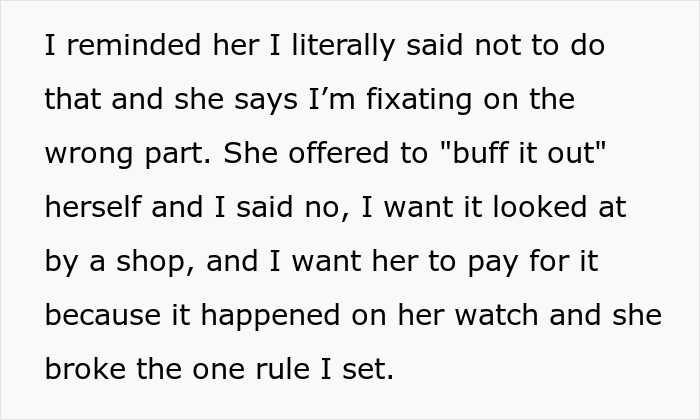
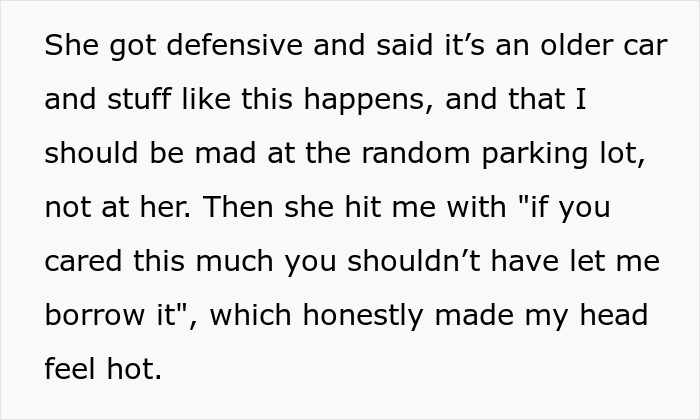
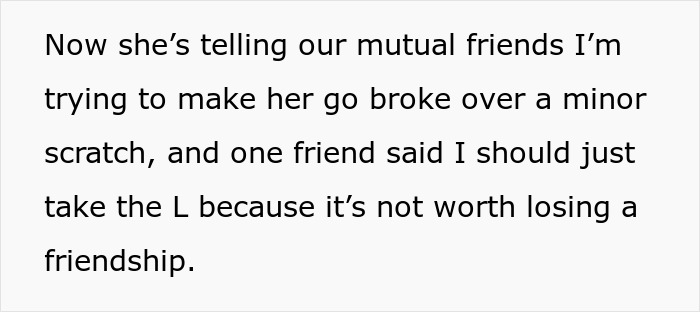
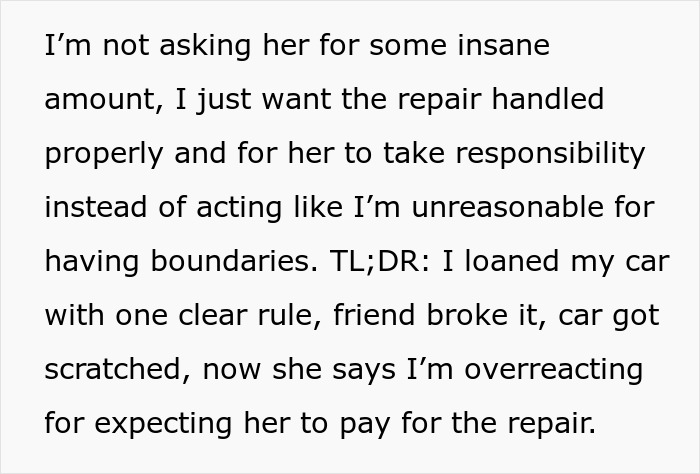
Image credits: DaxonPierce
The disagreement escalated, with the friend claiming the author was overreacting, while mutual friends debated whether insisting on accountability was worth risking the friendship
The OP started by sharing that she owned a paid-off car she takes good care of. However, when her friend asked to borrow it for a day, she agreed, but set a few rules including the fact that no one else was allowed to drive it. The friend, fun but often chaotic, playfully rolled her eyes but agreed anyway.
When the friend returned the car, the OP noticed a fresh scrape and scuffed mirror. At first, her friend offered a vague explanation saying that it happened due to tight parking and careless drivers, but the details keep changing. She claimed it happened a grocery store, then a restaurant, and that maybe someone else.
The OP then directly asked her if she let someone drive the car, the friend admitted she let her boyfriend move the car “just for a second”. The OP reminded her that was a rule she had lay down, but instead of apologizing, the friend accused her of focusing on the wrong issue. She suggested buffing the scratch herself and downplayed the damage because “the car wasn’t new”.
On top of that, the friend insisted that the OP shouldn’t have lent the car at all if she cared this much, which infuriated her. The OP asked her to pay for the damage, and that was when the friend went around telling their friends that the OP was trying to make her “go broke” over a small scratch. One friend suggested that the OP let it go to preserve the friendship, however, she just wanted her friend to take responsibility.

Image credits: senivpetro / Freepik (not the actual photo)
Borrowing valuable items like a car in this case, comes with an unspoken set of expectations. Do Say Give notes that borrowers are generally trusted to treat these items with extra care and take full responsibility. This trust is a cornerstone of relationships as lenders assume their belongings will be handled as if they were the borrower’s own.
Groundbreaker Therapy explains why the situation escalates further when accountability is unclear. When the friend couldn’t remember where the damage occurred, responsibility seemed to shift from one potential cause to another. Psychologists call this “diffusion of responsibility”, where multiple possible explanations allow people to unconsciously downplay their own role.
This is compounded by a common social dynamic which is the fact that being held accountable is often perceived as a personal attack, which makes conflict resolution more difficult. However, Psychology Today highlights the role of boundaries in relationships, stating that clear boundaries act as signals of mutual respect, and when ignored, it communicates that one person’s needs or limits don’t matter.
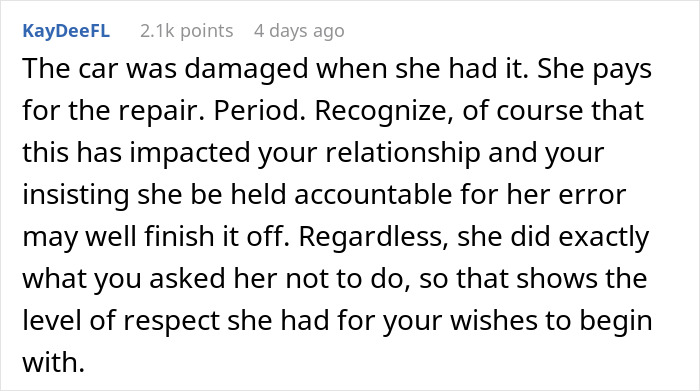
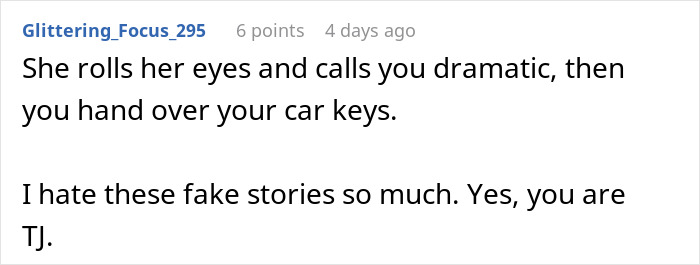
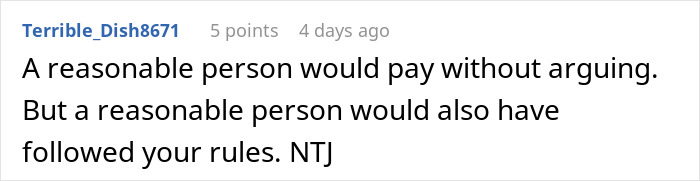
Netizens agreed that responsibility was clear-cut and since the car was damaged while it was in the friend’s possession, the cost of repairs should fall on her. What would you do if you were in the OP’s shoes? Would you insist on payment for a repair, or just let it go to save the friendship? We would love to know your thoughts!
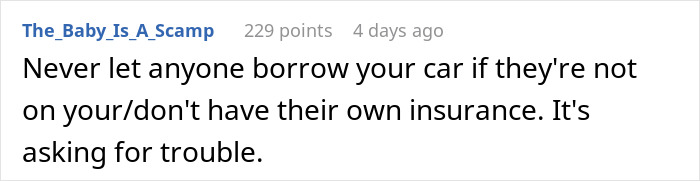
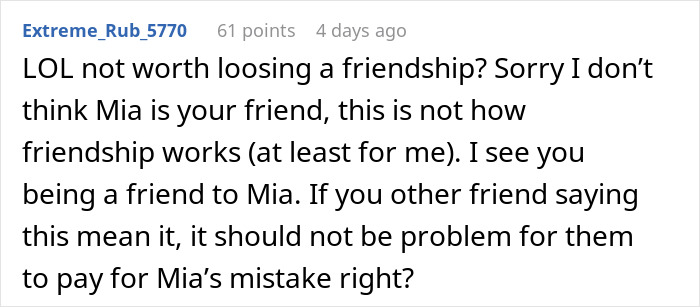
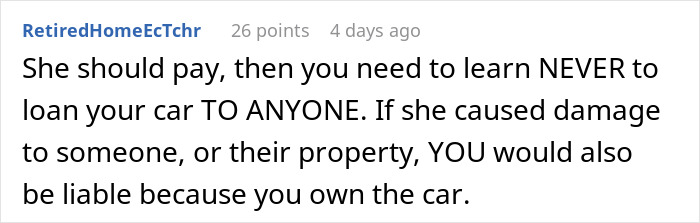
Netizens argued that the author knowing the friend’s history made the situation predictable and avoidable, urging stricter boundaries going forward




 Follow Us