It’s no longer that much of a shocker to see fans cancelling new/upcoming movies on X for one perceived transgression or another. Most times, these fans proceed with the rather extreme step of boycotting the movie entirely when it shows up in theaters. When that happens, people tend to assume the movie is doomed.
Recently, Christopher Nolan’s The Odyssey absolutely ignored that drama, opening to $264 million worldwide, as if people hadn’t spent weeks and months trying to tell their friends how bad they thought the movie was. But here’s the thing: this whole “boycott” thing is not new. Movies are often slammed for various reasons, including religious and geopolitical issues, as well as fan drama. But on more than one occasion, some films have thrived, financially or otherwise, in spite of the boycotts, and here are five films that did just that.
5. The Interview (2014)
In 2014, Seth Rogen and James Franco made a comedy about a bizarre mission to kill North Korean President Kim Jong Un (played by Randall Park), and it almost started an international incident. Just to show that they were not laughing about it like the rest of the world, hackers allegedly linked to the regime broke into Sony’s servers, leaked executive emails and dumped unreleased movies on the internet. Then they went one step further and threatened violence against theaters that dared to show the movie. Not surprisingly, those threats scared the big chains, and they pulled back, forcing Sony to kill their theatrical release plan.
However, Sony didn’t just slink away. They took the unprecedented step of releasing The Interview online: YouTube, Google Play, and a dedicated website. The movie exploded. People bought it out of pure nosiness and American pride. Within four days, it made $15 million. By the end of the month, that number was over $40 million, making it Sony’s most successful online release ever. Not bad for a movie that almost started World War III.

4. The Last Temptation of Christ (1988)
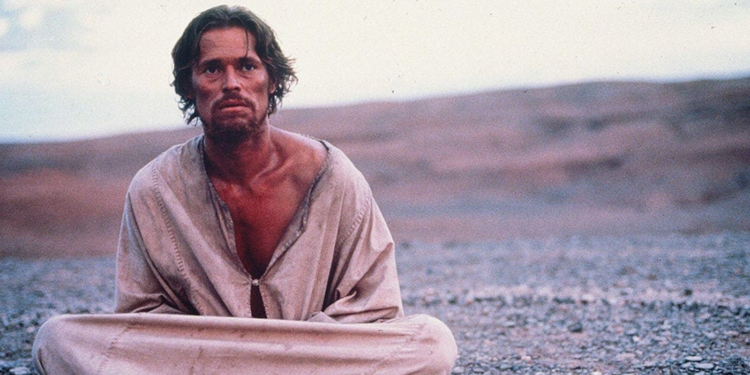
Martin Scorsese probably never thought he’d start a holy war when he was making this movie, but he definitely kicked up an intense fuss. The main problem was the movie’s dream sequence where Jesus imagines what his life would be like if he got married and had kids. Christian fundamentalists didn’t hold back on how disgusted they were with that depiction of their Lord and Savior. The studio was inundated with protest letters, and many theaters refused to show it.
The reaction in Paris was worse, as a right-wing Catholic extremist group actually firebombed the Saint Michel cinema during screening. Somehow, though, top critics like Roger Ebert enjoyed the movie, saying “…this film is likely to inspire more serious thought on the nature of Jesus than any other ever made.” Scorsese bagged himself an Oscar nomination for Best Director, which is proof that even a movie as controversial as this one can find its audience. These days, it’s considered one of the most thoughtful religious dramas ever made, the kind students study rather than protest.
3. Monty Python’s Life of Brian (1979)
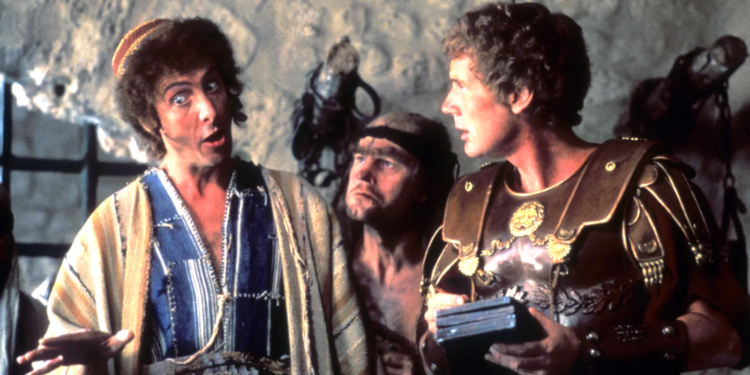
This movie was so controversial that eleven British councils banned it outright. Another 28 gave it a rating so harsh it couldn’t show anywhere in their towns. Catholic groups, Protestant groups, and Jewish groups all cried blasphemy, and Ireland and Norway wouldn’t touch it with a ten-foot pole. But Monty Python, being who they were, turned the whole thing into one big joke.
Their Swedish posters featured a tag line that read: “The film so funny it was banned in Norway!”. It was a marketing strategy that basically dared people to see what the fuss was about. And they did. The movie pulled in $20 million at the box office back in 1979, which would be around $90-$100 million today. It also sits comfortably near the top of pretty much every funniest-movie-ever list out there, with the old bans reduced to a fun bit of trivia.
2. Star Wars: Episode VIII – The Last Jedi (2017)
Much like the powerful early reaction to The Odyssey, the backlash surrounding this film mostly stemmed from diehard fans who demand meticulous perfection. Back in 2017, thousands upon thousands of these fans decided that Rian Johnson’s The Last Jedi committed “sacrilege” by turning Luke Skywalker into a cynical, defeated shell of the heroic Jedi they waited decades to see again. To show their displeasure at that “sacrilegious” act, they launched a review-bombing campaign across various social media platforms, X (Twitter at the time) included, hoping to thrash the movie’s reputation. They needn’t have bothered because the film still pulled in $1.33 billion worldwide and closed out 2017 as the year’s highest-grossing movie, hashtags and all. Turns out the people rage-baiting on social media aren’t exactly the ones filling theaters on a Friday night.
1. The Passion of the Christ (2004)
Mel Gibson couldn’t get a single major studio to back him to produce this movie. His critics were largely worried that the brutal violence and Gibson’s take on the crucifixion story would stir up antisemitic sentiments, and nobody really wanted the headache that came with that. So Gibson ended up putting up more than $30 million of his own money to fund and distribute the movie.
But unlike the early sentiment that followed the release of Scorsese’s The Last Temptation of Christ in 1988, churches and faith communities actually got behind the movie. They organized group outings that ensured that theaters were packed from day one. All that pre-release panic didn’t mean a thing once the money from the ticket sales started rolling in. And by the time the dust settled, the film made $612 million worldwide and became the highest-grossing R-rated movie at the time. This movie is just more proof that an ardent audience can drive a movie further than any marketing budget.
Read Next: 5 Iconic TV Characters Who Couldn’t Be Written in Today’s Cancel Culture
 Follow Us