Mike Flanagan has become one of television horror’s most dependable storytellers by treating ghosts as only part of the problem. His series are filled with haunted houses, vampires, cursed families, terminal illness, addiction, grief, religion, and death, yet the scares usually work because the characters already have something painful to lose. Familiar performers keep returning, but each project finds a different emotional engine beneath the supernatural material.
Five Flanagan television projects have premiered so far, with the two installments of The Haunting treated separately because they tell completely different stories with different characters. His upcoming Carrie series is scheduled to arrive on Prime Video on October 7, 2026, so it does not qualify yet. Ranked by character writing, horror, emotional impact, consistency, performances, and how effectively each story reaches its ending, here is every Mike Flanagan TV show from weakest to strongest.
5. ‘The Midnight Club’ (2022)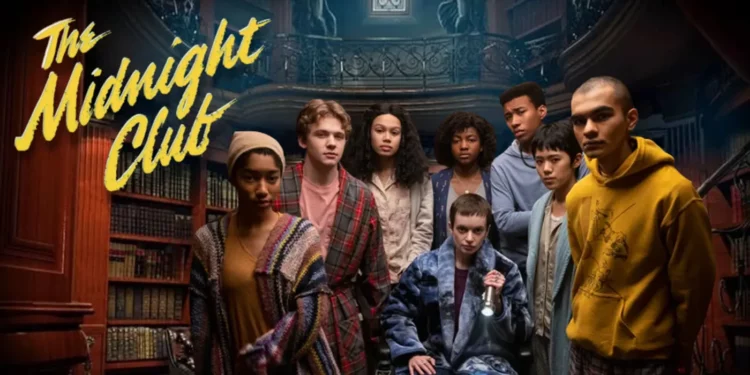
Iman Benson plays Ilonka in The Midnight Club, a teenager diagnosed with terminal thyroid cancer who enters Brightcliffe Hospice and discovers that several residents gather every night to tell frightening stories. The group has also made a pact: whoever dies first will try to send proof from the other side. Flanagan co-created the series with Leah Fong, adapting Christopher Pike‘s novel while folding several of the author’s other stories into the club’s nightly sessions.
The anthology-within-a-series format gives the cast room to reinvent themselves constantly, and episodes such as Anya’s story reveal how effectively fantasy can expose fears the characters struggle to discuss directly. The larger Brightcliffe mystery is less satisfying. Netflix cancelled the series after one season, leaving several planned answers and character arcs unresolved despite Flanagan later explaining where the story would have gone. The young ensemble gives the show plenty of heart, but incompletion hurts more here than anywhere else in his television work.

4. ‘The Haunting of Bly Manor’ (2020)
Victoria Pedretti stars as Dani Clayton in The Haunting of Bly Manor, an American au pair hired to care for two orphaned children at a remote English estate during the 1980s. She soon realizes that Miles and Flora are behaving strangely and that Bly contains people, memories, and apparitions that refuse to remain in the past. Flanagan uses Henry James‘ The Turn of the Screw as the foundation while incorporating material from several of the author’s other ghost stories.
Bly is less interested in frightening viewers than in asking what happens when love survives longer than memory. That shift makes it considerably more romantic than Hill House, particularly through Dani’s relationship with Jamie, played by Amelia Eve. The standout “The Altar of the Dead” reframes Hannah Grose, played by T’Nia Miller, through fractured memory and devastating realization. The season occasionally explains its mythology too heavily, especially near the end, but its final emotional turn proves that Flanagan can make a ghost story hurt without relying on terror.
3. ‘The Fall of the House of Usher’ (2023)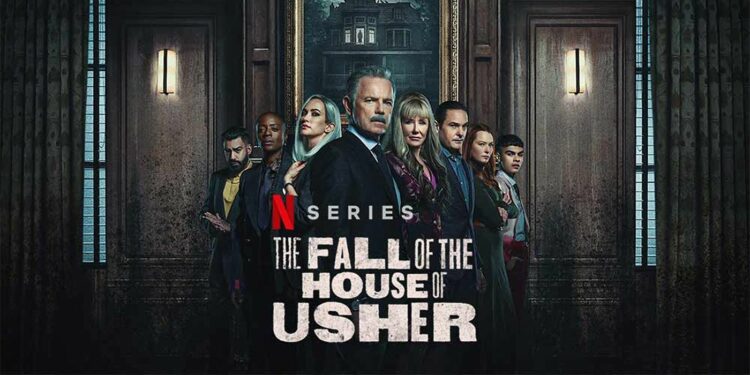
Bruce Greenwood plays pharmaceutical billionaire Roderick Usher in The Fall of the House of Usher, whose six adult children begin dying in increasingly elaborate ways as his family empire collapses around him. Mary McDonnell plays his formidable twin sister Madeline, while Carla Gugino appears as the mysterious Verna, whose connection to the Ushers stretches back decades. Flanagan uses Edgar Allan Poe‘s work as a toolbox rather than adapting one story literally.
That freedom makes this his nastiest and most playful television series. Acid rain, collapsing rooms, animal attacks, and other grotesque deaths turn Poe references into modern set pieces, but the spectacle always circles back to the family’s refusal to accept responsibility. Greenwood is excellent during Roderick’s long confession, while Gugino gets to reinvent Verna repeatedly as judge, witness, temptation, and executioner. The Usher children have less time for emotional depth than Flanagan’s strongest ensembles, yet the eight-episode structure moves with ruthless efficiency and ends exactly where its opening funeral promises it will.
2. ‘Midnight Mass’ (2021)
Zach Gilford plays Riley Flynn in Midnight Mass, a man returning to the isolated Crockett Island community after serving prison time for a fatal drunk-driving accident. His arrival coincides with that of Father Paul, played by Hamish Linklater, an intense young priest whose presence seems to produce impossible miracles. As church attendance rises, the island’s residents begin interpreting increasingly disturbing events through faith, guilt, grief, and their desperate need for something larger than themselves.
This is Flanagan at his most patient and personal. Conversations about death can stretch for minutes without interruption, and the series trusts Linklater, Gilford, Kate Siegel, and Samantha Sloyan to make theological arguments feel like character conflict rather than exposition. The church sequence in “Book VI: Acts of the Apostles” turns years of resentment, belief, and manipulation into horrifying communal action, while the final episode refuses an easy distinction between believers and skeptics. Its deliberate pace will divide viewers, but few horror series have examined faith and fanaticism with this much conviction.
1. ‘The Haunting of Hill House’ (2018)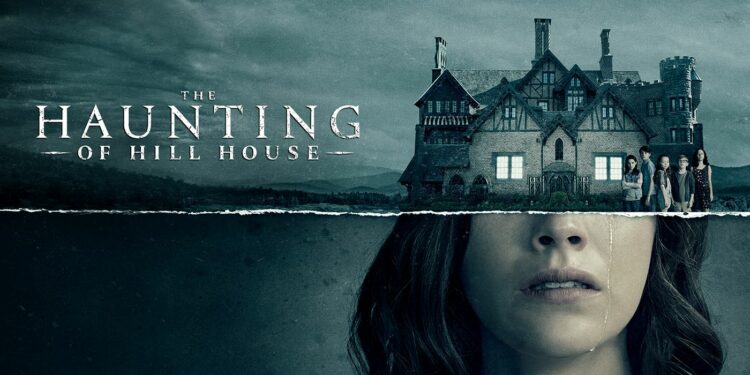
The Haunting of Hill House follows the Crain family across two timelines, showing their childhood inside Hill House and the damaged adults they become after escaping it. Michiel Huisman plays adult Steven, while Elizabeth Reaser, Oliver Jackson-Cohen, Kate Siegel, and Victoria Pedretti play siblings Shirley, Luke, Theo, and Nell. Henry Thomas and Carla Gugino portray their parents in the past as Flanagan radically reimagines Shirley Jackson‘s novel around family trauma.
The series reaches another level in “The Bent-Neck Lady,” when Nell’s lifelong haunting is revealed through one of Flanagan’s cruelest pieces of storytelling. “Two Storms” then turns a family argument at a funeral home into an extended technical showcase without letting the camera work overwhelm the grief underneath it. Hidden ghosts reward repeat viewing, but the real horror is the way every Crain remembers the same childhood differently. Later Flanagan shows became bloodier, stranger, and sometimes more philosophically ambitious. None has combined fear, structure, performance, and emotional devastation as completely as The Haunting of Hill House.
 Follow Us