I’ve spent the better part of my life photographing the small parts of nature, from flowers to bugs. Over the years, I’ve become obsessed with photographing insects and spiders. But each year, cold Ohio weather forces me indoors to wallow in sadness until warmer weather lures bugs out of hiding.
People have been telling me for years I should try to photograph snowflakes. Despite hating cold weather, I journeyed outdoors in single digit temps this winter to try photographing snowflakes with a makeshift snowflake “studio” that consisted of a glass plate (from a 4×6″ frame) taped to a plastic food storage container. Here are the results!
More info: Facebook
Firstly I created my Snowflake “Studio”
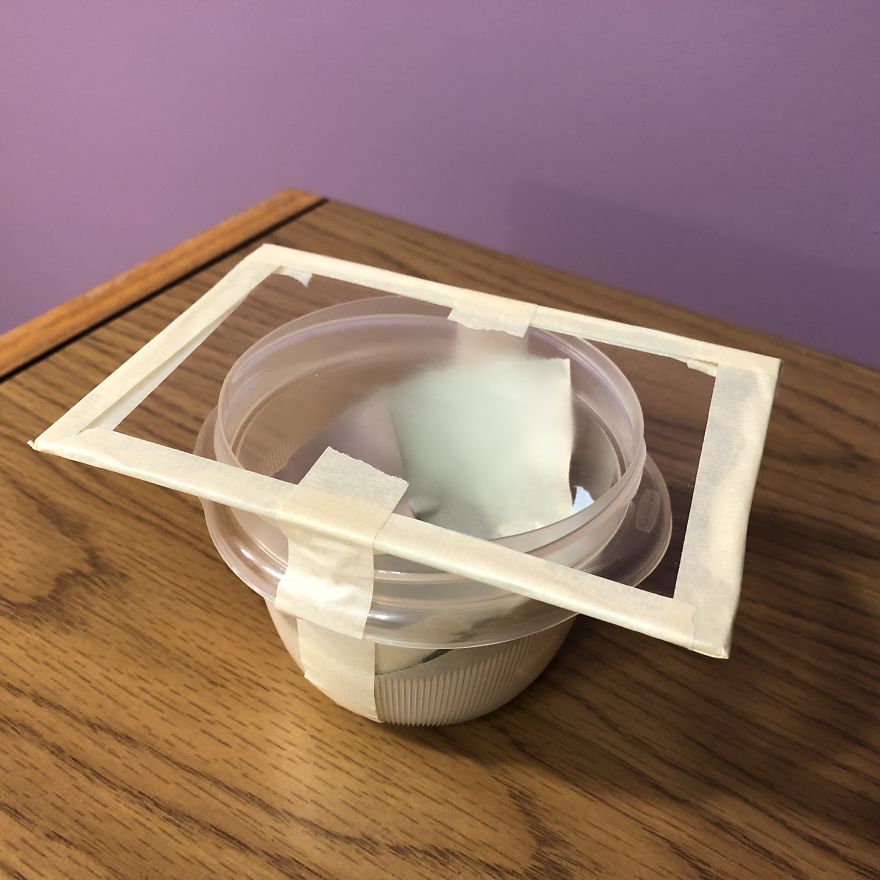
I taped a glass plate (from a 4×6″ frame) to a small plastic food storage container for my snowflake studio. I placed some different colored construction paper in the plastic container under the glass plate for a colorful background effect.
Then – lens setup
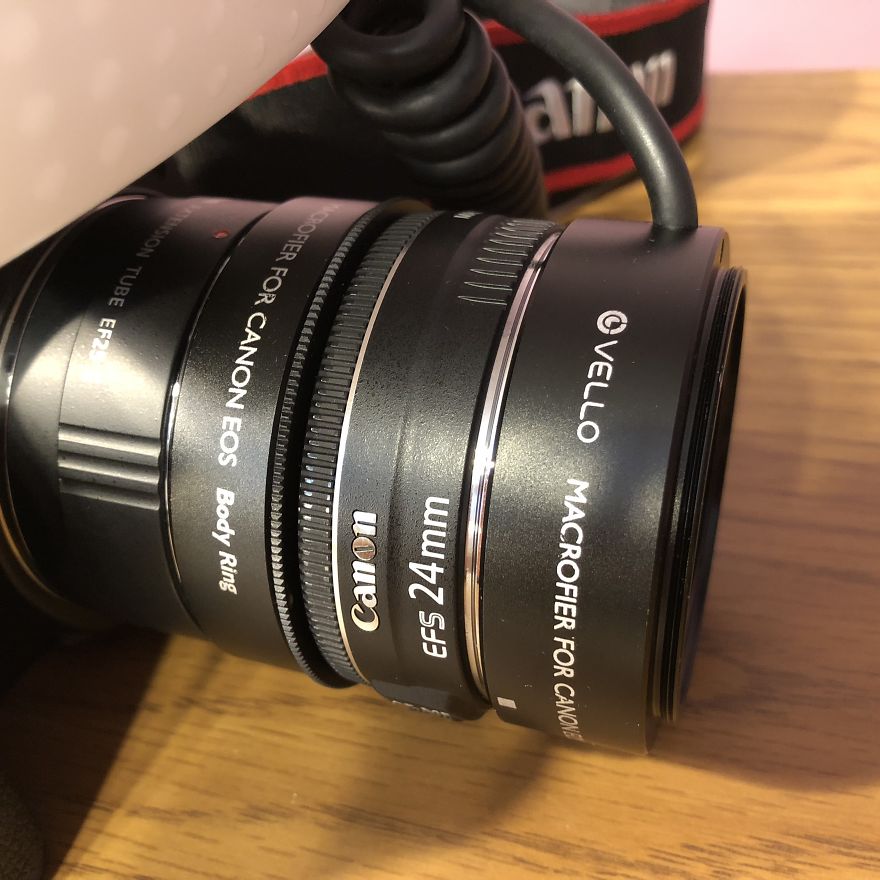
I use a Vello Macrofier reverse lens adapter paired with a 24mm or 40mm pancake lens for my macro insect and spider photography work. I found that the Vello Macrofier and 24mm pancake lens worked exceptionally well for shooting snowflakes. The reversed 24mm pancake lens (with the Vello adapter) achieves a 2.6:1 magnification ratio.
Camera Setup
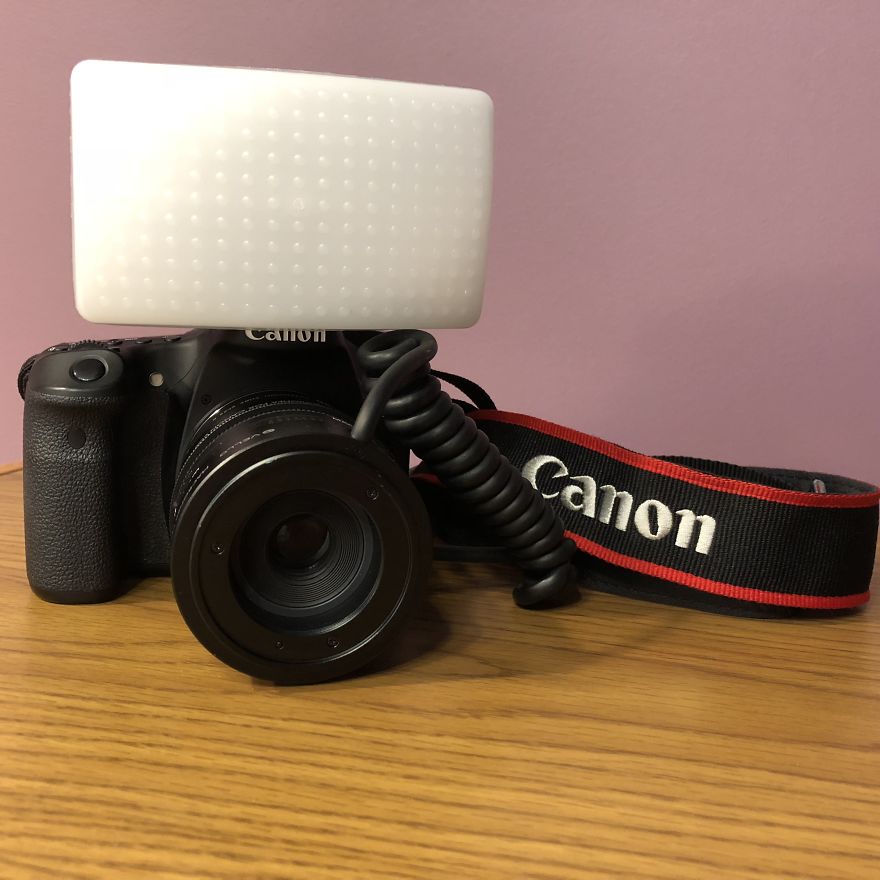
I shoot with a Canon 70D, Graslon Spark flash diffuser (which diffuses my camera’s built-in flash) along with a Vello Macrofier reverse lens adapter and a reversed Canon EF-S 24mm f/2.8 STM Lens.
The results – A Perfect Snowflake
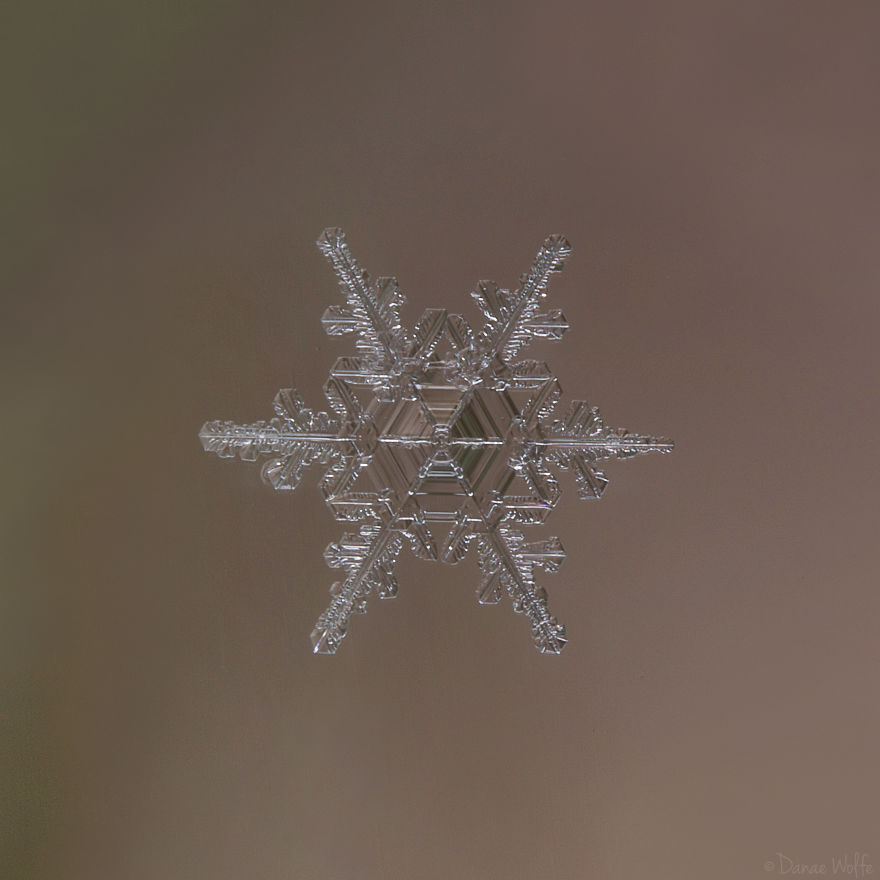
The results of my (relatively) inexpensive macro snowflake setup were impressive!
Each photo required some cropping and Photoshop work to remove dust spots and snowflake debris around the primary subject

The blue, green, and pink construction paper offered a colorful and clean background to each snowflake shot
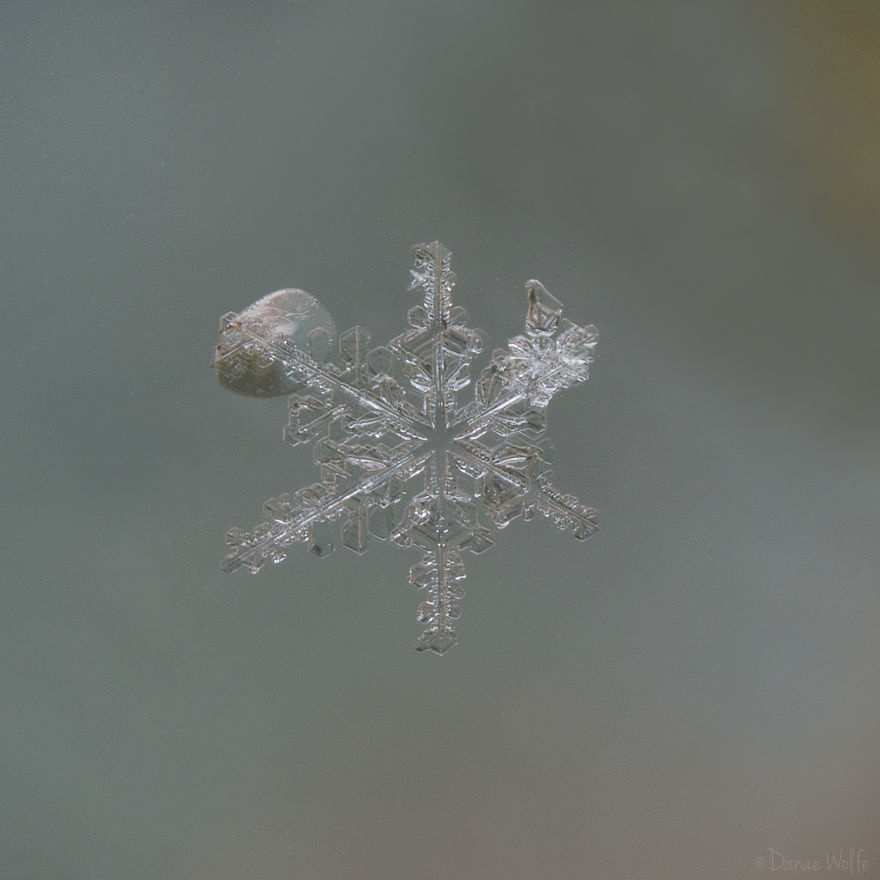
Every Snowflake is Unique
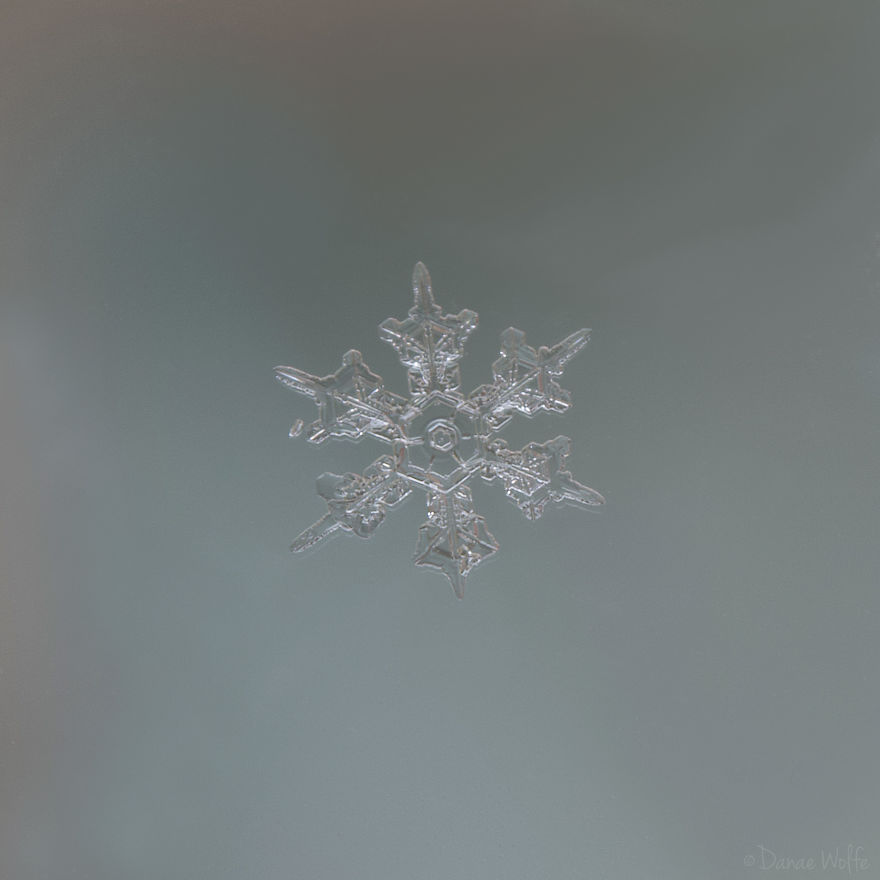
Like human fingerprints or zebra stripes, each snowflake is unique.
Tiny Crystals
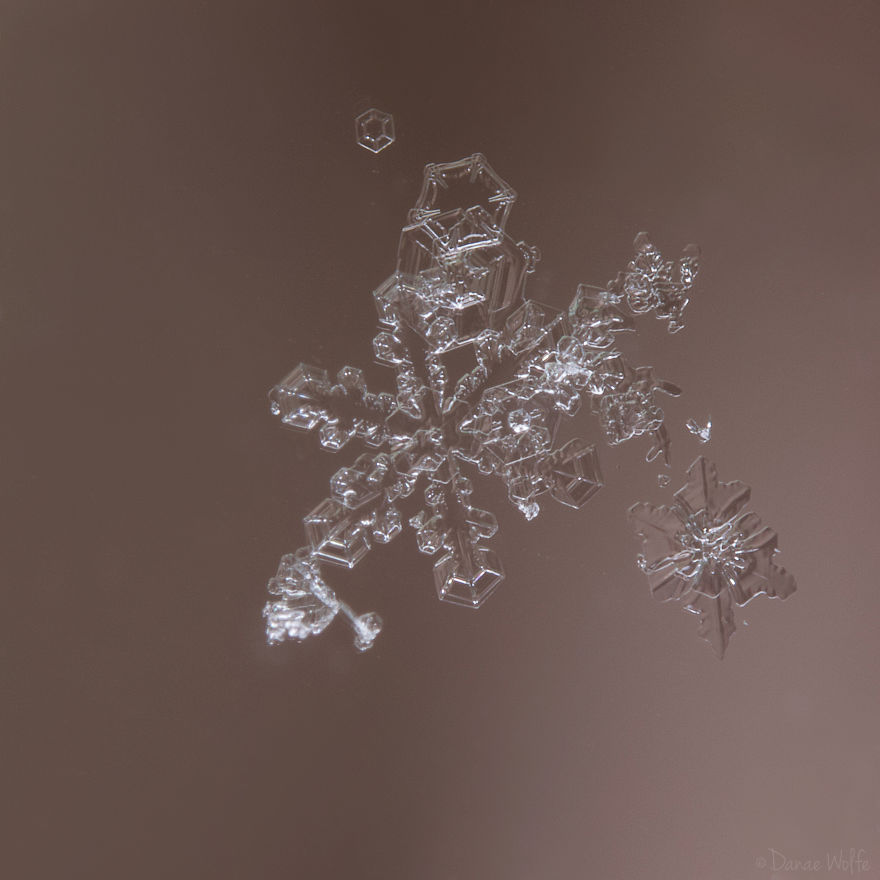
Each snowflake looks like a tiny crystal. You can see how even the smallest snowflake has a unique (and geometrically perfect) pattern.
I found that shooting on a glass plate (as opposed to fabric as some recommend) offered a cleaner look
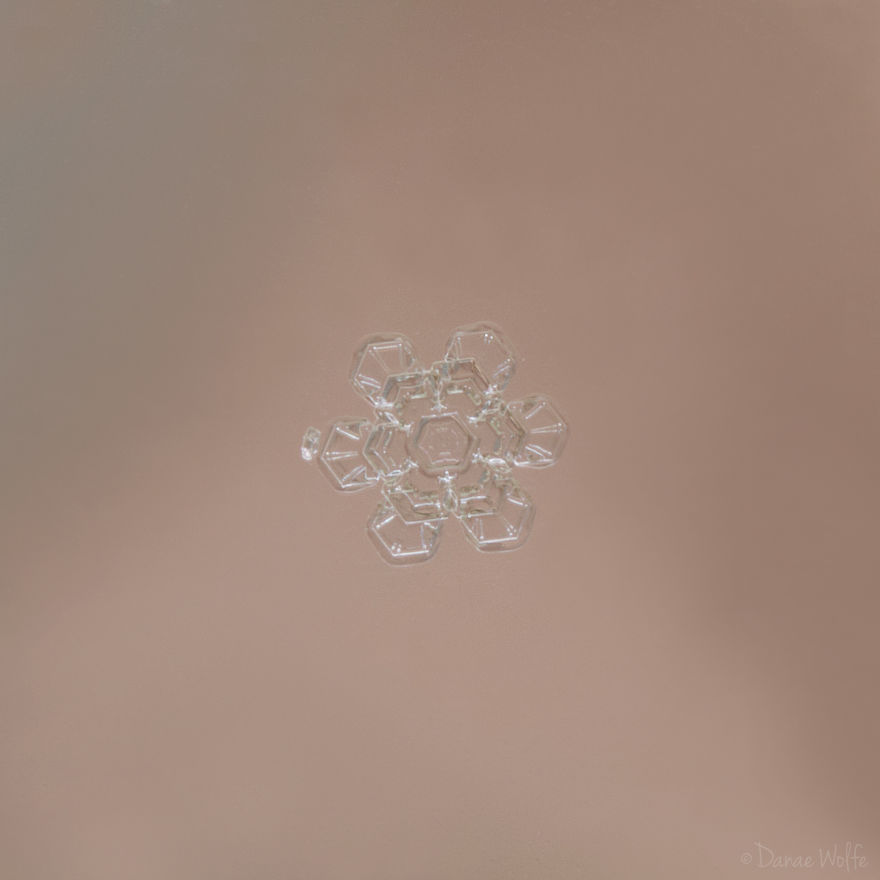
Below Freezing Temps
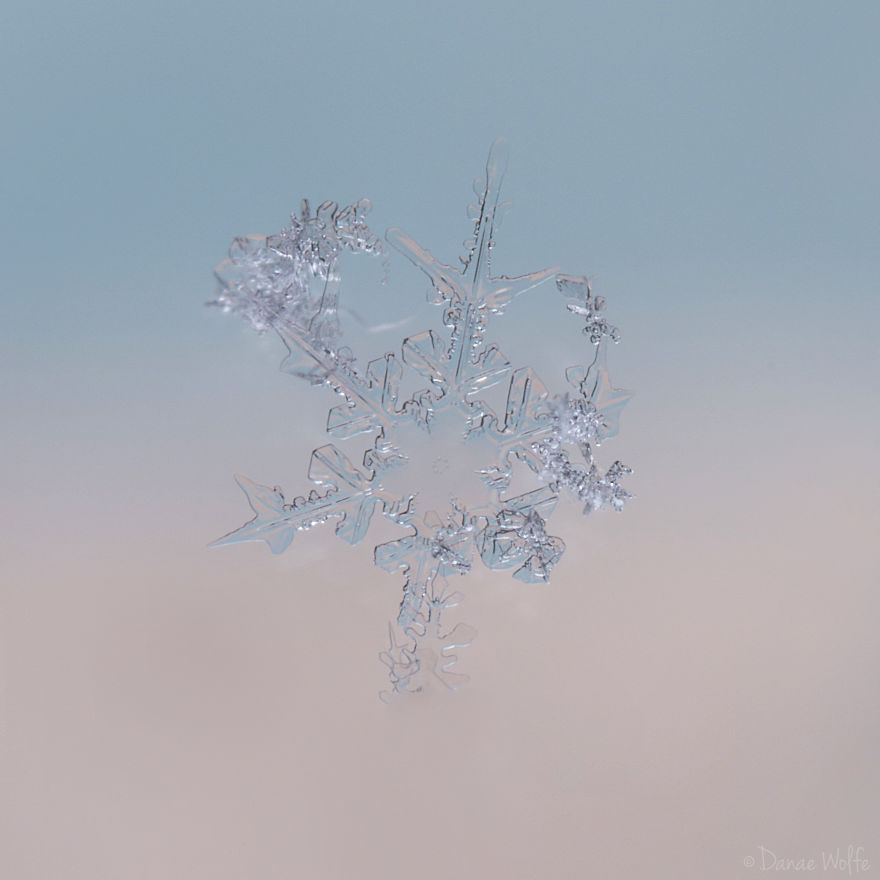
I shot these snowflake photos in single-digit temperatures, which allowed each snowflake to remain frozen after landing on the glass plate. I tried shooting in warmer temperatures (~30 degrees F) and found that the snowflakes melted too quickly to photograph. If attempting snowflake photography at home, you’ll want to place your “snowflake studio” outdoors about 10-15 minutes before you plan to shoot. This will allow your glass plate to cool down so snowflakes don’t melt too quickly.
 Follow Us