Being a stepchild can be difficult. More often than not, the stepparent sees you as an outsider, not one of their kids. Almost one in ten children in the U.S. live with at least one stepparent. And sometimes, the relationship with your own parent can sour because of that.
This teen got in hot water with both her dad and her stepmom after she spent her $1,000 lottery prize on the things she wanted, just like her mother told her. Furious that she didn’t help them as they had three more small kids and one on the way, the dad started guilt-tripping her and calling her selfish.
A teen won $1,000 in a raffle and spent it on the things she wanted: clothes, makeup, perfume, and other things

Image credits: Brooke Cagle / Unsplash (not the actual photo)
When her struggling dad and stepmom found out, they called her selfish for not giving the money to them
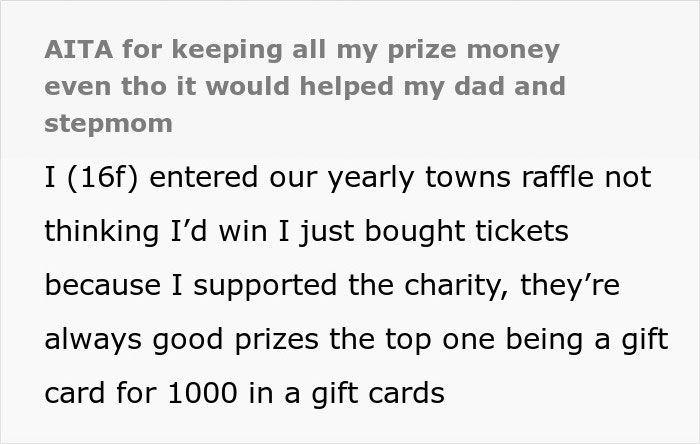

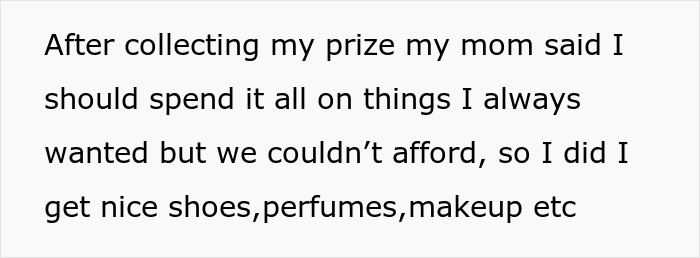

Image credits: Andrea Piacquadio / Pexels (not the actual photo)
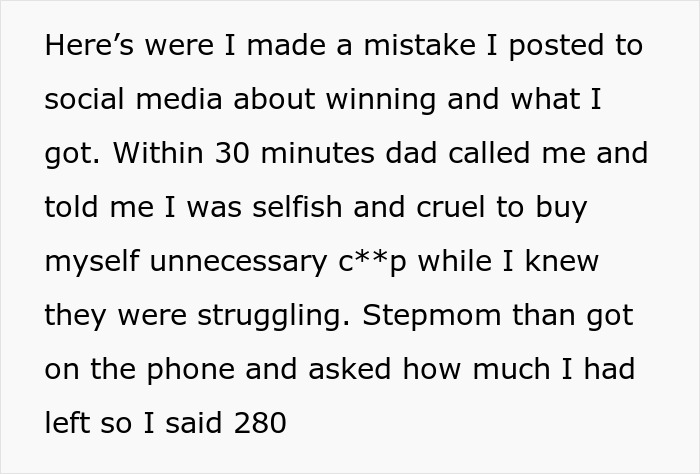
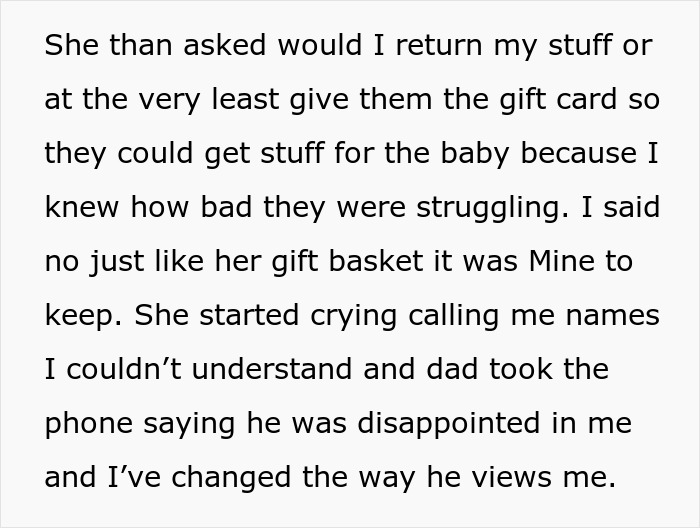

Image credits: MostPlenty3578
“They’re not the smartest with money,” the teen mentioned in the comments
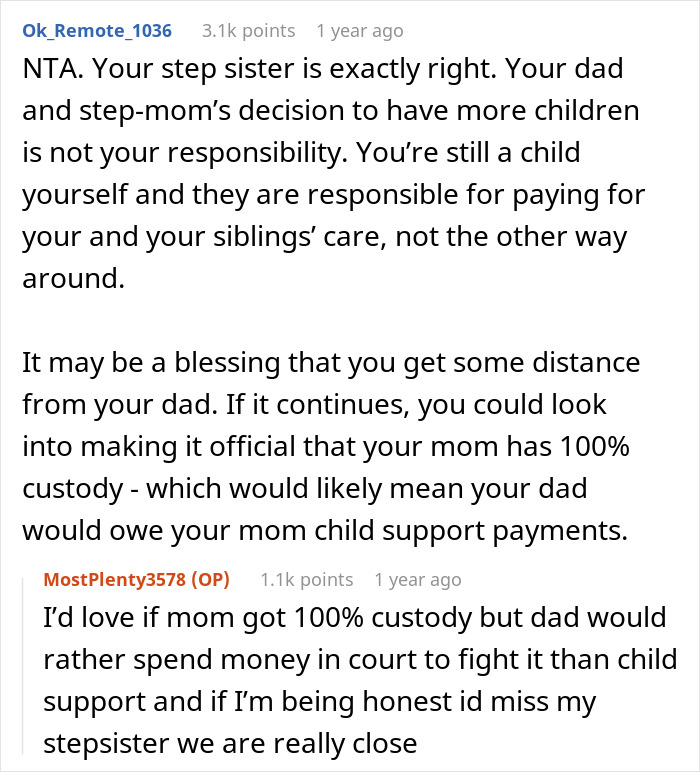
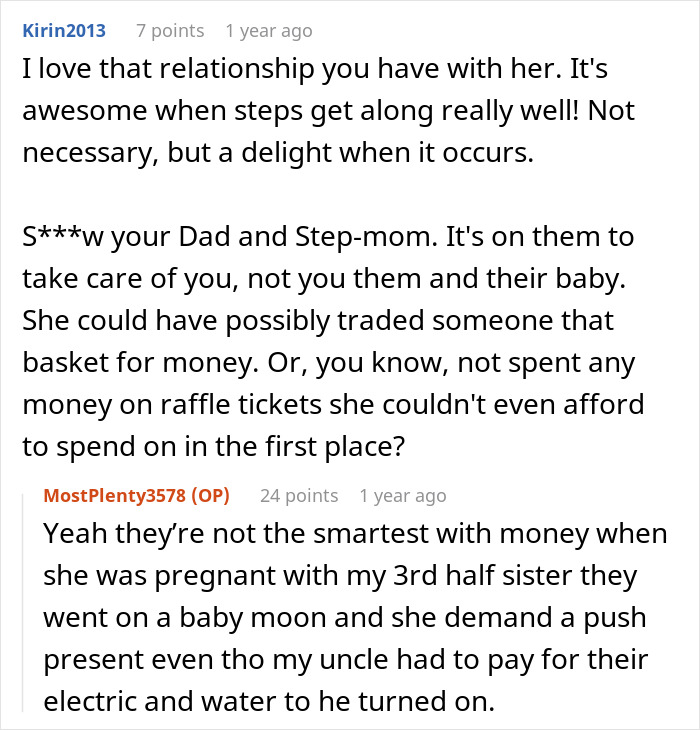
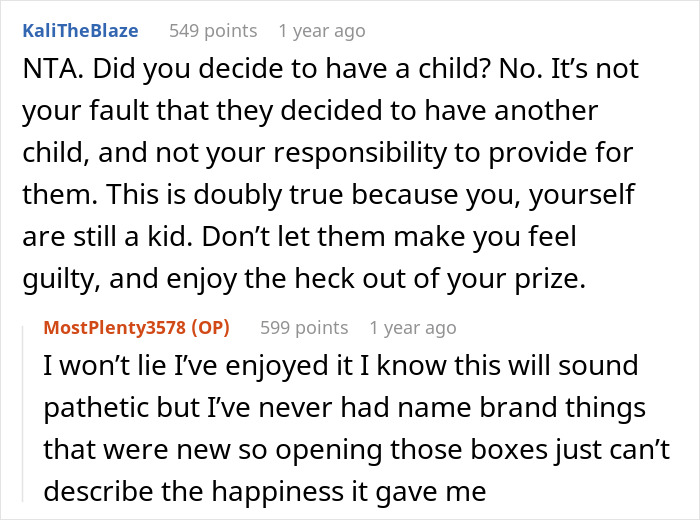
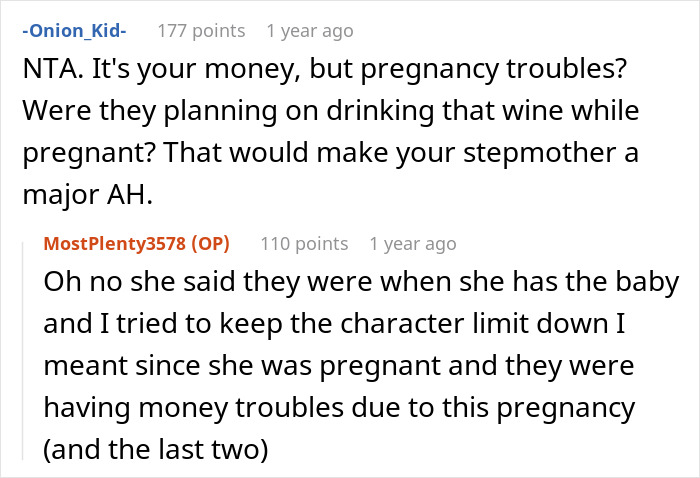



Image credits: Karolina Grabowska / Pexels (not the actual photo)
Teens need to learn financial literacy, but should not be expected to fill a parent’s role
Despite what some parents may think, a teen is not an adult. Even if they look or act like adults, they’re still minors. And a parent’s job is to provide for their child financially, not to treat them as dependable sources of income or unpaid nannies.
It’s not unusual for teens to have their own money. Whether through a part-time job, a sudden windfall like the teen in this story, or saving up allowance, teens can have income, too. In fact, in June of 2024, 37.4% of people ages 16 to 19 had a job in the U.S.
There are different reasons teens need their own money. According to Alicia Sasser Modestino, a professor of economics and public policy at Northeastern University, more than half of teens in America work to help cover bills, groceries, and utilities, or to be able to afford the things they want, like smartphones, clothes, and shoes.
Yet, according to experts, parents should avoid encouraging or expecting their kids to spend their own money on family needs. In fact, taking money away from a child is a big no-no, even if you’re trying to teach them how to save or take care of the household.
The founder of Smart Money Mamas, Chelsea Brennan, told Today’s Parent that parents take away a child’s or a teen’s autonomy when they take away a larger amount that they won in a raffle or were given by Grandma.
“Some kids can build a mental relationship that saving is my money disappearing, and that’s not going to be helpful in adulthood,” she explains. She recommends letting kids spend half of their cash gifts however they want, and the other half is divided into thirds (spend, save, or give away).
Granted, teens should learn financial responsibility, but not through giving their money away to cover basic household costs like bills and utilities. Until they’re grown up and able to make a living, that’s still the parents’ job. Worrying about newborn expenses might be too much for a person who hasn’t graduated high school yet.

Image credits: Erik Mclean / Pexels (not the actual photo)
Lottery winnings belong to the person who won them
Some people view lottery money differently from hard-earned money. In fact, winning the lottery often complicates the life of the winner, and this teen’s story, even with moderate winnings from a raffle, is a great example.
In a previous interview for Bored Panda, financial therapist Nate Astle, LMFT, CFT-I™, explained that sudden financial luck almost always complicates relationships. “This is actually a fairly common experience for people where there is a drastic shift in their wealth. Friends, family, and even your kindergarten pen pal come asking for favors.”
In his view, the winnings still belong to the person who won them. However, different cultures approach this kind of thing differently, and Astle notes that it is important to take that into account. “Family and societal cultures handle money differently. Some are more individualistic where the focus is on the individual’s success while collectivistic cultures prioritize the group’s well-being.”
At the same time, after reading the entire story, this kind of request from the stepmom and the stepfather seems on par with the course. They seem fine with letting their teen daughters shoulder childcare without worrying about parentification. Perhaps money is just another way they think teens should “contribute.”
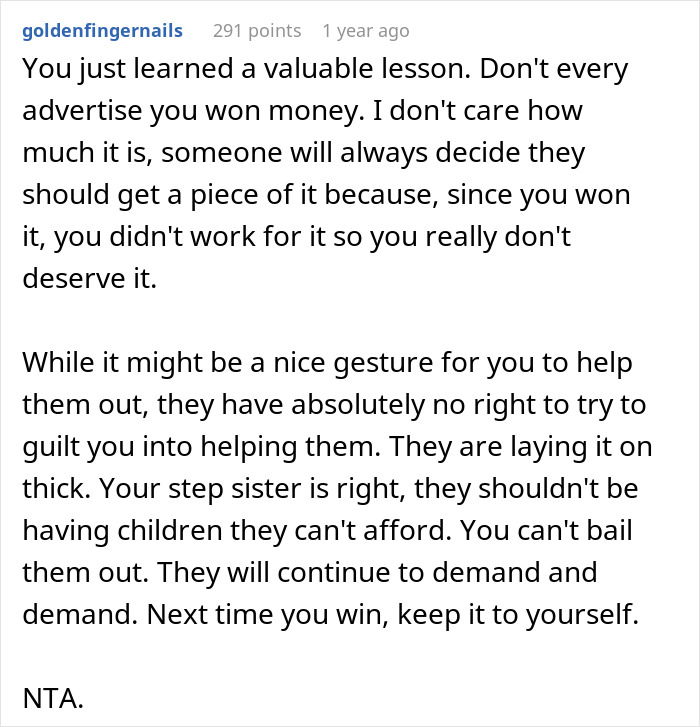
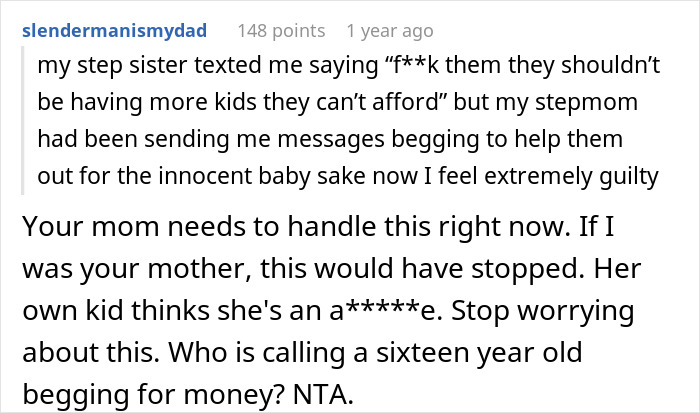
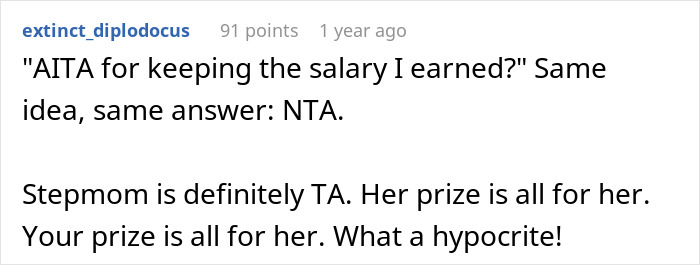
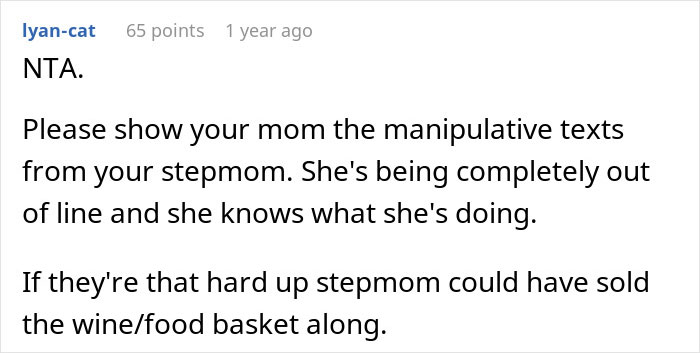
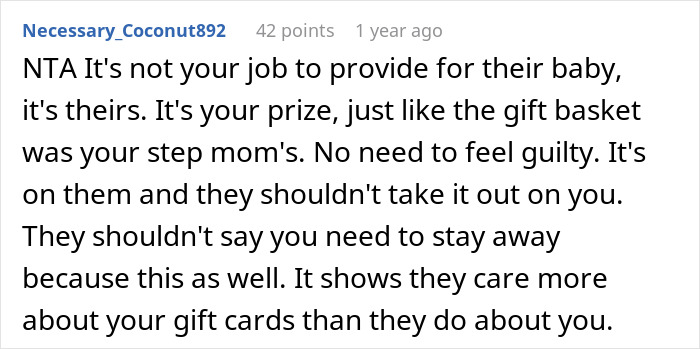
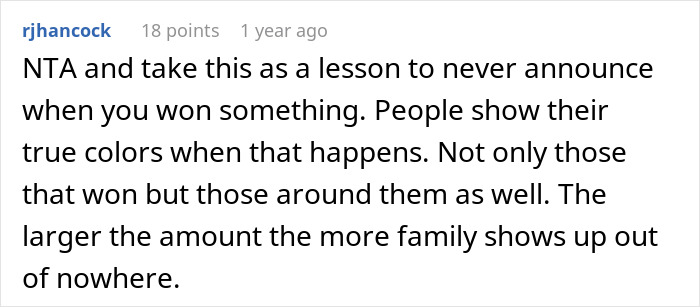
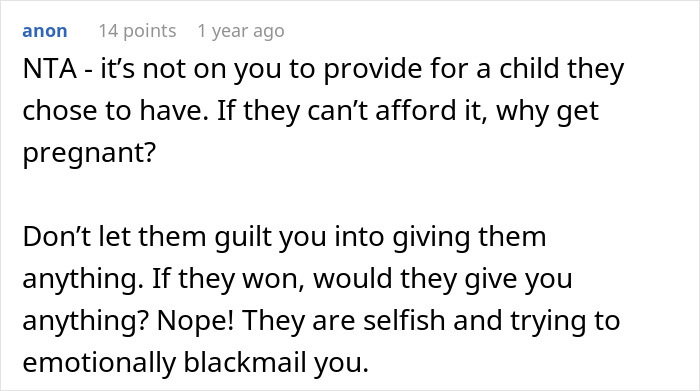
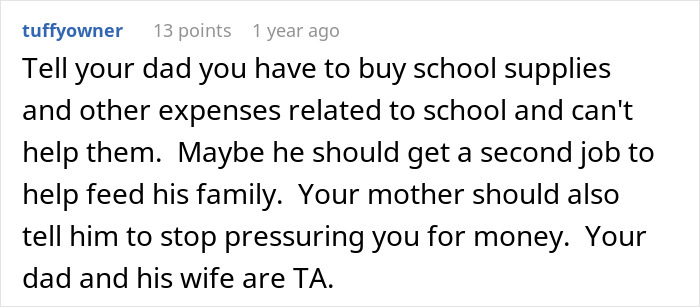
“Demanding the minor give them money because they’re struggling after going on a babymoon is wild to me,” commenters vilified the parents







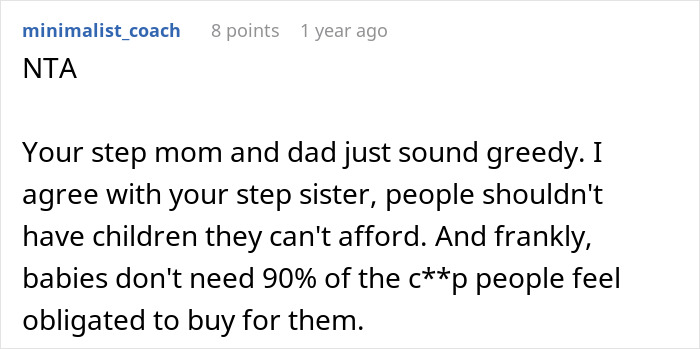

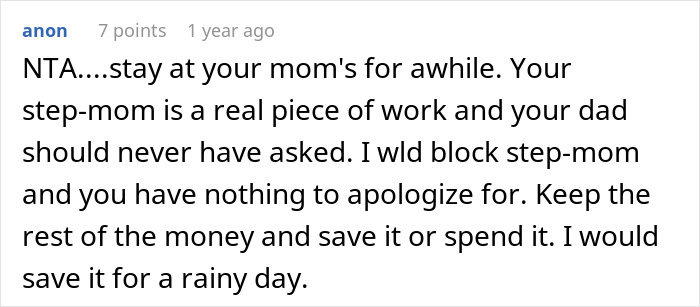





When the teen’s mom found out, she put the dad on the spot for acting entitled

Image credits: Alex Green / Pexels (not the actual photo)
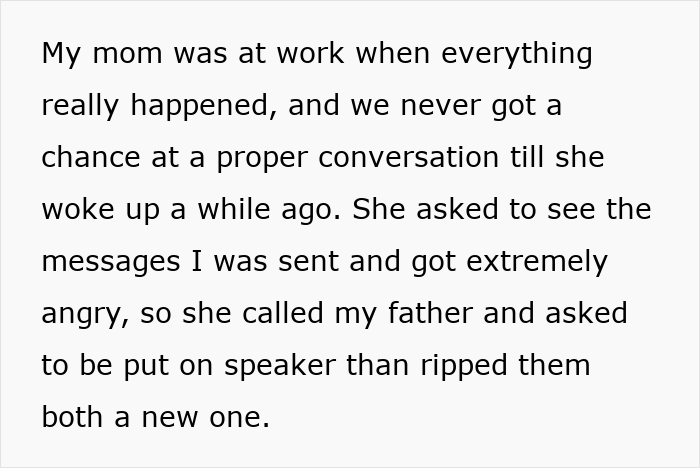



Image credits: Max Kolganov / Unsplash (not the actual photo)

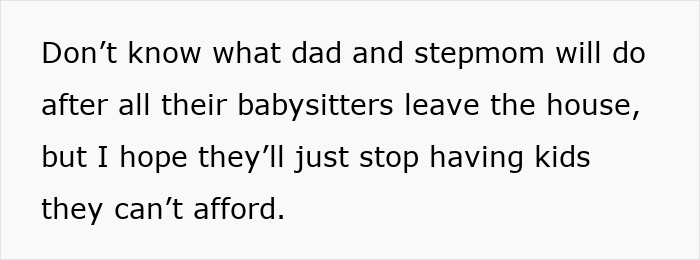
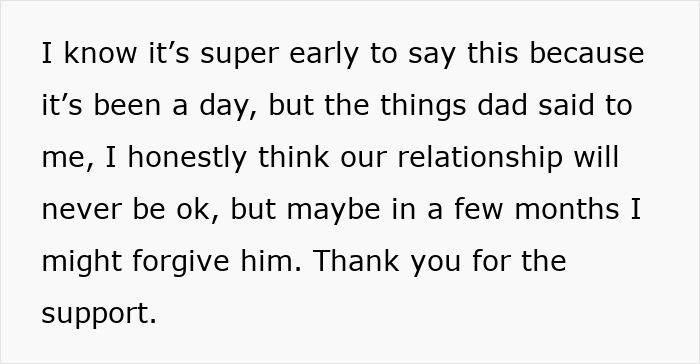
Image credits: MostPlenty3578
Commenters sided with the teen and her mom: “They deserve it”






 Follow Us