Movie franchises aren’t always the result of careful mapping by studios. Sometimes a film is just so much of a box office smash that the bigwigs immediately start rubbing their hands together and demand sequel after sequel. This often works like a charm and moviegoers continuously flock to the theaters for another outing.
Most successful franchises land because they didn’t come from a place where box office domination was the goal. Sure, it’s a nice bonus, but most start off with much more artistic integrity. However, there lies a plethora of movies that started off with global triumph in mind, often before creativity. Here’s our list of a collection of movies with colossal ambitions that fell flat on their face.
5. Eragon (2006)
Christopher Paolini‘s beloved novel, Eragon, hit book shelves in 2002 and kicked off a prosperous career for the renowned author. The book’s massive success paved the way for a big-budget Hollywood adaptation by 20th Century Fox. However, the 2006 film was widely hated by fans of the series and book critics. The production budget soared to $100 million, positioning it among the high-budget masterpieces of fantasy films from its era, reflecting its epic scale and ambitious vision. Within that vision was a planned franchise we never got to see.
By cramming a 500-word work of literary art into a 100-minute movie, Eragon completely gutted the core narrative and worldbuilding of Paolini’s cherished story, alienating the book’s massive fanbase while delivering a generic, rushed product to general audiences. While it made a modest profit worldwide, the heavy critical backlash and lack of fan support didn’t fill the studio with hope that enough people would return for a sequel, therefore completely squashing any plans for a franchise. However, Disney+ intend on doing the story justice with their upcoming TV series.

4. The Golden Compass (2007)
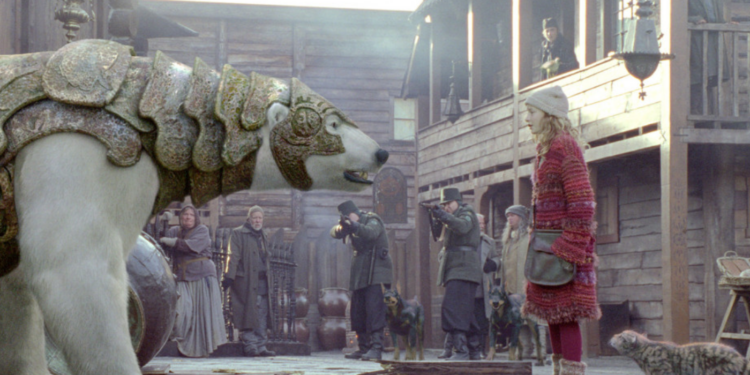
New Line Cinema had high hopes of turning The Golden Compass into a sprawling movie franchise, but it was hit with a trifecta of problems. Some of these occurred before the film had even hit movie theaters. Organizations like the Catholic League heavily campaigned against the movie. Ironically, this created a double-edged sword: the studio watered down the book’s themes to appease religious groups, which alienated the core book fans. As the studio began to panic, director Chris Weitz fell under pressure.
Weitz originally shot a faithful ending where Lord Asriel betrays Lyra and murders her friend Roger to open a portal to another world. Afraid this dark, anti-church ending would completely tank the film, New Line Cinema hacked off the last three chapters of the book (about 10–15 minutes of footage) right before release. This left the movie ending abruptly on an awkward, unearned happy note. Although the film grossed a healthy $302 million internationally, New Line Cinema lacked the funds to cover the massive $180 million production budget alone. To raise money, they sold off the foreign distribution rights. Simply put, a sequel was never going to be viable.
3. John Carter (2012)
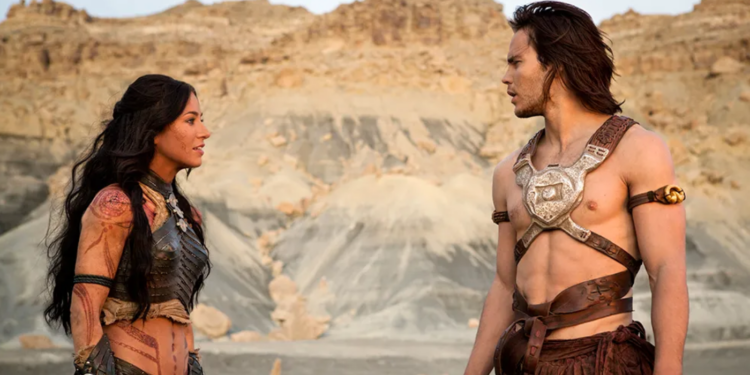
John Carter was explicitly built to be a massive franchise starter for Disney. But instead of launching a cinematic universe, it became one of the most legendary box office disasters in cinema history, forcing Walt Disney Studios to take a massive $200 million write-down. Director Andrew Stanton had a whopping vision in mind – he had already mapped out a full trilogy based on the book series. His planned sequels even had official titles: the second film was to be John Carter: The Gods of Mars, and the third was John Carter: Warlord of Mars.
Stanton’s cinematic grand plan failed as soon as John Carter hit cinemas. The main issues was the instant disconnect from lovers of the books. The source novel is titled A Princess of Mars. So originally, the film was tracked as John Carter of Mars. However, Disney had just suffered a catastrophic box office bomb with the animated movie Mars Needs Moms (2011). Panicking hard about using the word “Mars”, and thinking that a “Princess” title would scare away young boys, Disney’s marketing team stripped the title down to just John Carter. This made a sprawling, sci-fi space opera sound like a bland biography about an ordinary guy called John.
2. Green Lantern (2011)
Five years before he became a box office juggernaut superhero with Deadpool, Ryan Reynolds led a monster of a flop called Green Lantern. Director Martin Campbell‘s DC offering planned to launch a massive DC Cinematic Universe to rival Marvel, and before it even released in theaters, Warner Bros. hired writers to pen the sequel. Also, the creative team were so sure of themselves that they featured a mid-credits scene setting up the villain Sinestro for planned second instalment. A sequel that never came.
The truth of the matter is, Green Lantern was destined to fail from the get-go. Warner Bros. executives constantly demanded changes to the script to make it look and feel more like Marvel’s Iron Man. The studio eventually took the editing away from Campbell, resulting in a tonally confused mess that prioritized forced comedy and generic plot points over genuine comic book lore. Thanks to the heavy use of CGI in the film, it needed to earn around $500 million just to break even, but the film completely stalled out, grossing a disastrous $219 million worldwide. Sequels go where the money is, and this flick showcased one of the biggest deficits in decades.
1. The Mummy (2017)
When you have Tom Cruise in the lead role, a planned movie franchise seems impossible to fail, right? Not this time, unfortunately. The Mummy (2017) is unique because its failure wasn’t just a creative stumble – it completely destroyed an entire cinematic universe before it even got off the ground. This was a risky movie from the outset; trying to replicate the success of a story that had already been turned into a franchise powerhouse. The 1999 Brendan Fraser-led film prospered because it was a swashbuckling, romantic, lighthearted adventure heavily inspired by Indiana Jones. Universal’s 2017 reboot completely ditched that charming tone, opting instead for a bleak, self-serious, hyper-stylized action-thriller.
While it may be hard to fathom, casting Tom Cruise was the film’s biggest flaw. Yes, he can draw a crowd, but a crowd that expects a very specific formula. Universal originally wanted to make a true, gritty horror film, but casting one of the biggest action stars in the world fundamentally broke that premise. A traditional monster movie relies on fear, vulnerability, and suspense. However, a Tom Cruise vehicle demands high-octane stunts, zero-gravity plane crashes, and an unstoppable protagonist. As well as suffering a huge amount of bashing from critics, with an actual production budget swelling close to $195 million plus marketing, the movie lost the studio an estimated $95 million.
Read Next: 6 DreamWorks Animated Movies That Failed to Impress Audiences
 Follow Us