At the young age of 11, Sarah Rector became a historic figure after discovering an unbelievable amount of oil in her seemingly worthless land. Rector received the land allotment as her birthright for being a Black grandchild of Creek Indians born before the American Civil War. While the land she received was considered infertile, Rector believed there was treasure flowing like an ocean underneath it. True to her belief, the presumably infertile land turned her into an oil magnate.
Sarah Rector may be recognized as an oil magnate from childhood, but she didn’t have anything handed to her on a platter. The oil strike on her land led to several despicable and life-threatening situations. Regardless, she firmly maintained her decision not to sell or relinquish her land. Rector’s story has been a source of inspiration decades after her death. Cyrus Nowrasteh‘s 2025 biographical film Sarah’s Oil chronicles Rector’s early years in the oil business.
Sarah Rector’s Background Details and Early Life
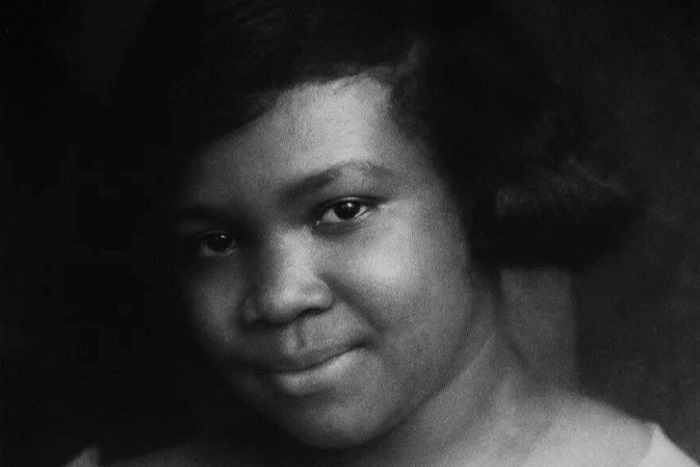
Before she became a renowned oil magnate, Sarah Rector was an ordinary Black child born in 1902 near Taft, an Indian Territory town occupied by Black people. She had five siblings, all born to Joseph Rector and his wife Rose McQueen. The Rector family ancestry can be traced to Black Creek Indians, who were enslaved before the Civil War. Her great-grandfather, Benjamin McQueen, was enslaved by Reilly Grayson, a Creek Indian, while her great-grandmother, Mollie McQueen, was enslaved by Muscogee chief Opothleyahola.
The Treaty of 1866 made Rector’s ancestors members of the Muscogee Creek Nation, and as Freedmen listed on the Dawes Rolls, her family members were entitled to land. Sarah Rector received 159.14 acres (64 hectares) in Glenpool, Tulsa County, Oklahoma. Black people received land from areas known to have infertile soil, while the fertile parts were reserved for the whites. Notwithstanding, the same infertile land turned the young Rector into an American oil magnate in no time.

How Sarah Rector Became the “Richest Black Girl” in the World
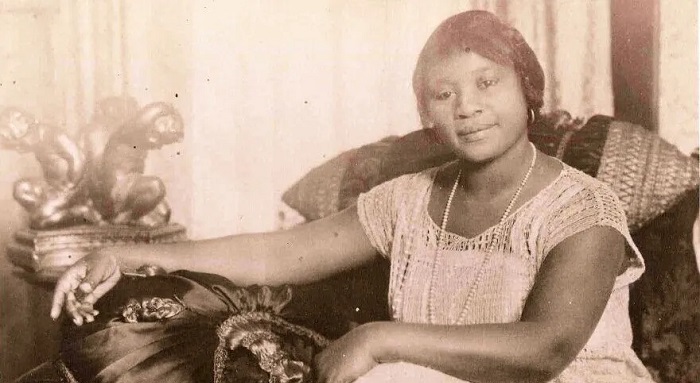
It all started with an allotment that was considered worthless. The land Sarah Rector received became a burden as they had to pay $30 annual property tax to keep it. Also, her father’s attempt to sell the land was futile. In February 1911, Joseph leased the land to the Standard Oil Company to help with the tax, and it was discovered to be oil-rich. In 1913, B.B. Jones, an independent oil driller, sank a “gusher” well on the land, producing about 2,500 barrels of oil per day.
Consequently, Sarah Rector was making over US$300 (equivalent to $10,100 in 2024) per day, earning her the nickname “Richest Colored Girl in the World.” However, she faced many controversies on her way to the top. According to Oklahoma law, at the time, Black citizens of Indian Territory with significant wealth were required to have respectable white guardians. As such, Rector’s guardianship was transferred from her parents to a family acquaintance named T.J. Porter.
Sarah Rector received royalties of $11,567 in October 1913. Her life changed for good as stories about her spread across the globe. Her wealth also led the Oklahoma Legislature to offer to declare her an honorary white. By the age of 18, Rector was a millionaire with assets such as stocks, bonds, and real estate. She bought a home on 12th Street in Kansas City, Missouri, where she lived with her family.
In her prime, Rector enjoyed her wealth, driving the best cars and shopping for fine clothes. She also threw lavish parties attended by the elites. However, with her abundant wealth came several issues, including the mismanagement of funds by her white guardian. Additionally, Rector had to sell her mansion when the Great Depression hit, losing most of her wealth. Nevertheless, she lived a comfortable life until her death on July 22, 1967, at the age of 65.
Sarah Rector Was Married Twice
When her wealth became public knowledge, Sarah Rector received marriage proposals at age 11. After moving to Kansas City, Rector married Kenneth Campbell, a local businessman. Their wedding took place in 1920 when she was 18. The union produced three sons, Kenneth (born in 1925), Leonard (born in 1926), and Clarence (born in 1929), before their divorce in 1930, one year after welcoming their last child. Sarah Rector married her second husband, William Crawford, in 1934. Crawford owned a restaurant. She was married to him until her death.
Sarah Rector Left a Timeless Legacy
Several decades later, Sarah Rector’s legacy still lives on. Her home in Kansas City still stands as a symbol of excellence. The Rector House, as it is known, was purchased by United Inner City Services in the 2010s. The nonprofit organization acquired the property to preserve its historic and cultural significance. Additionally, her struggle to keep her land and oil in her family’s hands was adapted into the movie Sarah’s Oil (2025).
 Follow Us