Every few years, a performance comes along that feels less like acting and more like a transmission from a different moral universe. Jake Gyllenhaal’s turn as Lou Bloom in Nightcrawler is one of those rare events. It didn’t just push him into a new phase of his career; it quietly redefined what a modern antihero could look like in an age obsessed with virality, grind culture, and “hustle” mythology. A decade later, filmmakers still borrow its ideas, but few have matched its mix of intensity, restraint, and unnerving realism.
What makes this performance so singular isn’t just that it’s memorable or quotable. It’s that Gyllenhaal constructs a character who feels terrifyingly plausible in today’s media ecosystem. Lou isn’t a cartoon villain; he’s a mirror held up to every system that rewards obsession, exploitation, and emotional emptiness. That’s why this work lingers — it’s not just great acting, it’s a diagnosis of an era.
‘Nightcrawler’ as a Career Risk That Rewired Expectations
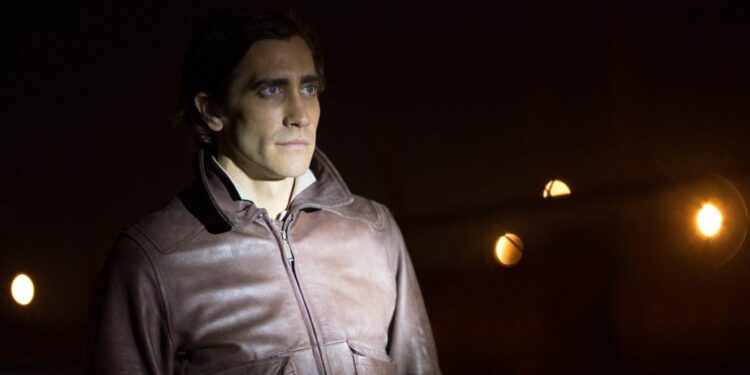
Before Nightcrawler, Gyllenhaal was respected for roles in films like psychological thrillers, indie dramas, and big-budget adventures, but he was still often framed as a conventional leading man. Lou Bloom changes that completely. He arrives on screen as a gaunt, wide-eyed opportunist and quickly reveals himself as something far more unsettling: a man who has fully absorbed self-help jargon and corporate speak but stripped them of any empathy.
Gyllenhaal’s physical choices are crucial. The weight loss, the sunken cheeks, the nocturnal energy — they all signal that Lou is living in a different tempo from everyone else. Yet he never overplays it. The performance isn’t loud; it’s needle-precise. That discipline aligns him more with the great character reshapers – think of the way Daniel Day-Lewis reshapes himself across key Daniel Day-Lewis roles – than with more surface-level transformations.
The Psychology of Lou Bloom: Charm, Emptiness, and Control
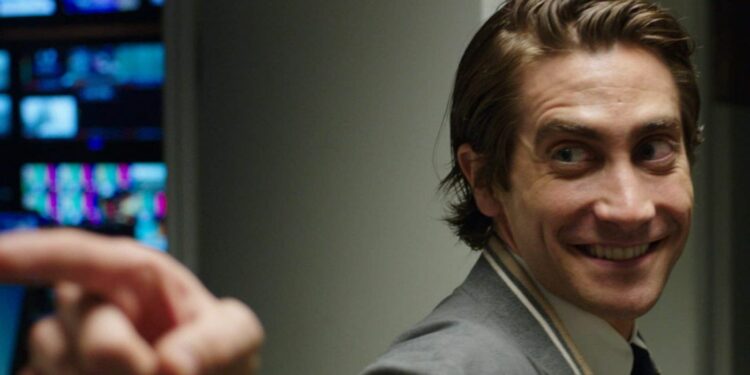
At the heart of the performance is the way Gyllenhaal plays Lou’s language. Every line is rehearsed, full of business clichés and motivational slogans, but delivered with an eerie sincerity. He listens closely, then weaponizes whatever he hears. The smile is polite, the tone is calm, yet there’s no real emotional core behind it. That hollowness is what makes the character so disturbing.
Unlike many cinematic sociopaths, Lou isn’t driven by revenge or trauma; he’s driven by opportunity. Gyllenhaal plays him as someone who has fully absorbed the idea that “success” justifies everything. That’s why the performance feels timeless and painfully modern at the same time. It anticipates the influencer era, the grindset cult, and the cold logic behind viral true-crime imagery more sharply than most explicit media satires.
How ‘Nightcrawler’ Outclasses Other Modern Antiheroes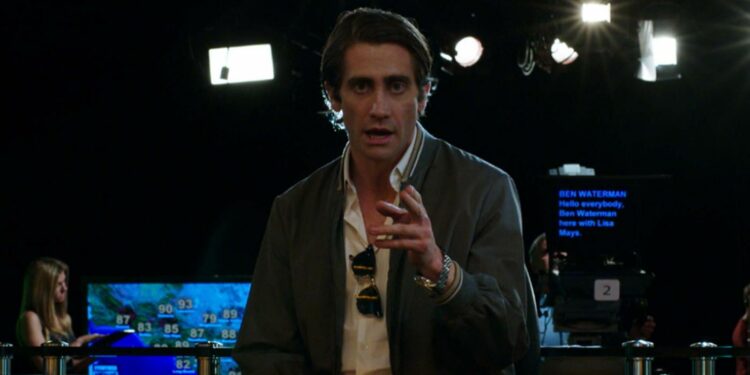
In the last two decades, we’ve seen a wave of iconic antiheroes and villains. Performances like Joaquin Phoenix in Joker or Christian Bale in American Psycho have become cultural landmarks. But what separates Gyllenhaal’s work is its chilling normalcy. Lou Bloom isn’t a mythic figure or a stylized monster; he’s a freelancer with a camera and a car, living in a city that quietly rewards his worst impulses.
Where many antiheroes lean into operatic violence or big emotional breakdowns, Gyllenhaal keeps Lou tightly coiled. The explosions are small — a flash of irritation, a sudden negotiation, a subtly threatening pause. That restraint makes the outbursts, when they do arrive, feel genuinely dangerous. It’s closer to the slow-burn menace we associate with some of the best horror movie work of the last decade than to typical thriller theatrics.
Craft, Collaboration, and Why the Industry Hasn’t Caught Up
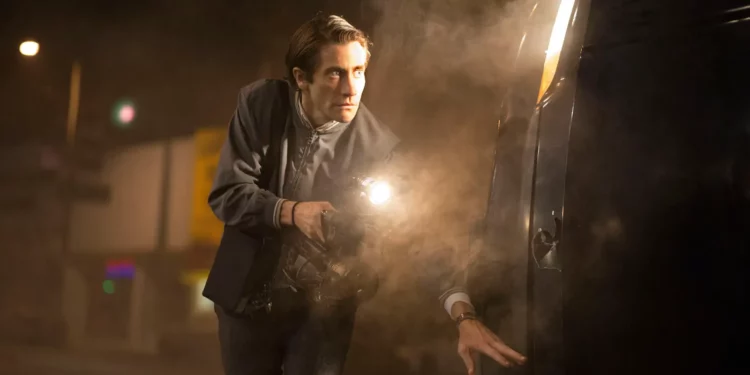
Part of why this performance hasn’t been matched is structural. Dan Gilroy builds the film around Lou’s perspective, letting the camera live in his nocturnal world of police scanners and crime scenes. The script gives Gyllenhaal long, uninterrupted stretches to manipulate, negotiate, and observe, rather than cutting away to safer subplots. That level of focus is rare in a marketplace that often demands faster pacing and broader appeal.
There’s also the simple fact that the industry doesn’t often reward this kind of risk. Lou Bloom is neither redeemable nor tragic in the conventional sense. He wins. His worldview is validated by ratings, promotions, and the silent approval of an entire system. That makes the film harder to market as uplifting or awards-friendly, even though the work on display matches anything found in lists of the top 10 movies of the 21st century according to major critics.
Comparisons Only Highlight How Singular It Is
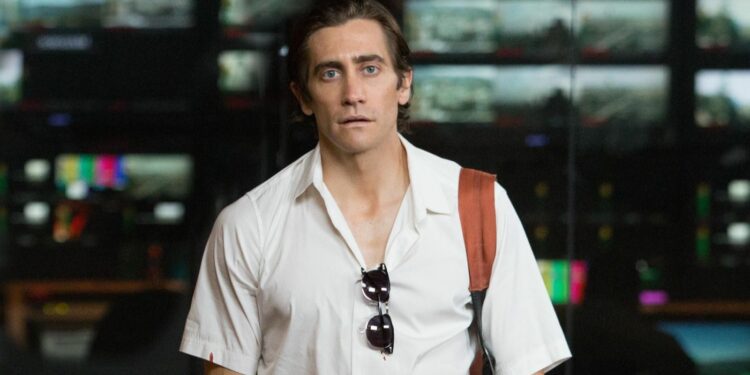
When people try to compare Lou Bloom, they often reach for figures like Travis Bickle or Jordan Belfort. But those characters exist in worlds that either lean into stylization or overt excess. Gyllenhaal’s performance exists in a more grounded register. The Los Angeles of Nightcrawler isn’t surreal; it’s recognizably our own, just shot at the hour when most people are asleep and the city’s most predatory incentives are visible.
Look at how the performance holds up next to the most acclaimed villain turns, from method-heavy work celebrated in Oscar-nominated Denzel Washington roles to ensemble-driven character studies like Magnolia. Lou Bloom still feels uniquely tuned to our specific economic, technological, and cultural moment. Other roles might be bigger, louder, or more decorated, but few are this tightly fused with the machinery of modern life.
How It Reshaped Gyllenhaal’s Career Path
After Nightcrawler, Gyllenhaal’s choices became noticeably bolder. Performances in films like Nocturnal Animals, Prisoners, and Enemy leaned further into psychological complexity, damaged masculinity, and moral ambiguity. Casting directors and audiences alike began to see him less as a traditional leading man and more as a specialist in characters who live at the edge of control.
This shift mirrors what happens when actors commit to extreme roles that nearly overwhelm them – the kind explored in pieces about actors who earned the most for a single movie or intense transformative performances. The difference is that Gyllenhaal’s transformation isn’t just physical or vocal. It’s strategic. Lou Bloom becomes the hinge point that allows him to move freely between prestige dramas, thrillers, and even genre films without losing credibility.
Why It Still Hasn’t Been Matched
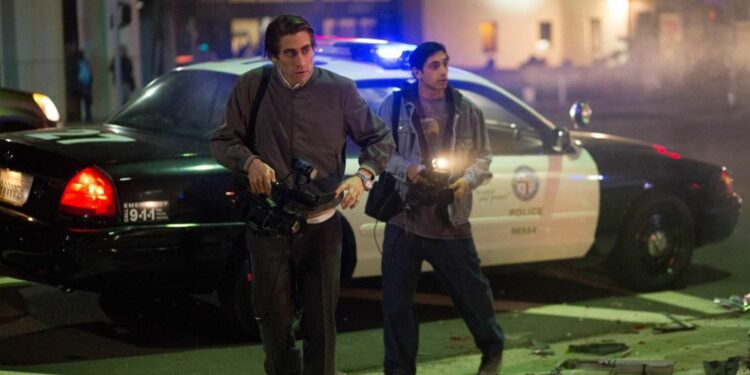
Ultimately, this performance hasn’t been matched because it sits at a rare intersection: an actor at full power, a director willing to build the whole film around that risk, and a subject that becomes more relevant every year. The gig economy has expanded, news cycles have accelerated, and the incentives to commodify tragedy have only intensified. Lou Bloom feels less like a relic of mid-2010s cinema and more like an ongoing warning.
To surpass what Gyllenhaal does here, another actor would need not just talent, but a similarly uncompromising framework around them. They’d need a story that exposes a modern system as clearly as this one exposes the late-night news grind, and a creative team willing to let them be truly unlikable without softening the edges. Until that combination appears again, Lou Bloom will remain what he is now: one of the clearest examples of how a single, perfectly calibrated performance can still feel ahead of its time.
 Follow Us