Don’t play with your food. Don’t get dirty. Don’t make a mess.
These are the rules that most people spend their entire lives trying to follow.
But what if making a mess became the entire point? That’s precisely what Sploshing, the bedroom trend that Sydney Sweeney helped popularize, is all about.
Forget strawberries and whipped cream. Some couples are taking food play to a much messier level

Andrii Lysenko/Adobe Stock (Not the actual photo)
Sploshing is certainly not a new kink. But it has gained fresh attention in recent months, especially after it received a pop-culture boost from an ice-cream scene in Euphoria.
Viewers were left seriously curious about the messy scene, where Sydney Sweeney’s character Cassie “sploshed” ice cream onto her body.
The messy scene helped bring a previously niche fet*sh to a much wider audience.
And curious couples got one more thing to try out to experiment outside of their usual bedroom routine.

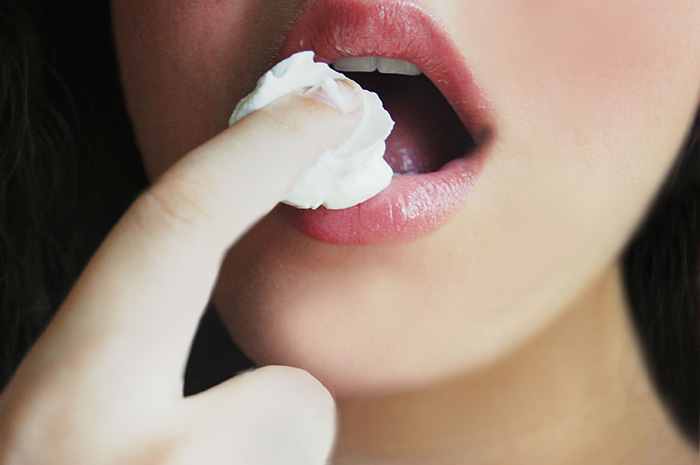
Honeybee Photography/Melissa Parada (Not the actual photo)
To understand what draws people to the messy practice, we asked experts to explain what sploshing is and why it can be a turn-on.
“Sploshing, also known as a Wet and Messy or WAM fet*sh, is about arousal from the feeling and sight of messy substances on the body; food, slime, foam, mud, gunge, anything slick and tactile,” said Gary Albert, a clinical hypnotherapist, s*x therapist and somatic sexologist who, in his words, helps people heal shame and awaken a confident s*x life.



Sploshing puts the mess itself at the center of the experience, unlike conventional “food play,” where items like chocolate, strawberries or whipped cream make a side-character appearance in the bedroom.
Examples of sploshing can range from smearing pudding on each other, using a partner’s body as a plate, tossing around in body-safe slime, or jumping into a bathtub of whipped cream.
Sydney Sweeney’s ice-cream scene in Euphoria gave the niche f*tish a renewed spotlight

“The mess itself is part of the s*xual or erot*c experience,” said psychosexual and relationship therapist Nia Jane Butler.
Explaining the differences between sploshing and ordinary food play, she said: “Food play can simply be playful or sensual, whereas sploshing specifically refers to the erot*c or fetishistic enjoyment of mess, texture, and the sensory experience of being covered in or interacting with it.”

The key difference would be the intention and focus, with food play being more of an “accent” to intimacy, Albert said.
Food play could include “feeding each other, maybe licking a little of the body here and there; a bit of chocolate, oysters, strawberries and cream,” he said. But “sploshing is all about the mess and the muck.”
“The eroticism comes from the texture, temperature, sound and total sensory immersion rather than the food as a prelude to something else,” he continued. “And notably, it doesn’t involve bodily fluids, which is the one line the community generally draws.”
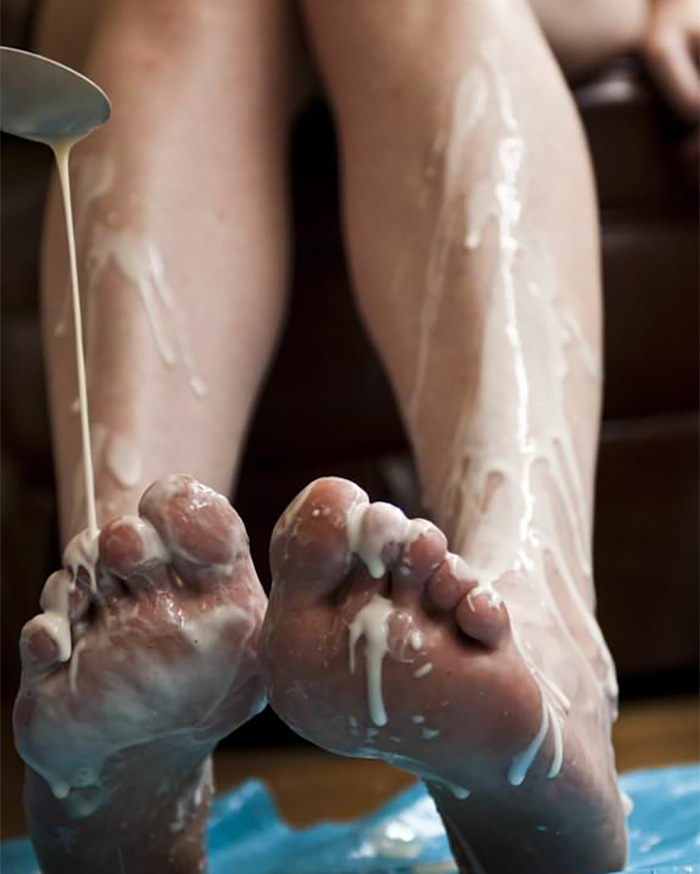
At first, the idea of finding food or slime arousing may seem unusual. But experts say the answer has less to do with what the substance is and more to do with how it feels and what it represents.
“It is not the substance itself that arouses people. Arousal comes from the sensation it provides and, above all, from the meaning people assign to it,” Dr. Anna Kelberg, counseling psychologist and clinical sexologist, told Bored Panda.
Kelberg said there are several reasons why “messy play” works.
“It is intensely sensory. It is deliberately unproductive – and when we play, we typically cannot stay in a performative state of mind, so performance anxiety tends to fall away,” she said.
Sploshing differs from ordinary food play because the mess itself is the focus
Dulúapics/Adobe Stock (Not the actual photo)
The act of being coated and covered in something warm, wet, or sticky is a “full-body wave of sensation” and “deeply sensory,” Albert added. And “strong sensation and arousal are the main ingredients in s*x and erot*c play.”
Sploshing can give way to a “combination of sensory, psychological and relational factors,” where “texture, smell, temperature, visual stimulation and the feeling of something on the skin can all contribute to arousal,” Butler explained.
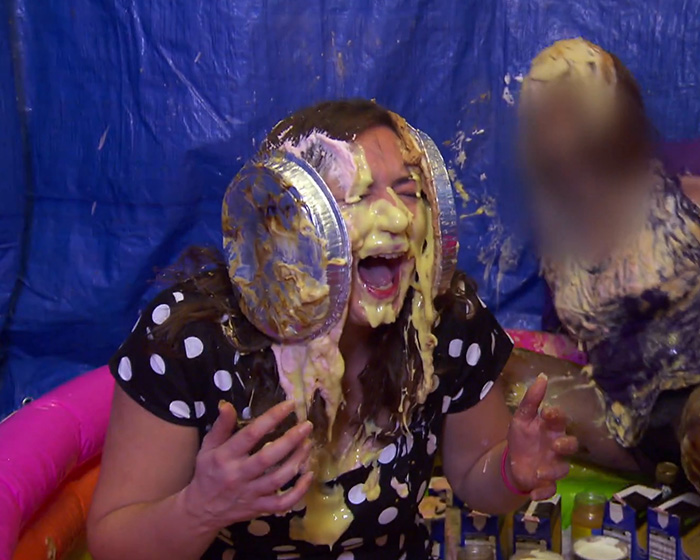


But sensory stimulation isn’t the only reason sploshing can be appealing. For some people, the real turn-on is the thrill of breaking the rules, especially when it comes to being “clean” and “composed,” Kelberg pointed out.
“How many times did your grandma tell you not to play with food?” she asked. “This rule-breaking by itself can amplify the experience of arousal for many people.”
It’s all about “breaking taboo,” Albert said, as is the case with most kinks and bedroom fantasies.
Experts say the appeal can come from intense sensory stimulation, including texture, temperature and smell

“Most of us were raised being told to stay clean, don’t make a mess, don’t get dirty,” he said.
“Deliberately covering yourself in mess is a joyful two fingers up to all that early conditioning and there’s a huge erot*c charge in transgression,” he continued.
In other words, part of sploshing’s appeal may come from the freedom of abandoning the rules of everyday life, like letting go of the need to stay clean or being in control and just opening your arms to the mess. Because “being messy is freeing, and freedom is s*xy,” Albert said.
Breaking everyday rules around cleanliness and mess can add to the appeal and arousal

While partners explore intimate desires, it is extremely important to accept that a particular kink does not necessarily indicate that there is “an underlying psychological problem that needs explaining or fixing,” Butler said.
Exploring a kink together can “create opportunities for communication, vulnerability, and mutual trust, particularly when partners discuss boundaries, preferences and what they are or aren’t comfortable trying,” she said. “The important factor isn’t the kink itself, but how partners approach it.”

Partners should negotiate consent, agree on boundaries, and have the freedom to change their mind at any point during the process.
Moreover, “nobody should feel that they need to participate in a kink to prove trust or intimacy – the healthiest exploration is always genuinely mutual and enthusiastic,” she added.
Trying a kink together could increase intimacy and trust between partners if it’s done “consciously,” Albert noted, because sharing a kink means “being seen in one of your most vulnerable, unguarded places, and being met there with acceptance rather than judgment.”
This is “profoundly bonding,” he added.

Drobot Dean/Adobe Stock (Not the actual photo)
Sometimes, even the act of talking it through beforehand and sharing desires could help build the intimacy.
“So the real trust-builder isn’t necessarily the mess itself but the honest communication and mutual permission around it,” he said. “Explore a kink together with consent and curiosity, and you often feel closer than before.”
Netizens had mixed reactions to the idea of sploshing around
















 Follow Us