Samantha Morton has spent more than three decades building one of the most respected careers in film and television. In these years, she has never relied on blockbuster roles or constant leading parts to make an impact. Instead, she has earned a reputation for delivering deeply human performances that stay with audiences long after the credits roll. Whether playing a grieving mother, a silent pianist, or a ruthless queen, Morton brings remarkable authenticity to every character.
Over the years, Samantha Morton has collaborated with some of cinema’s most celebrated directors while remaining true to her understated style. Each stage of her career has introduced another unforgettable character. Her consistency has made her one of the industry’s most admired performers. For new and older fans of the actress, these are the performances that best showcase why Samantha Morton is regarded as one of Britain’s finest actors.
Iris in Under the Skin (1997)
Long before she earned international recognition, Samantha Morton delivered one of her earliest standout performances in the British drama Under the Skin. She stars as Iris, a young woman trying to build a life of her own while struggling with family tensions and personal uncertainty. The role allowed Morton to showcase the emotional honesty that would later define her career.
Rather than relying on dramatic outbursts, Morton plays Iris with quiet confidence and naturalism. She captures the character’s vulnerability, resilience, and longing for independence through subtle expressions and restrained dialogue. Critics praised her performance, and the film helped establish her as one of Britain’s most promising young actors. Looking back, Under the Skin remains an important milestone that hinted at the remarkable career that followed.

Hattie in Sweet and Lowdown (1999)
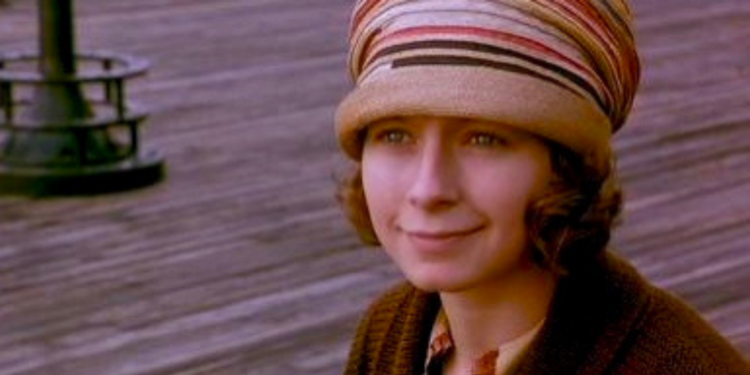
Samantha Morton earned her first Academy Award nomination for playing Hattie, a mute laundress who falls in love with an arrogant jazz guitarist played by Sean Penn. Without spoken dialogue, Morton relied almost entirely on facial expressions and body language to communicate the character’s emotions. The performance remains one of the clearest examples of Morton’s understated acting style. She says very little, yet every glance and gesture reveals Hattie’s hopes, heartbreak, and quiet strength. It is still considered one of the finest supporting performances of the late 1990s.
Agatha Lively in Minority Report (2002)
Samantha Morton delivered one of the most memorable performances in Steven Spielberg‘s Minority Report as Agatha Lively. Her character is the most gifted of the three Precogs who can foresee future murders. Although Agatha spends much of the film confined to a futuristic prediction system, Morton gives the character a powerful emotional presence that extends far beyond her limited physical freedom.
Her performance is built on subtle expression rather than dramatic speeches. Through distant stares, gentle movements, and quiet vulnerability, Morton makes Agatha feel both fragile and extraordinarily powerful. She also shares excellent on-screen chemistry with Tom Cruise, serving as the moral compass that guides Chief John Anderton toward the truth. In a film filled with spectacular action and groundbreaking visual effects, Morton’s haunting portrayal ensures that Agatha remains one of Minority Report‘s most unforgettable characters.
Morvern Callar in Morvern Callar (2002)
Few actors could carry a film with as little dialogue as Samantha Morton does in Morvern Callar. Playing the title character, she spends much of the movie processing a life-changing tragedy while revealing almost nothing through words. Instead, Morton communicates Morvern’s thoughts through subtle expressions, silence, and carefully measured reactions.
The performance earned widespread critical acclaim and won Morton the Best Actress award at the British Independent Film Awards. It also demonstrated her willingness to embrace challenging, unconventional material. Morvern Callar may not have reached a mainstream audience, but it remains one of the performances that best illustrates her extraordinary ability to play broken characters.
Sarah Sullivan in In America (2003)
Just four years after Sweet and Lowdown, Samantha Morton received her second Academy Award nomination for In America. This time, she took on the role of Sarah Sullivan, an Irish mother struggling to keep her family together after the devastating loss of a child. While the story follows the family’s new life in New York City, Morton’s performance provides its emotional center. She avoids melodrama and instead portrays grief with remarkable honesty. Sarah’s determination to protect her husband and daughters, even while carrying her own pain, makes every setback feel deeply personal. More than two decades later, it remains one of Morton’s most moving roles.
Myra Hindley in Longford (2006)
Samantha Morton delivered one of the boldest performances of her career in the HBO/BBC drama Longford. Portraying Myra Hindley, one of Britain’s most notorious murderers, she avoided sensationalism and instead portrayed a woman whose complexity challenged both the audience and the film’s central character. Morton never asks audiences to sympathize with Hindley’s crimes.
Instead, she presents a layered portrait of a prisoner confronting decades of public hatred while claiming to have changed. The difficult balancing act earned widespread praise from critics and won Morton a Golden Globe for Best Supporting Actress in a Series, Miniseries, or Television Film. It remains one of the finest examples of her willingness to take on emotionally demanding roles.
Deborah Curtis in Control (2007)
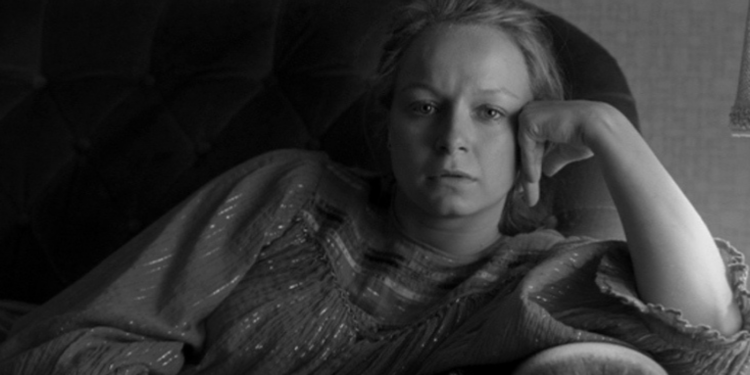
In Anton Corbijn‘s acclaimed biopic Control, Samantha Morton portrays Joy Division frontman Ian Curtis’ wife, Deborah Curtis. Although her screen time is brief, she brings warmth and professionalism to the role, helping ground one of the film’s pivotal moments. Control is often remembered for Sam Riley‘s breakout performance as Curtis, but Morton’s appearance demonstrates a quality that has defined her career. She never treats a supporting role as insignificant. Even with limited screen time, she creates a believable character who contributes to the film’s authenticity and emotional realism.
Mary Lou Barebone in Fantastic Beasts and Where to Find Them (2016)
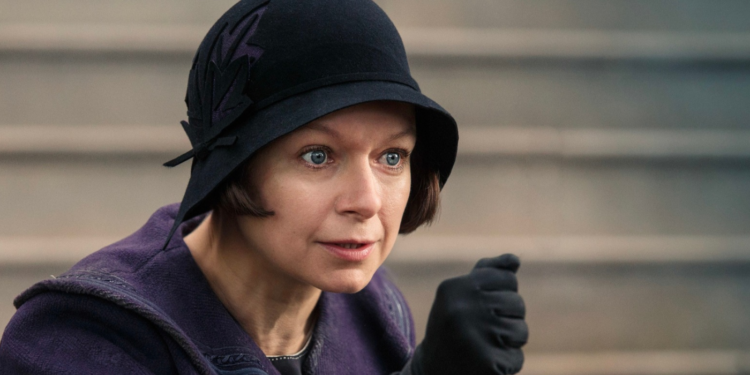
Samantha Morton took on one of the Wizarding World’s most unsettling non-magical characters as Mary Lou Barebone, the fanatical leader of the New Salem Philanthropic Society, also known as the Second Salemers. Convinced that witches and wizards were real and dangerous, Mary Lou devoted her life to exposing magic while raising her adopted children under strict and abusive rules. Morton’s stern expressions and unwavering conviction made the character a constant source of tension throughout the film.
What elevates the performance is that Morton never portrays Mary Lou as a cartoonish villain. She presents her as a woman consumed by fear, religious extremism, and an obsessive sense of righteousness. That relentless cruelty, particularly in her treatment of Credence Barebone (Ezra Miller), becomes one of the driving forces behind the film’s emotional conflict. Although Mary Lou is not on screen for long, Morton’s commanding performance ensures she remains one of the most memorable antagonists in Fantastic Beasts and Where to Find Them.
Margaret Wells in Harlots (2017–2019)
Samantha Morton made an immediate impression in Harlots as Margaret Wells, the determined brothel owner fighting to secure a better future for her family in 18th-century London. Fierce, resourceful, and deeply protective, Margaret is a woman who refuses to let society define her worth. Morton gives the character remarkable depth by balancing her toughness with moments of vulnerability. Her performance captures a mother’s relentless drive to survive as she navigates betrayal, rivalry, and constant danger. It remains one of the standout performances in the acclaimed period drama and introduced many television audiences to another side of her range.
Alpha in The Walking Dead (2019–2020)
Samantha Morton underwent one of the most dramatic transformations of her career to play Alpha, the leader of the Whisperers in The Walking Dead. Shaved head, chilling voice, and unwavering conviction turned the comic-book villain into one of the series’ most unforgettable antagonists. What made her performance so compelling was its complexity.
Alpha was ruthless and terrifying, yet Morton revealed the emotional scars and warped beliefs that shaped her actions. Instead of portraying a one-dimensional villain, she presented a deeply damaged woman whose obsession with survival came at a devastating cost. Her work earned widespread praise from critics and fans, with many calling Alpha one of the strongest villains in the show’s long history.
Catherine de’ Medici in The Serpent Queen (2022–2024)
Samantha Morton once again proved her command of historical drama by stepping into the role of Catherine de’ Medici in The Serpent Queen. The series explores the French queen’s rise to power, and Morton portrays her with intelligence, wit, and quiet ruthlessness. Rather than depicting Catherine as simply manipulative, Morton balances political ambition with vulnerability. She shows a ruler forced to make impossible choices in a dangerous royal court, allowing audiences to understand both her strengths and her flaws. Unsurprisingly, the performance earned praise for bringing new depth to one of history’s most controversial queens and stands among the finest television work of Morton’s career.
Circe in The Odyssey (2026)
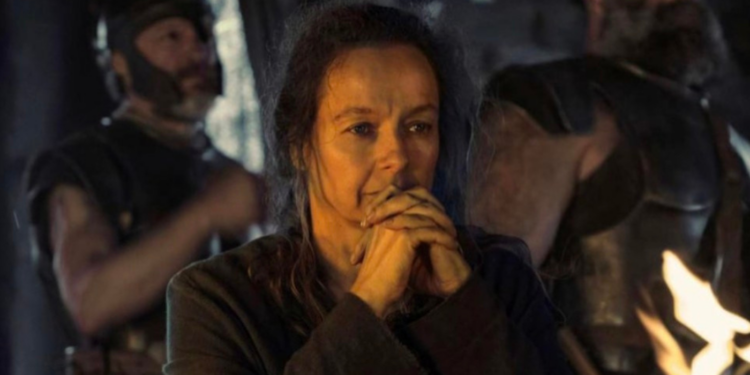
Christopher Nolan entrusted Samantha Morton with one of Homer‘s most fascinating characters, and she made the most of the opportunity. Rather than portraying Circe as a simple villain, Morton presents her as a woman shaped by pain, wisdom, and survival. Her performance shifts effortlessly between compassion, menace, and quiet sorrow, giving the mythical sorceress an emotional depth rarely seen in previous adaptations.
One transformative sequence became one of the film’s most talked-about moments. According to Nolan and producer Emma Thomas, the cast and crew responded with a rare standing ovation after one of Morton’s takes. The first time they had witnessed such a reaction since Heath Ledger‘s performance in The Dark Knight. The praise was echoed by early reviewers, many of whom described Samantha Morton as one of The Odyssey‘s standout performers despite sharing the screen with an ensemble cast.
 Follow Us