When people picture the ancient world, they often imagine ruins behind museum glass. But many of the world’s oldest cities are still alive, loud, and surprisingly ordinary.
Streets mapped out thousands of years ago can still shape a morning commute, while markets buzz beside temples. Prayers, trade, and celebrations continue in the same places where early communities once gathered.
Instead of treating these places as frozen relics, let’s take a look at how they kept going, century after century, with everyday life unfolding alongside deep roots.
#1 Jericho, Palestine
Jericho’s urban story reaches back more than 10,000 years. Archaeological research published in Cities traces settlement at Tell es-Sultan to the Neolithic period, citing early stone fortifications and water management systems that point to long-term, organized urban life.
That depth of history is formally recognized by UNESCO, which lists Ancient Jericho as a World Heritage Site for its testimony to early human settlement and city-building traditions.
Over thousands of years, the city absorbed conquest, trade, and religious influence, while its identity as a fertile oasis shaped by natural springs persisted.
That same oasis logic still shapes daily life, even as conditions have grown more fragile. CNN reports that movement restrictions and security measures increasingly limit how residents farm, trade, and move through the area.
Palm groves and agricultural land continue to define the city’s physical landscape, while sites like Tell es-Sultan and the Mount of Temptation remain central to religious and cultural life for pilgrims and locals navigating ordinary routines under ongoing strain.
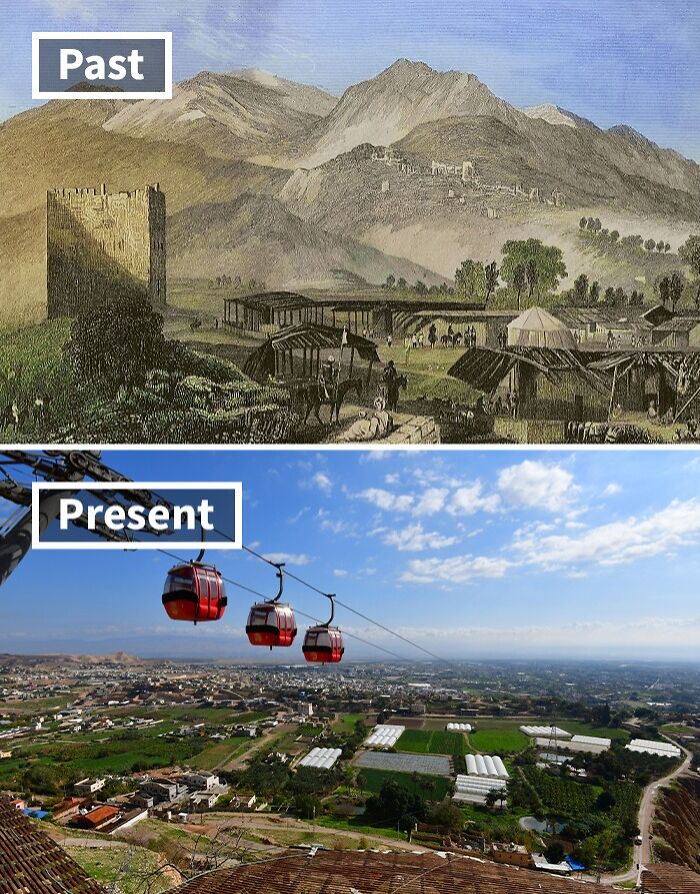
Image source: PHAS / Getty Images, Michele D'Amico supersky77 / Getty Images
#2 Damascus, Syria
Looking at how great capitals functioned before modern times helps frame Damascus today.
UNESCO recognizes the Ancient City of Damascus as a World Heritage Site, acknowledging an urban core that has been continuously inhabited for nearly 10,000 years and still functions as the city’s daily map.
The past is evident in detail in this ancient city; narrow lanes direct foot traffic past doorways, inner courtyards, and small storefronts, with the street plan still shaping how people shop, visit, and get home.
But the city is not preserved in a glass case. National Geographic reports that parts of the old city have seen population declines in recent years as residents move toward newer housing, leaving some historic buildings partially empty.
That shift changes the feel of certain blocks, fewer families living above shops, more spaces that sit quiet for stretches, even as other streets stay busy.
Every day, social life continues, just with the weight of the present on top of the past. Cafes and nightlife are reopening even as conflict persists nearby, and periodic flare-ups still puncture any sense of normalcy.
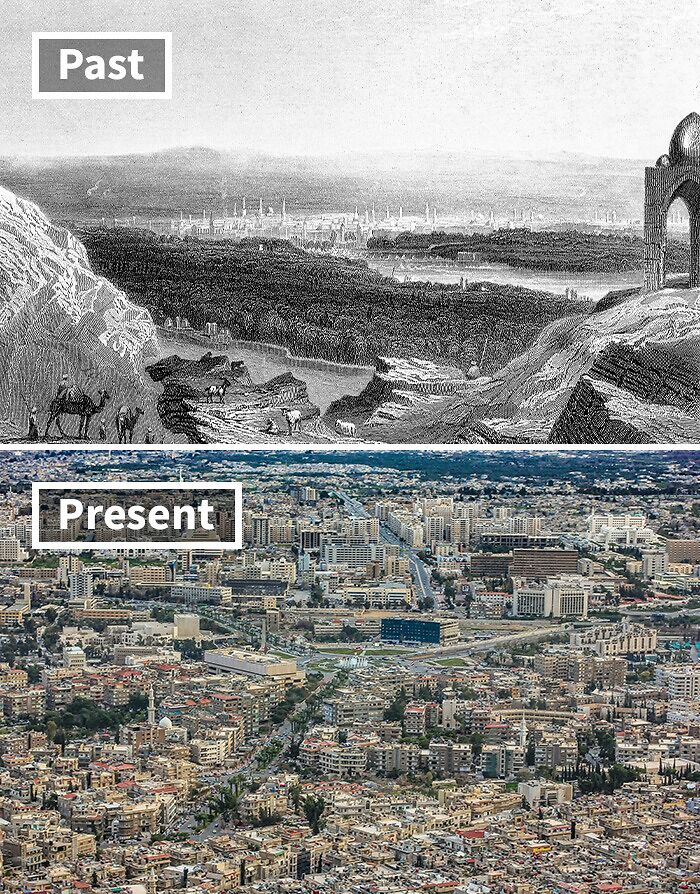
Image source: mikromand / Getty Images, Haykal / Getty Images
#3 Plovdiv, Bulgaria
Perched on hills above the Maritsa River, Plovdiv wears its age in the way the city is laid out. Older layers keep surfacing in the middle of everyday routes. Barceló notes that its story stretches back more than 8,000 years, with the city evolving through Thracian, Macedonian, and Roman chapters.
According to Britannica, under Roman rule, Plovdiv was known as Trimontium and grew into a major provincial center, built for public life with forums, theatres, and paved streets. That ancient infrastructure still shapes what you can see and where people naturally gather.
The city that now runs on culture as much as history, with galleries, festivals, and creative spaces threaded through older architecture.
Roman-era venues still host performances, Ottoman-era mosques stand near Bulgarian Revival houses, and bits of wall appear between homes like an unexpected reminder on a normal walk (per The Guardian).
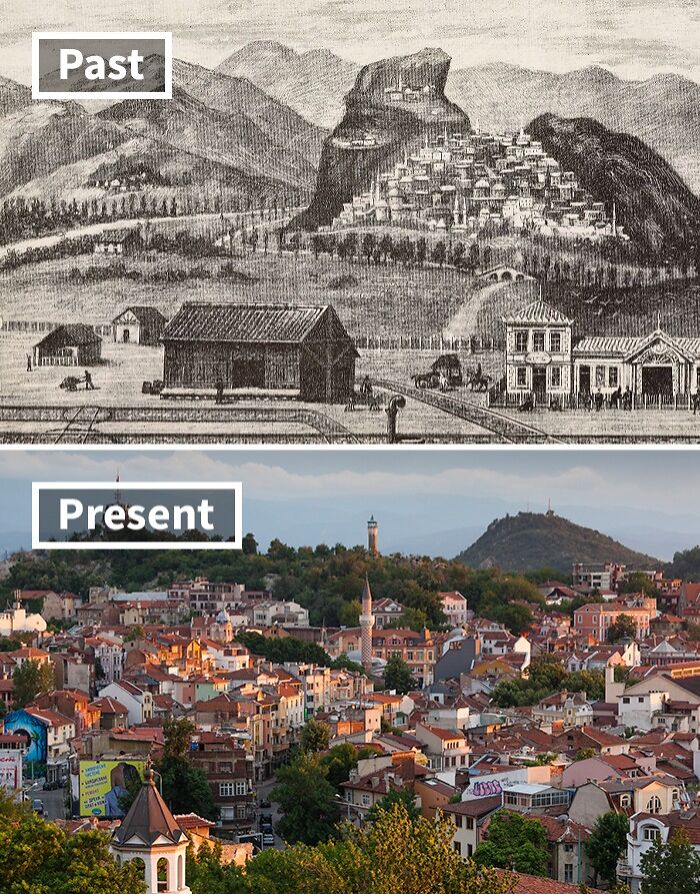
Image source: DEA / ICAS94 / Getty Images , Walter Bibikow / Getty Images
#4 Byblos, Lebanon
Byblos is among the world’s oldest coastal cities, with daily life unfolding on the same shoreline that supported settlement thousands of years ago.
Britannica traces settlement here to roughly 8,000 years ago, in the Neolithic period, with the city later emerging as a major Phoenician port linked to the cedar trade and the early spread of the Phoenician alphabet.
That long maritime history still shapes how the city functions. The harbor, once a center of ancient trade, now frames cafes, fishing boats, and evening walks, while layers of stone from different eras sit openly within the modern town.
Byblos is recognized as a UNESCO World Heritage Site, but it is not treated like a sealed relic.
Each summer, the Byblos International Festival turns the ancient port and surrounding ruins into open-air venues, bringing contemporary concerts into spaces shaped thousands of years ago.
The mix feels natural rather than staged, a reminder that the city’s role as a gathering place never really ended.
That sense of continuity exists alongside modern pressure. In 2024, regional fighting briefly reached the outskirts of the city when Israeli airstrikes hit a wooded area nearby, as reported by PBS.
Even so, daily life continues between ruins and storefronts, with residents and visitors moving through a place where deep history and the present day occupy the same streets.
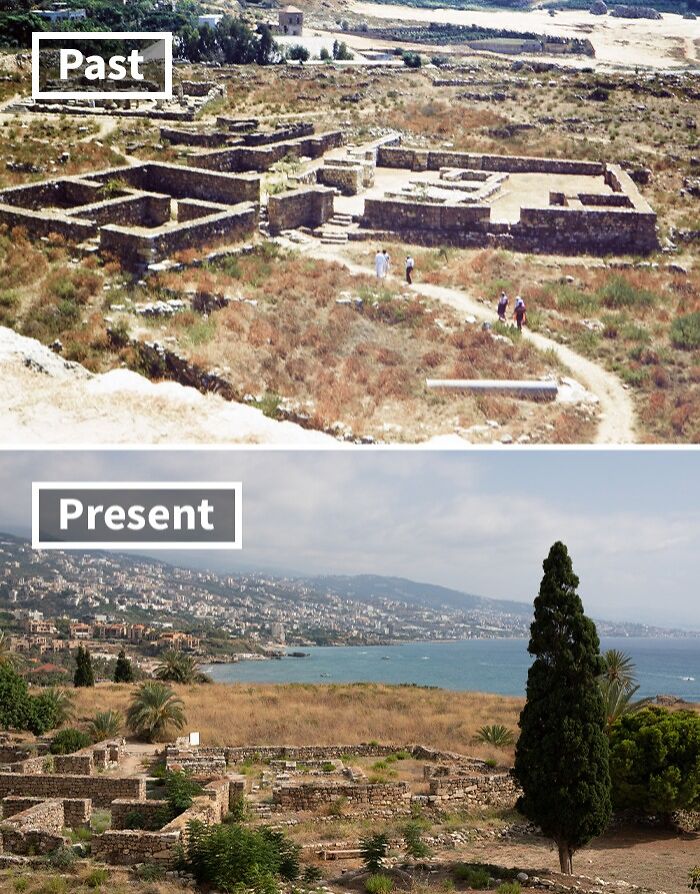
Image source: HUM Images / Getty Images, Geraint Rowland Photography / Getty Images
#5 Aleppo, Syria
Aleppo’s age is evident in the city’s organization around its historic core. Research by Harvard University traces continuous settlement from the Bronze Age onward, placing the city among the world’s longest-lived urban centers.
That long timeline is also marked by recent loss. Parts of Aleppo’s historic quarters were heavily damaged during the Syrian war, and recovery has been uneven, block by block.
On January 8, 2026, CNN reported renewed strikes and instability that disrupted neighborhoods already trying to rebuild daily routines.
Even under those pressures, Aleppo still functions as a commercial heart, with ordinary life pushing back in small, persistent ways. In markets and workshops, people reopen shutters, return to family trades, and move through streets whose basic routes were set centuries ago.
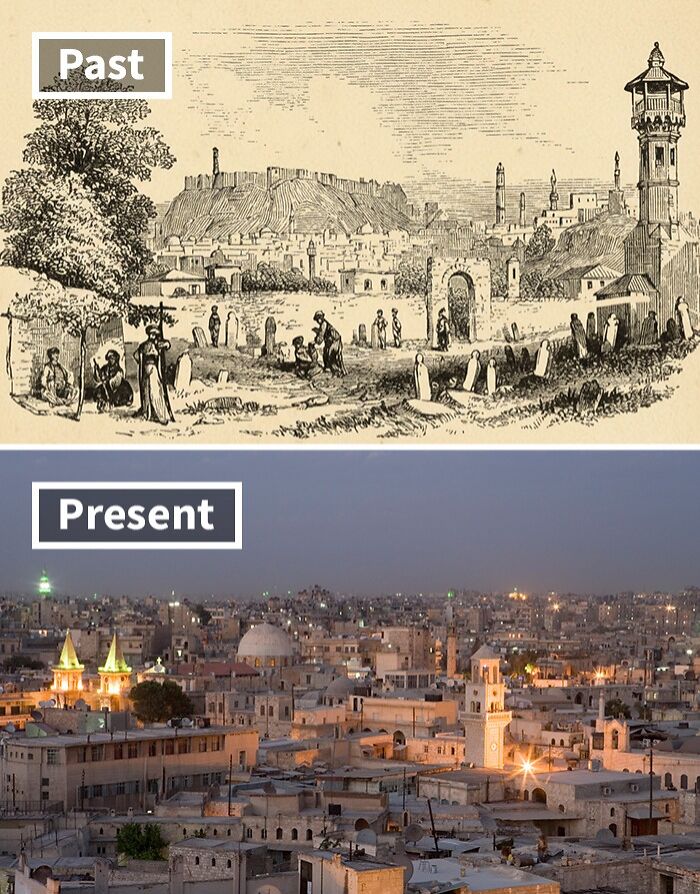
Image source: mikroman6 / Getty Images, Holger Leue / Holger Leue
#6 Faiyum, Egypt
Archaeological evidence summarized in the Local’s Guide to Egypt shows that while the ancient city of Shedet (modern-day Faiyum) developed around 6,000 years ago, the wider region contains much older traces of Epipalaeolithic hunter-gatherer communities.
This places Faiyum among Egypt’s earliest city landscapes, shaped by early farming and supported by the management of Lake Moeris and nearby canals, which made long-term settlement possible.
Britannica notes that Faiyum later became known as Crocodilopolis under Greek rule, a religious center devoted to the crocodile god Sobek. Water management remained its defining feature, linking ancient irrigation systems to the city’s long survival through shifting dynasties and empires.
Nowadays, Faiyum is a place where daily life still revolves around fields, markets, and the lake’s edge.
Farmers, fishermen, and families move through landscapes shaped millennia ago, encountering history not as ruins alone, but as part of ordinary routines.
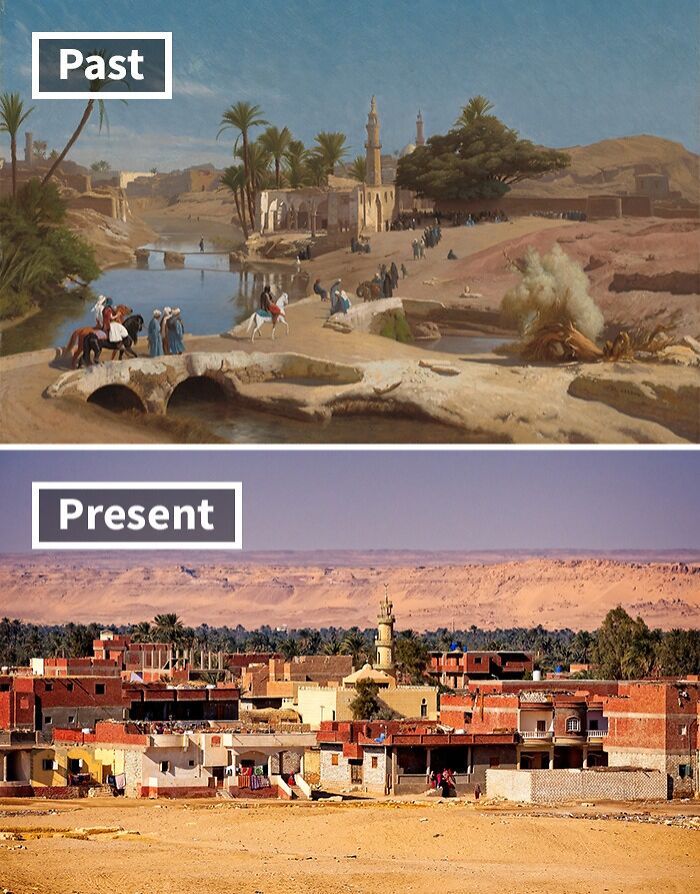
Image source: Heritage Images / Getty Images, Emad Aljumah / Getty Images
#7 Jerusalem (Israel/Palestine)
Britannica traces written and archaeological records back roughly 5,000 years, which helps explain why the city can feel like several eras stacked into the same streets.
That layering is most visible in the Old City, the historic walled core of Jerusalem. Sacred landmarks shape the day-to-day flow as much as they shape the skyline, with people passing the Temple Mount, the Church of the Holy Sepulchre, and the Dome of the Rock on the way to shops, prayers, and ordinary errands through dense quarters rebuilt again and again over centuries.
UNESCO lists the Old City of Jerusalem and its Walls for their cultural and religious significance to Judaism, Christianity, and Islam, recognizing a place where faith, history, and daily movement overlap.
That same compact geography helps explain why the city’s political status is disputed.
Jerusalem is claimed by both Israelis and Palestinians as their capital. Israel administers the entire city and considers it its capital, while Palestinians seek East Jerusalem as the capital of a future Palestinian state, a position widely supported by the international community.
Even with those tensions, the city runs on routine. Nearly 1 million residents move through markets like Machane Yehuda, gather on pedestrian streets in West Jerusalem, and fill the Old City’s narrow lanes each day, navigating a place where ordinary life continues inside an unresolved history.
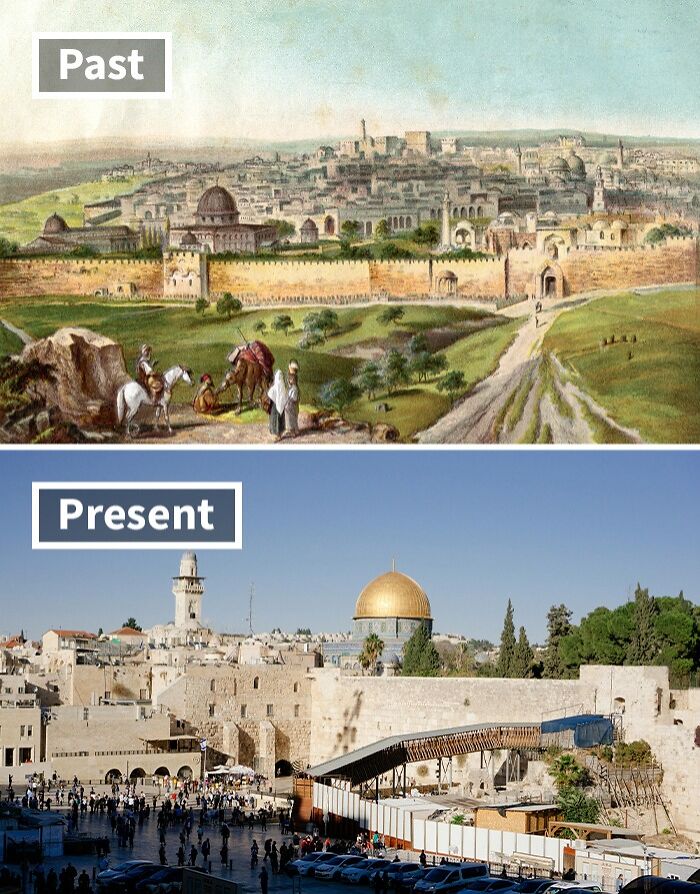
Image source: Grafissimo / Getty Images, Haley Black / Pexels
#8 Beirut, Lebanon
Beirut’s age is easy to miss at first glance because the city rarely presents itself as ancient. Research referenced by NASA places continuous human settlement here at more than 5,000 years, with earlier layers buried beneath modern streets rather than set apart as monuments.
That depth shows up in how the city keeps rebuilding itself. Beirut has absorbed centuries of trade, empire, and conflict, and its long history is written into layers beneath the surface rather than preserved in a single historic core. Cycles of damage and repair are part of how the city has functioned for millennia.
Recent instability has added another layer. The Global Conflict Tracker by CFR outlines renewed political tension in 2024, but everyday life continues alongside it. Cafes spill onto sidewalks, bookstores and galleries reopen after closures, and the Corniche fills each evening with walkers and fishermen.
Beirut remains a city where culture, debate, and social life happen in public. That openness is part of why the city still feels lived in rather than preserved, even after thousands of years.
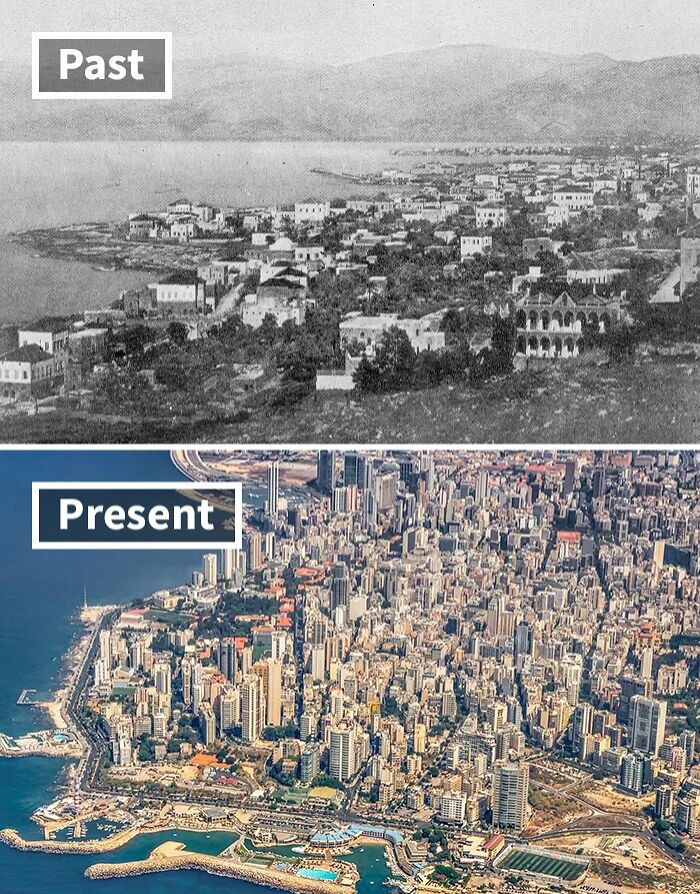
Image source: ilbusca / Getty Images, Haykal / Getty Images
#9 Athens (Greece)
Archaeological records summarized by EBSCO trace continuous settlement on the Acropolis from the Neolithic era onward, placing the city’s origins around 5,000 years ago.
That long timeline is visible in how the city is stacked. Classical temples rise above Roman remains, later churches, Ottoman traces, and modern neighborhoods, all occupying the same compact terrain.
UNESCO recognizes the Acropolis and its surrounding monuments for their influence on architecture, civic life, and ideas that shaped much of the Western world.
What makes Athens feel alive rather than monumental is how easily those layers blend into daily routines.
Cafes line pedestrian squares beneath ancient walls, markets stay busy late into the evening, and people cross the city with the Acropolis constantly in view.
As National Geographic describes, Athens is a place where ordinary life unfolds in the open, surrounded by ruins that were never fully separated from the city itself.
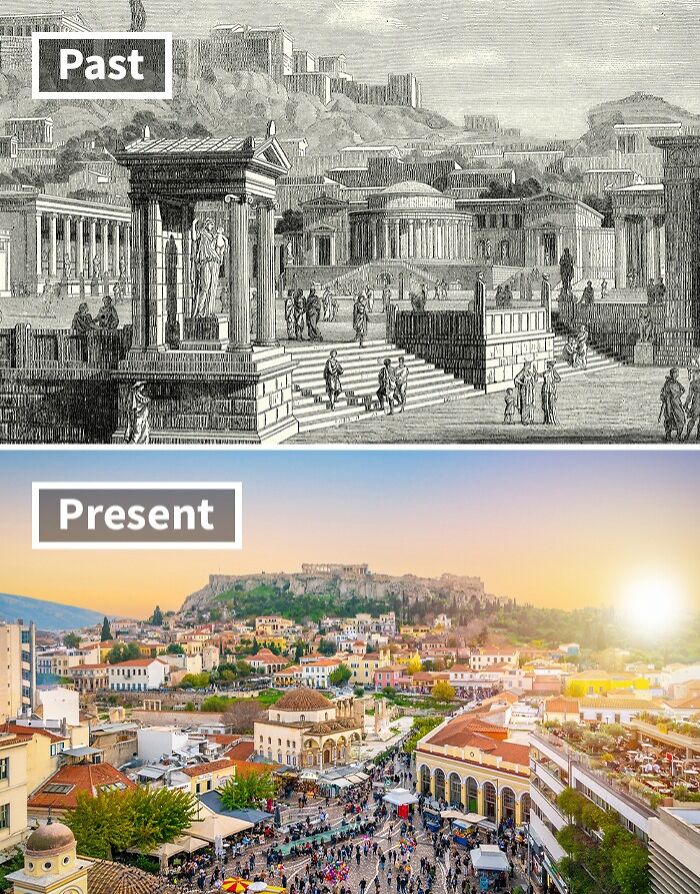
Image source: duncan 1890 / Getty Images, George Pachantouris / Getty Images
#10 Varanasi (India)
The Government of Uttar Pradesh places the city’s history at more than 3,000 years, rooted in early Hindu civilization, where religion, learning, and trade developed together.
That continuity is most apparent at the ghats, the long stone steps along the Ganges that structure the city’s rhythm.
National Geographic describes how dawn prayers, cremation rites, and evening Ganga aarti ceremonies still follow patterns established centuries ago, drawing residents and pilgrims into the same daily cycle.
What makes Varanasi feel distinct is how little separation there is between ritual and routine. Boats drift past cremation fires, vendors set up beside prayer sites, and narrow lanes funnel constant movement toward the river.
The city’s intensity stems from this overlap, in which ancient belief systems continue to shape ordinary days rather than merely exist as preserved traditions.
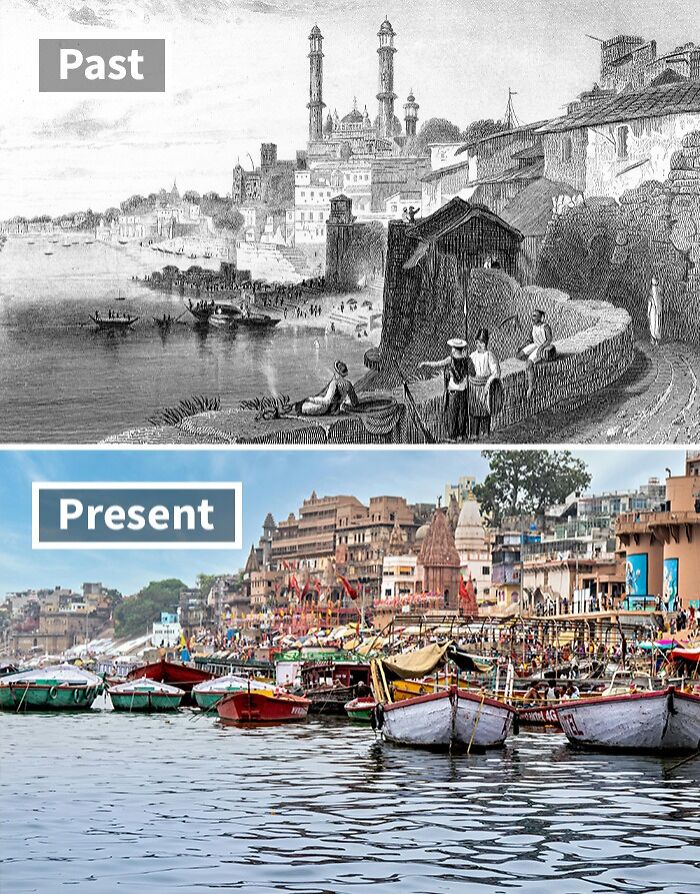
Image source: mikroman6 / Getty Images, Chandi Saha / Pexels
 Follow Us