America: land of opportunity, home of the brave, birthplace of the drive-through and the self-made millionaire. A country that will happily spend billions renovating a ballroom, bring back the McRib, and debate endlessly about what freedom means, but cannot quite seem to get around to telling a pregnant woman to put her feet up and relax.
Healthcare costs are climbing, maternity leave is practically a punchline, and somewhere out there, a woman is using her two weeks of paid leave to recover from childbirth. Meanwhile, one American moved to Germany, got pregnant, and received a letter from HR that genuinely broke her brain.
Maternity leave is one of the most hotly debated topics in the HR world, with policies between Europe and America being as different as they can get
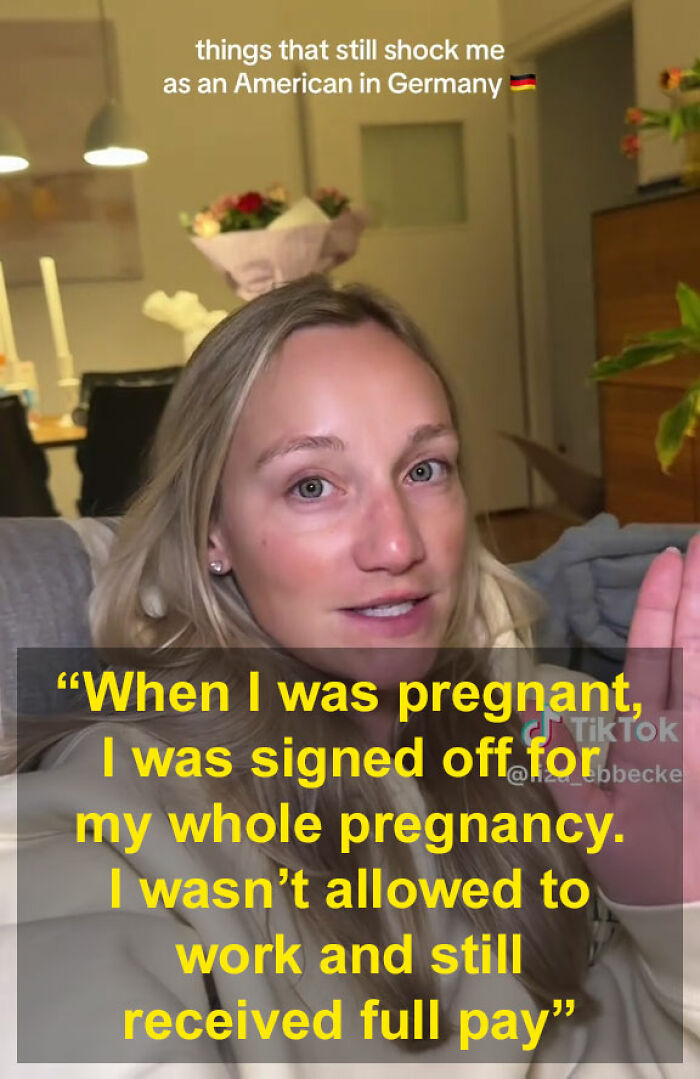
Image credits: liza_ebbecke / TikTok

An American woman living in Germany was issued a “stay at home” order from HR, and this maternity policy was a complete shock to her
Liza Ebbecke is a 32-year-old American who moved to Germany in 2018 after meeting her now-husband while traveling through Southeast Asia. She had no particular plan to stay, no real knowledge of German maternity policy, and absolutely no expectation that she would end up raising a child abroad. But life had other ideas.
When Ebbecke got pregnant, a letter arrived from HR that stopped her in her tracks. “I was genuinely shocked when I received a letter from HR saying I was not allowed to come into work during my pregnancy,” she told People Magazine. Her first reaction was that something had gone wrong. It hadn’t. Germany was simply doing what Germany does: being pragmatic.
She was being legally mandated to step away from work, and she would continue receiving her pay while resting before becoming a mother. For someone raised in a culture where working until your due date is practically a badge of honor, the concept took some getting used to. “I remember thinking on the first day, ‘How am I going to fill all this time?'” she said.
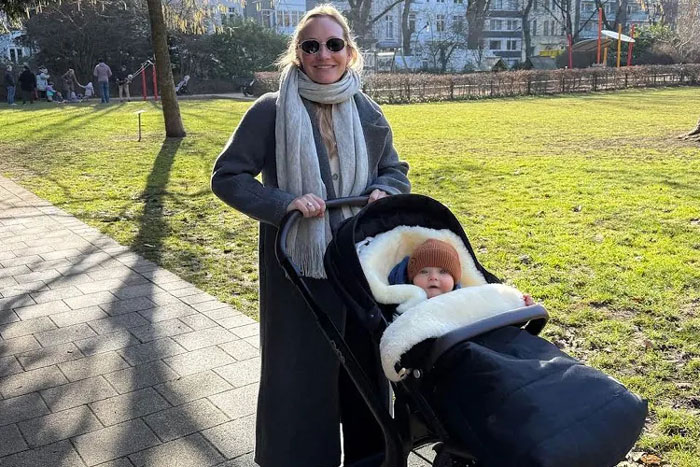
Image credits: liza_ebbecke / TikTok
Liza was expected to take plenty of pre-birth leave to rest before the baby arrived, and then also take months off after the baby arrived, all fully paid
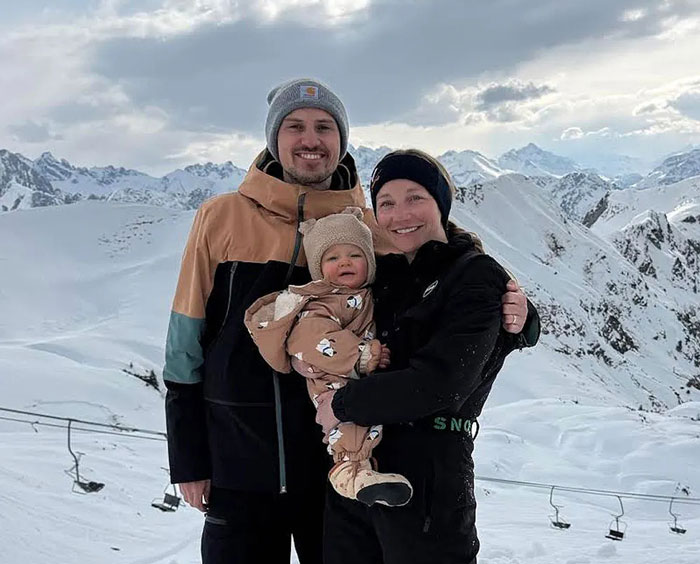
Image credits: liza_ebbecke / TikTok
She was nervous at first, not knowing what she would do with all the free time
The anxiety of having nothing to do eventually gave way to something she hadn’t expected: genuine calm. Ebbecke filled her days with hobbies, joined an NFL fantasy league, and took long walks with her dog. The frantic pace she had always associated with productivity quietly dissolved into something slower and, it turned out, considerably healthier.
“It ended up being such a calm and healthy period of life,” she told People Magazine. “I really slowed down before becoming a mom.” When her son arrived, that same unhurried pace continued. Germany’s postpartum infrastructure gave her a ready-made framework for early motherhood that she hadn’t known to look for. “Germany offers so many postpartum and baby classes,” she said.
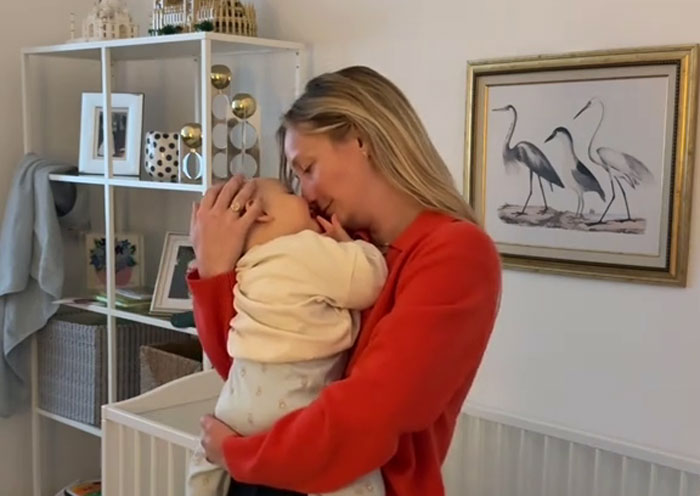
Image credits: liza_ebbecke / TikTok
She soon discovered a whole list of maternity leave activities offered by the government, which helped her form a community that would support her through this new phase in her life
But perhaps the most unexpected gift was the community. Ebbecke made a deliberate effort to put herself out there socially, connecting with both German and international mothers in her area, and those relationships became one of the most meaningful parts of the whole experience.
“Having close friends with babies around the same age has made such a difference,” she said. What began as a temporary move abroad, born out of a chance meeting while backpacking, had quietly become an entirely different life than anything she had planned. One with more support, more balance, and considerably more time to breathe.
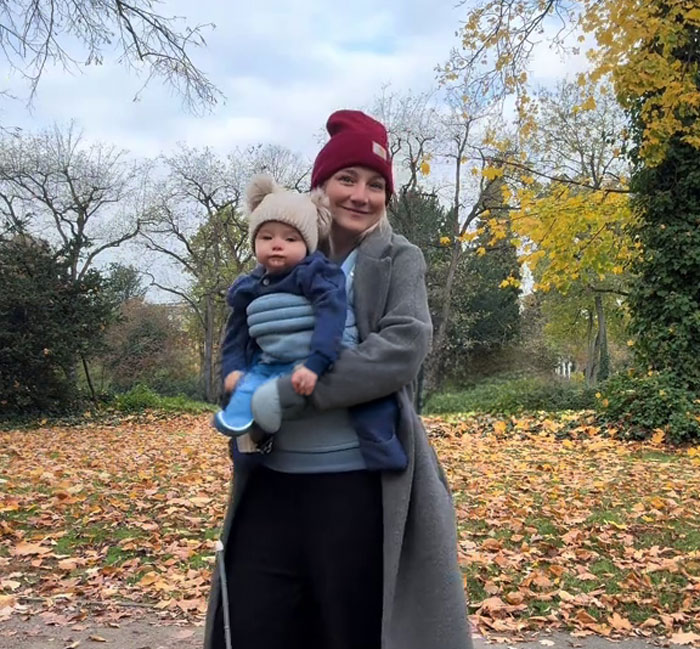
Image credits: liza_ebbecke / TikTok

Image credits: syda_productions / Magnific (not the actual photo)
There are no official policies in the USA for paid maternity leave, and most woman take their limited personal time off to give birth
The gap between American and German maternity policy is more like a chasm. The United States has no federally paid maternity leave. What it does have is the Family and Medical Leave Act, which provides eligible employees with 12 weeks of unpaid, job-protected leave. Unpaid. And crucially, only around 60% of workers even qualify for it, meaning a significant portion of American mothers aren’t covered at all.
Germany, by contrast, provides six weeks of fully paid leave before birth, eight weeks after, and then up to 14 months of parental allowance (Elterngeld), which replaces between 65 and 67% of a parent’s prior net income. Parents are also entitled to up to three years of job-protected leave in total. The two systems are not even playing the same game.
Image credits: The Yuri Arcurs Collection / Magnific (not the actual photo)
The science backs up the case for proper maternity leave, too. A paper by the IZA Institute of Labor Economics found that a minimum of 14 to 18 weeks of paid leave is critical for maternal physical recovery and infant health outcomes. Below that threshold, the research suggests, both mother and baby pay a measurable price.
But here is where it gets more complicated, because the same research also shows that the benefits are not linear. Extended leaves beyond six months offer negligible additional health benefits and can actually negatively impact a mother’s career progression by widening pay gaps and making it harder to return to the workforce at the same level.
In other words, the sweet spot exists, and Germany, for all its generosity, is not without its own debates about where exactly that line should fall. What is not up for debate is the baseline. Fourteen weeks minimum. Paid. The US is not there yet, and for millions of American mothers, that gap is the difference between a career and having a family.
Do you think this German policy is as good as it sounds, or would you change anything about it? Share your thoughts in the comments!
Watch the original video here
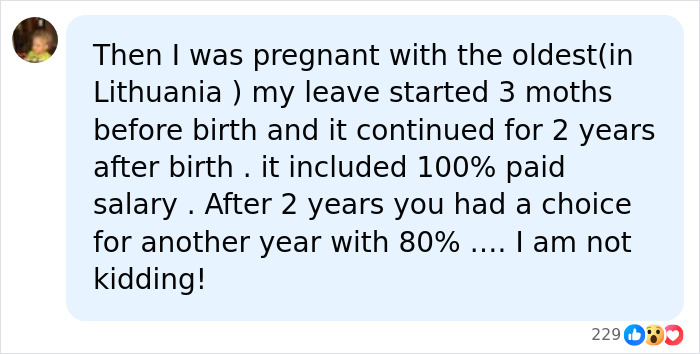
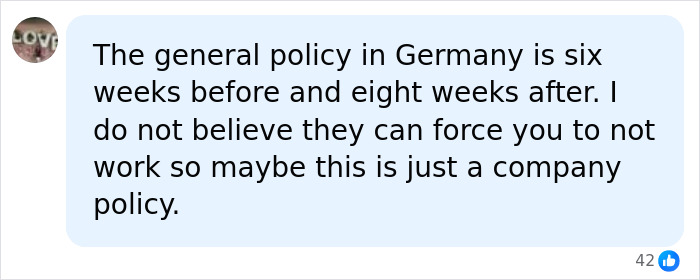
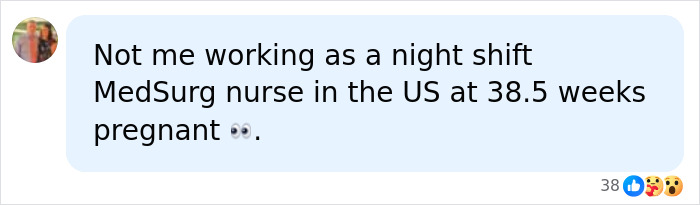
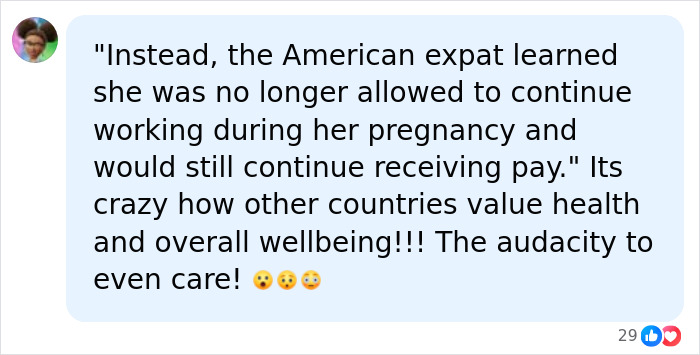
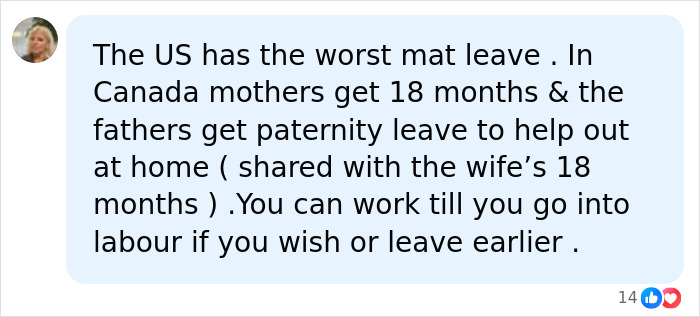
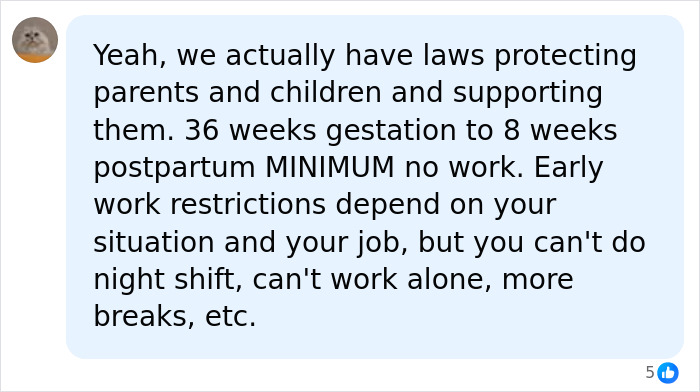
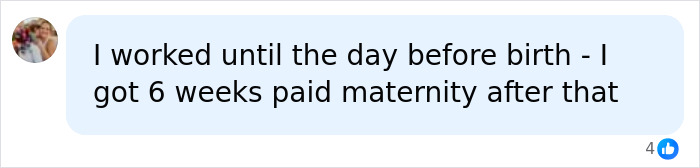
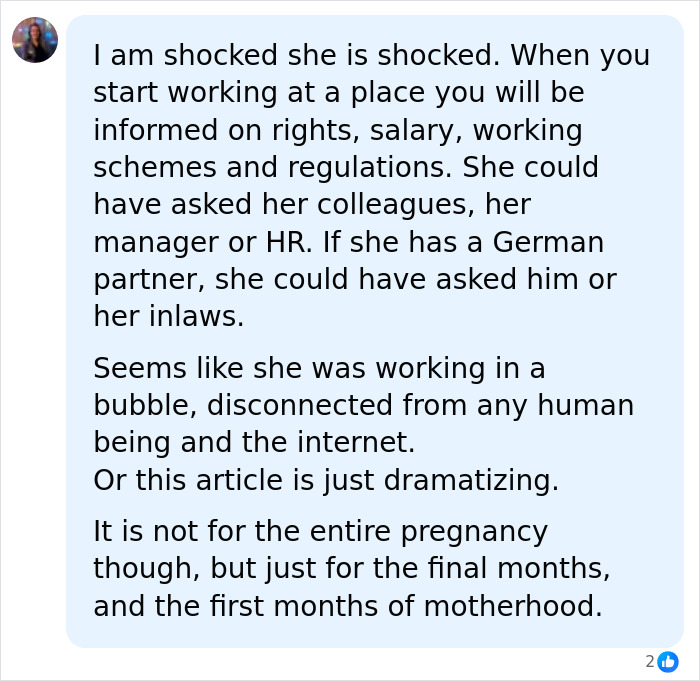
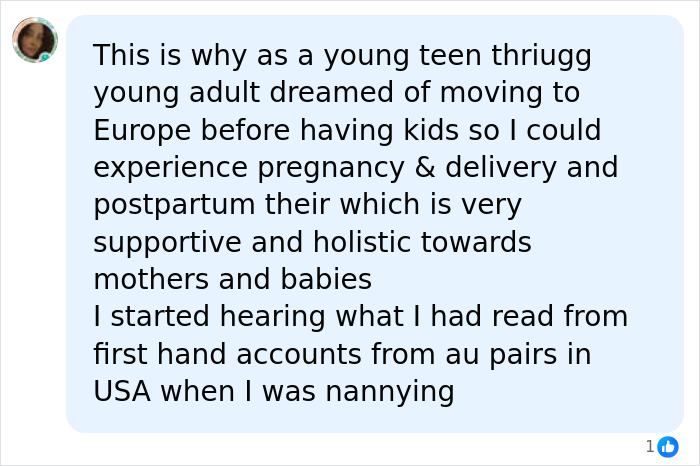
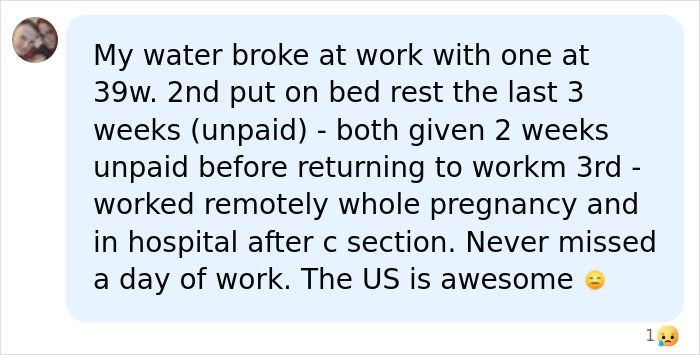
People in the comments shared all the wild maternity leave options their countries offered, with European countries consistently offering the most beneficial options



 Follow Us