Walking into an emergency room is a bit like stepping onto a stage where anything can happen, except the actors don’t always remember their lines. From suspiciously dramatic limps that vanish when no one’s looking to symptoms that defy all known science, medical professionals have truly seen it all.
As it turns out, you can’t exactly outsmart people who deal with the human body for a living. And while some attempts at faking it are almost impressive in their creativity, others fall apart faster. Either way, these stories prove that if you’re going to put on a performance, maybe don’t do it in front of an audience trained to spot every little inconsistency.
More info: Reddit
#1
My mom had a patient who said she had passed kidney stones at home and needed pain meds. The lady actually brought in the kidney stones as proof. Patients don’t usually do this, and the stones were way bigger than people can pass on their own. My mom sent them to the lab and they came back as “geological origin.” Aka, crazy lady picked up small stones from outside to try and get meds.

Image source: echristine12, Graphic Node
#2
We have a patient at our primary care clinic who claims to be blind. He always comes in with sunglasses and a white cane. We were always suspicious though. Something definitely seemed off.
One day someone followed him out of the building. He walked through our nearly empty parking lot, and down the street a little ways to a car parked out of view of the clinic. He folded up his cane, got into the driver’s seat, merged into traffic and drove away.

#3
A surprising number of people try to fake being unconscious, but there’s a simple test for that. Pick up their hand and drop it onto their face. If they smack their own face, they’re unconscious. If they move their hand to the side as it drops, they’re conscious.

Image source: Preceptual, Daniel Hooper 🌊
While the stories of patients faking it might seem purely humorous, there’s a serious psychological and medical context behind them. According to the Mayo Clinic, factitious disorder is a condition in which individuals deliberately fabricate, exaggerate, or even induce symptoms to assume the “sick role,” often seeking attention or emotional care rather than material gain.
Unlike malingering, the motivation isn’t financial or practical. This disorder can take two main forms: imposed on self, where a person fakes or causes illness in themselves, and imposed on another, formerly called Munchausen syndrome by proxy, where a caregiver fabricates illness in someone else to maintain the patient role.
#4
I had a woman come into triage in labor and delivery. We ruled her our for breaking her water. She was pissed that she wasn’t going to get induced and be delivered. So after I left the room she flooded the bed, the floor and herself with tap water. Literally gallons and gallons of water, it was leaking out from under the door. SOO much water – It was like that scene in Coneheads. She said it was her water breaking. Again quickly ruled her out and told her she needed to go home. She subsequently urinated in the bed before leaving.

Image source: parkersdadguy, DC Studio
#5
Not exactly faking it but funny story:
When I was working in the hospital a patient’s screen with his vital parameters started showing dangerously low levels of oxygen in blood, which basically means somebody is suffocating in a way. So all alarms go on and the nurses and one doctor rush to the patients room while the CPR mode is active. Surprisingly the patient was looking all well and didn’t show any blue skin (sign of deoxygenate blood), he was even smiling. So everybody just confusedly went on with their business, except for this one sister that grinned at the old man raising her finger, saying “oh mr smith, did you hold your breath again to see how fast the oxygen levels drop?”. And he just started grinning like a five year old and nodded. One of the funniest moments :D.

Image source: philebro, Drazen Zigic
#6
A bit late to the party.
I had a patient who was supposedly comatose but was giving a few mixed signs when it came to making a definitive judgement. There is a test called a drop arm test, where you raise the patients arm over their head and drop it. A noncomatose patient will move their arm on their own to avoid hitting themselves in the face. But I had a different idea.
With the nurse in the room I said. “Okay. Our defining test. If his arm stays straight up unassisted he is comatose.”
I let go of his arm and it stayed totally upright. The guy did himself in. I told him shortly after that the gig was up and he had no medical reason to be admitted.

Image source: AFlyingRadish, The Yuri Arcurs Collection
Medical professionals are trained to detect these behaviors using careful observation and evidence-based tools. According to Merck Manuals, clinicians watch for patterns of deception that appear during patient evaluation, history-taking, and physical exams.
Red flags can include inconsistencies in patient history, like changing or exaggerated stories that don’t match documented records, unusually extensive knowledge of medical terminology or hospital procedures, and physical or behavioral cues, such as the absence of expected symptoms, complaints that only appear when unobserved, or tampered samples and manipulated devices.
#7
I posted a while back but will post it here again. It wasn’t super obvious at first, but after looking into her records it became clear:
So this happened a few months ago on my psychiatry rotation in medical school.
There was a patient at an inpatient psychiatric facility for intimate ideation. She constantly insisted that she had a mass on her breasts and demanded to be physically examined only by male doctors. When the psychiatrist I was rotating under declined to perform a physical exam, she asked me to do it during my daily patient interview. I also declined physical exam, but had a bit of a hunch to check her medical records.
It turned out she had an ultrasound done a week before that found only normal breast tissue without masses. However, apparently this this lady had frequented many doctor’s offices with various complaints of an unspecific nature and would usually focus on breasts or female private parts complaints when she visited male physician’s offices.
We diagnosed her with factitious disorder (formerly known as Munchausen syndrome) and histrionic personality disorder. It seems her goal was mostly attention from medical professionals (she had lots of issues), but we also had to be careful to make sure she wasn’t fishing for a lawsuit. Patients like her are why doctors document everything meticulously.

Image source: PMME_ur_lovely_boobs, Frolopiaton Palm
#8
Called to a bar for a seizure. Waitress says she delivered his bill and he suddenly went to the floor having a seizure. Look over at him, and he’s laying there flopping his arms and Legs around, as he looks is right in the eye and screams over and over “I’m having a seizure!!”
We tell him to stand up so we can take him to the ambulance. He does and starts walking to the door. We tell him to hold up, gotta pay your bill first. Man, was he pissed at us. Waitress tells us he does this all the time. Well, not today. He still took a ride to the hospital though. The hospital has good egg salad sandwiches.

Image source: Nothinmuch, koldunova_anna
#9
Not a medical professional, but a coworker of mine. Let’s just call her Linda.
Was involved in a minor car accident, her car was able to be driven away, went to the doctors and must have laid it on thick to try and get some sort of compo payment.
Came back to work cause obviously the doctor wasn’t having her nonsense but played the victim for months on end (until I’m guessing her insurance compo failed to pay out) claiming that her spine was no longer connected.
I called her on it too, said well Linda you’re doing ok for someone who should be at least paraplegic if your spine isn’t connected.
She just gave me a dirty look and said ‘That’s what the doctor said, my spine isn’t connected anymore’
And I just stand there looking at her like ಠ_ಠ while the supervisor panders to her every need, oh don’t worry Linda, everyone else can pick up extra work, oh no don’t try to pick that up just sit down, you just relax.

Image source: anon, Getty Images
Motivation plays a critical role in understanding why patients behave this way. Charlie Health emphasizes that while people may fake illnesses for attention or to avoid responsibilities, the underlying reasons differ between factitious disorder and malingering.
Factitious disorder arises from an internal drive to assume the “sick role”, with individuals unconsciously or compulsively fabricating symptoms to fulfill emotional needs. Malingering, in contrast, is deliberate deception with a clear external incentive, like avoiding work, obtaining financial benefits, or evading legal consequences.
#10
When I was a labor nurse, the emergency room sent up a gal who said she was in labor. She was a sturdier lady so it was hard to tell. No prenatal care. No fetal heart tones. Did an ultrasound. She’d had a hysterectomy. She and her partner insisted we were wrong because they prayed and knew they were having their miracle baby. Good luck with that ma’am.
This person had a long mental health history. I have no doubt that she believed she was pregnant.

Image source: kamarsh79, Getty Images
#11
Not a medical professional but work security in an ER, once had a guy come in, announce that he was going to have a seizure, then laid down slowly and comfortably in the floor and didn’t start “seizing” until he was sure everyone was looking at him, then when the nurse (who knew he was obviously faking) said they were going to have to run a tube down his throat he was suddenly fine.

Image source: DsgtCleary, Getty Images
#12
Pediatrician here so my patient was younger (and I think influenced by Mom)
This 13 year old kept getting admitted for complaints that never made sense. Lack of smell. Dizziness. “Seizures” that would happen while he was walking/running. Heart felt hot, etc. Every specialist under the sun had seen him and cleared him. He had every test and imaging study you could think of.
There was a lot of social stuff going on and this was a hard family to discharge. He’d get admitted, we’d run a hundred tests and as soon as we were about to discharge him, some new symptom would come up.
The worst was once after I had already written the discharge orders and the nurses called to let me know the patient had gone blind.
I was grouchy that day and wasn’t having it.
I went in with a rolled up piece of paper. I checked his pupils. I used a Snellen. I went through the whole rigmarole.
Then when I was talking to his mother, without looking I threw the paper at him hard and fast. He yelped and dodged it. I told Mom that they were going home.
To be honest I still feel a little guilty about it, and don’t know what the right thing to do was.

Image source: sjwilli, Getty Images
Finally, detecting these behaviors relies heavily on proper training and experience. Psychiatric Times notes that healthcare professionals develop these skills through medical school curricula, residency programs, continuing education, and specialized forensic psychiatry programs.
Training emphasizes pattern recognition, multidisciplinary approaches, verification of patient history, behavioral observation, and standardized assessments. These strategies allow clinicians to identify red flags without prematurely accusing patients, even when the fabrication is subtle or cleverly executed.
#13
Well… not a doctor, but in school a friend decided he had enough of it for the day and go to the infirmary pretending he was blind. I was in the infirmary for a cut, so i watched the whole thing. At first he pretended he was blind from both eyes, after the nurse asked how he get to the infirmary alone, he changed to only the right eye, she goes to get a flash light and when she asked again he said it was the left eye. Then she moved a finger in front of him, and both his eyes made the following movement… she placed a band-aid on his forehead, moved to treat my cut and said to him “i fixed your mind’s eye, you can go back to class now”.

Image source: jackspicerii, Getty Images
#14
Not a medical professional but ——— When I was visiting a small town in North Carolina I had to go to the ER because of a kidney infection and I remember out of nowhere they did this thing where they placed a fist on my kidney and lightly punched it with their other hand and the pain was so searing and awful that I just screamed and cried. They told me it was to make sure I wasn’t faking it for the medication.

Image source: cynthigha, Getty Images
#15
Not quite the same thing but in the ER. A woman came claiming she was in labor so got her on her way to L&D, L&D sent her back saying she was faking it and needed to go to the psych ward… quick physical exam showed that was false because the baby was crowning. Sent her back to L&D and from what we heard baby was delivered in the hall on the way there.

Image source: spermbankssavelives, reewungjunerr
Whether it’s a dramatic fall that conveniently disappears when no one’s looking, or a symptom that defies all logic, these attempts reveal just how attuned medical professionals are to the human body, and human behavior. It’s a mix of observation, experience, and sometimes, a healthy sense of skepticism that keeps them one step ahead.
Not every fake attempt is the same, of course. Some are painfully obvious, others surprisingly inventive, and a few are almost impressive in their audacity. Reading through these stories gives you a window into both the creativity and desperation of people trying to bend reality, and the sharp eye of those who see right through it!
#16
Lady kept putting cut-up plastic pieces up her uterus. You read that right. Not in the private parts, the uterus. Wanted to be perceived as a medical mystery. Surgery to remove it. Complains of more plastic coming out hours later. Doc says “I took pictures, there is no more plastic”, tells her to stop doing it. She requests a new doctor, and another surgery occurs. More plastic.
This is called Munchausen/factitious disorder. Incredibly frustrating to deal with as a provider.

Image source: naruto54894, kriscole
#17
Not a medical professional, but when I was a teenager I had this friend who would literally fake seizures.
At first we took it seriously because my other friends and I were young and didn’t know better. She only did this when other people were around to watch and to sympathize with her. We would just stand there and watch, she wouldn’t even shake, yet she called them seizures.
Eventually we smarted up and realized she wasn’t even doing a good job of faking. Especially after she was taken to the hospital— we tagged along because we were sleeping over—and we witnessed the doctor telling her parents that he doesn’t know what’s going on, but her body shows no signs of having a seizure. That person was darn weird.

Image source: 0jolsks0, senivpetro
#18
My grandma used to work with a lady at a hospital funny enough, that would always say she got an on the job injury and needed to take a few weeks workman’s comp. A doctor there would somehow always giver her a note and she would get a free week or two vacation, come back for a month, and do it again, obviously milking the system.
One day her boss said “Ok, but there’s nothing for you to do here on light duty. Usually we’d send you home until you’re better but we’re going to have you come in until you’re better.” “But there’s nothing for me to do!” she said. He told her “I know, bring a magazine or something. It’ll be a long day sitting in the break room.”
She lasted two days and never pulled that stunt again.

#19
Had a pt come in with uncontrolled diabetes. He was type 1. His bsl was really high. A couple days and it was back under control and he was ready to be discharged when they went out of control again. Those pattern continued.
About 7am one morning his girlfriend fronts me needing a note for the judge. He was supposed to be in court at 8am. He’d been eating wild amounts of food to try to get out of going to court, then wanted us to fix the situation with 1 hour notice. We did nothing. He went home about 11am.

Image source: stupidperson810, seventyfour
#20
I worked as a nurse on a cardiac floor. Chest pain was the biggest thing people would use seek prescription meds, because if nitro isn’t working we also give oxygen and other controlled substances while turning it into an emergent situation. We even have an acronym for it. MONA: Meds (prescription), oxygen, nitroglycerin, aspirin. All are interventions for a heart attack.
When you have a heart attack, your cardiac tissue releases these markers. Kind of a distress signal. We can pick these up on a blood test. Sometimes a heart attack can be seen on an EKG.
If a patient had a history of negative tests and/or multiple admissions and all their vitals were normal and I expected they were faking it, I would ask them if it hurt when I put my hand on their chest. They would *always* say yes, and then I could happily inform them that this likely wasn’t cardiac but muscular pain since heart attacks won’t cause pain when your chest is touched. I would suggest a warm compress and some tylenol and their pain was always mysteriously gone within seconds of my announcing that it couldn’t possibly be related to your heart. 🤷♀️
After a while you do get very used to the signs and symptoms of people *actually* having a heart attack. There’s just no faking that level of panic or the look on their face.

Image source: PM_ME_UR_YELLOW_LABS, Curated Lifestyle
#21
Had a patient arrive to my unit thrashing around on the stretcher and saying “I’m having a seizure, I’m having a seizure!”
Transport and I moved her into her room and I told her to call me when she’s done. Amazingly, she was cured!

Image source: anon, https://www.freepik.com/free-photo/doctors-nurse-pushing-female-patient-stretcher-corridor-hospital_29564070.htm#fromView=search&page=1&position=0&uuid=5a9a9fd3-e59c-411e-9bd2-926ee0bd402f&query=stretcher
#22
I am kinda late but…
I am an X-ray tech, and when I was a student these 2 people came in, a man who was pushing a woman on a wheelchair with an ankle boot.
Anyway, they came in with a prescription for an ankle xray. They ask if she has to take off the boot and I said yes because obviously it would superimpose on the anatomy. She all of a sudden starts crying saying that it was too painful. No tears. The man said she broke her ankle in 3 places some time ago and her ankle becomes curved when she takes the boot off. Okay dude….
Ankle xrays are easy; take off your shoes and socks, 3 views, boom, done. But no says she cannot get on the exam table and she needs people to hold her ankle together. We literally had 4 xray techs working this HIGH PROFILE case. One to hold the digital cassette, one to hold her ankle in place. One to hold THE CHAIR we HAD to put her ankle on, and one to push the button to shoot. We did this all while she was screaming in pain and she even said “END ME PLEEEEEAAASSSEE…”
The funny thing? All the xrays showed no abnormal findings. No old fractures, no screws or plates of any past surgeries. Literally a perfect intact ankle.
They wanted pain meds for sure. They looked like illegal substances users and had a plan to get more. So annoying.
edit: grammar and spelling.
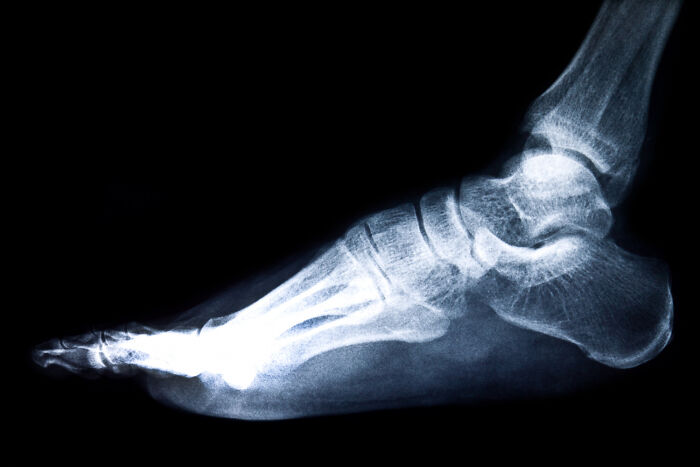
Image source: MadSpaceYT, zirconicusso
#23
When I wanted to be a physical therapist, I volunteered at one of my local clinics. We had a lady who claimed she was in excruciating pain. She couldn’t walk more than 5 feet without literally screaming in pain in the clinic. She couldn’t even move her toes without yelling profanities. She kept talking about how her meds ran out and needed more. She also started talking about how her whole family thought she was dependent on substances, but she swore wasn’t.
I started feeling for her a little, she seemed nice and like she was going through some mess.
But then once the doctor walked out of the room, her and I got to talking about music. I told her my uncle was in a blue grass band and she mentioned how much she LOVED bluegrass.
She loved it so much that the prior weekend, her and her husband spent 14 hours at a festival. She was tired was carrying chairs around and dancing. And they were traveling to go to another one the day after her appointment.
When I asked her if she had any pain during the festival, she said “oh none at all. It was a fantastic weekend” and then realized she gave herself up and got real quiet.

Image source: duddy33, freepik
#24
Got called for a seizure to a park well known to be full homeless users. We walk up and there is a man, laying in the grass in no distress. As soon as I say “hi there” he starts shaking his whole body and yells “oh no help me I’m seizing” and his friend says “I think you need to give him some meds for the seizures.”.

Image source: masterofcreases, freepik
#25
Had a prisoner once that was faking full amnesia including name. I told him there was a nerve in his ear that if he put his finger in his ear and couldn’t remember his name that he was for sure faking because it even worked with severe dementia. Finger in ear… remembered name; finger out of ear… cant’ remember who he was. Insta discharge back to jail.

Image source: timeandspace555, Curated Lifestyle
#26
Crazy, I actually just got out of the hospital and Im reading this in bed. I SHOULD have gone to the hospital Monday when I had terrible pain in my left side that doubled me over and made me puke but I have an irrational fear that doctors arw always going to think Im faking and yell at me for wasting their time. So I psyched myself out and convinced myself that I was overreacting and the doctor would think I just want meds or something but I still felt horrible today so I forced myself to go. The doctor was very nice and it turns out I had passed a kidney stone on Monday. He sent me home with a note keeping me out of work for the next couple days and a small prescription for meds. And told me from now on if you’re in so much pain it’s causing you to double over, just go to the darn hospital.

Image source: anon, gpointstudio
#27
Not necessarily faking it but I work at an clinic and definitely memorable when a patient asked if we would fill out an FMLA form for her period week every month. Like if you are actually so debilitated (which can happen) that is definitely something we need to address and first step would be to get on birth control. Didnt want any sort of assessment or to start trying treatments, just the form so she could get out of work every month. Unsurprisingly we denied that one.
Image source: future_nurse19
#28
Literally every day. Fake seizures. Fake syncope. Fake chest pain. The list goes on.
Image source: mileznmilez
#29
My mom had a “frequent flyer” at the emergency room she worked at. This lady was constantly in unimaginable pain over everything. She got a spinter in her finger and that constituted a 10 on the pain scale and she needed pain meds to deal with it. She was a known using illegal substances as well. She had been caught stealing needles and shoving them up under her huge sweaty chest. The only reason my mom found out was because she came back in to place the EKG pads, and to do so, she had to lift her breasts up to place the pad. When she did, the needles rolled out.
From that point on, they had to have a member of security watching her any time a nurse or doctor left the room. She also had a massive arrest record and there were times the cops would bring her to the ER instead of an ambulance.

Image source: Booner999, undefinedstock
#30
I commonly have young kids who really want glasses because some of their friends have them. They’ll come in acting like they can barely see the big E on the chart. I change some lenses in front of their eyes, give them a little encouragement that they can see better, and they can magically read 20/20 with little to no prescription. They’re not big fans when I tell them they don’t really need glasses.

Image source: anon, prostooleh
#31
Not a medical professional. I was thought to have been making my symptoms up. That it was all in my head. 2 years and a mess load of doctors later. Turns out I have a muscle disease. So apparently I’m really bad at having a disease. I know even the doctor that found it, thought I was faking it. He apologized profusely and sent me to a specialist that deals with rare muscle diseases.

Image source: anon, The Yuri Arcurs Collection
#32
I’ve worked at a hospital for about a year, so I’ve only had two cases where I knew a patient was faking it.
The first one was a young male patient who had an abscess under his arm and demanded inpatient treatment (he did not. I don’t know why he was admitted). He refused to let a nurse put in an iv so we had to call RRT (rapid response) to put in an iv using their ultrasound (complete waste of resources. We use this for patients who are old with poor veins). I took him to the shower and he says he’s dizzy, I go to walk him to bed with the gait belt on and this man DROPS. It was 100% a fake fall with the way he fell to his side to protect himself from belly flopping the floor. Then he fakes being unresponsive. We call RRT and the fall team to come and assess. Fun fact: this patient fakes 3 falls in the week he was in the hospital. This patient was a complete waste of a bed and resources. He was telling me he was a medical assistant but now he’s on disability (in his early twenties?? When he walks fine???) which is kinda a red flag for Munchhausen‘s. Surprise surprise he’s back a few months later with the same issue. Surprise surprise…. he falls twice more during his stay. House doctor started charting that they were purposeful and so they didn’t count toward for floor fall count.
Second one was a few weeks ago, lady comes in with “pseudo-seizures” as she states…. she literally said she has fake seizures. Ok. So she “seized” in the room. RRT is already on the floor so they come and check it out. This woman doesn’t even jerk right, she looks like she’s grinding/doing the worm…. in the bed. RRT RN picks up her arm above her head and she guards…….. so it’s definitely fake. That, and she has no postictal phase (when people seize, it takes them a little while to come back down to earth). She just sits up and whines that she’s in pain. She goes number 2 in the bed…. on purpose to show me she’s in pain and the PA refuses to order her the meds she’s asking for. She asks someone to help her up out of bed to the bathroom but I popped into the room and told her “because her seizures are /so unpredictable/ there’s no way we can get her up without the risk of her seizing again. Bedpan it is.”.
Image source: Purrybear
#33
Husband is a doctor waiting for his residency to start, last year during a pediatrics clinical rotation he had several parents who has clearly coached thier kids into faking all sorts of idiomatic aches and pains in order to get the doctors to prescribe controlled meds.
Image source: madisonpreggers
#34
Getting pages that patients state they are in indescribable agony and screaming nonstop, then going outside their room and listening a bit while they joke and laugh with their family….only for them to start screaming again as soon as I walk in the room.
Image source: anon
#35
I used to see kids faking it a lot to avoid going to school/doing homework back when I was rotating in Pediatrics. Best one was a 11 year old who had read every symptom of appendicitis and regurgitated It as a medical student would in exams and he didn’t even have fever and his USG was normal. He could have won an Oscar for the acting though including that small moan when examining the abdomen and checking for rebound tenderness.
Image source: anon
#36
Had a frequent-flyer patient who did have some legitimate medical issues, but you could tell that there was more to it than that. Patient would tell us to push IV controlled pain meds as fast as possible because “it works better.” Also had the usual “I’m allergic to every single weaker pain med but specific strong ones” story. I suspected they were also fudging some admissions information (was making the rounds at area facilities) but that’s another story.
Patient had to self-catheterize due to a bladder problem, but would regularly come in with raging urinary tract infections. While catheters can cause UTIs, the frequency and severity didn’t seem to add up, on top of the other questionable aspects of this particular patient. Turns out, patient was putting their bodily fluids on the catheters before inserting them to cause the infections so they could come into the hospital for meds.

Image source: BlanketNachos, jcomp
 Follow Us