Some objects make you pause and ask, “Wait, what is that?” But the real surprise isn’t just their strange appearance, it’s the secret life they lead.
In this list, we’ve gathered 20 curious objects that spark instant intrigue, from cleverly disguised modern gadgets to ancient artifacts that survived the impossible.
The lineup jumps from 2,000-year-old meals frozen in time to “hostile” urban designs meant to control how we sit, and secret WWII survival gear hidden in plain sight.
Each one comes with an origin story packed with drama, deception, and a heavy dose of “how did this ever exist?” energy.
Keep reading, and you won’t just recognize these pieces, you’ll understand why their hidden histories are even more dazzling than the objects themselves.
#1 This Pen-Pendant Was Designed To Be Mistaken
Someone could spot this on a chain and assume it’s a stylish pen pendant, the kind of little conversation piece people wear without thinking twice. That assumption is the whole point, because this is the Vesper, a sex toy created by Crave.
Wirecutter describes the Vesper as “a vibrator on a chain necklace” in a published review, noting it also nods to Joan Holloway’s gold pen necklace from “Mad Men.”
It’s an electric pleasure device designed to blend in with everyday objects and pass as jewelry unless you already know what you’re looking at.
The giveaway is also the cleverest part. To charge it, you unscrew the cap like you’re opening a real pen.
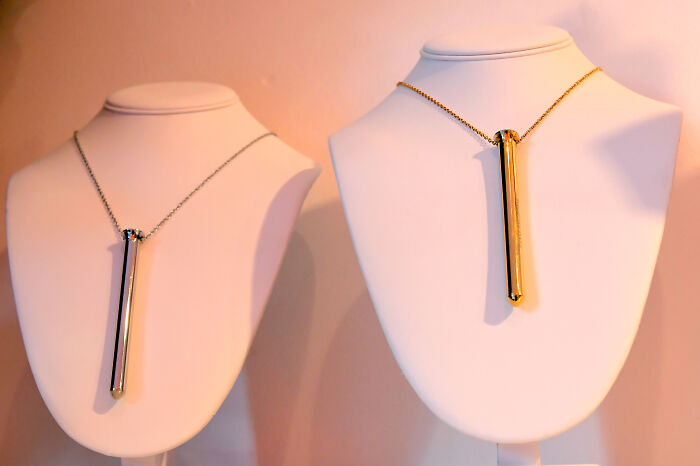
Image source: Charley Gallay / Getty Images
#2 This Camden Bench Stops More Than Sitting
The Camden Bench is a massive, monolithic block of molded concrete that reads like a sculpture more than street furniture.
People often describe it as a lumpy seat, but the shape is deliberate. Failed Architecture notes that it was commissioned by the London Borough of Camden, designed by Factory Furniture, and introduced in 2012.
Its sloped surface and ridges are classic hostile architecture. They make it hard to sleep on, awkward to lounge on, and unfriendly to skateboarding. The same smooth, crevice-free build also reduces hiding places for litter, graffiti, or objects.
At that point, doesn’t it stop feeling like design and start feeling like enforcement?
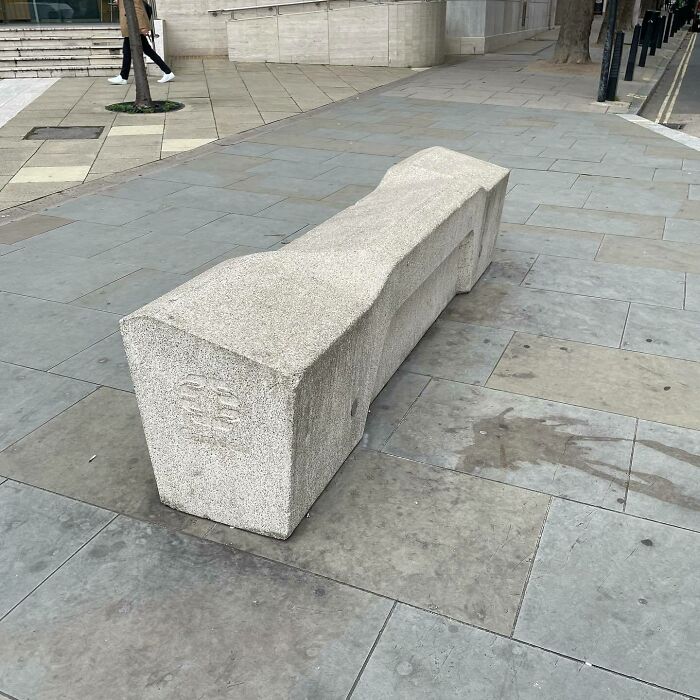
Image source: uncriticalsimon / Instagram
#3 This Wwii Item Was Meant To Be Hidden
Folded up, this WWII item could pass as a scarf tucked into a pocket. Unfold it, though, and you’re holding an escape map printed on silk.
The Bodleian Map Room Blog explains that these were British-made maps issued to Allied aircrew, designed for the worst-case scenario: a crash landing and a dash through enemy territory.
Silk mattered for transportation in the harshest sense. It was light, quiet, hard to tear, and could be tucked into a boot or uniform without giving you away.
One detail is oddly satisfying: early versions were printed on silk that wasn’t good enough for parachutes, and later production shifted to acrylic.
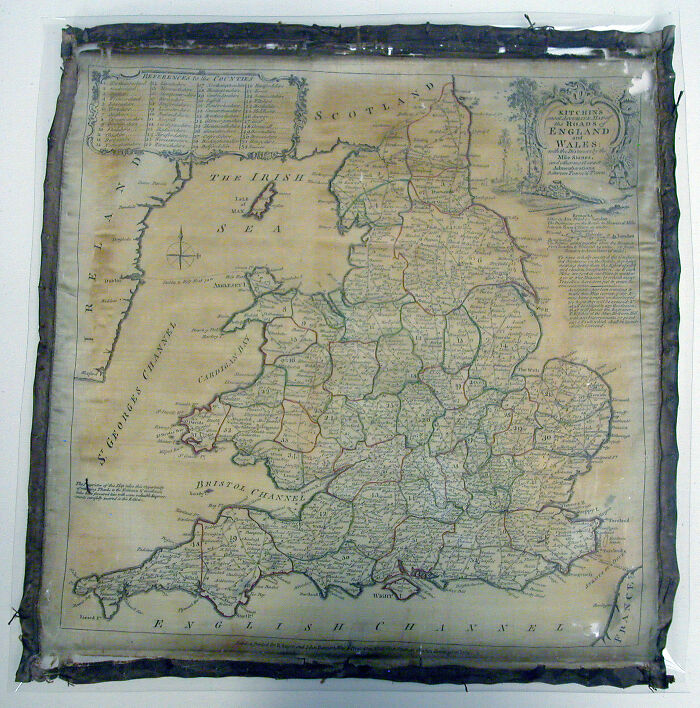
Image source: Heritage Images / Getty Images
#4 Edible Packaging To Replace Plastic Bottles
You’d swear someone dropped a laundry pod on the table, until you realize it’s a drink. Ooho is a water “bubble” wrapped in a seaweed-based membrane that you can swallow, or even eat.
Notpla says the whole project started with a blunt question: why should a few seconds of drinking leave behind packaging that lasts for centuries?
Their co-founders, Rodrigo García Gonzalez and Pierre Paslier, developed the first edible water bubble at Imperial College London in 2013, then kept refining it in their student kitchen.
The form is the point. A small, liquid sphere designed to revolutionize how we think about “single-use” altogether.
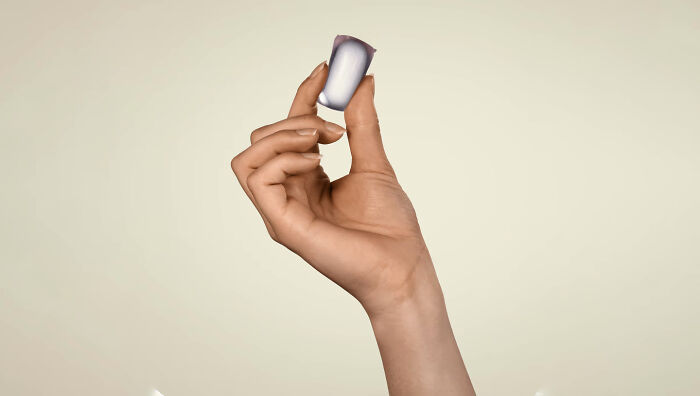
Image source: Notpla.com
#5 A Simple Loaf That Survived The Impossible
This is “just bread,” but it’s also a 2,000-year-old museum object with a backstory you can almost smell.
A baker in Pompeii likely slid this loaf into the oven right before Mount Vesuvius erupted in 79 AD. Instead of burning away, it carbonized (a process in which high heat and a lack of oxygen turn organic material into charcoal, preserving its shape for millennia) and solidified into ash, and archaeologists later found it still shaped like a real meal-in-progress.
Visit Naples describes it as Panis Quadratus, a round loaf scored into eight segments, with a cracked, segmented texture that made it easier to break and share.
Even the top was stamped with a name, marking it as the property of “Celer, slave of Q. Granius Verus.”
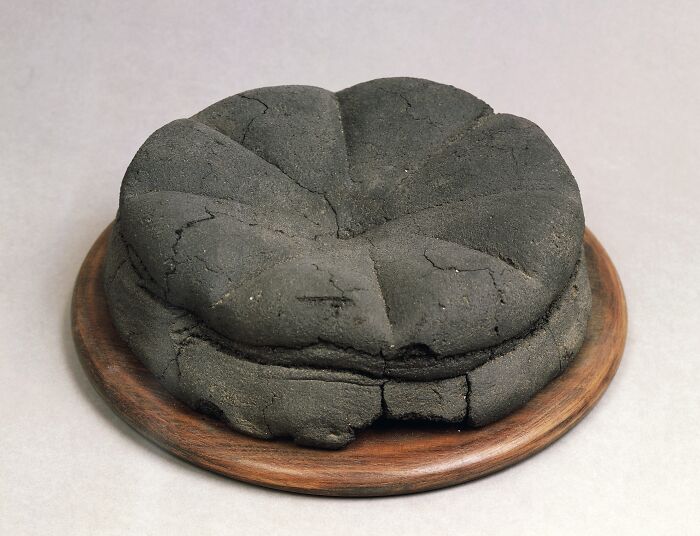
Image source: DE AGOSTINI PICTURE LIBRARY / Getty Images
#6 Chic Wooden Box Made For A Desk Ritual
At first glance, it looks like a chic wood box you’d keep on a dresser. It’s polished, compact, and almost like it’s hiding jewelry.
But it’s actually an inkstand, a Regency-era desk set from the United Kingdom, designed to hold ink, often in crystal bottles, and keep dipping pens close at hand.
In the 1800s, letter writing became a daily ritual for the upper classes, and inkstands turned ordinary objects like ink jars, pen rests, and candle space into status-worthy desk pieces.
The Herald Times notes that as correspondence became more common, people wanted one elegant place to control the chaos of ink.
Once you realize it’s not a box at all, you start spotting the logic: everything is arranged for a quick, inky message.
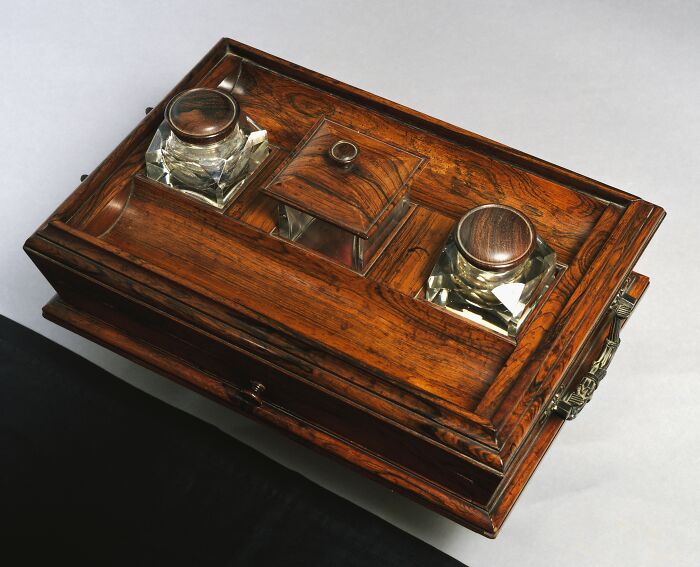
Image source: DEA / A. DAGLI ORTI / Getty Images
#7 The Origami That Took Microscopy Global
A flat, printed piece of folded paper reads more like packaging than a device.
In the image, Stanford bioengineering professor Manu Prakash, one of the inventors, is holding a Foldscope microscope.
Prakash co-authored the Foldscope research published on PLOS One. In that paper, the “magic” is a small spherical ball lens mounted in the paper frame.
A sample slide slips in, an LED shines through, and the folds align while your thumbs handle panning and focusing by flexing the optics stage.
Foldscope Instruments says Prakash and Jim Cybulski came up with it after repeatedly seeing bulky microscopes break in field stations, and asking a blunt question: what’s the best microscope you can build for under $1?
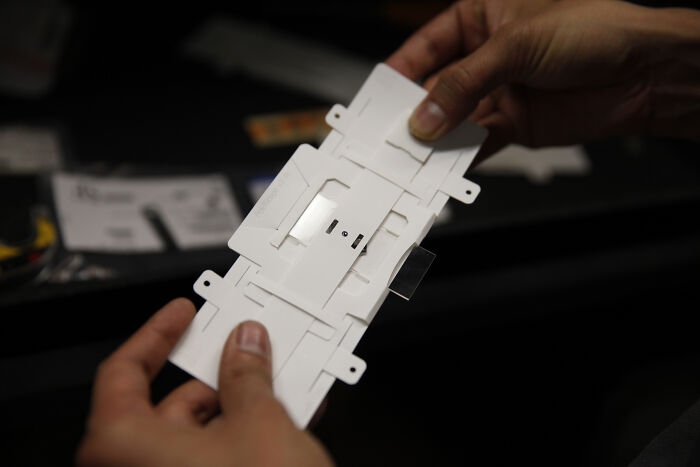
Image source: San Francisco Chronicle/Hearst Newspapers / Getty Images
#8 This ‘‘Medical’’ Item Came In A Tool Kit Box
It comes in a fitted box like a precision tool kit: a long chrome wand, a hand-crank, and extra heads that make it look more surgical than soothing.
The Science Museum Group identifies it as the ‘‘VeeDee’’ mechanical vibrator, made in London between 1900 and 1915, and marketed as a gear-driven, hand-cranked vibratory massager rather than an electric device.
In the late Victorian and Edwardian eras, “curative vibration” was treated as a catch-all remedy, and the box even claimed it could cure almost everything, from colds to digestive complaints.
The name itself is a wink, too. The museum notes it’s likely a pun on ‘‘Veni, Vidi, Vici,’’ (I came, I saw, I conquered), suggesting the device ‘conquered’ illness through the power of vibration.
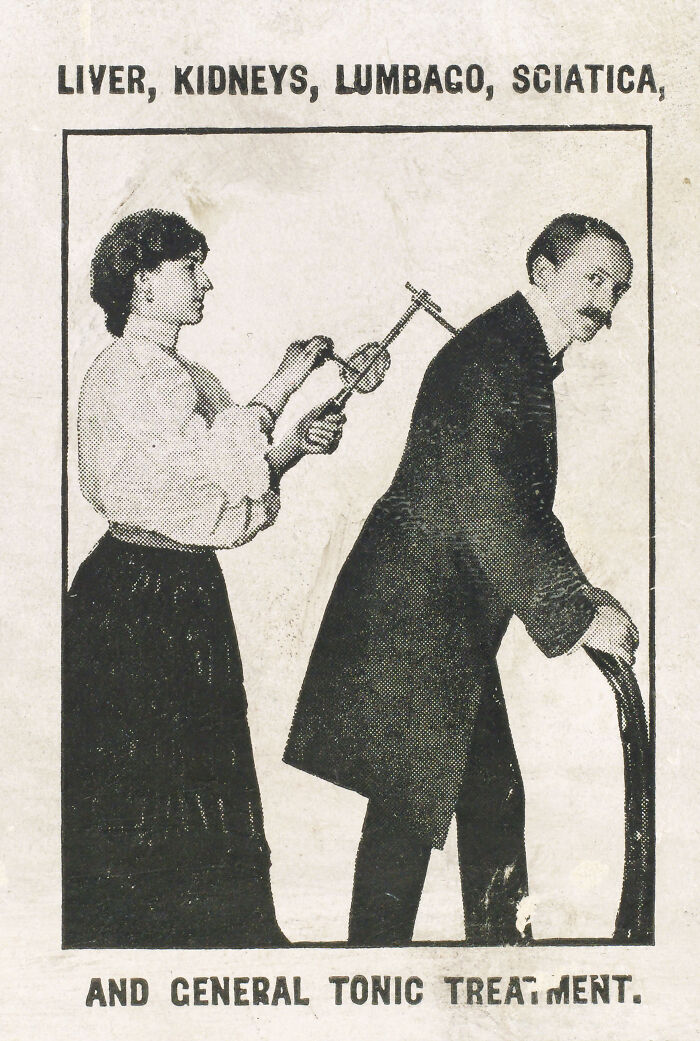
Image source: Science & Society Picture Library / Getty Images
#9 U-Shaped Toothbrush For Hands That Struggle
No matter how weird-looking, a U-shaped toothbrush flips the usual routine.
Instead of guiding bristles tooth by tooth, you place a mouthguard-like brush over your teeth and let the bristles contact multiple surfaces at once, which can make brushing feel far less demanding.
Autobrush, one of the best-known brands behind the concept, frames it as an evolution of brushing for kids who struggle with technique, need more independence, or have sensory and motor disabilities.
The dazzling part isn’t a single inventor. It’s the design leap of reshaping a fine-motor task into a strange, mouthguard-style brush head that covers multiple teeth at once, helping reduce missed spots when perfect hand control isn’t realistic.
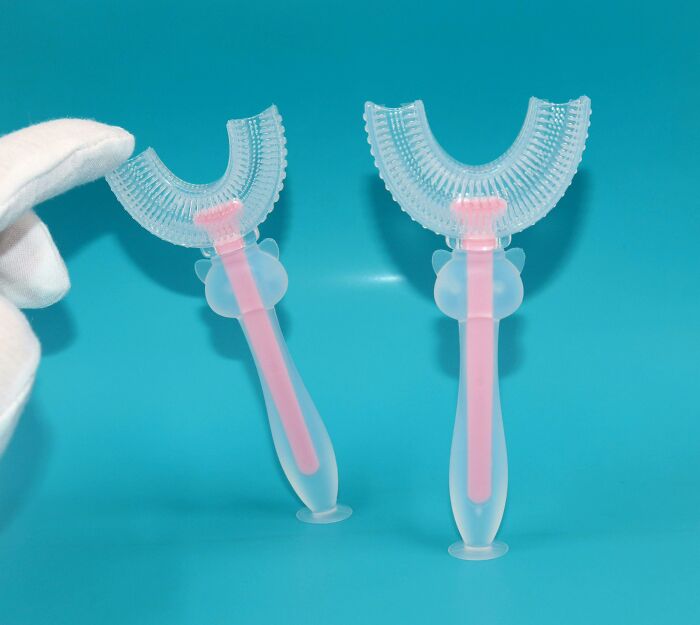
Image source: abdul wasi sherzai / Pexels
#10 A Tiny Seal Collection That Once Carried Weight
Raised crests, miniature emblems, and miniature stamps can pass for pocket-size art until you notice the purpose: they “sign” a message without ink.
Wax seals work by melting sealing wax, often with a match, then pressing a brass stamp into the soft pool to leave an identifying mark.
Premium Wax Seals traces its roots back to ancient Mesopotamia, where cylinder seals were rolled into wet clay around 3500 BCE to authenticate documents and deter tampering.
By the Middle Ages, wax became the go-to in Europe for letters and legal papers, because the seal didn’t just mark identity. It also acted as a privacy alarm: if it cracked, someone had been there first.
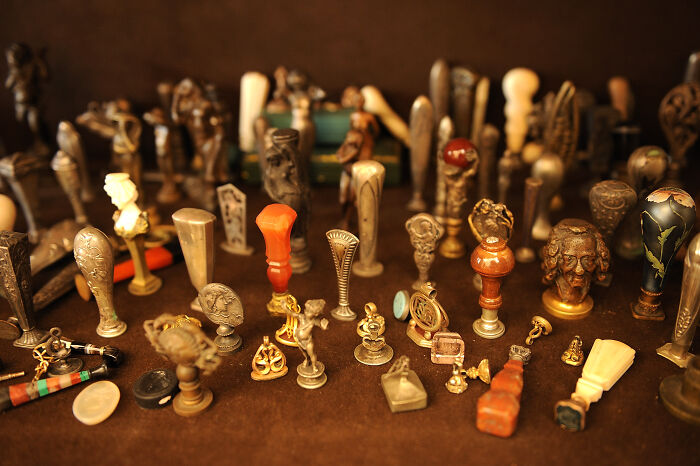
Image source: Tullio Puglia / Getty Images
#11 Theca Looks Like Jewelry, But It Holds A Sacred Relic
A theca can fool you at first. It’s small, polished, and so jewelry-like it reads as luxury until you realize it isn’t meant to decorate you at all. It’s a sealed container for a Christian relic.
Adele Kenny explains how the system works: the relic sits behind a glass crystal with a handwritten label naming the saint, then everything gets tied down with thread and stamped with a red wax seal from the issuing Church authority.
The proof continues on paper as well, with an official document meant to confirm what’s inside.
Kenny notes that relic trading surged in the 20th century and fakes spread quickly, so the theca became part reliquary, part tamper-evident ID.
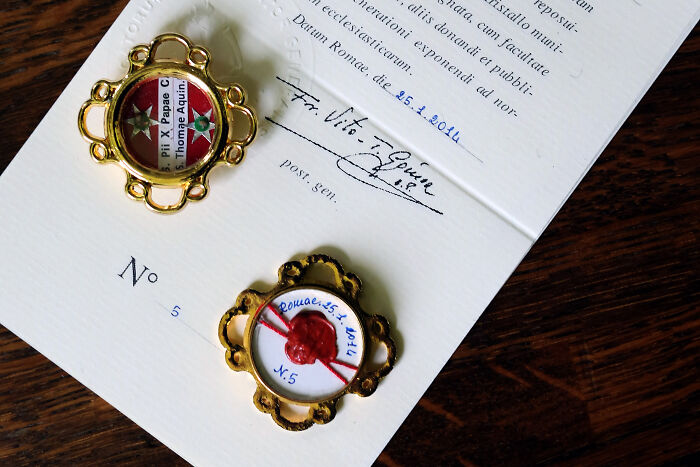
Image source: Franco Origlia / Getty Images
#12 An Empty Bottle With A Mysterious Warning Attached
A small, stoppered bottle shouldn’t feel threatening, yet this one comes with a dare built in.
The Pitt Rivers Museum says an elderly woman near Hove, Sussex, handed it over around 1915 with a warning that a witch was inside, and that opening it would bring “a peck o’ trouble.”
That claim is what makes it so uncanny, because most “witch bottles” weren’t about trapping a literal witch at all. They were folk-magic counterspells, usually filled with personal bits and sharp objects, then hidden under hearths or thresholds to repel harm.
The museum’s note adds an irresistible detail: as far as they know, it has never been opened.
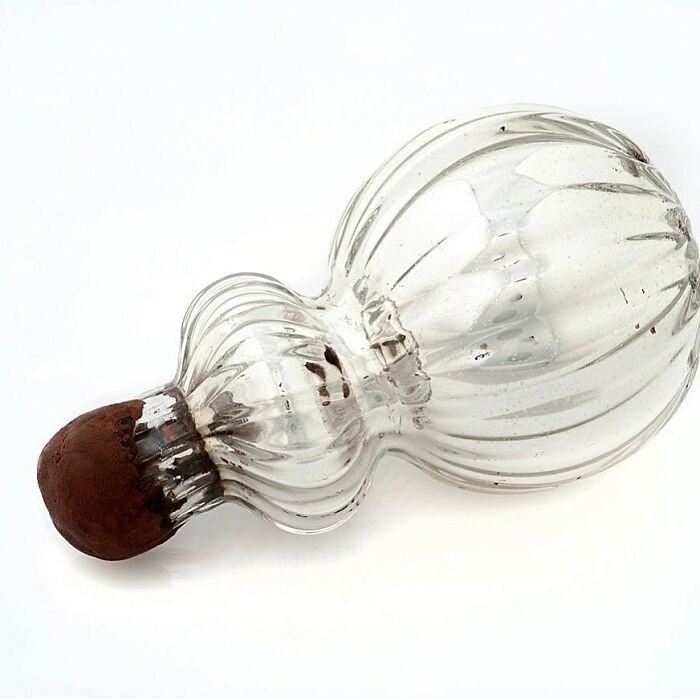
Image source: pittriversmuseum / Getty Images
#13 Tenji Blocks Are Tiles With An Invisible System
Tenji blocks are the bright yellow stone tiles with raised dots and bars that many people mistake for bold street design. In reality, they’re an “invisible” navigation system you can feel through your shoes.
TIME says Japanese inventor Seiichi Miyake developed the canary-yellow “braille blocks” in the 1960s after a friend began losing his sight, even paying out of pocket to get the design right.
The first tactile pavement appeared in Japan in 1965, and by 1967, it was installed near the Okayama School for the Blind.
Straight bars guide people toward safer paths, while raised domes warn of danger ahead. And the wild part is how global it became. Tokyo and Osaka followed, and it later spread to countries like the US, Canada, and the UK.
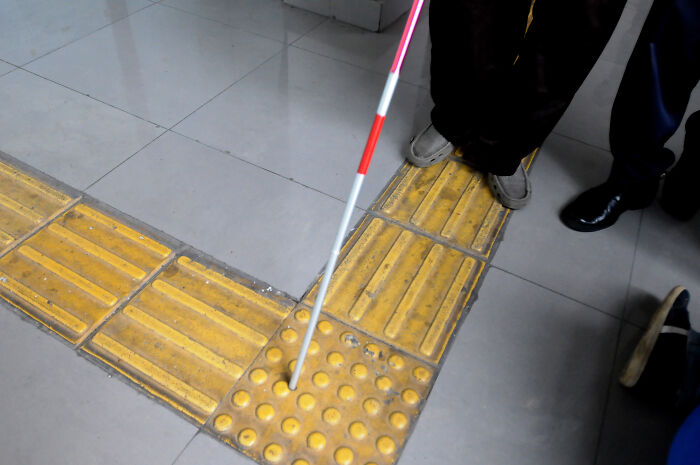
Image source: NurPhoto / Getty Images
#14 Toy Story Of Invention With A Real-World Impact
Two paper discs, a bit of string, and a couple of pulls feel like something you’d invent in a schoolyard, not a device that belongs anywhere near blood testing.
Stanford University calls it the Paperfuge, a human-powered centrifuge made of paper that costs about $0.20 and weighs around 2 grams.
Manu Prakash, a Stanford bioengineering professor who also co-founded Foldscope with his lab team, came up with it by borrowing the mechanics of an ancient whirligig toy dated to 3300 B.C.E., then pushing that simple trick to lab-level speeds.
According to Stanford, it can reach 125,000 rpm and separate plasma from whole blood in under 1.5 minutes, without electricity.
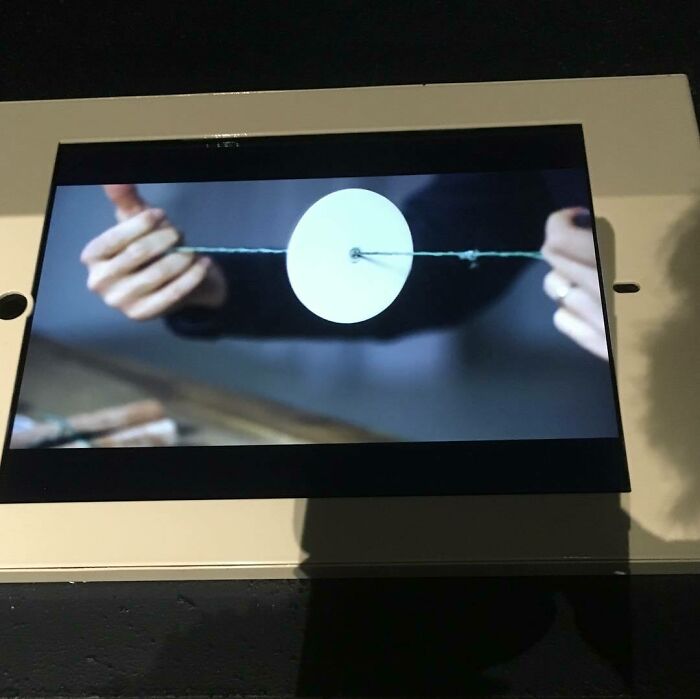
Image source: hilarymbgresty / Instagram
#15 A Metal Pot With A Hidden Twist Function
A silver and gold “empress” sits upright, dressed in gilt details and holding a scroll. It’s easy to read it as a figurine until you realize the whole thing is a pepper pot.
The British Museum says it was found in the Hoxne Hoard, a major discovery unearthed in Suffolk, England, in 1992 alongside about 15,000 coins and other Roman silver.
The twist is what it was built for: pepper was an expensive imported spice in the Roman world, and pepper containers like this are rare finds.
Flip it over, and the design makes sense. A rotating disc in the base clicks between three modes: closed, wide openings for refilling, and small holes that turn the “empress” into a table-top shaker.

Image source: Print Collector / Getty Images
#16 Metal Cubesat Looks Like A Brick Until You Learn Why
A metal brick with rails and sharp corners screams “robotics kit” and looks far from a spacecraft until you learn it’s meant to leave Earth.
This is a CubeSat, a standardized nanosatellite built around a 1U unit measuring 4 × 4 × 4 inches, expandable into larger sizes.
The best part is how it started: NASA notes the format was developed in 1999 by Cal Poly and Stanford to give students a realistic platform for education and space exploration.
Because CubeSat was never truly patented and remained open-source, it quickly grew into a global industry standard, a simple shared blueprint that made space feel buildable.
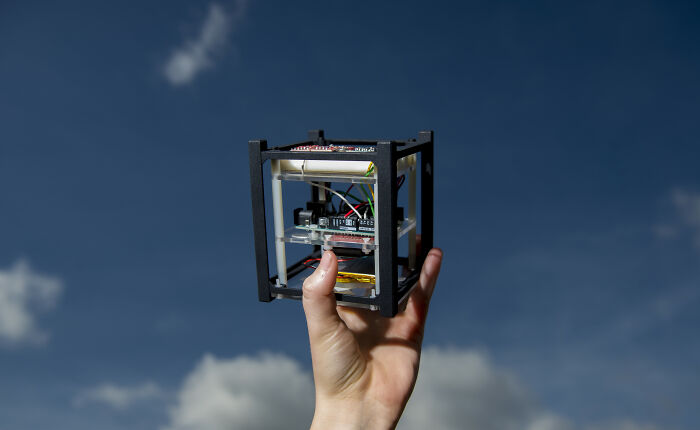
Image source: MediaNews Group/Orange County Register via Getty Images / Getty Images
#17 House-Ring Actually Made For A Ceremony
This house-ring wasn’t meant for everyday wear. It was designed for a Jewish wedding ceremony, with a miniature building sitting on top so the ring would be impossible to miss when it mattered most.
In the Arts, researcher Maria Stürzebecher explains that the ring’s intricate “micro-architecture” helped make the legal moment visible, as witnesses had to see the ring and confirm its real value.
The article notes that Jewish law also pushed the design in a practical direction: wedding rings were expected to be plain metal without gemstones, so value wasn’t hidden in a stone.
Some surviving rings even hide a small piece inside that makes a sound when moved, like a quiet announcement.
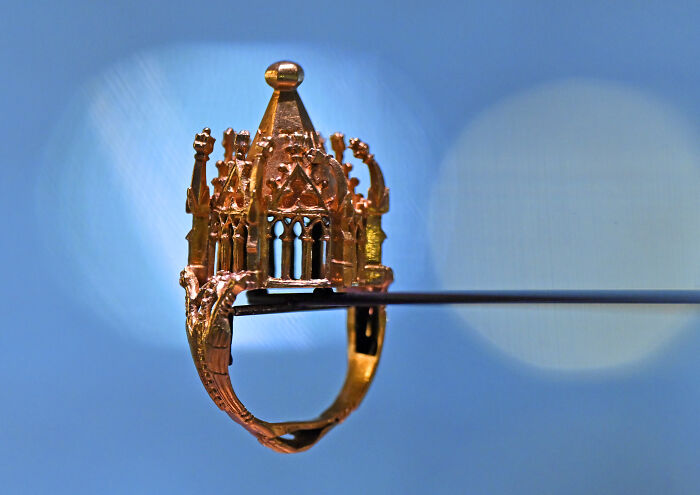
Image source: picture alliance / Getty Images
#18 A Chunky Straw-Like Object Built For Emergencies
It looks like a chunky plastic straw with a cap and a weird little threaded tip, as if it belongs in a tool kit rather than your pocket. But it’s a LifeStraw personal water filter, built for moments when “drinkable” water isn’t guaranteed.
You sip straight from a stream or from a narrow disposable bottle, and its microfilter membrane is designed to block most of the waterborne “nasties” you would worry about in an emergency.
In a UKC review, Dan Bailey points out another part of the idea: for every LifeStraw product purchased, the company says a child in need receives safe drinking water for a year, largely through its work in Kenya.
One warning: it needs upkeep, including the backwash syringe, which can become the real hero.
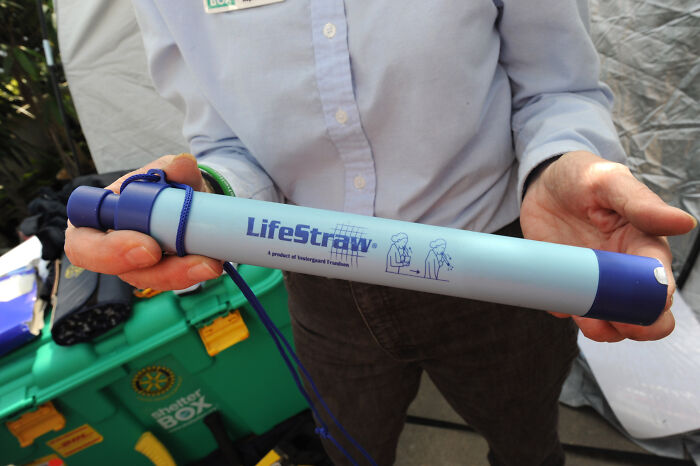
Image source: Albany Times Union/Hearst Newspapers / Getty Images
#19 A Chair You Can’t Sit On, No Matter How Real It Looks
It’s a chair that looks ready for you to pull up and sit in. Then your eye catches the spindles. They’re so thin they feel more like sculpture than furniture, and the base hides a delicate threaded steel swivel mechanism.
This is a Shaker turning chair prototype from the Mount Lebanon Shaker community in New York, dated to the 1800s. The Magazine Antiques describes it as “pretty, dangerous,” and gives the key warning: don’t sit in it.
In a July 31, 2024, episode of “Curious Objects,” host Ben Miller talks with American design specialist Sarah Margolis-Pineo about why this experiment mattered, even if it could not handle a full-grown adult.
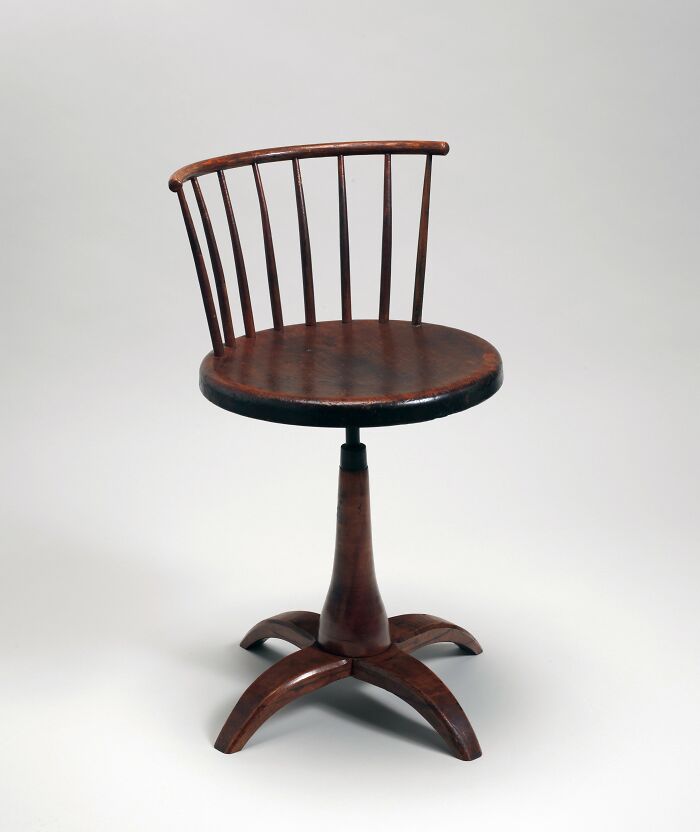
Image source: Sepia Times / Getty Images
#20 This Horse With Wheels Looks Modern, But It Isn’t
This tiny horse could pass for a modern push-toy, right down to the wheels and the worn paint. But the British Museum catalogs it as a painted wooden toy horse on wheels from Roman-period Egypt, found at Akhmim.
No one can prove how a specific child played with it, but it’s hard not to picture it rolling across a floor two thousand years ago. And because several wheel-horses like this are known, some researchers have even linked the idea to famous stories of trick horses, like the Trojan Horse in Virgil’s “Aeneid.”
The magic of ancient, unique historical objects is that they still move, even when the story doesn’t.
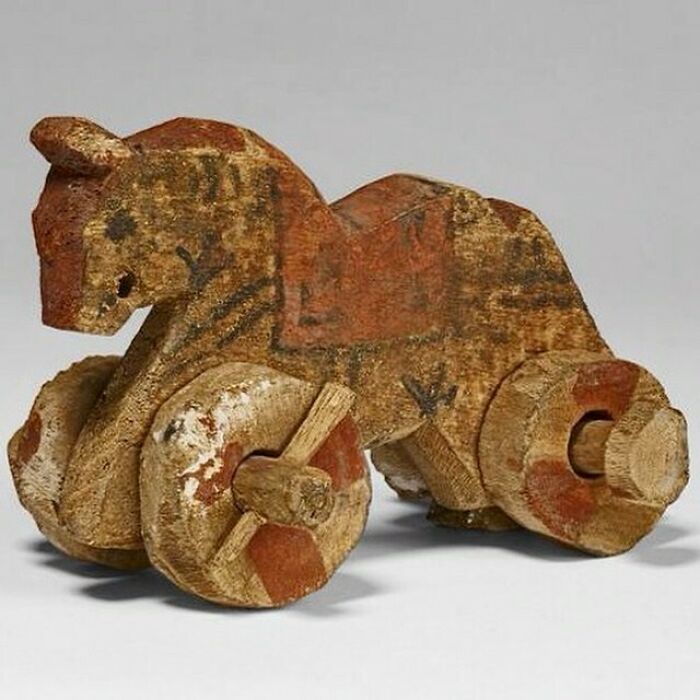
Image source: britishmuseum / Instagram
 Follow Us