We all have our little quirks. The “playing devil’s advocate,” the “constructive criticism” that nobody asked for, the classic “it was just a joke!” after a comment that was definitely not a joke. We think of them as harmless, the background noise of our personalities.
But what if that background noise is actually a low-grade toxic alarm? An online community asked people to name these “harmless” habits that are secretly doing a lot of damage. The answers are a hilarious and deeply uncomfortable lesson in self-awareness. You might want to take some notes.
More info: Reddit
#1
Not standing up to people or letting things slide when they bother you.

Image source: anon, Javier Haro
#2
Not acknowledging your own feelings as they happen.

Image source: AproachingAzathoth, Nik
#3
Sweeping problems under the rug to keep the peace.

Image source: majesticSkyZombie, Curated Lifestyle
When we think of “toxic,” our minds usually jump to the big, dramatic stuff like outright cruelty, manipulation, or explosive anger. But as life coach Elizabeth Perry explains, the most common form of toxicity is far more subtle. It’s the “harmless” habits that function like a thousand tiny paper cuts to a relationship or our own mental health.
This is the stuff the online thread was brilliant at identifying: the constant negativity disguised as “realism,” the passive-aggressive comments that come with a smile, or the friend who always seems to one-up your problems with their own, a classic case of “playing the victim.”
#4
Scrolling in bed immediately after waking up.

Image source: mustymusketeer, Victoria Romulo
#5
Being relaxed about all kinds of (lack of) privacy because ‘I have nothing to hide’. You open so many doors by giving zo much info.

Image source: Toiletjuffrouw, Curated Lifestyle
#6
Thinking there is something wrong with asking for help and that you are lesser for it. This applies to everything from work, to personal issues, to everything.
I’m genX and we got independence shoved down our throats hard. I actually got in trouble for refusing help at work the other day.

Image source: Carmelpi, Toa Heftiba
One of the most common and celebrated harmless habits is glorifying being overworked. We’ve all heard it, and many of us have said it: “I’m so slammed,” “I only got four hours of sleep last night,” or “I haven’t taken a vacation in years.” As a BBC Worklife report points out, we’ve created a “cult of burnout,” where we treat exhaustion as a status symbol and a measure of our importance.
The online thread was full of people realizing this isn’t a sign of dedication; it’s a sign of a deeply unhealthy relationship with work. This toxicity bleeds into every other part of your life, leaving you with no energy for the people and things that actually matter.
#7
Living my life to make everyone happy.

Image source: ImmortalSequence, Daniel Martinez
#8
Not getting enough sleep. Not encouraging others to get enough sleep.

Image source: MC1R_OCA2, Getty Images
#9
I’m in the habit of saying sorry – even when I’m not at fault.
Did you do something wrong to me? Oops! I’m sorry!

Image source: anonymous-dreaming, Getty Images
Who doesn’t love a bit of self-deprecating humor? It can make you seem humble, relatable, and funny. But as the UK Therapy Guide explains, there’s a fine line between a harmless joke at your own expense and a habit that can genuinely damage your mental health.
When “I’m such an idiot” becomes your go-to punchline for every minor mistake, it stops being a joke and starts being a form of negative self-talk that you’re normalizing for yourself and others. Many in the online thread pointed out that this habit is often a way of putting yourself down before anyone else can, a toxic defense mechanism disguised as a charming personality quirk.
#10
Letting family get away with being horrible just “because they’re family”. Not really a habit I guess but my life is so much better having cut the toxic ones out.

Image source: sarotto, Getty Images
#11
People who have an upset tone frequently but wont let their partner know what’s up. Talked to my buddy about this recently and the tone is wildly exhausting if you live with your partner. It stifles the house, makes someone guess why you’re upset, and overall these people seem to lack any EQ. A tone can seem harmless but when they have a tone for days on end and withdraw themselves they’re miserable partners.

Image source: klynnyroberts, Vitaly Gariev
#12
Avoiding the difficult conversations because you don’t “like confrontation” – and villainising the other person for “being confrontational”.

Image source: CaptainChristiaan, Getty Images
Not all toxic habits are about how we interact with others, some are about the quiet ways we damage ourselves. A perfect example is “doomscrolling.” On the surface, it feels like a responsible, “harmless” habit. You’re just staying informed about what’s happening in the world, right?
But as Harvard Health explains, this endless consumption of bad news hijacks our brain’s stress response system, keeping us in a perpetual state of high alert. It’s like chain-smoking bad vibes. The people online confessed that this “harmless” habit was actually fueling their anxiety and making them feel helpless, proving that sometimes, the most toxic thing you can do is refuse to log off.
#13
Looking at your phone all the time.

Image source: Individual_Step5068, Priscilla Du Preez 🇨🇦
#14
Going to work sick.
(I don’t think it is harmless but most people I met do and it’s so infuriating).

Image source: RealAwesomeUserName
#15
Self deprecating humor, I was told by a therapist when I was going through a period of depression to avoid it because “you know it”s a joke, but you’re brain does not”. So it’s just adding to the negative self talk your brain is already dealing withm.

Image source: virtualpig, Natalia Blauth
After reading a list like this, it’s easy to have a mini-panic attack and start analyzing every single thing you’ve ever done. But the point isn’t to become paranoid; it’s to recognize that a little dose of introspection is healthy.
The fact that so many people in the online thread were able to identify these habits in themselves and others is a good thing. It shows we’re all learning to spot the subtle ways we can be better to ourselves and to the people around us. Recognizing the problem is the first, most important step, and sometimes, a bit of cringe is the best motivation to change.
Do you have any subtly toxic traits to add? Share them in the comments!
#16
Casual alcoholism.

Image source: MrRWhitworth, Alyona Yankovska
#17
When someone says, “I’m the kind of person that just tells it like it is” as an excuse to be an obnoxious a-hole.
Image source: CrumblinEmpire
#18
Jokingly trash-talking people. You are actually insulting people, but doing it in a way that you can deny you are doing anything wrong. If the other person takes offense, THEY are the problem for not being able to take a joke and for being too sensitive.
Image source: anon
#19
Not washing ur hands… I’ve seen too many guys in and out of the washroom and do not wash.
Image source: anon
#20
“Don’t ask for permission; ask for forgiveness”
Sometimes you can’t un-mess something.
Image source: ComfortableAbject416
#21
Bending over incorrectly – long term damage to the back is significant.
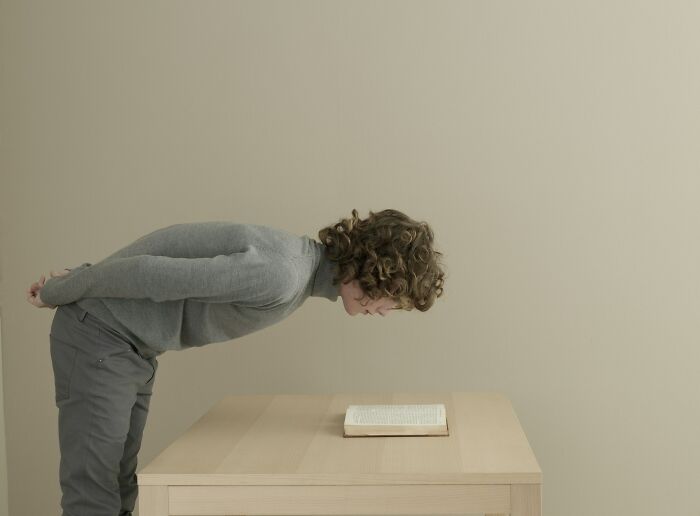
Image source: reddituserexample1, Getty Images
#22
Not resting when your body needs it. A lesson from someone now living with chronic illness: rest is not a treat, it’s a necessity.

Image source: green_oceans_, Sandra Seitamaa
#23
Supporting your children even when they are wrong.

Image source: Carramannos, Natalia Blauth
#24
Avoiding conflict at all costs.

Image source: anon, Getty Images
#25
Replaying fake arguments in your head so you’re “ready” if they ever happen. Feels harmless, but it keeps you stuck in fight mode with people who aren’t even there.

Image source: PsychologicalDog0522
#26
Constant positivity. Refusing to feel “negative” emotions is extremely unhealthy.

Image source: MysticNyxx, Cphotos
#27
Habitual complaining and negative speech, use of harsh words and phrasing. Seems harmless or funny to many people. But we have increasing numbers of studies coming out showing that negative speech is processed by the brain much like violence, it has a slow burn toxic effect on the speaker and everyone who hears them. A lot of people need to understand that restraining the impulse to harsh and disparaging speech unless really necessary is nearly as important as restraining the impulse to violence.

Image source: Madock345, Getty Images
#28
Labeling everything that’s somewhat uncomfortable and a normal part of life “toxic”.

Image source: nowhereman86, Blake Cheek
#29
Doom scrolling on social media, tik tok, Facebook reels…

Image source: FewConsequence9910, Artem Beliaikin
#30
Tautological reasoning
“I always tell the truth, because I never lie…”
Run. Run away.

Image source: PrestigiousCreme8383, Daiga Ellaby
#31
Saying “just kidding” after something.

Image source: rborob, Curated Lifestyle
#32
Constantly comparing: your partner, job, house….

Image source: TowerStarHermit, Getty Images
#33
Watching 12+ hours of TV a day — which is quickly being replaced by my Reddit Hyperfixation 😬😬.
Image source: su_shi_seashell_chef
#34
Being a helicopter parent, and saying “if u got nothing good to say dont say anything at all” has given us a generation of young adults who can’t think for themselves and can’t take criticism.
Image source: steveinstow
#35
Religion.
Image source: Nihilistic_River4
#36
Forcing kids to hug or kiss relatives if they don’t want to.
Image source: Musical_Goddess
#37
Comfort zone.

Image source: anon, Coen Staal
#38
Not saying NO when you really feel like saying it.

Image source: Ready-Section8614, Josh Muller
 Follow Us