Martin Scorsese’s Goodfellas is not only widely-regarded as one of the greatest mob films ever but also one of the greatest movies ever made. Its sweeping narrative explores the timeline of perhaps the Mafia’s most successful period. But with that success came turmoil, mayhem, and heartache – making for a well-rounded cinematic masterpiece.
Goodfellas is one of those movies that ages like a fine wine, garnering adoration from new generations with each passing year. If you have seen the movie countless times, there may still be easter eggs you missed or behind the scenes trivia you weren’t aware of. So, let’s explore this classic 35 years later and delve into its cultural impact, crazy on-set stories, and fascinating easter eggs.
The Iconic “Funny How?” Scene
Joe Pesci took home an Oscar for his role as sadistic gangster Tommy DeVito in Goodfellas. While his rendition was magnetic from start to finish, one scene remains the most iconic. In the tense moment, Henry Hill (Ray Liotta) tells Tommy that he’s funny, only for Tommy to question him on it. The room fills with unease as Tommy stares him down and presses for an answer, a menacing look on his face the whole time.
Many believe that this scene was completely improvised by Pesci, however, it was scripted by Scorsese during the rehearsal stage. This actually happened to Pesci in real life while working as a waiter. When telling Scorsese about the incident, it inspired the legendary filmmaker to revisit the script and add it in. Scorsese filmed around four takes of the improv session and then wrote the scene based on that.
Cash Is King
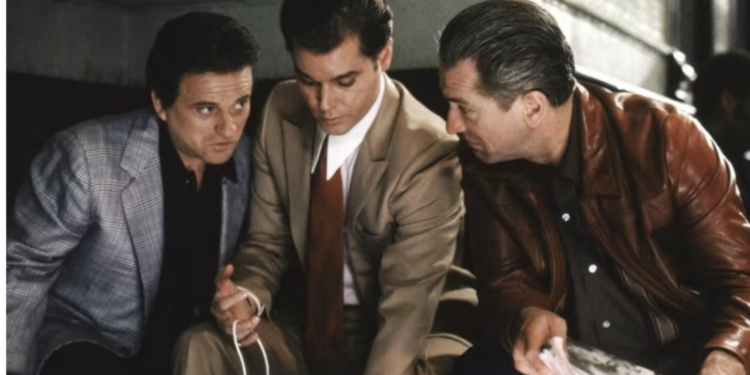
A lot of money is handled in Goodfellas, and some of it is real. Robert De Niro‘s character Jimmy Conway chucks the stuff around like it’s candy, tipping near-enough everyone in the room. De Niro was so into his character that he requested the money to be real. To oblige, the film’s prop master drew out $5,000 of his own money from the bank. After filming each scene involving the money, no one could leave the set until it was counted and given back.
Goodfellas Wasn’t Strictly for Trained Actors
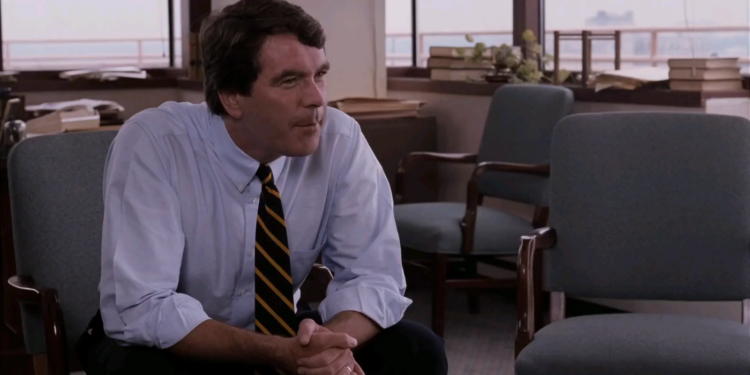
Goodfellas has some of the top names in Hollywood in its ensemble, but it also has some first time actors. Reportedly, the movie shot with real-life mobsters as extras. As a result, the set was closely monitored by law enforcement. But the cops didn’t stop there, one of them is in the movie.
Edward McDonald stars as himself in the film. McDonald is the actual witness protection officer who worked with Henry Hill and his wife Karen. So, his scene in the movie is him reliving one of the biggest moments of his career. Also, Johnny Roastbeef, the mobster who Jimmy dresses down for spending too much money, was a first timer too. Martin Scorsese discovered Johnny “Roastbeef” in Rao’s Restaurant in East Harlem and asked him to be in the film.
Hitchcockian Influence
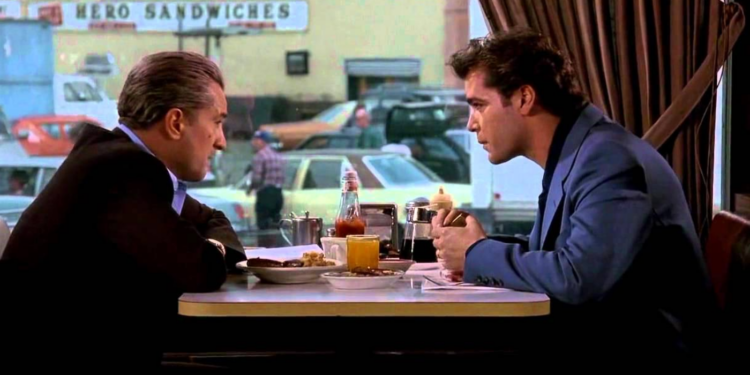
Scorsese is a big fan of Alfred Hitchcock, and it shows in Goodfellas. The closeup of young Henry watching gangsters on the street clearly mirrors Norman Bates spying on Marion Crane in Psycho. Scorsese also uses the iconic dolly zoom when Jimmy and Henry meet at a diner to show that the law is closing in. This shot was made famous by Hitchcock’s thriller, Vertigo.
A Sequel of Sorts
In a crazy twist of cinematic fate, Goodfellas has an unlikely companion film that was released just one month earlier in August 1990: the Steve Martin-led comedy My Blue Heaven. The screenplay was written by Nora Ephron, who was married to Goodfellas writer Nicholas Pileggi. Reportedly, much of the research for both films was done in the same sessions with Henry Hill. However, Hill later stated that he had no idea Ephron was gathering material for a script, saying he flipped when he saw the movie because she used some of the things he’d told her on the phone.
While Goodfellas chronicled Hill’s rise and fall in organized crime, My Blue Heaven picked up where the drama left off – depicting the chaotic life of Vincent “Vinnie” Antonelli (the Hill stand-in) struggling to adapt to suburban witness protection. Hill had been sent to Redmond, Washington, where he single-handedly started a crime wave because there was no crime there. The film’s premise mirrored reality all too well. In real life, Hill was expelled from the Witness Protection Program in 1987, just seven years after entering it, after being convicted of cocaine trafficking in Seattle. He was ultimately kicked out for repeated breaches of protocol, specifically for revealing his true identity and crimes to others while under the influence of alcohol and drugs. So, Goodfellas became a critical masterpiece, and My Blue Heaven serves as its lighter, overlooked comedic companion – two sides of the same wiseguy coin.
Goodfellas Hit New Jersey
Many of the main cast members from Goodfellas boarded The Sopranos in 1999. Lorraine Bracco starred as Henry’s long-suffering wife Karen in Goodfellas and Dr. Melfi in The Sopranos. Tony Sirico dished out his iconic double finger pointing in Goodfellas as Tony Stacks and in The Sopranos as Paulie ‘Walnuts’ Gualtieri. And Michael Imperioli‘s Spider (the poor kid who gets killed by psycho Tommy for no good reason), took on a lead recurring role as Christopher Moltisanti in The Sopranos.
Many other Goodfellas stars crossed over too, including Frank Vincent, Vincent Pastore, Tony Lip, and Paul Herman. Altogether, 28 Goodfellas cast members had their part in one of entertainment’s most remarkable casting overlaps. Some were small roles, others were blink and you might miss it, like Tobin Bell (best known as Jigsaw from the Saw franchise). He appeared in both productions, playing an unnamed parole officer in Goodfellas before appearing as Major Carl Zwingli in The Sopranos.
The Cultural Impact of Goodfellas Explored
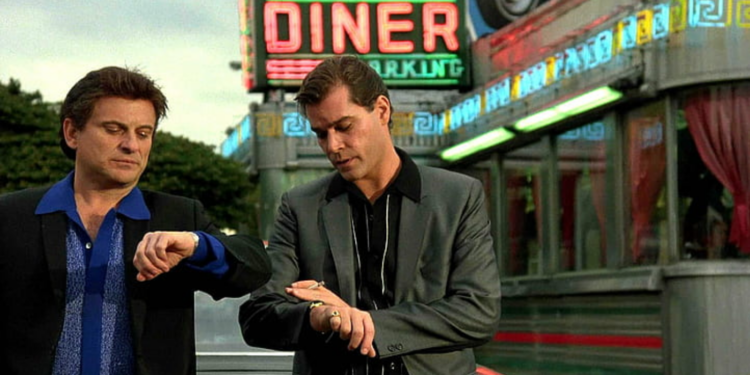
In 2000, the United States Library of Congress deemed Goodfellas culturally significant and selected it for preservation in the National Film Registry. But before this, the film’s influence had already reshaped Hollywood and inspired countless filmmakers. The classic mob flick ignited aspiration in the likes of Quentin Tarantino and Paul Thomas Anderson, with 1990s films like Natural Born Killers, Reservoir Dogs, and Boogie Nights, having a frenetic feel. To that, Scorsese pioneered the long, unbroken Steadicam sequence, influencing films like Swingers, Birdman, and 1917.
Perhaps most significantly, David Chase‘s The Sopranos borrowed extensively from the Goodfellas playbook, not just from casting but also its use of music. Shows like The Wire, Breaking Bad, and Boardwalk Empire began depicting gangsters and career criminals as layered, complex characters with believable motivations. Therefore, the golden age of television simply would not exist without Goodfellas, because none of those shows would exist without The Sopranos.
Read Next: 11 Times Robert De Niro Collaborated With Martin Scorsese in Film
 Follow Us