Christopher Nolan has built a reputation for bold storytelling, but his films endure because of their precision, scale, and visual ambition. Across two decades, his collaborations with cinematographers like Wally Pfister and Hoyte van Hoytema have reshaped modern blockbuster language. Ranking these films by cinematography isn’t about spectacle alone — it’s about how composition, lighting, camera movement, and thematic visual design elevate the story. Here’s where each feature stands when judged purely on its visual command.
‘Interstellar’
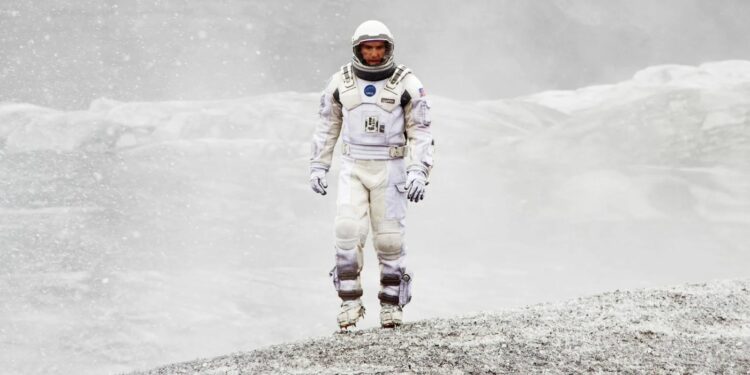
The first mention of Interstellar deserves recognition as Nolan’s most visually poetic film. From the dust-washed Americana aesthetic to the freezing elegance of Mann’s planet, every frame reinforces the film’s themes of isolation and longing. Hoytema’s IMAX sequences, especially the spinning Endurance docking scene, create a staggering sense of physical immersion. Later references to Interstellar reveal a film that blends cosmic scale with intimate human focus, using image-making as emotional propulsion.
‘Dunkirk’
Dunkirk is a masterclass in experiential cinematography. Nolan avoids dialogue-heavy exposition and lets the visual language carry the narrative. Hoytema’s handheld urgency in the Mole sequences, the crisp aerial choreography, and the muted color palette turn the film into a visceral pressure chamber. Every horizon line, cockpit vibration, and beach panorama contributes to a visual grammar driven by tension. Dunkirk shows that clarity can be just as cinematic as scale.
‘The Dark Knight’

The Dark Knight revolutionized blockbuster cinematography by integrating IMAX into narrative-driven filmmaking. Pfister’s sharp contrasts, deep shadows, and towering cityscapes grounded the story in a gritty, semi-dystopian realism. The opening bank heist illustrates Nolan’s commitment to physical shooting — the piercing blues, the sharp reflections, and the steady framing make it a visual thesis statement. The Dark Knight remains the gold standard for urban crime visuals in franchise cinema.
‘Oppenheimer’

Oppenheimer represents Nolan’s boldest fusion of IMAX, portraiture, and experimental technique. Hoytema uses black-and-white large-format film to create a crisp, oppressive texture around Lewis Strauss and the political hearings. Meanwhile, the fiery color sequences immerse viewers in J. Robert Oppenheimer’s private psychological world. As the narrative unfolds, Oppenheimer confirms that even dialogue-driven films can achieve monumental visual impact when crafted with discipline and conceptual precision.
‘Inception’

Inception combines architectural imagination with photorealistic grounding. Pfister’s preference for practical effects means rotating hallways, folding cities, and zero-gravity combat feel tactile rather than digital. The film uses depth, symmetry, and motion to convey layered consciousness. Over time, Inception has become one of Nolan’s most copied visual templates — especially its sharp color temperature shifts between dream levels and its commitment to real-world physics.
‘The Prestige’

The Prestige proves minimalism can be just as striking as spectacle. Nolan and Pfister shoot the Victorian world with warm lamplight, soft shadows, and slow, deliberate movement. The cinematography mirrors the film’s obsession with misdirection — simple frames that hide deeper mechanisms. In retrospect, The Prestige shows that intimacy and atmosphere can carry visual weight equal to large-scale effects, turning each stage performance into a study in controlled illusion.
‘Tenet’

Tenet is visually ambitious but deliberately disorienting. Hoytema’s glassy, modernist palette and crisp daylight exteriors emphasize the coldness of the film’s world. While some sequences — especially the reverse explosions and highway set pieces — showcase technical brilliance, the aesthetic coherence doesn’t reach Nolan’s highest tier. Later discussions of Tenet often highlight its ambition more than its clarity, making it a fascinating but uneven showcase of his time-bending experimentation.
‘Batman Begins’
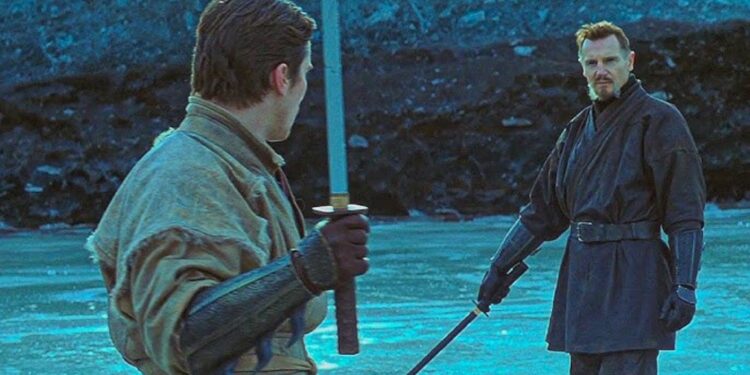
Batman Begins introduced Nolan’s grounded superhero visual style. The gritty browns, fog-drenched shadows, and handheld intimacy separate it from the stylized oversaturation of earlier comic-book films. Still, the heavy use of quick cuts and darker lighting sometimes reduces clarity during action scenes. Even so, Batman Begins remains foundational, establishing a visual language of realism and fear that later superhero franchises would echo.
‘Following’
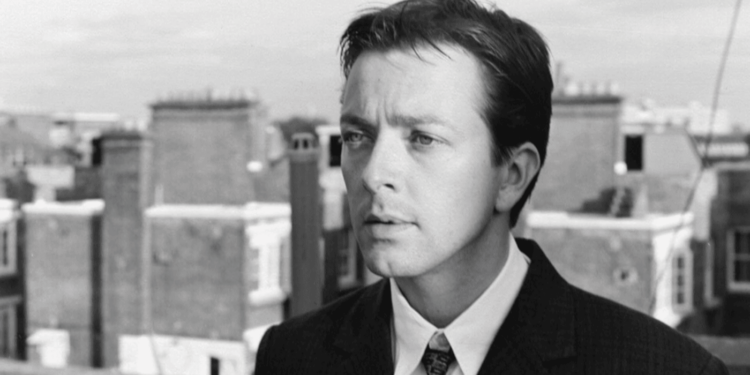
Following, shot in black and white on weekends for almost no budget, hints at Nolan’s emerging eye. While the frames are thoughtful and intentionally geometric, the limitations of early equipment cap its visual impact. Rewatching Following reveals the beginnings of Nolan’s interest in perspective, surveillance, and identity, using tight compositions and shadows to suggest a much larger world just outside the frame.
‘Insomnia’
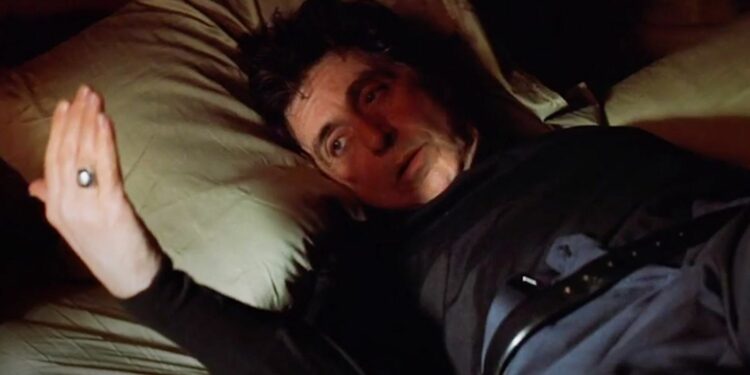
Insomnia is Nolan’s most restrained film visually, but that’s by design. Pfister’s muted palette, soft daylight, and fog-drenched exteriors reinforce the psychological unraveling at the film’s core. Although competent and atmospheric, it lacks the immediately iconic imagery that defines Nolan’s later work. Still, Insomnia is a reminder that not every film aims to be visually overwhelming — some simply need to be precise, immersive, and quietly unsettling.
Across his filmography, Nolan’s cinematography reveals a consistent vision: clarity, physicality, and conceptual rigor. Whether bending time, exploring space, or reconstructing history, his images always serve the story. That’s why ranking them is difficult — even his lowest entries display a level of craft most directors never reach, and his best work has permanently raised the standard for what blockbuster cinematography can achieve.
 Follow Us