Diane Marlys Bromstad is a name that keeps resurfacing online because people are looking for clarity, not drama. Her story is repeatedly referenced in fragments, often without clean context, which creates the impression that something is missing. In reality, the main reason the searches persist is simpler: there is limited verified public information, and the internet tends to fill gaps with repetition.
Most readers are not hunting for gossip. They are trying to understand who Diane was, what is actually known about her death, and why the same uncertainties keep cycling back into search results. When a private individual becomes a recurring query, the lack of primary records becomes the fuel. The questions multiply because the answers do not expand.
This is also where misinformation takes root. A single vague claim, repeated across multiple posts, can start to look like confirmation. Over time, that repetition creates a “story” that sounds documented even when it is not. For anyone trying to separate reality from noise, the challenge is not finding content. It is finding content that is anchored to verifiable details.
Who Diane Was and Why Her Public Footprint Is So Thin
Diane appears in online discussion far more than she appears in public records that explain her life. That imbalance is important. She was not a celebrity, and she did not build a public-facing career that generated constant coverage. Many people who become trending searches were never public figures at all. They become searchable because their name is linked to other names, and because curiosity spreads faster than documentation.
When a person lives privately, the public usually learns only what is incidentally recorded: occasional mentions, indirect references, or limited biographical information. That can feel unsatisfying, but it is also normal. A thin public footprint is not proof of secrecy. It often just means a life lived outside the spotlight.
That is why the phrase “untold details” can be misleading. Sometimes there are no hidden chapters waiting to be revealed. Sometimes there is simply not much that was ever made public, and the internet is reacting to the absence itself.
What Is Known About Her Death and Why “The Case” Feels Bigger Than It Is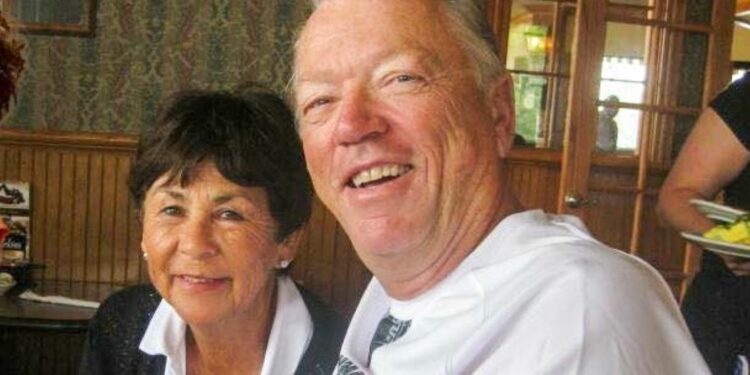
Most people searching Diane’s name are really searching for a neat timeline: what happened, when it happened, and what the official conclusion was. The problem is that many online summaries blend confirmed facts with inferred narratives. Once those are mixed, the reader cannot tell what came from a record and what came from interpretation.
It also helps to be precise about what people mean when they say “the case.” In a lot of online conversations, “the case” is used as shorthand for any situation involving uncertainty, family ties, or unanswered questions. But not every death becomes a publicly unfolding investigation, and not every story has an ongoing legal track. Sometimes there is no open court process to follow, no stream of filings, and no “next chapter” that will appear later.
This matters because it changes expectations. If there are no active proceedings, then there may be no updates by definition. Search interest can rise even when nothing new exists, simply because older content is resurfacing or being re-shared.
Another reason the topic stays active is that people confuse “not widely published” with “not known.” Official determinations may exist without being packaged into easily searchable, widely repeated summaries. That gap between formal records and internet-friendly explanations is where speculation grows.
Why Her Name Keeps Resurfacing and What Counts as a Real Update
Diane’s name resurfaces because the internet rewards recurring curiosity. When people search the same question repeatedly, platforms interpret that as demand, and more content gets created to match it. That content often rephrases what already exists instead of adding anything new. The result is a loop: limited facts, repeated summaries, increased curiosity, then even more summaries.
So what counts as a real update? In practical terms, it is only something grounded in verifiable change: an official record, a confirmed statement tied to a credible source, or a documented development that materially adds information. A reworded recap is not an update. A recycled claim is not an update. And speculation dressed up as certainty is the fastest way to make the subject feel more mysterious than it actually is.
It is also worth acknowledging the human side of this. When private individuals are discussed online, the lack of context can turn them into a symbol rather than a person. That makes it easier for the internet to keep “working the story,” even if there is no responsible basis for doing so. Treating Diane as an individual, rather than as a trending query, is the simplest way to avoid turning uncertainty into invention.
The most accurate conclusion is not always the most satisfying one. With stories like this, the truth may be that the public record is limited and may remain limited. That does not automatically imply hidden wrongdoing. It often just reflects privacy, incomplete public documentation, and the way online ecosystems amplify unanswered questions.
People keep searching because they want closure. The responsible way to address that demand is to draw a hard line between what can be supported and what cannot. That clarity is usually what readers want most, even when the answer is that there is no new verified information to add.
 Follow Us