White Bear Was a Punishment Park, Not an Apocalypse
The ending reveals that the “collapsed society” is a set and the chaos is scripted. Victoria hasn’t stumbled into the end of the world—she’s trapped inside White Bear Justice Park, a constructed attraction where her suffering is the main event. The silent onlookers aren’t mind-controlled victims; they’re paying customers instructed to film, not help. The masked hunters aren’t random killers; they’re actors assigned roles in a daily performance.
That reframe is why the episode feels so cruel on rewatch. Every moment that seemed like a desperate fight to survive becomes a planned beat on a schedule. The chase routes, the staged rescues, the “safe houses,” even the weapon props are part of a designed experience meant to produce maximum fear. The park doesn’t just want to punish Victoria—it wants to stage her terror in a way that feels thrilling for spectators.
Most disturbing is the reset. At the end of the day, staff confront her with the truth and then wipe her memory so the punishment can repeat tomorrow with the same intensity. The park is built to preserve fresh suffering, because fresh suffering is what keeps the audience satisfied. If she remembered everything, the performance would lose its punch. The memory wipe is the mechanism that keeps the cruelty renewable.
What Victoria Did and Why the Public Wants Revenge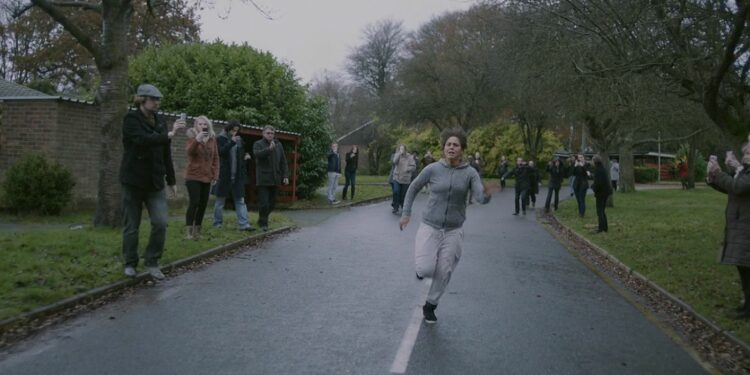
The reveal also clarifies why the crowd is so eager to participate. Victoria was convicted in connection with the kidnapping and death of a child. That fact is used inside the episode as the moral justification for everything that happens to her. The park frames her as someone who deserves limitless punishment, which turns the audience into “good people” in their own minds—people who are supporting justice by watching.
But the episode’s real target isn’t Victoria. It’s the crowd’s certainty. White Bear forces you to sit with an uncomfortable question: what does a society become when it turns punishment into a theme park attraction? The show isn’t asking you to sympathize with her crimes. It’s asking you to examine what it means to enjoy someone’s suffering because you believe they’ve earned it.
That’s why the “justice” label is so important. The park doesn’t present itself as revenge; it presents itself as righteousness. Once cruelty is framed as moral duty, spectators don’t feel like they’re participating in violence—they feel like they’re participating in accountability. The episode argues that this is how spectacle gets normalized: not through overt evil, but through confident moral language that makes brutality feel justified.
How the Ending Turns the Audience Into the Villain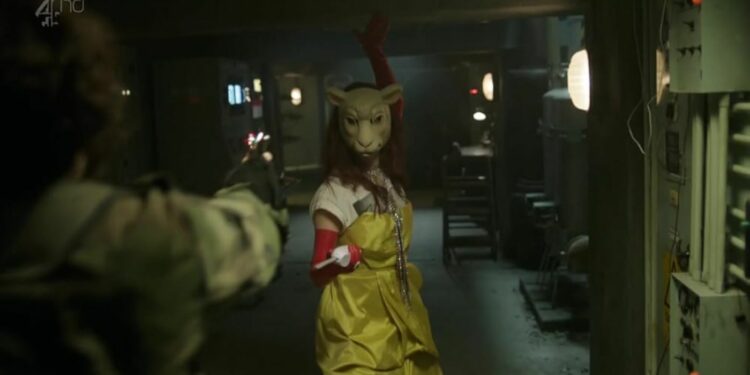
On first watch, the most frightening people seem to be the masked hunters. On second watch, it’s the smiling crowd. The hunters are performing a role; the crowd is revealing a desire. They don’t film because they have to—they film because they want to. Their silence isn’t fear; it’s complicity. The phones aren’t tools of survival; they’re souvenirs.
The ending also weaponizes your own empathy. For most of the episode, you’re aligned with Victoria because she’s confused and terrified. That alignment is intentional. It builds emotional investment in her survival, so the reveal doesn’t simply change the facts—it changes what you thought you were watching. When you learn who she is, you’re forced into the same moral crossroads as the crowd: do you withdraw empathy instantly, or do you recognize that empathy and accountability are not the same thing?
This is where the episode’s thesis lands. A society can believe in justice and still become monstrous in the way it delivers it. The park offers no rehabilitation, no endpoint, and no proportionality—only a loop designed to satisfy spectators. The punishment becomes less about the crime and more about maintaining a public ritual of outrage. That’s why it feels like satire and warning at the same time.
The White Bear Symbol Was Branding in Disguise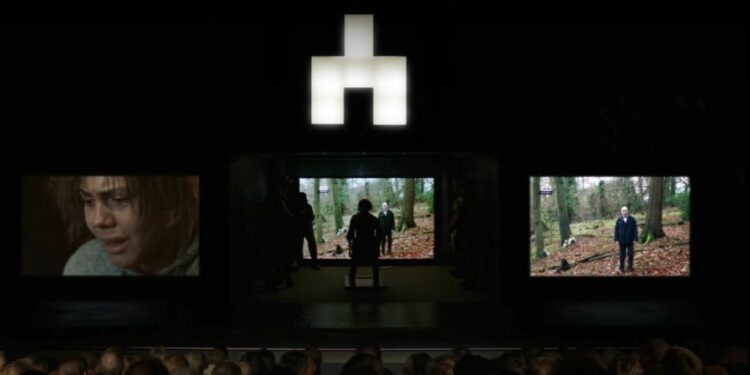
The White Bear symbol seems like the key to a conspiracy for most of the episode. It appears on screens and signs like a broadcast marker, and it’s treated as proof that something is controlling the population. The ending reveals the darker, simpler truth: it’s branding. It’s the park’s logo stamped across the experience the way a theme park stamps its identity onto maps, wristbands, and attraction signage.
The detail many viewers miss is how early the episode tells you this without saying it out loud. The symbol is everywhere, but it doesn’t function like a “signal” in the way an apocalypse story would use a signal. It functions like a guided narrative tool—an icon that keeps the day’s story coherent and repeatable. It’s there to keep Victoria moving, to keep the audience oriented, and to make the experience feel like it has a mythology worth buying into.
 Follow Us