“Was the show better than the source material?” That’s one argument most fans of TV adaptations will probably never stop having. Sometimes the answer is relatively straightforward, especially when the show doesn’t try to go beyond the range of the source material. It’s a trickier proposition when the show overtakes the source material and keeps forging its own trail.
The five shows on this list did just that. They went from adapting their source materials to outgrowing them completely. One is a fantasy series that crossed the finish line years ago, while the author of the books it’s adapted from has yet to manage that. Another stretched a 60-page short story into six seasons of prestige TV. Read on to find out how they pulled it off.
1. Game of Thrones (2011 – 2019)
The first five seasons of this multiple-award-winning fantasy epic faithfully followed A Song of Ice and Fire books. That’s roughly one book per season. Then The Winds of Winter missed its deadline, the way overdue sequels tend to (remember “Chinese Democracy” – the Guns N’ Roses album people joked would be released the year pigs learned to fly). Nobody expected that to happen, least of all George R.R. Martin, but season 6 aired without anything on the page to guide it. Two more seasons, including a much-maligned final season, followed the same trajectory, with a series finale dropping in 2019.
The showrunners, David Benioff and D. B. Weiss, had a broad idea of where Martin was headed, so they filled in the blanks themselves. The books, however, are still sitting in the “someday maybe” pile. Just recently, Bantam Books shut down rumors of a 2026 release, calling the chatter “false.” Martin himself has admitted he’s “so far behind,” and that he’s sometimes just “not in the mood.” So, the show remains the only ending we’re likely to get, even though it was a pale imitation of what could have been.

2. The Leftovers (2014 – 2017)
Tom Perrotta’s 2011 novel (same name) has 336 pages. But the show burned through it in just one season, which featured 10 episodes. That left Damon Lindelof with two more seasons and no book to draw from. So he moved everyone to Texas in season 2, then to Australia for the season 3 premiere. The book never went to any of these places. Some of the show’s best episodes, including that unforgettable season 2 premiere and that haunting series finale, none of that came from the novel.
By the end, the show had become a beast in its own right, with Perrotta himself admitting that his book was too quiet for weekly TV. The biggest change is Kevin Garvey. In the book, he’s a boring mayor, but in the show he’s a raging police chief who dies and comes back. Lindelof said a mayor just sits in his office and watches the chaos, but a cop is in the mud, fighting. Even the creepy cult got new rituals, inspired by a Karate Kid joke in the writers’ room.
3. The Boys (2019 – 2026)
Garth Ennis and Derick Robertson wrapped up the comic version of The Boys in 2012, all 72 issues, sewn up nicely with a clean ending. Erik Kripke’s Amazon show certainly borrowed the premise, the cast, even the mean streak, but ended up rewriting the rules completely. Butcher’s backstory changed. So did Homelander’s arc. Even Black Noir got a totally different job. By season 3, the show was its own universe. Five seasons and the Gen V spin-off later, the show had covered way more ground than the comics ever did.
Anyone still curious can dig up the comic book’s ending in a back-issue bin, but it hasn’t spoiled anything for years. The series finale proves it. In the comics, Black Noir turns out to be a clone of Homelander who committed the atrocities, and Butcher kills Noir before being killed by Hughie. The show ditched that narrative completely. Instead, it crafts an entirely different endgame where Kimiko strips Homelander’s powers, Butcher kills him with a crowbar in the Oval Office, and Hughie ultimately executes Butcher to stop a supe-killing virus.
4. The Handmaid’s Tale (2017 – 2025)
Margaret Atwood’s 1985 novel ends with Offred climbing into a van in the dark, unsure whether she’s being arrested or rescued. Season 1 of the Hulu show ends in pretty much the same way, since it’s the only entry that actually follows the book. Everything else after that, from June’s resistance work to side characters that Atwood barely mentioned, all came from Bruce Miller’s head. Just like that, that slim 300-page novel turned into a sprawling six-season, sixty-six-episode international saga.
Atwood wrote a sequel, The Testaments, in 2019. But by then, the show had already built its own path into the future, culminating in a sixth and final season. Atwood basically gave Miller a high five and told him to run wild. Some critics called season 2 “misery porn,” sure. But others praised it for the “detail and color” it added to the world. One critic called it “the best adaptation and extension of a novel to date.”
5. Justified (2010 – 2015)
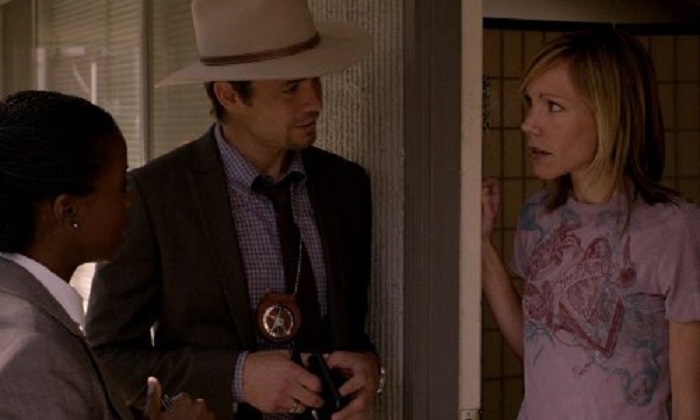
60 pages – that’s all Elmore Leonard’s novella Fire in the Hole gave the FX team. Raylan Givens appeared in two earlier stories, but Fire in the Hole supplied the actual road map to the show. That includes the Harlan County setting, the setup, and the opening shootout scene. After the pilot, the show was flying blind. Six seasons followed, built around Raylan vs Boyd Crowder, a character who barely survives Leonard’s original. It also made Raylan quieter and more intense, and invented Mags Bennett, a villain who doesn’t exist in the source material.
Margo Martindale even won a Primetime Emmy for portraying Mags. In fact, the changes and public reception were so good that Leonard released a new novel, Raylan, in 2012. It became one of the few novels that were inspired by the TV show, not the other way around. He also stayed on as executive producer until he died in 2013. By then, however, the show had become less an adaptation and more a spin-off with his blessing.
 Follow Us


