The death of a leading actor can leave a film in an impossible position. Production schedules are disrupted, scripts often need rewriting, and filmmakers face the delicate challenge of completing a performance while respecting the actor’s legacy. Over the years, advances in visual effects have given studios new ways to finish these projects, blending CGI, body doubles, archival footage, and digital compositing to preserve performances that might otherwise have remained unfinished.
Not every production relied on the same techniques. While some films recreated portions of an actor digitally, others combined stand-ins with carefully crafted visual effects or repurposed previously filmed scenes. The following movies stand out as some of Hollywood’s most notable examples of productions completed after an actor’s death using CGI, visual effects, body doubles, and innovative filmmaking techniques.
Game of Death (1978)
Bruce Lee died in 1973 after filming only a portion of Game of Death. Several years later, the studio decided to complete and release the unfinished project despite having very little original footage to work with. The finished film relied on body doubles, archival footage from Lee’s earlier productions, photographic stand-ins, and optical visual effects to create the illusion that he had completed the movie. While the result remains controversial among fans, it became one of Hollywood’s earliest and most ambitious attempts to finish a film following an actor’s death using available visual effects technology.

The Crow (1994)
Brandon Lee had filmed most of The Crow before he was fatally wounded in a tragic on-set accident. With only a handful of scenes left unfinished, the production faced an uncertain future. Director Alex Proyas completed the film using stunt double Chad Stahelski, early digital face replacement, and clever editing techniques. Although primitive by today’s standards, the visual effects were remarkably convincing for their time. The finished film became both a critical and commercial success, with Lee’s haunting performance remaining at the heart of its enduring legacy.
The Imaginarium of Doctor Parnassus (2009)
When Heath Ledger died unexpectedly in January 2008, The Imaginarium of Doctor Parnassus was only partly finished. Rather than abandon the project, director Terry Gilliam reworked the story to fit the film’s fantasy setting. Whenever Ledger’s character entered a magical mirror world, he transformed into different versions of himself, portrayed by Johnny Depp, Jude Law, and Colin Farrell. While the casting change became the film’s defining solution, visual effects and digital compositing were also used to blend the performances and smooth transitions between actors. The creative approach allowed the production to honour Ledger’s final leading role without attempting a full digital recreation.
Gladiator (2000)
Oliver Reed died from a heart attack while filming Gladiator in Malta, leaving several scenes involving the slave trader Proximo unfinished. Rather than recast the role, director Ridley Scott chose to complete Reed’s performance using a combination of body doubles, digital face replacement, and carefully edited existing footage. At the time, the visual effects were groundbreaking. Although audiences only saw Reed on screen for a few additional minutes, the seamless work allowed Gladiator to retain one of its strongest supporting characters without disrupting the story.
Fast & Furious 7 (2015)
Paul Walker‘s death in a car accident in November 2013 brought production on Fast & Furious 7 to an immediate halt. With significant portions of Brian O’Conner’s story still unfinished, Universal Pictures faced the difficult task of completing the film while honouring one of the franchise’s defining stars. The solution combined several filmmaking techniques.
Walker’s brothers, Caleb and Cody, served as body doubles for unfinished scenes, while Wētā FX used sophisticated CGI and digital face replacement to recreate Paul’s likeness. Existing footage from earlier takes also helped fill the remaining gaps. Rather than simply finishing the movie, the filmmakers rewrote the ending to give Brian a heartfelt farewell instead of killing off the character. The emotional beach sequence and the closing montage, accompanied by “See You Again,” became one of the most memorable tributes in modern cinema.
The Hunger Games: Mockingjay – Part 2 (2015)
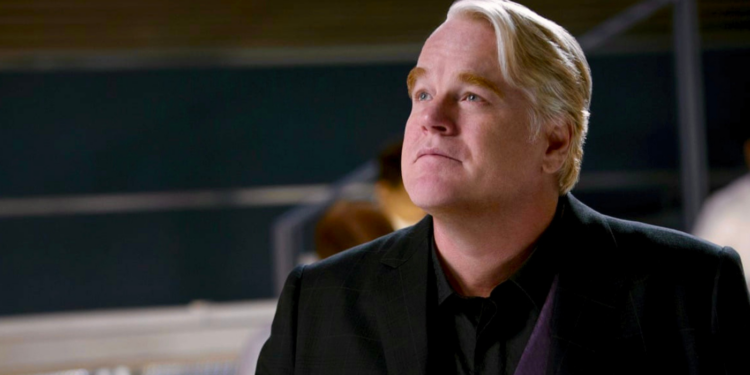
Philip Seymour Hoffman had nearly completed his work as Plutarch Heavensbee before he died in 2014. Fortunately, most of his scenes had already been filmed, allowing director Francis Lawrence to finish the movie without digitally recreating the actor from scratch. Instead, the production rewrote several scenes, redistributed a small amount of dialogue, and used subtle visual effects to bridge the remaining gaps. The restrained approach ensured Hoffman’s final performance remained authentic while avoiding technology that might have distracted from his remarkable work on screen.
Star Wars: The Rise of Skywalker (2019)
Carrie Fisher‘s death in 2016 forced Lucasfilm to rethink the conclusion of the Skywalker Saga. Rather than recast Leia Organa or create an entirely digital performance, director J.J. Abrams built the character’s remaining scenes around unused footage originally filmed for The Force Awakens. Those existing performances were enhanced through digital compositing, visual effects, and carefully rewritten dialogue to integrate Leia naturally into the story. Although the process was technically demanding, it allowed Fisher to remain a meaningful part of the saga’s emotional ending without replacing the performance she had already delivered.
Ghostbusters: Afterlife (2021)
Harold Ramis had been dead for more than seven years when Ghostbusters: Afterlife reunited the original team. Bringing back Egon Spengler was always going to be one of the film’s biggest creative challenges. Instead of relying solely on CGI, the filmmakers combined a body double with digital facial effects and careful lighting to create Egon’s emotional final appearance. The result avoided unnecessary spectacle and focused on delivering a heartfelt farewell that resonated with longtime fans while paying tribute to one of the franchise’s most beloved characters.
 Follow Us