Today, Platoon is looked upon as one of the greatest war movies ever made. At the time of its release, it was a film like no other. Written and directed by Oliver Stone, it was the first ever Vietnam war movie to be helmed by a Vietnam veteran.
Since then, Stone has served up several other masterpieces, including the likes of Wall Street, JFK, and Snowden. While they are all hard-hitting works of art in their own right, it is Platoon that is frequently hailed as his magnum opus. Now 40 years on, let’s take a deep dive into what made this movie so iconic, from behind the scenes details to easter eggs you may have missed.
Oliver Stone’s Real-Life Horrors Leaked Onto the Screen
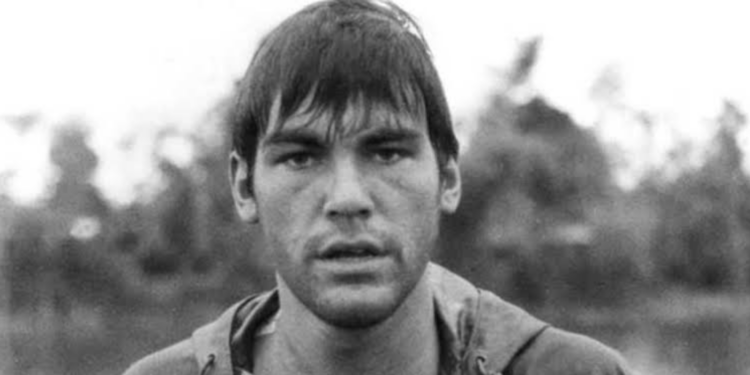
Oliver Stone enlisted in April 1967 and requested combat duty. He got exactly what he asked for and arrived in South Vietnam on September 16, 1967. With the 25th Infantry Division and the 1st Cavalry Division, he served as an infantryman and on Long-Range Reconnaissance Patrol until November 1968. During his tour, he was wounded twice in combat, culminating in the Bronze Star Medal for valor for his bravery in action.
After bicentennial celebrations brought back memories of his service in the Vietnam War, Stone began pouring out his experiences onto the page, eventually crafting a spec script for what we now know as Platoon. Although much of the movie is dramatized, the main character, Chris Taylor (played by Charlie Sheen), acts as Stone’s surrogate. Many of the horrors of the film are based on horrendous sights Stone saw himself, glistening the movie with authenticity. Veterans widely praise the film for nailing the physical misery of “boonie humping” patrols, weapon handling, radio chatter, and the psychological exhaustion of the jungle.

The Brutal Training Behind the Scenes
No doubt about it, Oliver Stone is a filmmaker who strives for intense realism with every single movie he makes. While he lived through the Vietnam War, his cast did not. So, to illicit raw and authentic performances, Stone brought in Captain Dale Dye – a highly decorated Marine combat veteran. Dye served as a technical adviser on the film and his methods were brutal. He put the cast through a gruelling 14-day military boot camp in the Philippine jungle before cameras started rolling. By the time filming begun, the actors knew how to dig their own foxholes, had lived off MRE meals, and were going through genuine exhaustion from the vigorous training and shifts on night watch.
Platoon Filmed Mid-Revolution
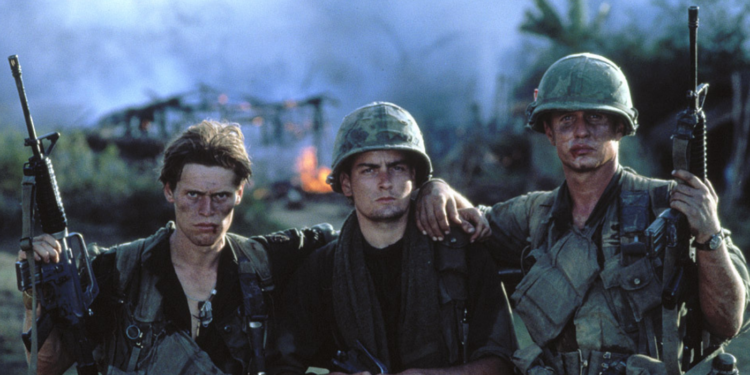
When local authorities got wind of Platoon, they immediately got on the defensive. When they got a chance to glance over the script, they blocked filming permission due to critical depiction of Vietnamese troops. So, Stone moved production to the Philippines, importing tons of red dirt to match the distinctive soil of Vietnam he remembered from his tour. However, there was a much bigger problem at hand.
Production kicked off right as the People Power Revolution was overthrowing dictator Ferdinand Marcos. Cameras had to stop rolling for two days as Marcos fled the country. For a brief moment, it seemed like Stone’s passion project was about to meet its end, but Stone re-negotiated military permits with the new government.
Casting Near-Misses & Typecast Flips
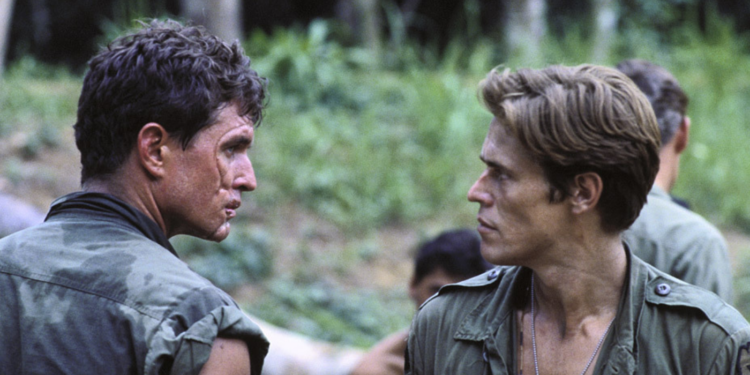
The cast of Platoon reads like a who’s who of Hollywood A-list talent. While some actors were still on the up, it was still classed as one of the most star-studded movies of the year. Tom Berenger and Willem Dafoe were standouts, both bagging Oscar nominations for Best Actor in a Supporting Role. However, if Stone hadn’t been thinking on his toes, this may not have happened. Berenger was known for playing “good guys”, while Dafoe was renowned as a formidable villain. Reversing their personas yielded two of the movie’s strongest characters.
When it comes to the role of Chris Taylor, Charlie Sheen wasn’t the initial pick. Reportedly, after penning his first draft back in 1971, Stone wanted The Doors frontman Jim Morrison. Although he never formally responded, when Morrison was found dead in Paris in July 1971, a copy of Stone’s script was reportedly with him. Even after this, Sheen still wasn’t the next choice, his older brother was. Emilio Estevez signed up to play Taylor early on, however, financing fell through. By the time it was a go-picture, he had already signed on to other projects.
Production Details You May Have Missed
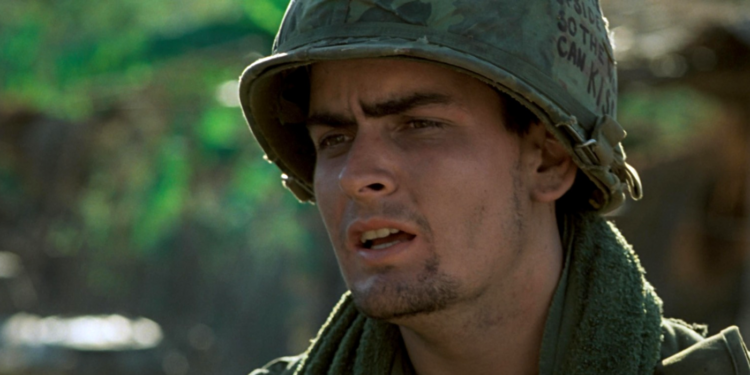
You may have noticed the graffiti on the helmets of the soldiers in Platoon. This wasn’t written in the script. Stone gave the cast free rein to write whatever they wanted. Sheen’s helmet is the most iconic, reading “When I die, bury me upside-down, so the world can kiss my a**.” Johnny Depp wrote “Sherilyn”, which was a tribute to his girlfriend at the time, Sherilyn Fenn. But the best of all was Lt. Wolfe’s helmet. Actor Mark Moses drew MAD Magazine’s Alfred E. Neuman alongside the phrase “What, me worry?” This was the smartest of the bunch as MAD Magazine was widely read and popular among many young American soldiers (commonly called “grunts”) serving in the Vietnam War.
Read Next: Stand By Me 40 Years Later: BTS, Easter Eggs & More
 Follow Us