Some people deal with relationship drama by eating ice cream, blocking an ex, or posting cryptic song lyrics on social media. Others apparently decide the best revenge strategy is booking a hotel room with their ex, getting pregnant, and then acting surprised when everyone around them starts questioning their life choices.
Today’s Original Poster (OP) found herself caught in exactly that kind of situation after spending years helping support her single-mom sister and toddler niece. Now, netizens are left debating whether helping family should come with limits, or if some people are simply expected to keep sacrificing no matter what happens.
More info: Reddit
While reciprocity can help build strong connections, it can also become problematic when gratitude turns into obligation

Image credits: alex starnes / Unsplash (not the actual photo)

The author moved in with her single-mom sister and after getting a well-paying job, she began covering more rent and daycare when her sister started struggling financially
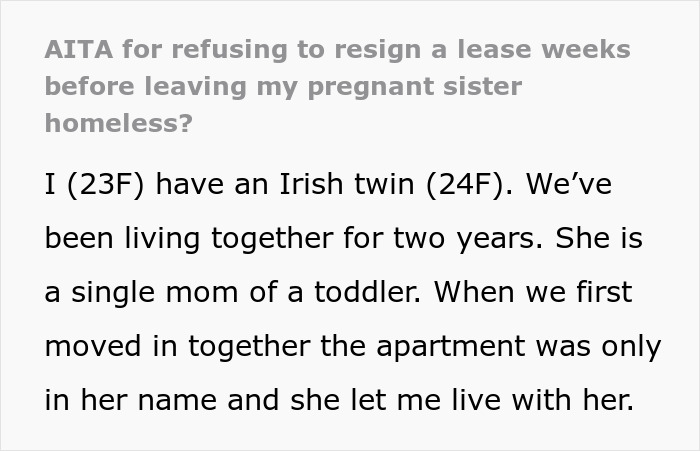

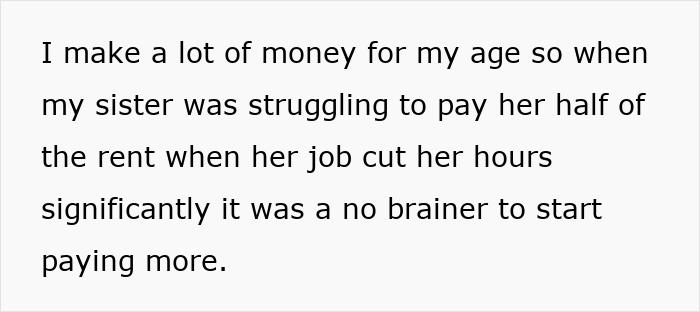


Image credits: The Yuri Arcurs Collection / Magnific (not the actual photo)
The sister later revealed she was nine weeks pregnant, admitting the father was the same ex who was already avoiding child support for their first child
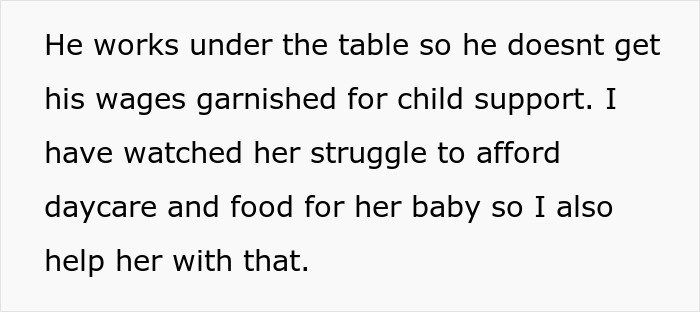




Image credits: Freepik / Magnific (not the actual photo)
Worried that the financial burden of another baby would fall largely on her, she told her sister she would not renew their lease if she continued the pregnancy
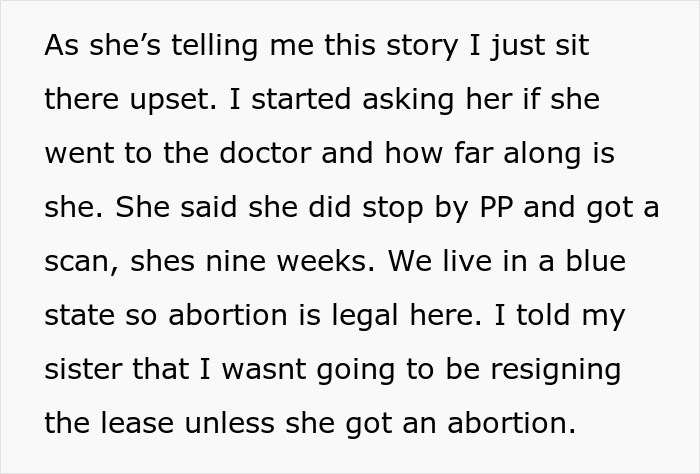




Image credits: Much_Guarantee_9607
The ultimatum sparked a major family conflict, with relatives accusing the author of being heartless and selfish
The OP shared that she had first moved in with her Irish twin because she was still completing dental assisting school and couldn’t qualify for an apartment on her own. Even then, she paid half the rent and utilities while working toward financial independence. After graduating and landing a well-paying job, she officially joined the lease and became a major source of financial support for the household.
When her sister’s work hours were reduced, the OP voluntarily started paying a larger share of rent because she could afford it. She also helped cover the costs associated with raising her niece. However, her sister sat her down and announced she was pregnant again. Initially shocked, the OP was even more stunned when she learned the father was the same man who had abandoned responsibility for their first child.
Knowing that she was already covering a substantial portion of household expenses, the OP began calculating what another child would mean financially. At the end of the day, she insisted that she would not renew the lease unless her sister chose to terminate the pregnancy. Her sister accused her of forcing an impossible choice between housing and her unborn child, and called her an evil, horrible person.
Soon, other relatives became involved and criticized the OP as well for what they viewed as a cruel and heartless demand. They argued that she owed her sister support because she had once been given a place to live when she needed help herself, but the OP pointed out that she had always paid her share and had spent years contributing financially far beyond what was expected.

Image credits: The Yuri Arcurs Collection / Magnific (not the actual photo)
In situations like this, shared households can quickly become financially unbalanced when childcare responsibilities enter the picture. The Center for American Progress states that these arrangements often start with a sense of mutual support, but over time the costs and benefits tend to be distributed unevenly between household members.
This pressure becomes even more intense when considering the actual cost of childcare itself. PolicyMap data shows that infant care can consume between 8% and 19% of a household’s income, significantly exceeding the federal affordability benchmark of 7%. This gap highlights how quickly childcare can become one of the largest financial burdens in a home, especially when incomes are already stretched.
Cognitigence explains that the sense of obligation to return favors or benefits one has received complicates this kind of situation. According to them, in close relationships, especially within families, this can create an unspoken expectation that help received in the past must be repaid in some form, even if the original support was intended as temporary or voluntary.
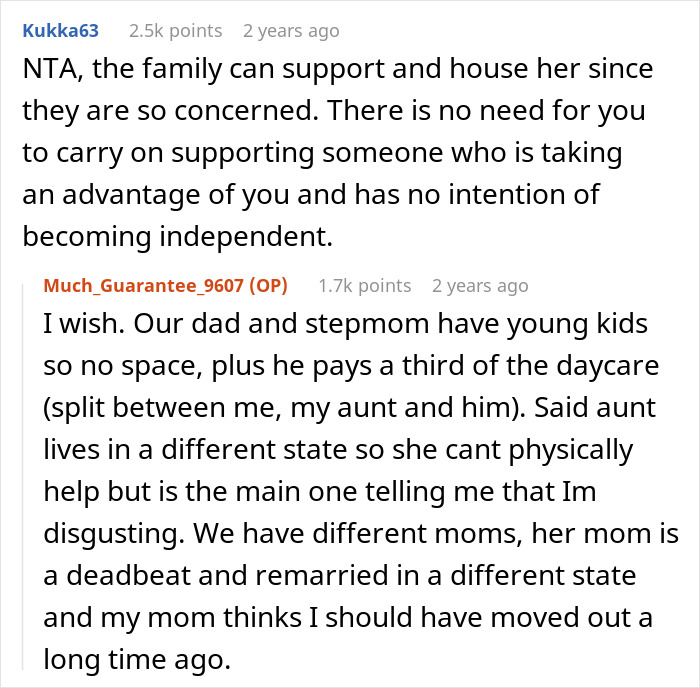
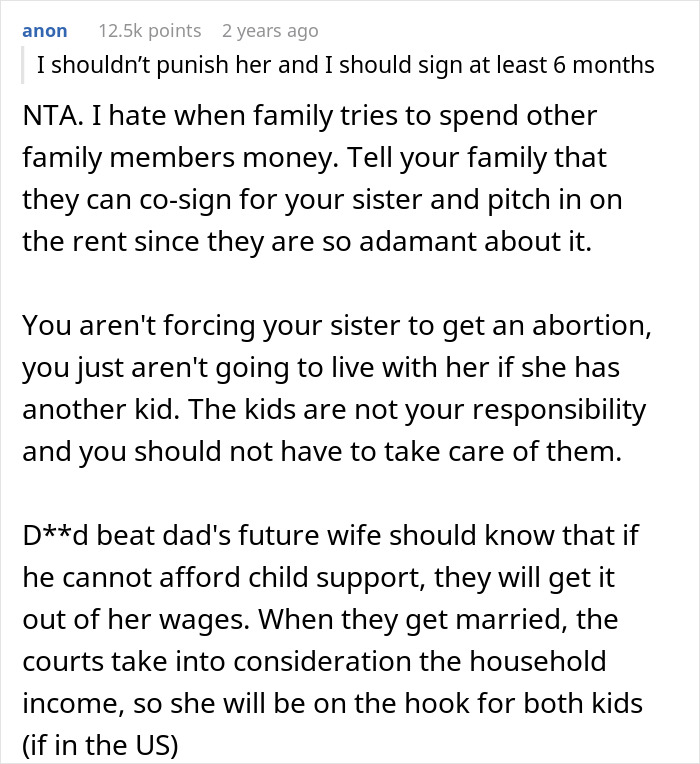
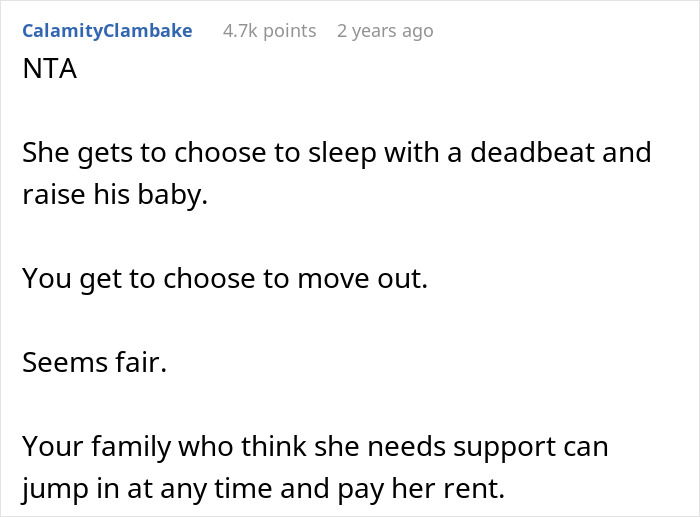
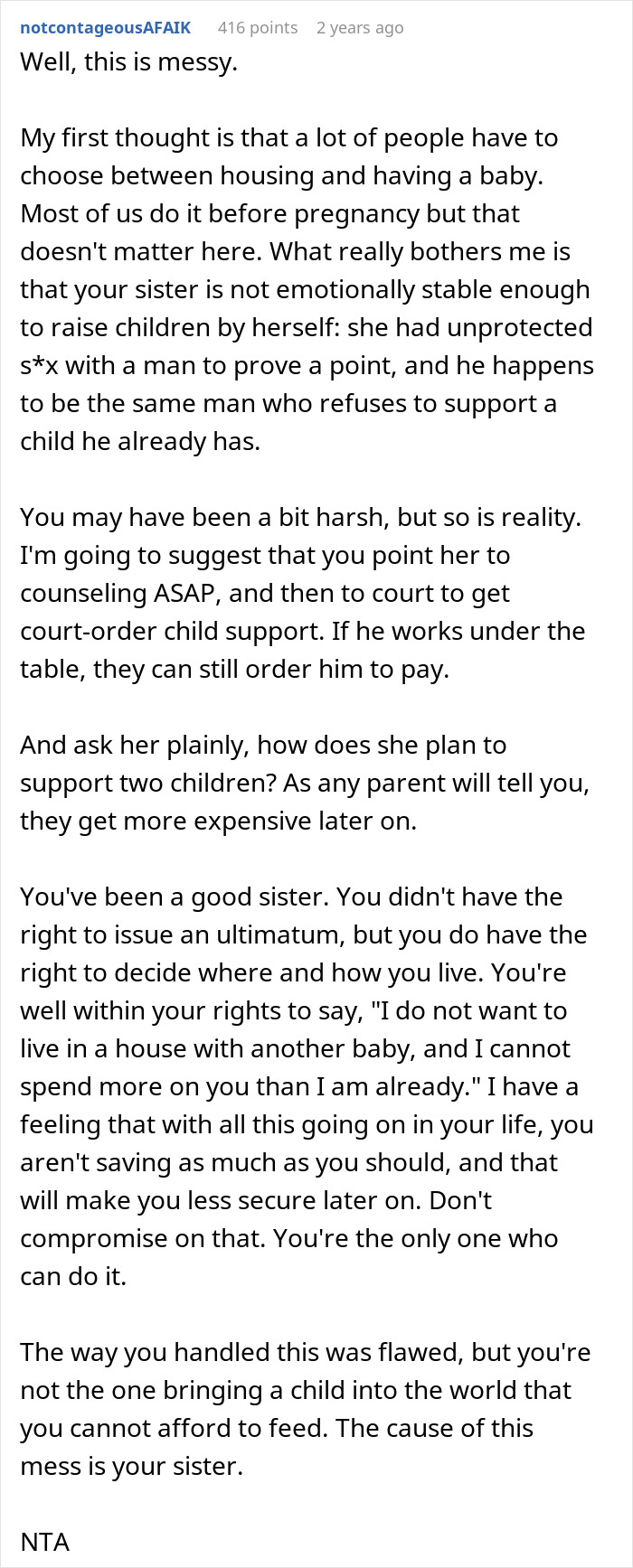
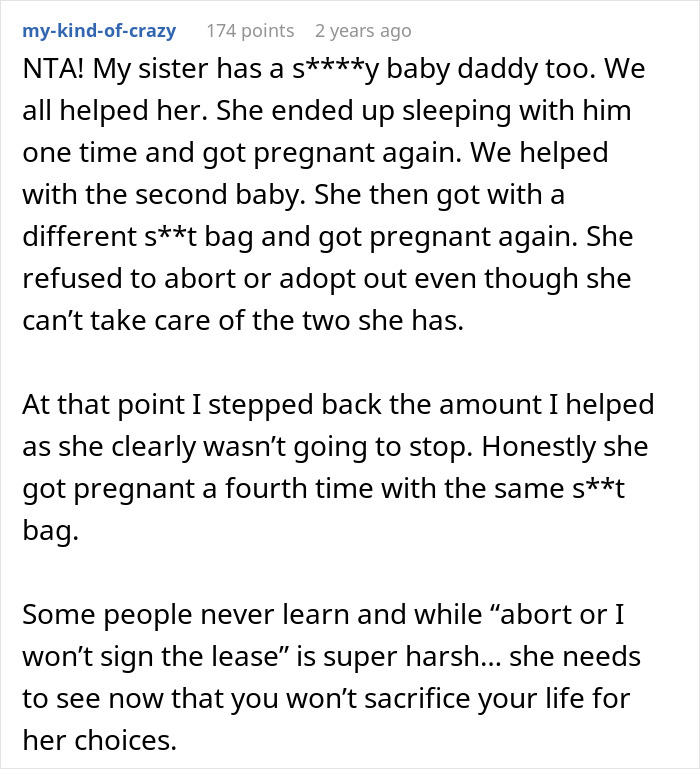
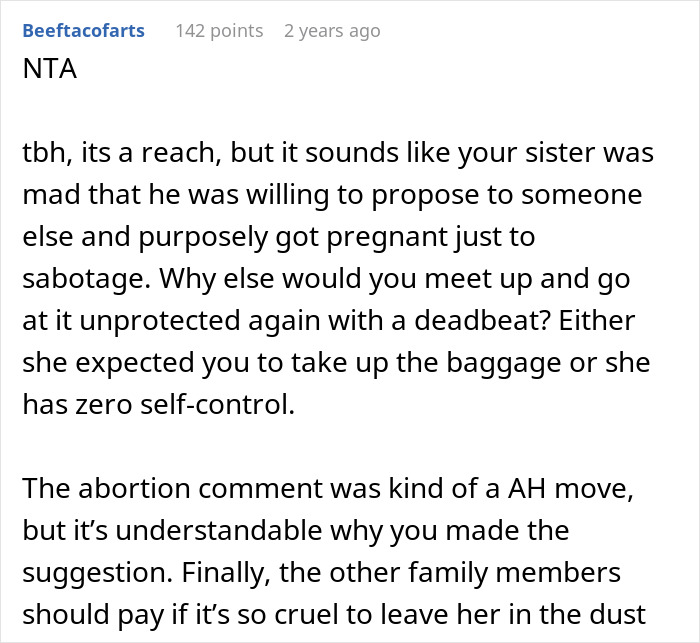
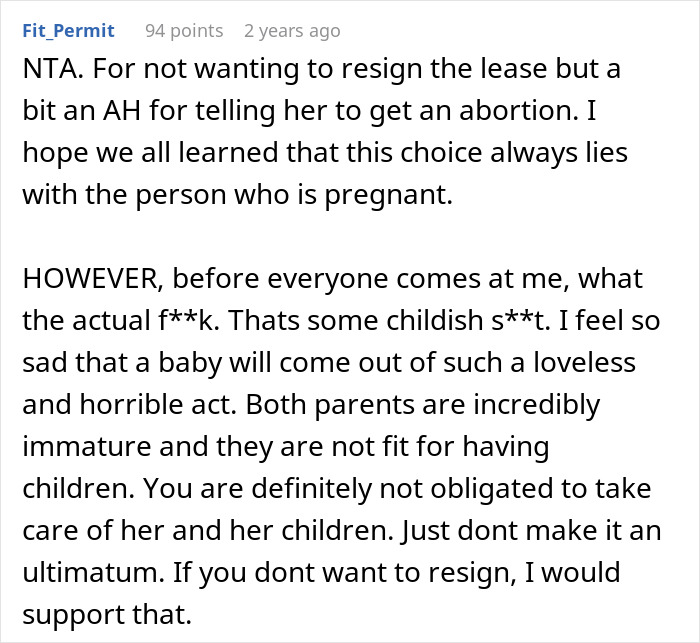
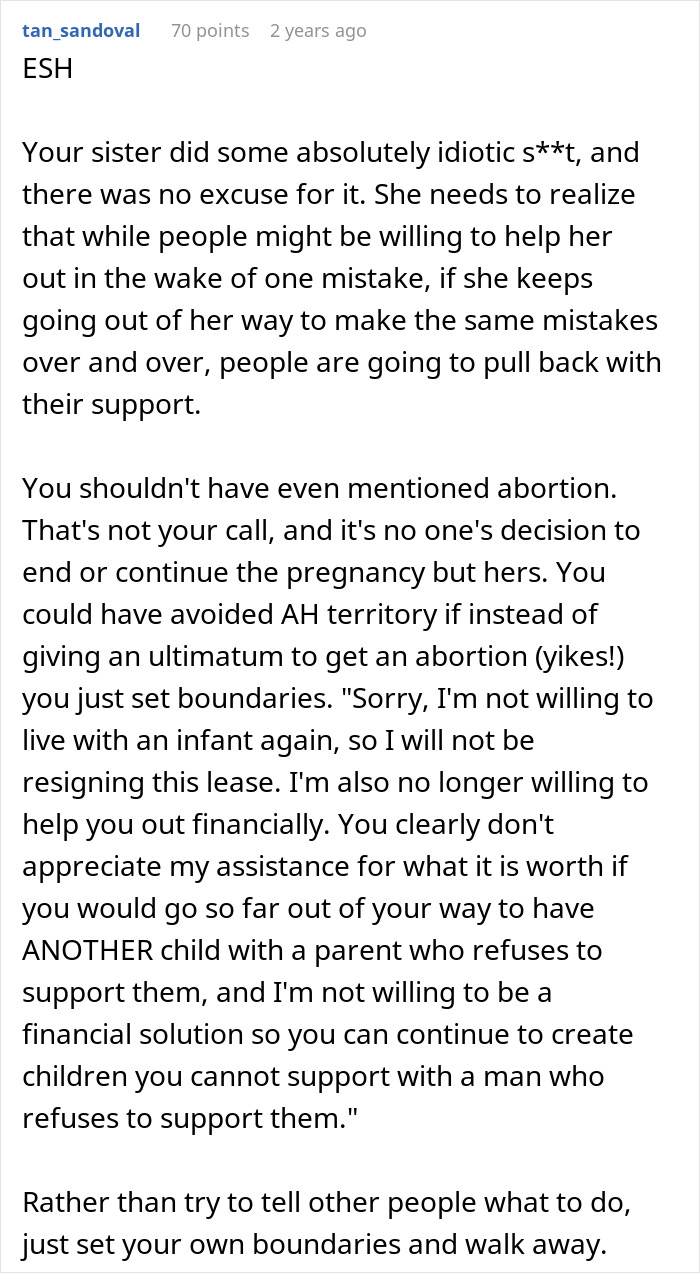
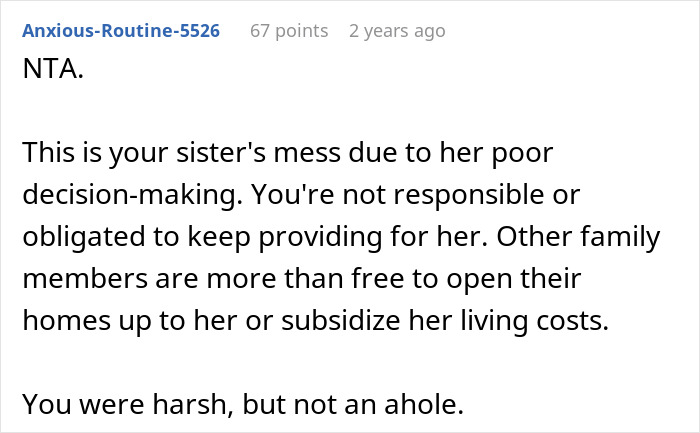
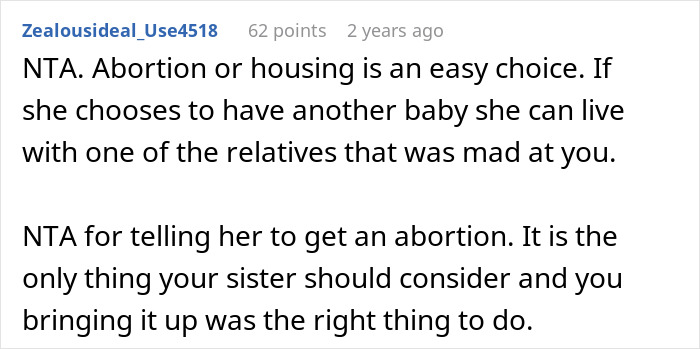
Netizens agreed that the OP was not responsible for continuing to financially support her sister. They also argued that family members who disagree should step in themselves to support the sister. What do you think? Where do you personally draw the boundary between helping family and protecting your own financial stability? We would love to hear from you!
Netizens viewed the situation as a boundary issue rather than cruelty, emphasizing that the sister’s choices are her own responsibility















 Follow Us