Most times when fans of Mr. Robot talk about the show, the conversation almost always centers on Rami Malek’s dead-eyed stare and the hacking. While there’s absolutely nothing wrong with that train of thought, it almost feels like reducing the Game of Thrones universe to a story about dragons. True enough, but that’s only half the story. And like Thrones, which was never really about dragons, there’s more to Mr. Robot than just ones and zeroes.
Not many shows nailed character development like this underrated cult classic, which centers on a man who had to break his mind into puzzle pieces just to survive the trauma of his childhood. Malek’s Elliot Alderson is arguably the most unreliable narrator in TV history, yet somehow he’s the easiest character to feel for. Half the time, viewers couldn’t tell if what he saw was real, but there was no doubt that it cost him a lot to look.
Elliot Alderson Was Introduced as Already Broken, Not Becoming Broken
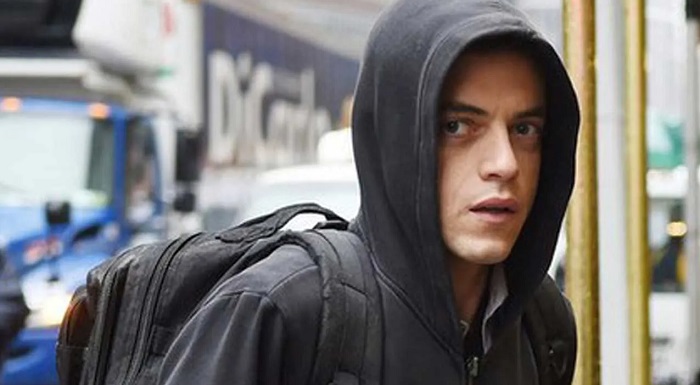
The go-to template for most psychological thrillers, like Mr. Robot, is to present the protagonist as a normal, functioning member of society from the pilot episode. Then slowly break them down before dropping the trauma bomb in Season 2 like some big surprise.
That’s certainly not the case with Mr. Robot. From the beginning, viewers get a front-row seat to the colossal mess that is Elliot Alderson’s life. His daily routine basically consists of using morphine to get through the day, staring at a cracked phone screen like it holds some important secrets, and living by a strict rule book that’s become his substitute for human touch.
In short, the guy can’t hug, but he can hack. His idea of intimacy is control through information. The clearest example of this is when he hacks his therapist, Krista’s (Gloria Reuben) boyfriend, in Season 1. He also uses his hacking abilities as a tool to establish dominance, just like when he turned in his drug dealer, Fernando Vera (Elliot Villar), to the authorities after pulling up all his life info. Creator Sam Esmail trusted viewers to get it immediately without any elaborate explanation. By the time the real heavy stuff dropped, audiences were already quite comfortable inside Elliot’s messy but never boring psyche.

Every Twist in Mr. Robot Tells You More About Elliot, Not Less
The general view from several critics and viewers is that every major twist in Mr. Robot says less about Elliot, not more. That consensus is not entirely correct. For instance, towards the end of season 1, viewers are dealt a double gut-punch that tells us more about Elliot, not less. First, he kisses Darlene (Carly Chaikin), and she freaks out completely because she’s his sister, a fact his mind had completely erased. This sends him digging, and what he finds on an unlabelled CD confirms it: Mr. Robot (Christian Slater) is his dead father. Not an outside mentor or real anarchist, but a personality his mind constructed from his grief.
Instead of changing the plot, this revelation completely reframed the meaning and weight of every argument both characters had ever had before that. Suddenly, every time Mr. Robot convinced Elliot to do something, it plays in the mind of the viewer like a man arguing with his own grief, something that wasn’t apparent before.
Viewers see more of that in Season 2, where Elliot slowly pieces together that he’s been in prison the whole time while narrating a completely different reality to the audience. His mind didn’t necessarily invent the people around him, but it re-created the setting. The prison yard became a basketball court, the warden’s associate “Lone Star” Lockwood (Michael Maize) became a neighbor, and the whole grim architecture of incarceration became a coping story his mind built around a situation he couldn’t face directly.
And then Season 4’s episode “407 Proxy Authentication Required,” filmed almost entirely like a stage play, forces the worst truth of all in the open: his father sexually abused him as a child. That’s what Mr. Robot was built to contain: not just the grief of losing a father, but the unbearable reality of who that father actually was. Neither revelation felt like a cheap shock. Both felt like the show had been driving towards that, because it had.
The Finale Gives Elliot Clarity Instead of A Happy Ending

Mr. Robot’s final season still gets a lot of backlash from sections of the show’s fanbase, and when looked at honestly, those sentiments appear to be valid. The finale didn’t exactly bring the fireworks many hoped for, and that’s often demoralizing. But set aside the emotions, and it’s obvious that the show went exactly where it was supposed to go for Elliot.
In one of its last scenes, the Mastermind wakes up in the hospital with Darlene at his bedside, and pulls his hand away from hers, because he’s not really Elliot. He tells her flat-out: “I’m not Elliot. I’m only a part of him.” Darlene knew. She’d known for a long time that the person she’d been working beside wasn’t the brother she grew up with. From there, the Mastermind retreats into Elliot’s mind, takes his seat in a movie theater alongside Mr. Robot and all the other personas, and lets the real Elliot surface for the first time in the show. Darlene looks at him and says, “Hello, Elliot.” The end.
It doesn’t play out like a tragedy. In fact, that’s the most peaceful scene in a show that spent 4 seasons being loud about what it is, and that’s entirely by design. Elliot doesn’t get the revolution, and he doesn’t get Angela (Portia Doubleday) back. But the one thing he does get is the same thing he spent four seasons running from: the truth about himself.
 Follow Us