Conflict at work is almost inevitable. And when handled correctly, it can be an opportunity for growth and future collaboration. However, some employees seem like they’re looking for any excuse to cause outrage and stir up drama.
One office worker went viral after sharing the nightmarish situation his colleague dragged him into, and asking the AITAH community for its thoughts on the workplace drama. According to the man, his coworker overheard him speaking with his family on the phone in his native language. She accused him of racism and immediately reported him to HR, all because a common word he’d used sounded like a slur in English. You’ll find the full story below.
Respecting your colleagues’ background and culture is non-negotiable. However, some employees like to stir up trouble where there is none

Image credits: Freepik (not the actual photo)
One office worker shared how he got in ‘trouble’ after his toxic colleague reported him to HR for speaking in his native language during a private phone call
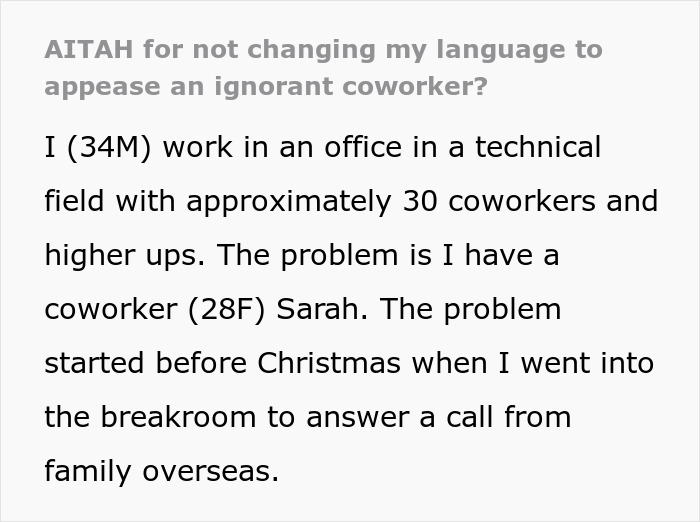

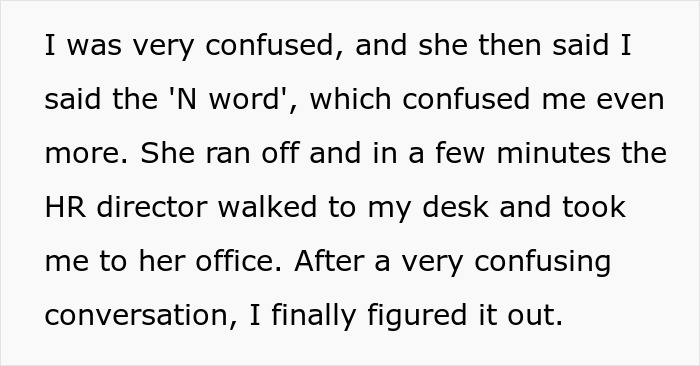

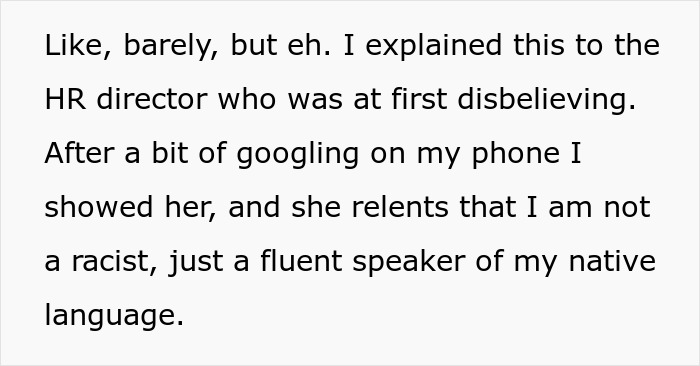
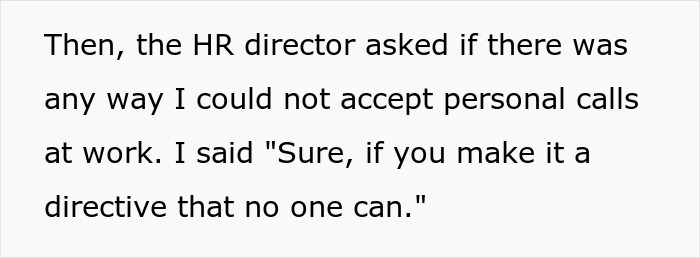

Image credits: MART PRODUCTION/Pexels (not the actual photo)



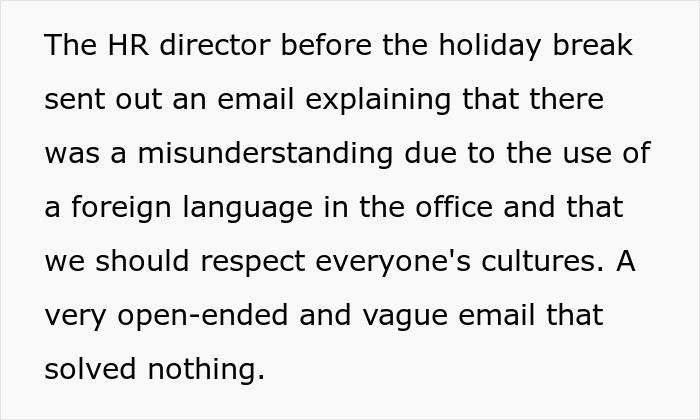
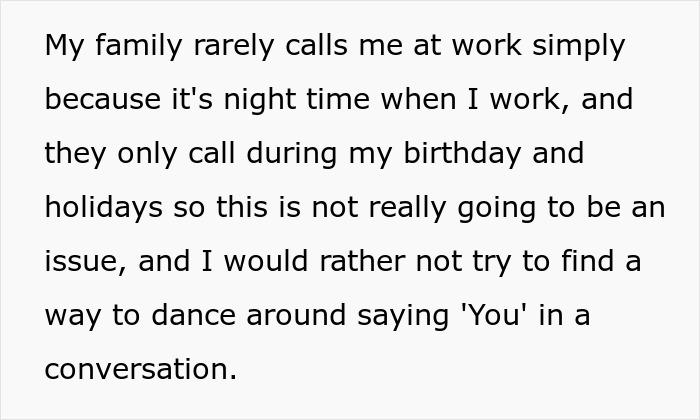


Image credits: ZoomieHan
Toxic coworkers tend to be manipulative and selfish, and undermine their colleagues to get ahead

Image credits: Christina Morillo/Pexels (not the actual photo)
The fact of the matter is that there’s only a limited number of sounds that human beings can make while speaking. And so, some words will sound similar in different languages, even if their meaning is completely different. The same goes for written words, too: things that are spelled the same way can mean different things in different languages.
Using slurs in the workplace shouldn’t be tolerated, but the same goes for cultural discrimination, like your colleagues trying to force you not to use certain words in your native tongue while on a private call with your loved ones.
Furthermore, if HR tries to single you out by restricting just what you can do, but not what your coworkers can do, this is an act of discrimination. You may want to speak with a lawyer or your union rep to see what your options are in that situation.
It’s quite likely that you’ve personally had to deal with a toxic coworker at some point in time. They’re often very entitled, a nightmare to deal with, and make your day-to-day routine at the office much harder than it needs to be.
In short, they introduce a ton of (unnecessary) stress to your life. And if they’re in a position of power, they influence the culture of the company in a very negative way.
According to ‘Fortune’ magazine, one of the signs that you’re working with someone toxic is that they’re manipulative. They care more about their personal gain than teamwork. Some examples of this type of behavior include stealing their coworkers’ ideas and conforming to the views of those in power for political gain.
“Ambition at any cost can be toxic for everybody else around them,” Amrit Sandhar, the founder of The Engagement Coach, told ‘Fortune.’
Sandhar adds that toxic coworkers also misuse their power and tend to override anyone else who has a different opinion. They prefer ordering people about instead of fostering inclusivity.
Reaching out to a trusted senior colleague for advice is a great way to work through issues at the office

Image credits: George Milton/Pexels (not the actual photo)
Meanwhile, clinical psychologist Ros Taylor stresses that toxic coworkers lack confidence, which manifests itself in jealousy, underhanded advice, and fake helpfulness, so that they look better at your expense.
Furthermore, they might trash-talk their colleagues behind their backs, downplay their successes, and provide feedback that makes them fail.
“A lack of confidence underlies so much of workplace behaviors that get enacted. They are so lacking in confidence that they need to boost themselves—and that means damning somebody else,” Taylor explained to ‘Fortune.’
She notes that toxic behavior is learned in childhood and can work its way into adulthood, too. These individuals tend to play the victim to get others’ sympathy, gossip about others, and blame others for their own mistakes.
Broadly speaking, you have three main strategies available to you if you’re working with a toxic colleague. You can learn to cope with them emotionally. You can try to solve the problem. Or you can leave your place of work for a (hopefully) better company.
On the one hand, if you ignore toxic behavior, it can ingrain itself into the company’s culture. On the other, calling out this toxicity can backfire, too, potentially harming your career progression.
From Taylor’s perspective, it’s important to “find a way of rewarding the good in them.” By using positive reinforcement, you can shift your relationship with your toxic colleagues.
Alternatively, Sandhar tells ‘Fortune’ that you can reach out to your other colleagues for support… hopefully, ones with more seniority.
“There are people out there who want to help and want to make a difference. So it’s identifying who those are, approaching them and saying, ‘Here’s what I’m experiencing, how do I deal with it?’, and allowing them to escalate it.”
What are your thoughts about the entire situation? What would you do if someone in your office tried to control how you spoke your native language with your family and friends? How would you have handled the bizarre work drama? How do you handle toxic colleagues? Tell us all about it in the comments down below.
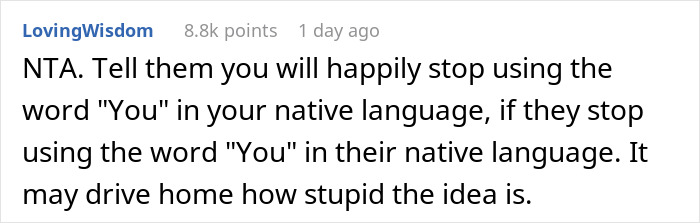
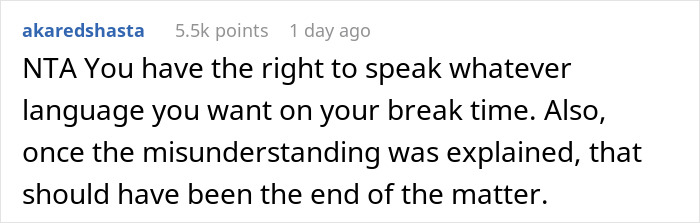
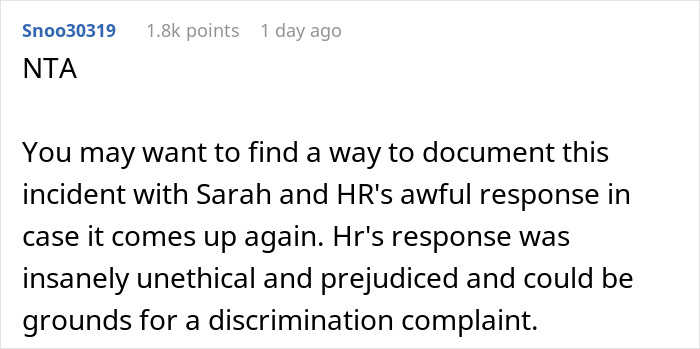
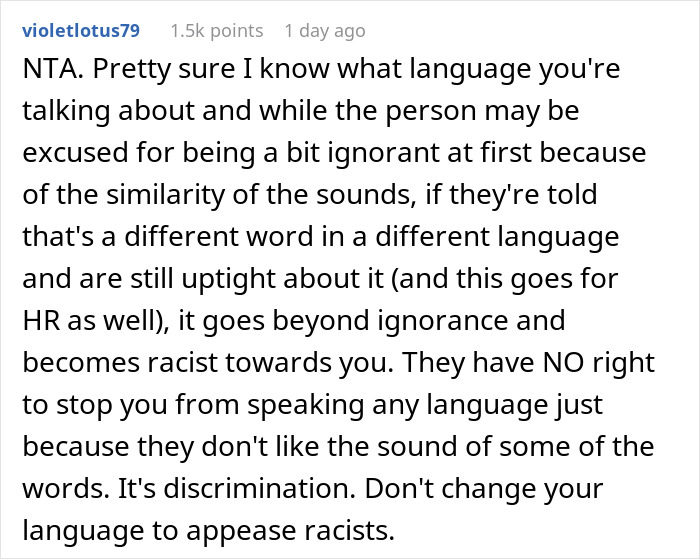
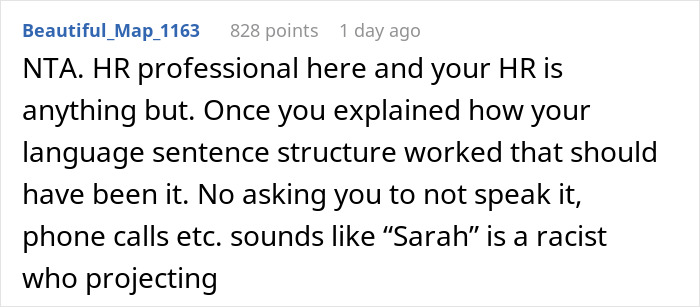
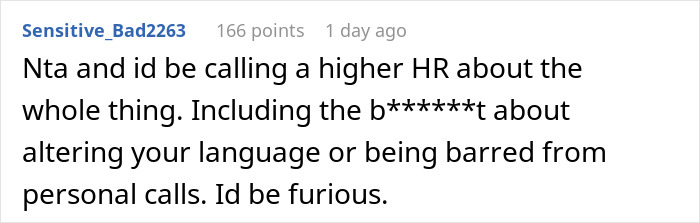
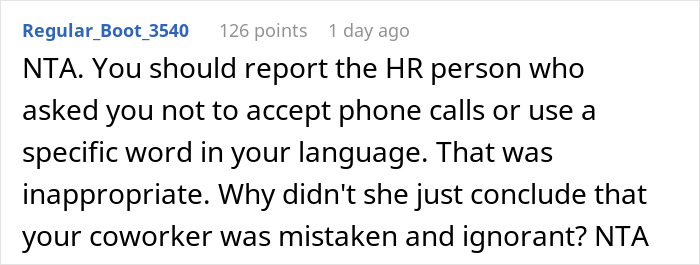
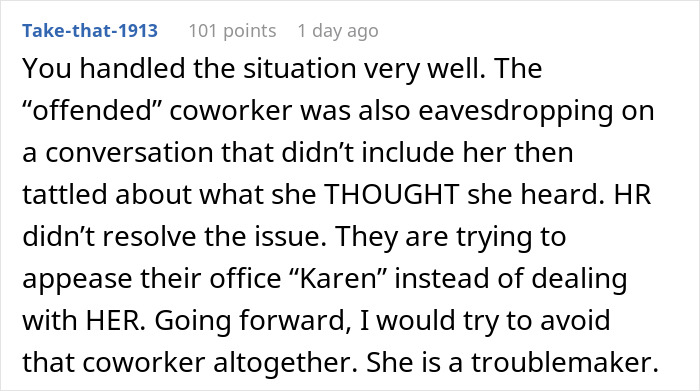
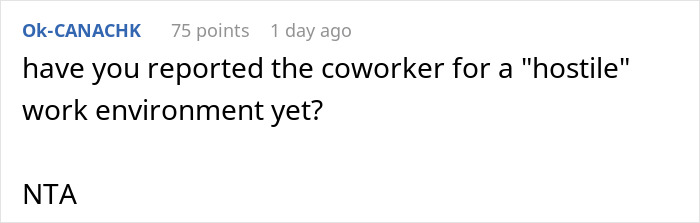
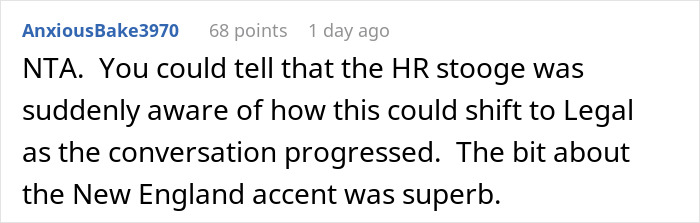
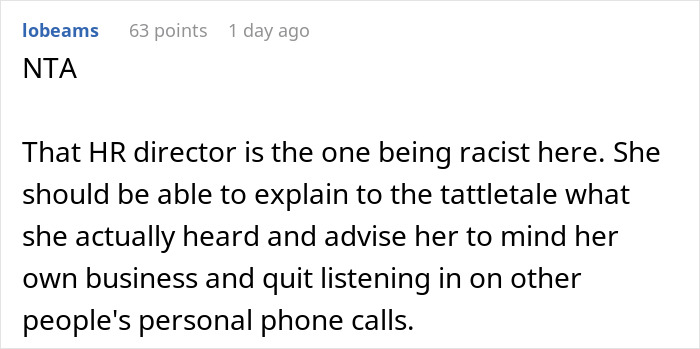
As the story started going viral, people wanted to share their thoughts about the workplace drama. Here are their perspectives



 Follow Us