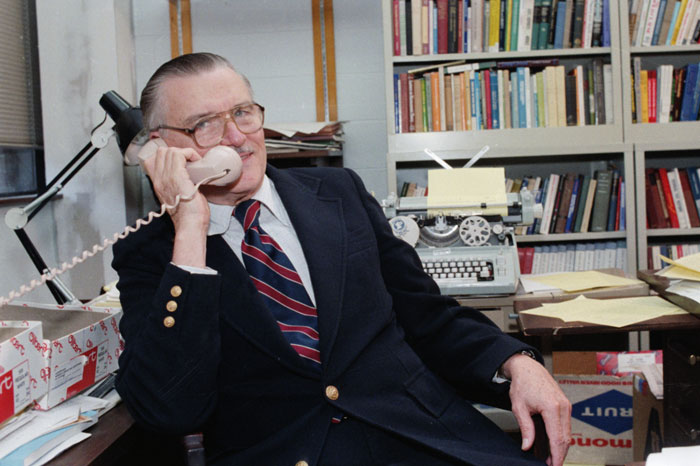
In Japan, they have a word for him. ‘Hatarakanai ojisan’ translates as “non-working older man” and refers to the corporate phenomenon of a senior employee who has been at the company long enough to be effectively unmovable, costs considerably more than his output justifies, and spends a meaningful portion of his working day doing something that is not quite work. Data from Japanese government surveys suggests that approximately 49% of Japanese companies have at least one on staff.
Although the Japanese gave it a name, the phenomenon is much less Japanese than it appears. He is in London. He is in Chicago. He is in Johannesburg. He is the reason the promotion that was supposed to happen in 2021 has not happened yet, and the reason the person who was supposed to get it has started updating their LinkedIn in the bathroom on their lunch break. The office has not changed to accommodate an extra decade of working life. It has simply absorbed it, awkwardly, at everyone else’s expense.
The people absorbing it most directly are the ones trying to get in through the door that the hatarakanai ojisan is blocking from the inside. Gen Z is entering a labor market where the Boomers have not left and where the career ladder that previous generations climbed has developed an immovable obstruction somewhere around the third rung.
People are living longer, which should be good news, but experts say a whole generation is now paying the price for that oversight. This is the longevity bottleneck, and it is about to get considerably worse before anyone in a position of authority admits it is happening. For once, we feel sorry for Gen Z, and we try to see who is to blame, because surely then we can figure out how to fix it?
Age is only the tip of the conveyor belt
20% of Americans over the age of 65 are still employed. That number has nearly doubled compared with 35 years ago, according to corporate mindset trainer Sira Masetti, and it shows no signs of reversing. In the UK, the employment rate for people aged 65 to 74 has also been climbing steadily for a decade. Germany, South Korea, and Australia are all watching the same trend from slightly different angles and arriving at the same conclusion: the workforce was not designed for this many people to be in it simultaneously across this many decades.
The traditional economic model assumed a relatively clean generational conveyor belt. People entered the workforce in their twenties, moved through it over forty years, and got a golden watch in their mid-sixties, making way for the next cohort to step into. But now, the conveyor belt has jammed. The people at the top are staying, the people in the middle are stuck, and the people at the bottom are standing in a queue that is moving at a speed best described as geological.
Guillermo Triana, CEO of PEO Marketplace, has seen this problem up close for decades. “If a senior employee remains in their position for much longer, younger staff may have to wait a long time before they have any chance of advancement. During twenty years, such a delay may negatively affect a young person’s financial opportunities, leadership skills, and ability to accumulate wealth.”


A person who enters the workforce at 22 and hits a longevity bottleneck is potentially waiting until 42 for the kind of career progression that would previously have arrived in their early thirties. That is the decade in which people buy houses, build savings, and develop the professional confidence that comes from actually being given responsibility. Missing it has consequences that compound.
Lucas Botzen, global employment specialist, adds a taxation dimension to the conversation: “A declining percent of workers can ultimately fund a rising percent of expenditures for pensions, health care and social services, with potentially increasing pressures on payroll taxes, income taxes, and consumption taxes.”
Younger workers are not just blocked from advancing. They are also being asked to fund the retirements of the generation blocking them, while simultaneously managing housing costs that have increased beyond anything their predecessors faced at the same age. The financial physics of this arrangement are not sustainable, and the people at the bottom of the pyramid are doing the maths.
The old man is not the villain, though
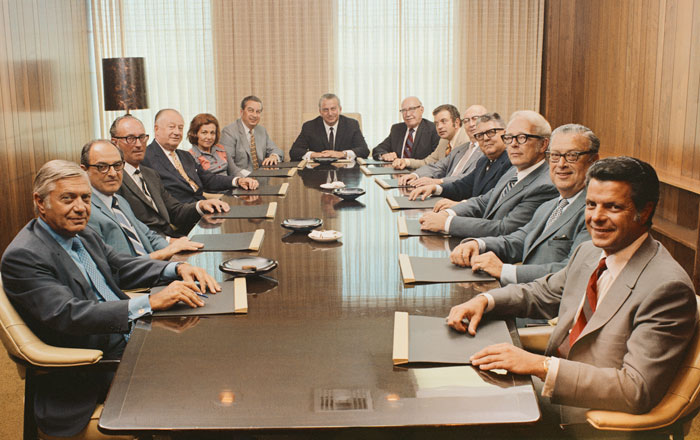
Before we turn this into a generational grievance piece, let’s set the record straight. The older worker who stays is not, in most cases, doing anything wrong. They are playing the hand that has been dealt to them. Work gives structure, identity, social connection, and income. Retirement, particularly in economies where pension provision is increasingly shameful, is not the comfortable exit it was sold as.
Phil Moran, Managing Director of Oryx Executive Search, makes a point that cuts through a lot of the noise: “In the executive world, people joke their funeral will be their retirement party. These jobs offer little incentive to leave. With remote work and intellectual value taking precedence over physical labor, 65 or 70 doesn’t automatically feel like an appropriate exit point anymore.” People simply can’t afford to have a beach retirement in Miami as they thought, and the thought of entering a retirement home when you are still kicking it at 70 seems like a joke. So, let’s keep working!
Marilyn Heywood Paige, a marketing consultant whose client base has shifted dramatically toward women over fifty seeking career momentum, reports hearing the same thing repeatedly: “I’m finally able to do what I really want, why would I stop now? I can’t retire, but I’m too smart to work for someone else.” We can’t call this selfishness. This is a generation that spent forty years building expertise and finds itself, at the point of peak competence, being culturally encouraged to stop. The logic of stopping has not kept pace with the reality of extended healthy working life, and nobody restructured anything to account for that gap.
Yes, old people exist; that’s not the issue. The problem is that the systems around them were built for a world where they did not stay this long, and nobody has updated the architecture.
What happens when the ladder stops moving?
Sira Masetti explains that you can observe a leader for a decade, sit in every meeting, take every course, and still not have developed the instincts that come from being the one whose name is on the decision. Those instincts require actual responsibility, and actual responsibility requires someone above you to move.
Moran identifies the innovation consequence with equal precision: “If younger leaders never get to make consequential decisions, they never get to develop the instincts that come from making them. And the organization loses the benefit of having different generations challenge one another.” The bottleneck is not just a career problem for the individual. It is a strategic problem for the organization, which is eventually running on the accumulated judgment of a leadership cohort that has not been meaningfully challenged from below in years, while its most ambitious younger talent has left to find somewhere that will actually let them do something.
Shawn Hill, VP of Growth at MoveBuddha, watches this play out with precision every time. “The younger professionals are feeling like they are being looked over and leave for almost any opportunity that guarantees an express ticket to the top. And some older professionals are feeling trapped. On one side they want to continue working, and on the other they don’t want to carry the full weight and responsibility of their senior management roles.” Both groups are stuck, and the organization is losing people from both ends simultaneously while the middle quietly calculates its options.

The fix nobody has implemented at scale
Every expert we spoke to comes to the same conclusion, which is encouraging for diagnosis but less encouraging about how little of it is actually happening. The consensus is that the linear career ladder needs to be replaced with what Botzen calls a career lattice, a structure that allows movement through expertise, mentorship, project ownership, and specialist contribution rather than simply waiting for the person above you to vacate their chair.
In practice, this looks like senior executives transitioning into advisory and mentoring roles while younger employees take operational responsibility. Triana describes the mechanism: “An experienced executive can move into mentoring, advising, consulting, and specialist roles, while a younger employee takes on day-to-day managerial responsibilities. This way, the company can retain its institutional knowledge without depending on one person to hold the role until retirement.” The institutional knowledge stays. The blockage moves. Everyone theoretically wins.

Moran adds the critical detail that separates restructuring from a title change with no real content: “It has to feel authentic and not just like a title change. It is about proximity to power. If younger leaders never get to make consequential decisions, they never get to develop the instincts that come from making them.” An advisory role that comes with a reduced salary, a smaller office, and no actual influence is not a solution. It is a demotion with better branding, and the people being offered it will recognize it immediately.
The gig economy is doing some of this work by default. Around 38% of the American workforce is now freelance or gig-based, according to current estimates, with roughly 47% of those providing skilled knowledge services like consulting, IT, and marketing. Many of these are experienced workers who have effectively created their own exit from the bottleneck by leaving the bottlenecked organization entirely and selling their expertise back to it on their own terms.
This solves their individual problem. It does not solve the systemic one, and it arguably makes it worse by removing experienced people from the mentoring pipeline entirely while the organizations they left figure out how to function without institutional knowledge they never properly transferred.

The reckoning that is coming
The longevity bottleneck is not a temporary inconvenience that will resolve itself when the Boomers eventually retire. It is a structural misalignment between how long people work, how career systems were designed, and how the economic burden of extended life is distributed across generations. It will get worse before it gets better, because the demographic mathematics are unambiguous and the political will to restructure retirement, pension systems, and workplace hierarchies simultaneously has not yet materialized anywhere in a form that matches the scale of the problem.
What would actually help, and what almost nobody with the power to implement it is currently doing, is a fundamental rethink of what retirement means, what career progression means, and what organizations owe both their oldest and youngest employees simultaneously. Phased retirement. Genuine advisory structures with real proximity to decision-making. Early responsibility for younger workers that does not require waiting for a vacancy. Tax structures that make it attractive to transition rather than stay or leave entirely.
None of this is complicated in theory, but it requires organizations and governments to admit that the system is broken in a way that cannot be fixed with a LinkedIn post about intergenerational collaboration. Which is where most of the current conversation is happening and where it will stay until someone decides the problem is urgent enough to address rather than interesting enough to discuss.
In the meantime, the hatarakanai ojisan is in his corner. The person who should have been promoted three years ago is updating their CV. But while half of the politicians are wearing diapers, we are probably far from an actionable solution. So hold on to your baggy panta, Gen Z; it’s not about to get easier.
Have you been stuck somewhere on the career ladder, waiting for a top spot that will seemingly never arrive? Tell us about it in the comments!
 Follow Us