Family is there to help each other when the going gets tough. Or at the very least, not make everything worse. But when Reddit user u/LogicalSky6901 and her family started staying at her husband’s sister’s place, their arrangement quickly became too much for them to handle.
In a post on the subreddit ‘Am I the [Jerk]?’, the woman explained that they paid her sister-in-law campground prices for using her property to park and live in their camper, but that eventually wasn’t enough for her.
This woman and her husband paid his sister for a chance to temporarily park their camper on her property

Image credits: Stephen Ellis (not the actual photo)
But after they began living there, she quickly demanded they contribute in other ways too



Image credits: energepic.com (not the actual photo)

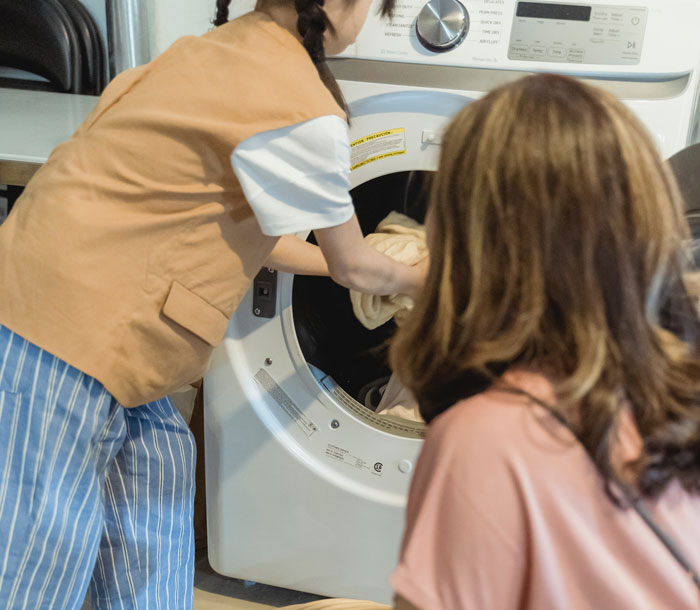
Image credits: Nicola Barts (not the actual photo)



Image credits: Yulia Khlebnikova (not the actual photo)

Image credits: Tirachard (not the actual photo)

Image credits: David Levêque (not the actual photo)

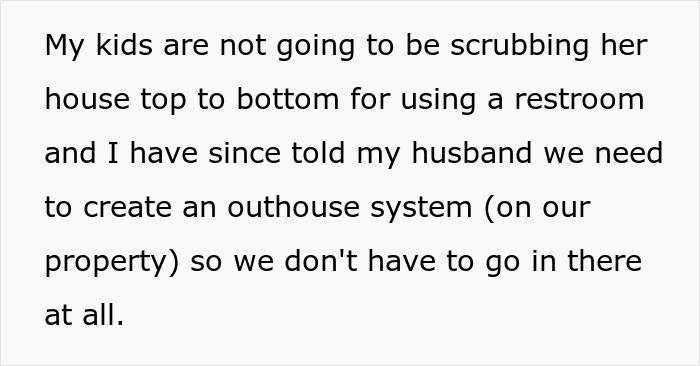

Image credits: Anton (not the actual photo)

Image credits: LogicalSky6901
In-law conflicts are quite common

Image credits: Keira Burton (not the actual photo)
Popular culture and real-life examples often feed us the assumption that conflicts between in-laws are normal. And quite often it seems that they are unavoidable.
Part of the reason why navigating these relationships can be tricky is the fact that there is no rulebook for them. For example, how close people should live to their in-laws, how often should they see each other, and what responsibilities might they share?
In a 2020 study from the US, both men and women reported having more conflict with their mothers-in-law than their mothers, and mothers indicated having more conflict with their daughters-in-law than their daughters.
Especially between women

Image credits: Liza Summer (not the actual photo)
Terri Apter, a psychologist and senior tutor at Newnham College, Cambridge University, who conducted more than two decades of research in the field, found that 60% of women admitted the relationship with their female in-law caused them long-term unhappiness and stress. Two-thirds of daughters-in-law believed that their husband’s mother frequently exhibited jealous, maternal love towards their son. Seventy-five percent of couples reported having problems with an in-law, but only 15% of mother-in-law/son-in-law relationships were described as tense.
One possible factor that could contribute to the prevalence of female in-law tension is child-rearing and the impact it has on women, which could potentially compound any pre-existing disagreements.
In a Finnish study, researchers discovered that compared to child-free couples, mothers and fathers were as likely to report conflict with their own parents, but more likely to report individual conflict with their in-laws.
Many young adults found in-law conflict increased after the birth of their first child, with the shared interest of a grandchild providing fresh reasons for grandparents to “influence and interfere in the lives of other family members.”
Of course, we don’t have the full context about the situation in OP’s family, but who knows, maybe it’s easier for her sister-in-law to risk a fight by demanding her kids help with the chores than to parent her own daughter?
Either way, children and parenting in general seem to only add fuel to the fire that is in-law relationships.
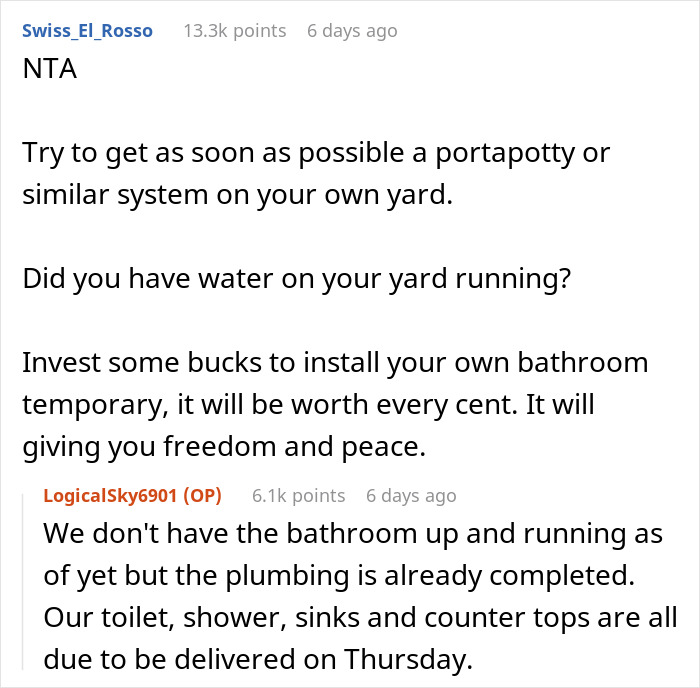
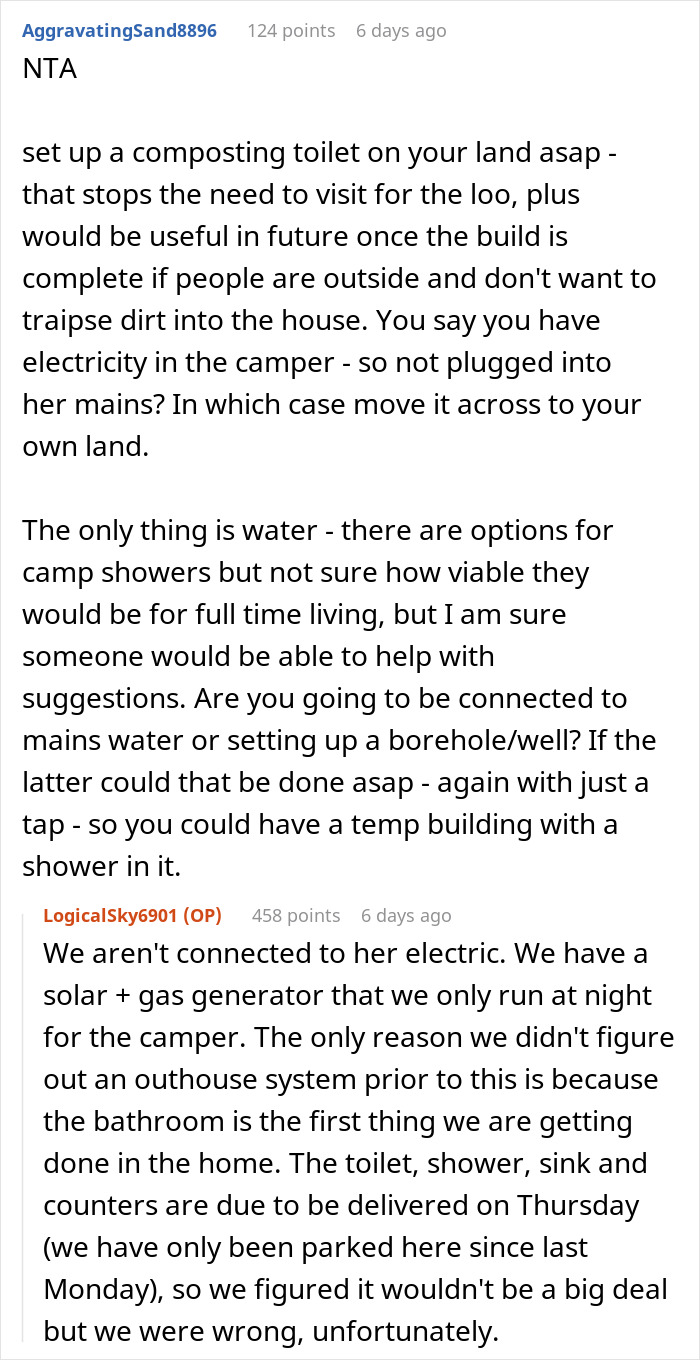
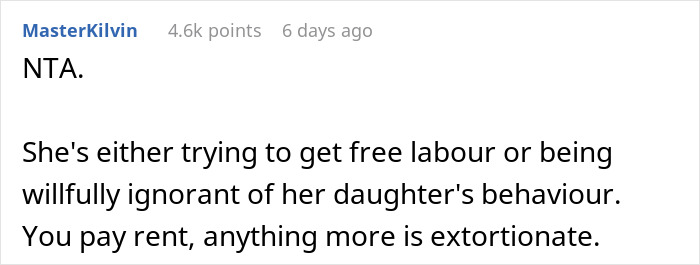
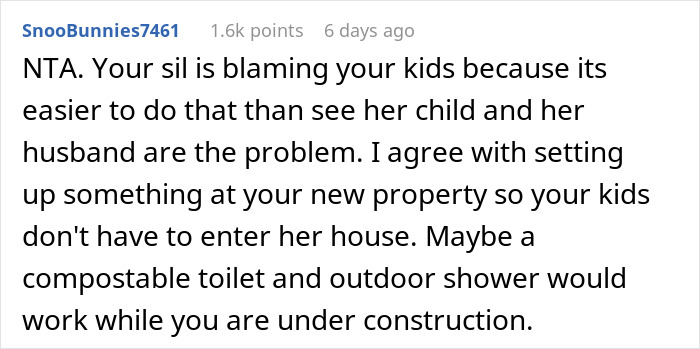
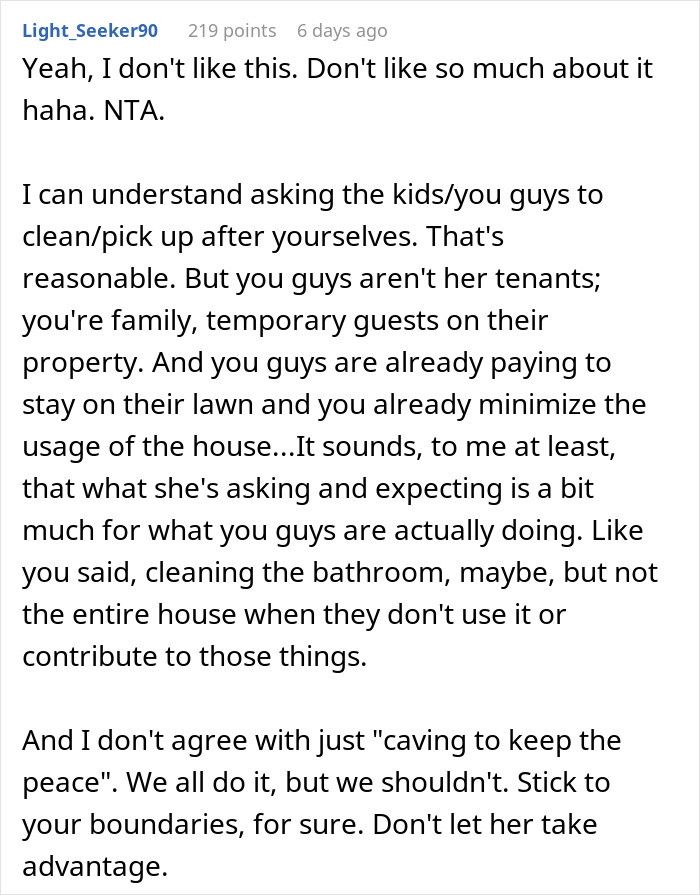
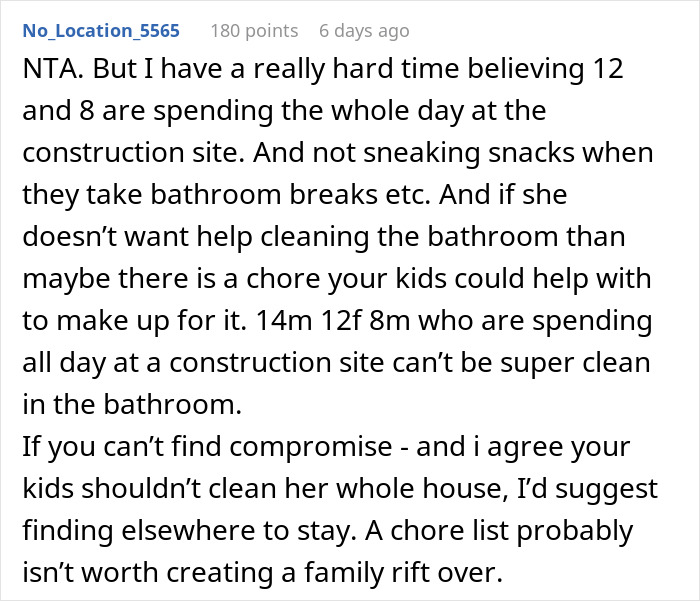
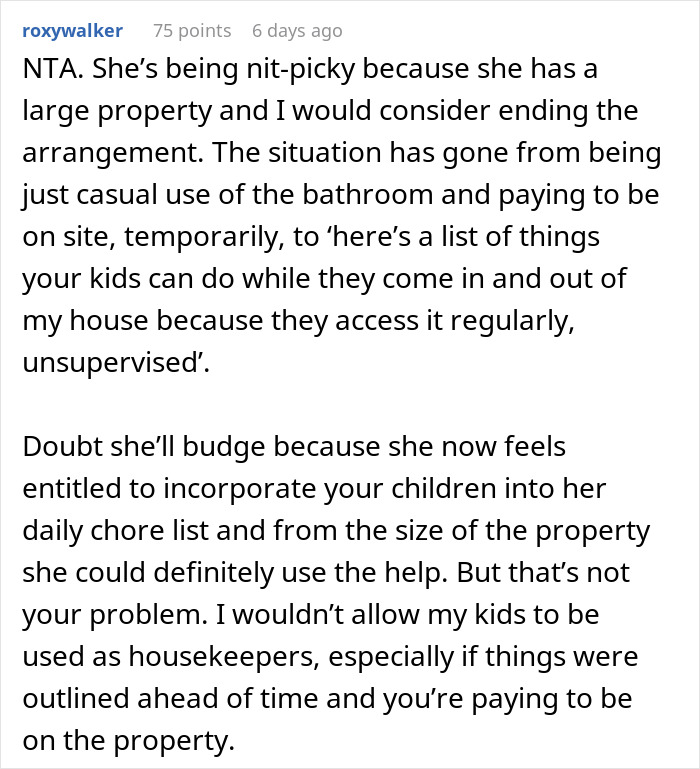
After reading her story, people unanimously said that the woman did nothing wrong and that it’s the sister-in-law who needs to rethink her approach





 Follow Us