At night, the Australian jumping spider Portia fimbriata hangs upside down beneath a thread of its own silk and goes almost completely still. For a long time, it would have been reasonable to assume the little hunter was simply resting; however, a new study from the University of Bonn suggests something much more interesting is going on: the spider appears to sleep in two separate stages, and one of them looks a lot like the REM sleep humans drift into every night.
More info: pnas.org
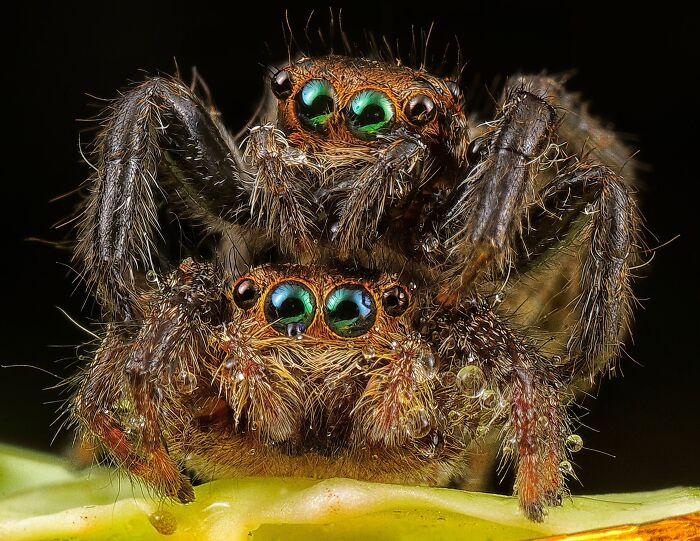
The Australian jumping spider Portia fimbriata appears to experience two distinct stages of sleep, including a REM-like phase
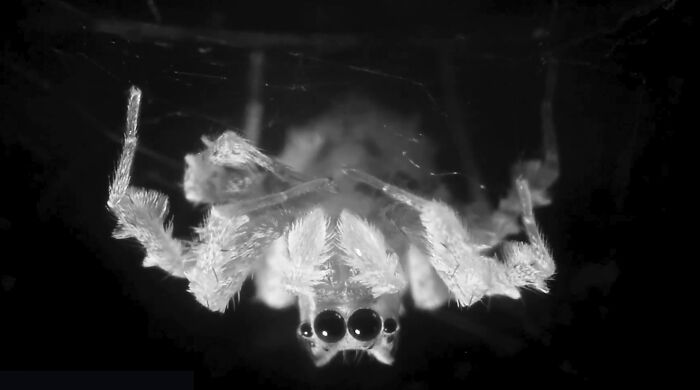
During this REM-like phase, the spiders’ eyes move, and their muscles twitch, much like the rapid eye movements and small jerks seen in sleeping people and many other vertebrates. According to the researchers, whose findings were published in the Proceedings of the National Academy of Sciences, this is the first thorough experimental evidence that spiders don’t just switch off for a while but enter genuine, regulated sleep. That would be notable for any animal. Coming from a creature whose nervous system has so little in common with ours, it raises big questions about where sleep came from in the first place.
Portia fimbriata is not a big animal; a fully grown adult is roughly the size of a one-euro coin. What it lacks in size, though, it makes up for in strategy. Most spiders feed mainly on insects, but members of the Portia genus go after other spiders, and they have some famously cunning ways of doing it. One trick involves working the silk of another spider’s web to mimic the vibrations of a trapped, struggling insect. The web’s owner hurries over expecting an easy meal and finds a predator waiting instead.

During this phase its eyes move rapidly and its muscles twitch much like those of sleeping humans
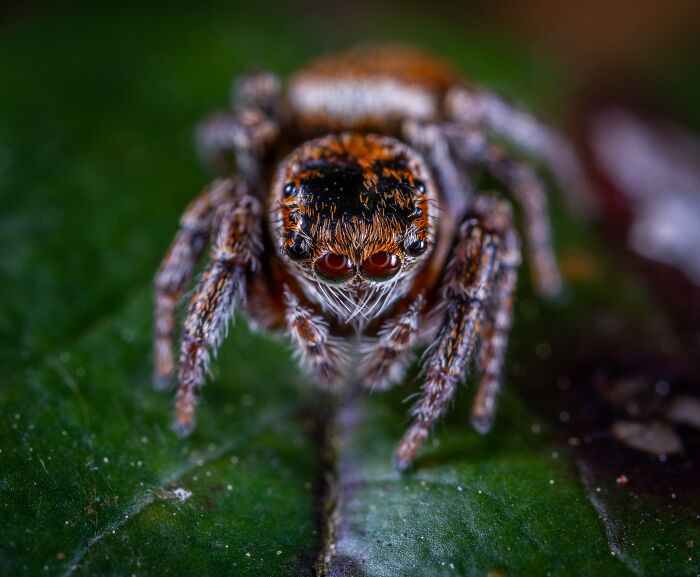
Hunting like that points to an unusual capacity for learning, which is exactly why the team at the university’s Institute of Organismic Biology chose this species. Scientists have studied sleep in great depth in humans and other vertebrates, but they still know surprisingly little about how it works in animals built so differently. A clever spider seemed like a good place to start untangling how sleep, the nervous system, and cognition fit together.
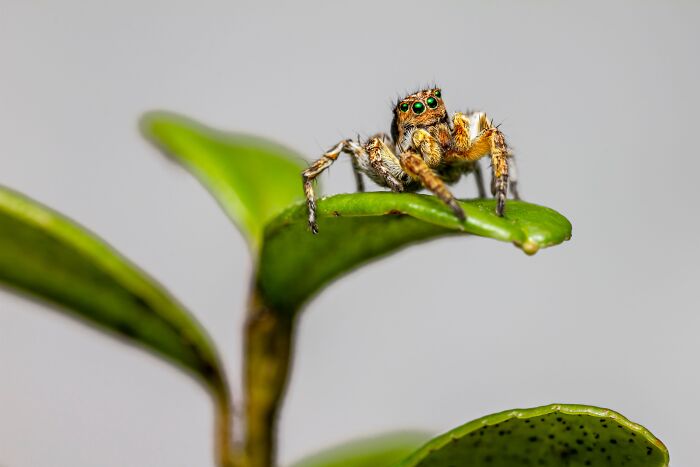
Researchers chose this tiny predator because of its remarkable hunting strategies and unusual ability to learn
To see what the spiders were really doing after dark, the researchers placed them one by one in plastic dishes about 12 centimeters (4.7 inches) across and watched them for several days and nights under different lighting conditions. Infrared cameras let them keep filming through the night without switching on any visible light. The footage showed how the spiders positioned themselves to sleep, when they rested quietly, and when the telltale eye movements and twitches kicked in.
Sitting still, of course, is not the same as sleeping, so the team had to prove the difference. They played sounds to the spiders and measured how quickly each one reacted, since a truly asleep animal tends to respond more slowly than one that is merely inactive. They also deliberately disrupted the spiders’ sleep to check for “sleep rebound,” the tendency to make up for lost rest by sleeping more afterward. Taken together, the observations and tests gave the researchers strong evidence that Portia’s sleep is regulated and comes in distinct stages.
Using infrared cameras scientists recorded the coin-sized spiders hanging upside down from silk threads throughout the night
None of this was easy. Spiders sense the world very differently from people, so the scientists first had to work out which sound would reliably get a consistent reaction. They also had no way to measure the spiders’ brain activity, so every conclusion had to come from behavior alone, using huge amounts of high-resolution video recorded over many days and nights. They also took care not to assume that a twitching spider is going through the same process as a sleeping human.
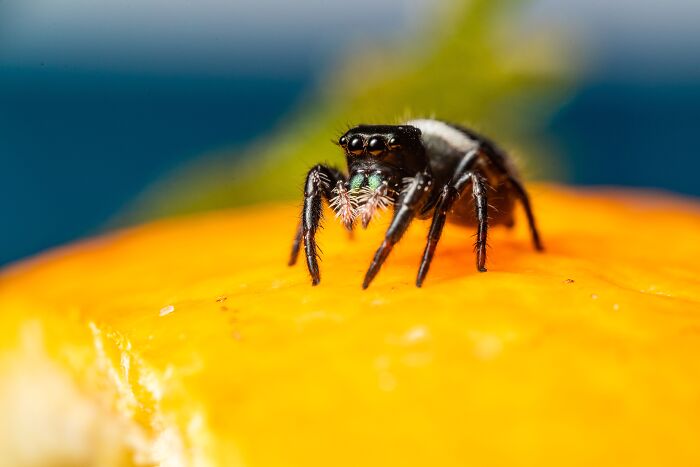
Sound tests and sleep disruption experiments revealed that the spiders respond more slowly when asleep and make up for lost rest afterward
That caution matters for the most tempting question of all: do spiders dream? The researchers are clear that spotting REM-like movements doesn’t answer it. The study does show that sleep in these tiny predators is far more complex than anyone had firmly established before.
The implications reach well beyond spiders. Most of what we know about sleep comes from vertebrates, mainly mammals and birds. Finding similar features in an animal with a radically different nervous system could help scientists pin down when different kinds of sleep first appeared and why, and whether certain sleep mechanisms are shared across the animal kingdom or evolved separately in different lineages. The researchers argue that future studies should look past the usual suspects and include species with unusual adaptations or much simpler nervous systems, work that could feed into behavioral science, neuroscience, and chronobiology, the study of biological rhythms. Even after decades of research, many basic questions about sleep remain unanswered, including some about our own.
The findings provide the first thorough experimental evidence of regulated sleep in spiders and raise new questions about whether REM sleep evolved across different animal groups
The Bonn team is already planning its next moves. The researchers are comparing REM-like sleep across different spider species and examining how spiders sleep in the wild versus in the lab. They also want to know what happens inside the brains of spiders and insects while they sleep, and whether particular sleep stages help with learning and other mental tasks. Another focus is how climate change and human activity, especially artificial light at night, might disturb the sleep of spiders and other arthropods. Whether Portia actually dreams is still anyone’s guess. For now, a spider no bigger than a coin has handed scientists a new way into one of biology’s longest-running puzzles.
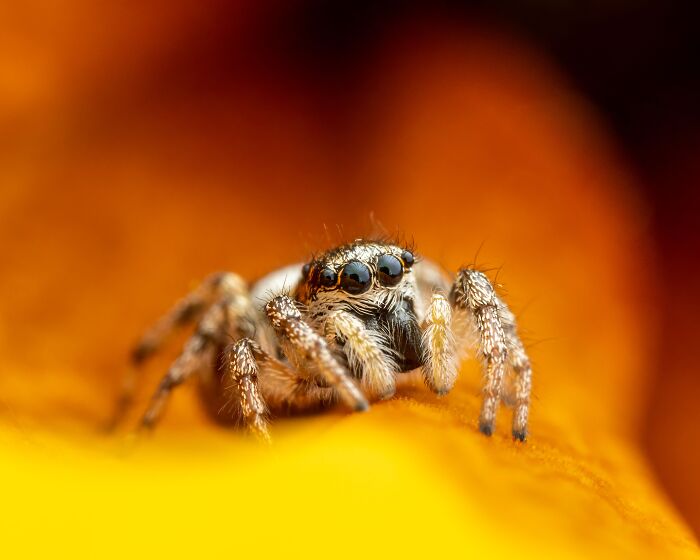
Scientists still don’t know whether spiders dream but further research will explore how sleep affects their learning and how artificial light might disrupt their nighttime rest
 Follow Us