On February 29, 1940, at the 12th Academy Awards, Hattie McDaniel made history by becoming the first African American to receive an Oscar.
She won the Best Supporting Actress Oscar for playing “Mammy” in Gone with the Wind, the 1939 epic that also became the first color film to take home Best Picture.
For many readers tracing the timeline of black Oscar winners, her win is the moment the door first cracked open for actors and actresses who had been locked out of Hollywood’s biggest honors.
This article breaks down what happened that night, why it was complicated, and how her legacy still echoes today.
The Barrier-Breaking Win of 1940
Long before Hollywood liked to congratulate itself for “progress,” Hattie McDaniel’s story already carried the weight of American history.
As Britannica notes, McDaniel was born to formerly enslaved parents. So when she walked into that ballroom as an Oscar nominee in 1940, it wasn’t just another glamorous night out. That moment spoke to what African American talents could claim in public, and what they were still expected to swallow in private.
For Black performers by winning recognition in a system that rarely made room for them, even a breakthrough came with conditions, starting with the setting itself.
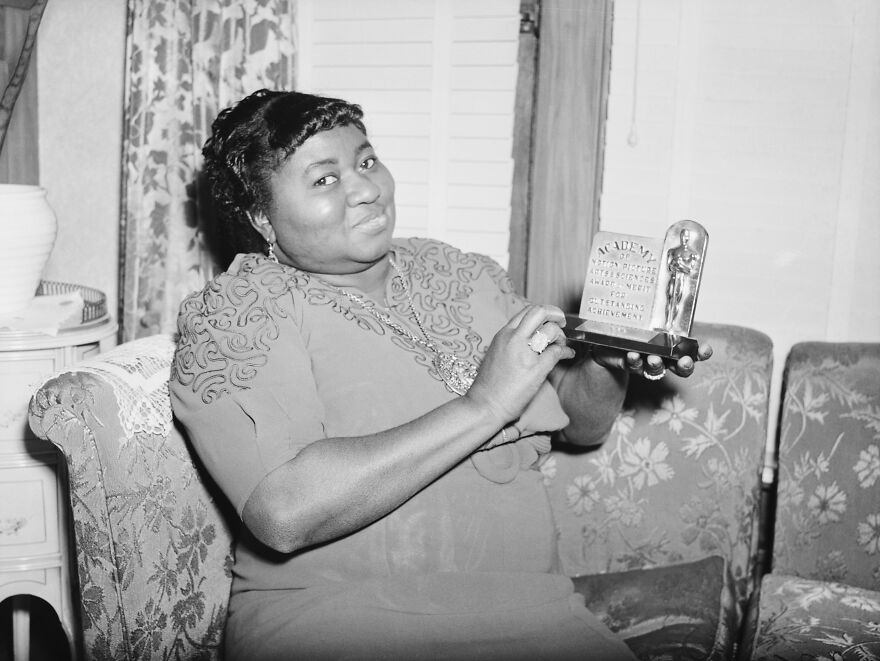
Image credits: Bettmann / Getty Images
The Academy of Motion Picture Arts and Sciences explains that the ceremony took place at the segregated Cocoanut Grove at the Ambassador Hotel, and that McDaniel and her guest were seated separately from the film’s other nominees.
In the Jim Crow Era, this kind of “separate” treatment wasn’t shocking to the people in power; it was the rule. For McDaniel, the result was a historic win unfolding inside a room still organized around racial segregation.
For modern readers, that detail reframes the night: the trophy underlined the humiliation, but didn’t erase it.
And it’s hard not to read that scene as a message aimed at every Black actress and actor watching from the margins of the industry. Yes, you can be celebrated, but you can still be reminded that you’re not meant to sit at the center of the story.
Then McDaniel spoke, and her words did something Hollywood couldn’t control. On the Oscars YouTube account, McDaniel’s acceptance speech is still there in full. The Black best actress thanks moment lands because you can hear joy and restraint in the same breath.
She opens by calling it “one of the happiest moments of my life,” then thanks everyone who “had a part in selecting” her. She describes feeling “very, very humble,” and says she will hold the award “as a beacon” for whatever she may do next.
And then comes the line that still lands like a closing bell: “I sincerely hope I shall always be a credit to my race and to the motion picture industry.”
Of course, the role behind that milestone would spark a very different conversation right after the applause faded.
The Controversy and Complexity of “Mammy”
Almost immediately, the role that made history became the one people argued about. Hattie McDaniel didn’t just play “Mammy” once. Smithsonian Magazine notes she played a maid at least 74 times across her career, and that repetition shaped how audiences and critics read her success.
For some viewers and civil rights advocates, the frustration was obvious: Hollywood kept handing a Black actress the same narrow costume, then applauded her for wearing it well. The NAACP criticized her for portraying stereotypes on screen, but McDaniel didn’t dodge that criticism.
In a 1947 article she published, she pushed back on the idea that taking those roles meant endorsing them. “I have never apologized for the roles I play,” she wrote, arguing that her critics underestimated the public’s ability to separate performance from real life.
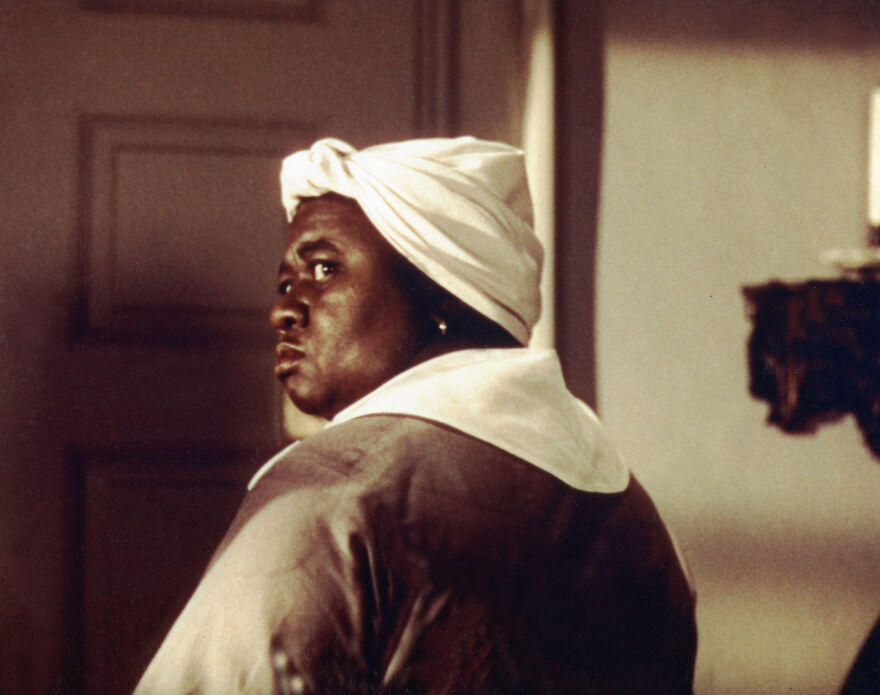
Image credits: United Archives / Getty Images
Her bluntest line, repeated for decades, captured the economic reality behind the moral debate: “I’d rather play a maid than be one.” It’s uncomfortable to hear, but it explains why the conversation around “Mammy” never stays simple.
On one hand, the character draws from a long-running caricature of Black womanhood: loyal, domestic, and defined by serving a white household. According to Smithsonian Magazine, “Mammy” was a common name used for enslaved women in domestic roles, which only sharpens the historical sting, especially given McDaniel’s own family history.
On the other hand, McDaniel treated the industry like a battlefield with limited exits. She didn’t just accept the script as fate. In that same 1947 writing, she said she had persuaded directors to omit dialect from modern pictures when she could.
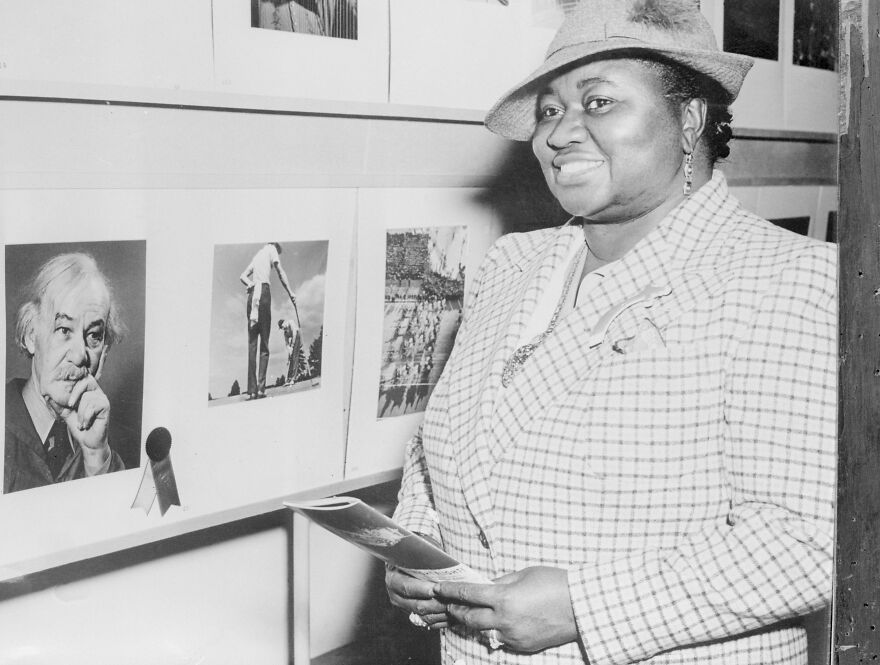
Image credits: Bettmann / Getty Images
And when it came to the ugliest language of the era, she drew a line. The Atlantic details how the slur appeared in the screenplay, but never made it into the finished film. McDaniel refused to say it, and joined other actors in pushing back.
That detail matters because it shows the tightrope she walked as a woman of color working inside a studio system built to flatten people into types. She couldn’t rewrite Hollywood overnight, but she fought for small, concrete limits on what it would demand from her.
Still, even with an Oscar on the shelf, the bigger door to lead roles, romantic leads, and complicated heroes barely moved. That’s where the next milestone shifts the story forward, to Sidney Poitier and the long wait for a Black man to win the Best Actor Oscar.
The Male Trailblazer: Sidney Poitier
After Hattie McDaniel’s win exposed how quickly Hollywood could celebrate a breakthrough and still limit what came next, another question hung in the air: when would the Academy’s biggest actor awards finally reward a Black leading man?
That’s where Sidney Poitier enters the story. Biography frames him as a star who made Hollywood reckon with a Black leading man built on discipline, range, and roles that refused to play like a punchline. It’s hard to overstate what that meant in an era when top actor prizes rarely went to Black actresses and actors.
Poitier’s rise didn’t come from a smooth Hollywood runway, either. He grew up between the Bahamas and the US, then fought his way into New York’s theater scene through the American Negro Theater, pushing until the industry couldn’t ignore him.
The payoff wasn’t just symbolic, as Poitier kept choosing characters written with intelligence and moral weight and pushed back against the limited parts Black actors were offered, until 1964 arrived.
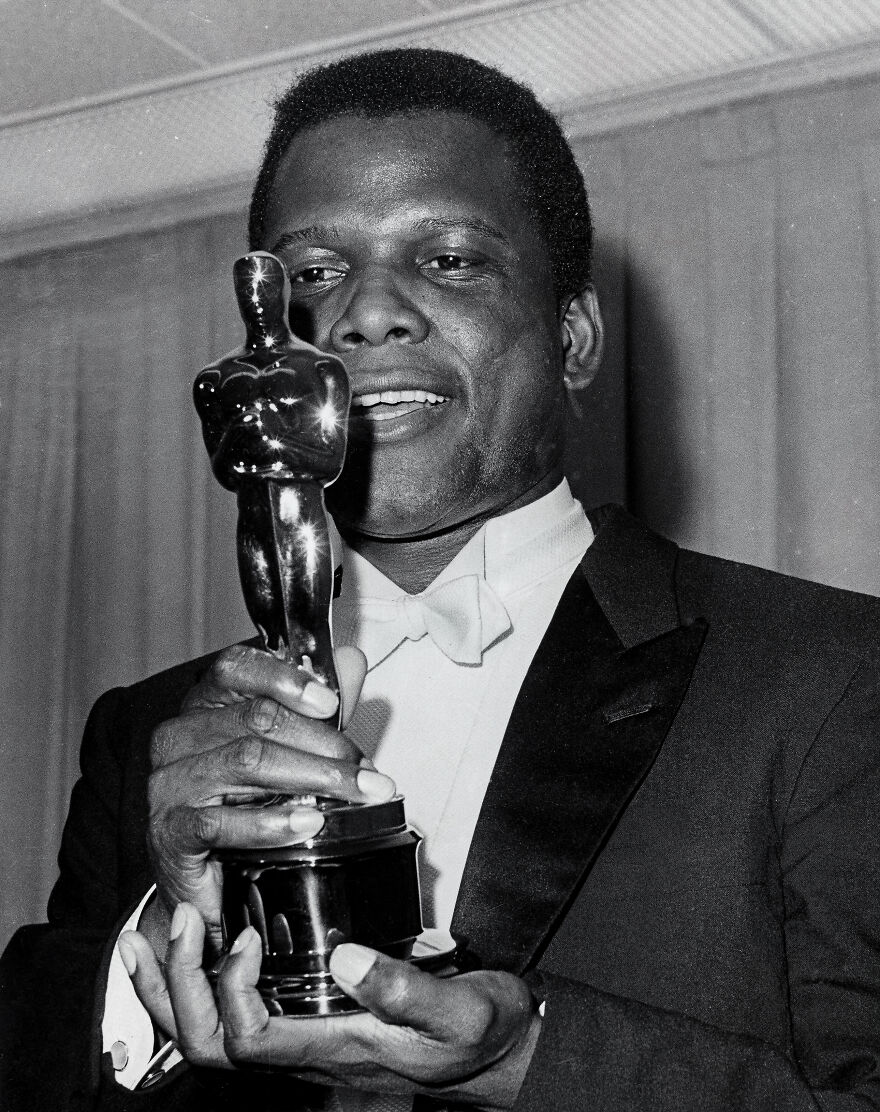
Image credits: John Kisch Archive / Getty Images
The Academy of Motion Picture Arts and Sciences notes that Sidney Poitier was the first African American to win the Oscar for Best Actor for Lilies of the Field, and that among the four acting category winners that year, he was the only one present at the ceremony.
For readers tracking the timeline, it also landed as a delayed echo of McDaniel’s night: roughly 24 years after her acting win, a male actor finally received the Academy’s top acting honor.
It’s impossible to separate that moment from the civil rights movement, even if Poitier’s public image often read “calm” compared to the era’s loudest headlines. CNN describes how he took real risks away from the cameras, including a dangerous 1964 trip with Harry Belafonte to Mississippi during Freedom Summer to deliver $70,000 in cash to support civil rights organizing.
That’s the tension people still find fascinating: he was a movie star, a symbol, and a participant in history, sometimes all in the same week.
In the Oscars YouTube account clip of his acceptance speech, Poitier doesn’t frame it as a solo victory. “Because it is a long journey to this moment,” he says, before offering “a very special thank you” to the filmmakers and the Academy. The words sound simple, but the subtext is huge: this was a Black actor who won Academy Awards when the industry still treated that outcome as an exception.
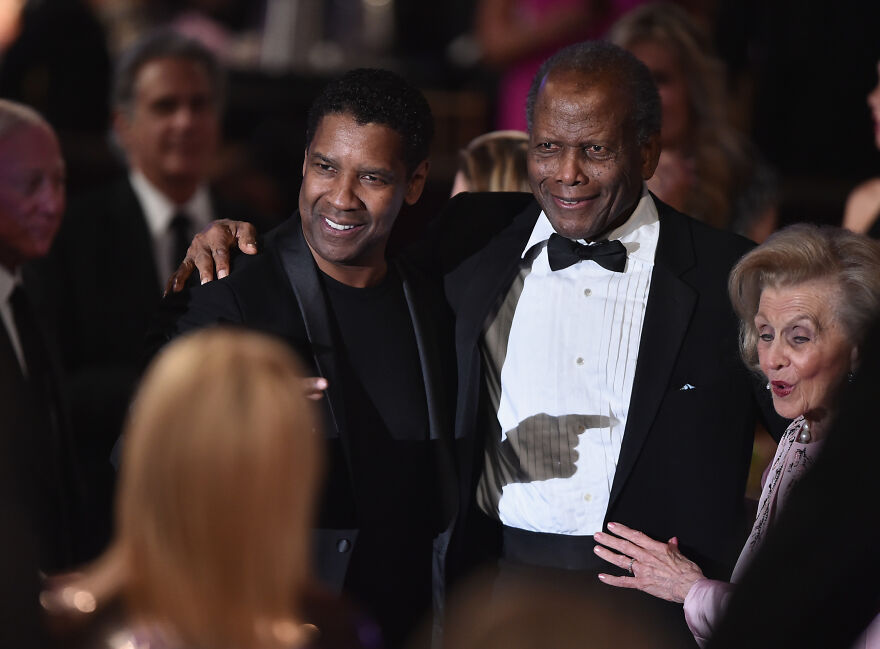
Image credits: Alberto E. Rodriguez / Getty Images
In the Oscars YouTube account clip of his acceptance speech, Poitier doesn’t frame it as a solo victory. “Because it is a long journey to this moment,” he says, before offering “a very special thank you” to the filmmakers and the Academy. The words sound simple, but the subtext is huge: this was a Black actor who won Academy Awards when the industry still treated that outcome as an exception.
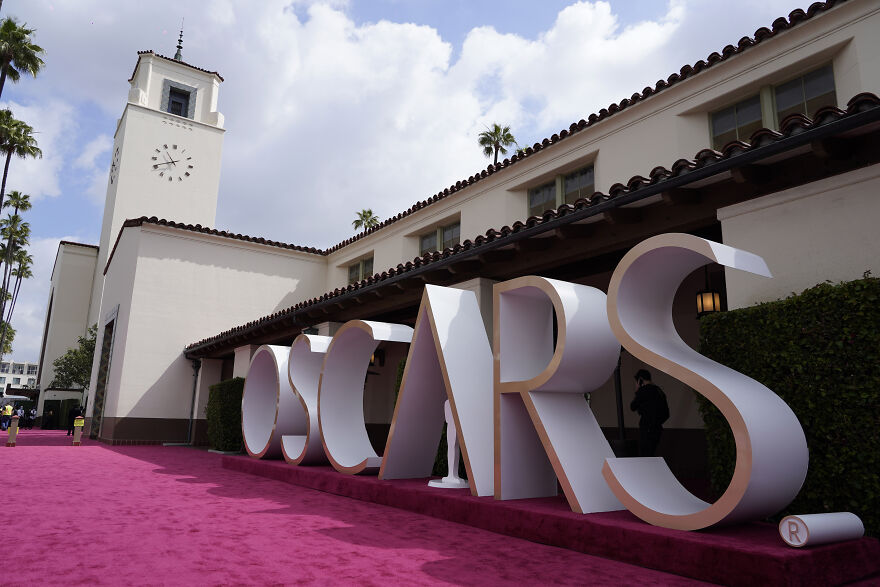
Image credits: Penske Media / Getty Images
Of course, the story does not stop here. Beyond the firsts, later wins helped turn breakthroughs into a new normal. Whoopi Goldberg became the second Black actress to win the Oscar for Best Supporting Actress after Hattie McDaniel.
Iconic Morgan Freeman won his first Oscar for Million Dollar Baby, earning an award for his role after decades in Hollywood. Viola Davis became the first Black performer to complete the “Triple Crown of Acting,” a rare sweep of awards for best honors across the Oscars, Emmys, and Tonys.
Mahershala Ali made history as the first Muslim actor to win an Oscar for his role as Juan in Moonlight. All of these moments matter, but the timeline still begins with McDaniel, and that is why her name stays at the center of the story in the end.
Hattie McDaniel’s Win Still Matters
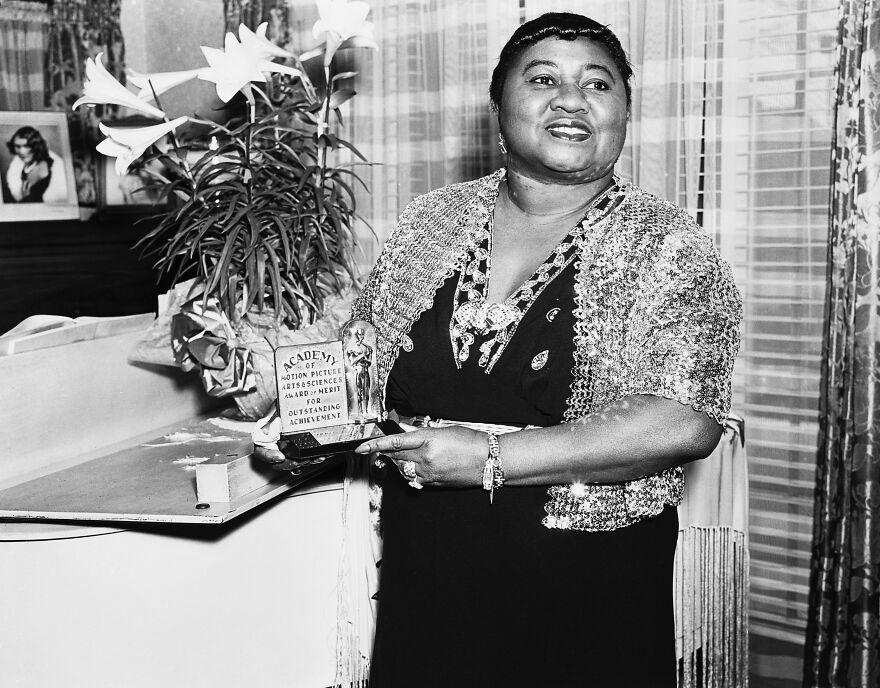
Image credits: John Kobal Foundation / Getty Images
McDaniel made history for Black performers in a Hollywood that still treated segregation as normal. The Hattie McDaniel official page traces that breakthrough back to her family story, including parents born into slavery, and frames her win as a lasting “beacon” for what could come next.
She became the first Black performer to win an Academy Award, then left her Oscar to Howard University in the hope it would inspire future generations. In an era when it felt inevitable for a male actor to prevail, she gave every actress proof that the door could open.
Though her original plaque mysteriously went missing decades ago, the Academy finally replaced it in 2023, ensuring her ‘beacon’ continues to shine at Howard University.
🔔 Stay Tuned for Hollywood’s Biggest Night!
We are gearing up for a massive Live Oscars 2026 Coverage event! Mark your calendars for March 15th, we’ll be right here with real-time winner updates, red carpet fashion galleries, and expert analysis of every viral moment.
 Follow Us