Humans may be part of the animal kingdom, but there’s still so much many of us don’t know about the creatures we share the planet with. They come in all kinds of shapes and sizes, and some of their abilities are stranger than anything we could make up.
So today, we’re taking a closer look. We gathered some interesting facts and photos from the Instagram page @wonderzofthewild, and they’re a nice reminder that animals are far more remarkable than we usually realize.
#1
The immortal jellyfish (Turritopsis dohrnii) possesses one of the most extraordinary survival abilities in nature.
When faced with stress, injury, or old age, it can reverse its development and return to an earlier life stage known as a polyp, essentially beginning its life cycle all over again. This unique process has earned it the title of the only known animal capable of biological immortality.
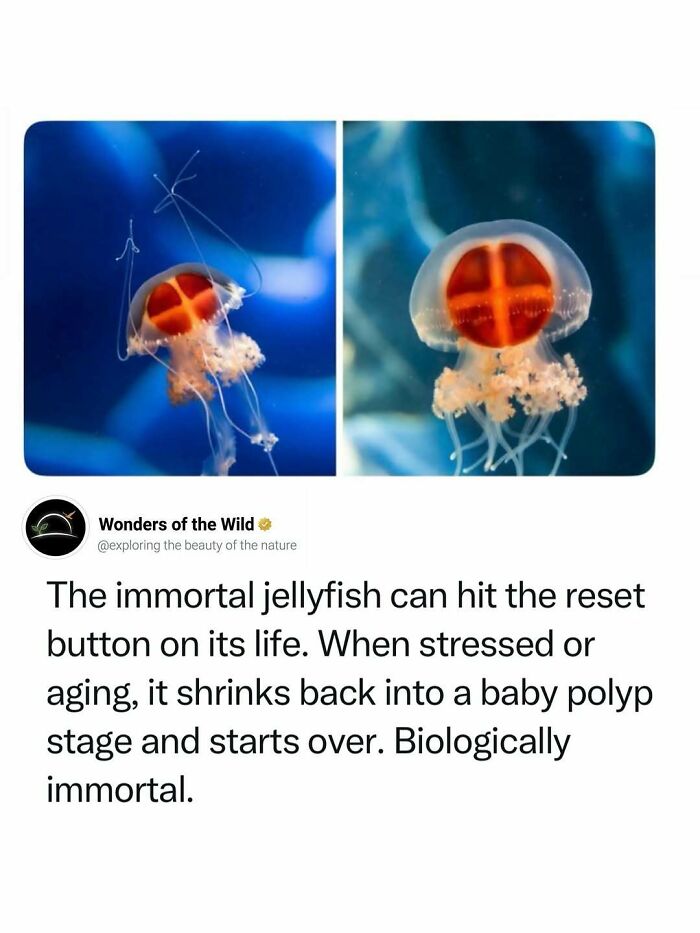
Image source: wonderzofthewild

#2
Italy has officially become a “forest nation,” with over one-third of its land now covered by forests, the highest level recorded since the Middle Ages. This remarkable recovery reflects decades of natural regrowth and environmental protection efforts across the country.
These expanding forests play a crucial role in absorbing carbon, supporting biodiversity, and restoring ecosystems that were once heavily altered by agriculture and urbanization. From the Alps to the Apennines, Italy’s green landscapes are quietly making a powerful comeback, showing how nature can regenerate when given space and time.
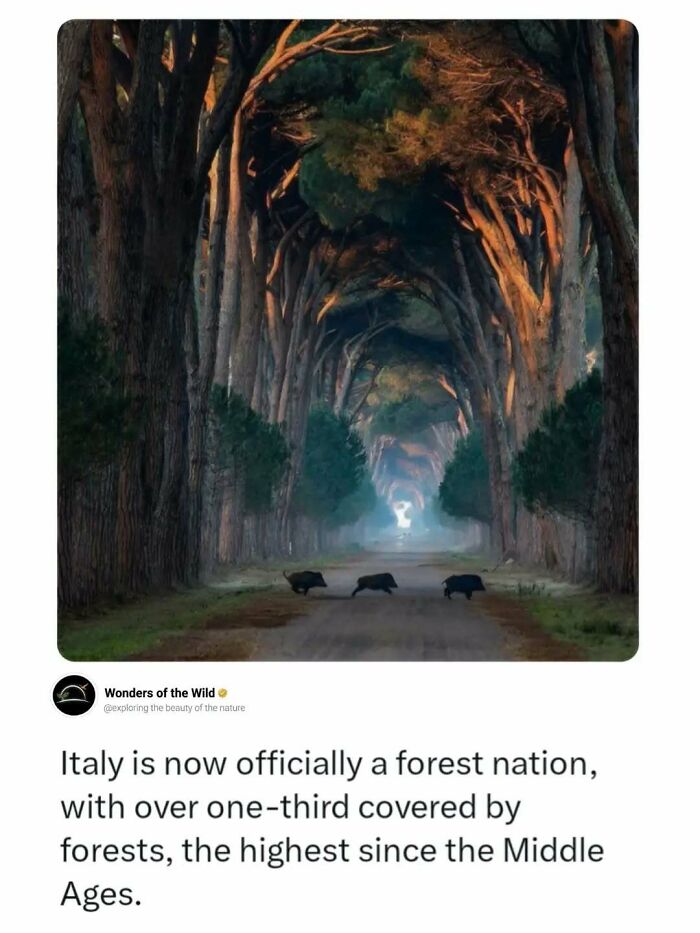
Image source: wonderzofthewild
#3
The Shima Enaga is a tiny Japanese subspecies of long-tailed tit, often described as looking like a small ball of cotton with eyes. Found in the cold regions of Hokkaido, it has an almost perfectly round, snow-white face and soft, fluffy plumage that helps it survive chilly winters.
Despite its delicate appearance, the Shima Enaga is energetic and active, constantly flitting between branches in search of insects and small food sources. Its charming look and gentle movements make it one of Japan’s most beloved birds, symbolizing cuteness, winter beauty, and the quiet magic of nature.
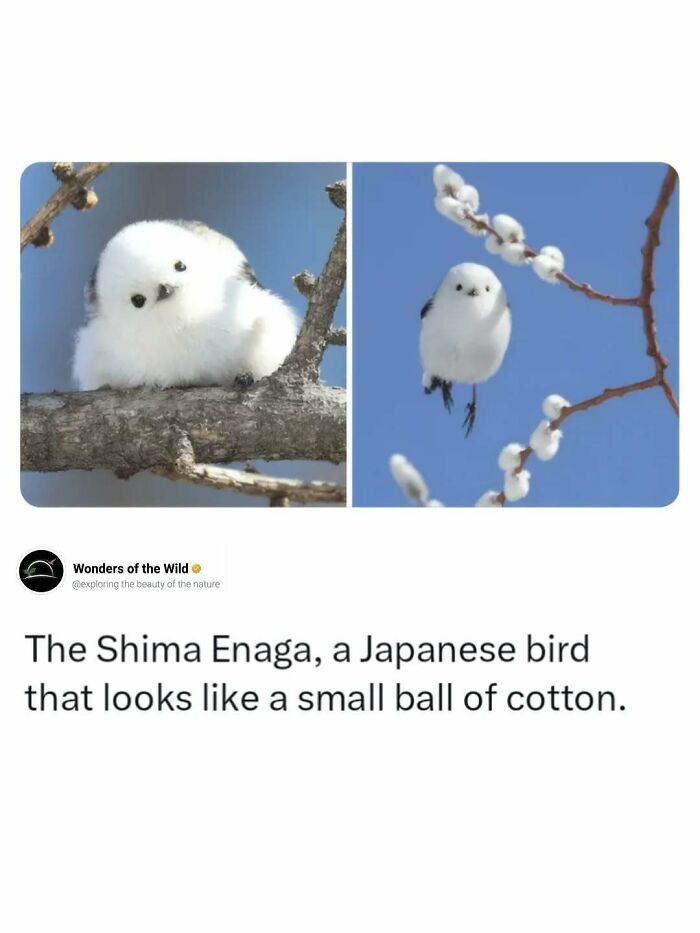
Image source: wonderzofthewild
#4
The jaguarundi is one of the most unusual wild cats in the Americas, standing apart from other felines in both appearance and behavior. Unlike most wild cats, jaguarundis communicate using a wide range of sounds, including chirps, whistles, and chatter-like calls. They are also more active during the day than many of their feline relatives.
Their diet is surprisingly varied, consisting not only of small animals but also fruits and other plant material when available. In some regions, they have even been observed moving through habitats alongside monkey groups, taking advantage of food opportunities created by the primates’ activity. With its elongated body, short legs, and unique vocalizations, the jaguarundi remains one of the most distinctive and lesser-known wild cats in the world.
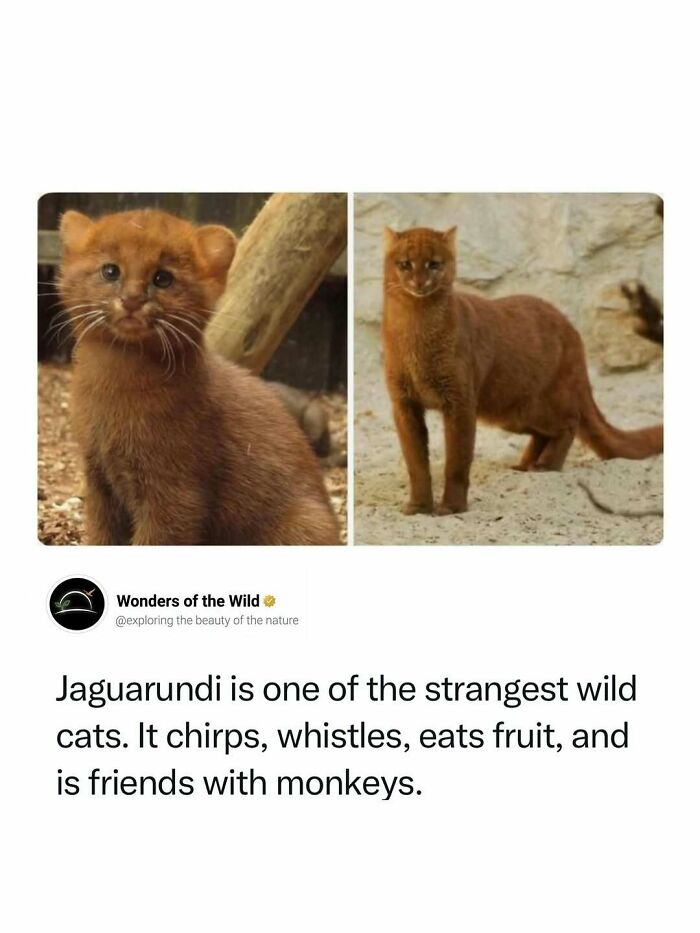
Image source: wonderzofthewild
#5
The plant is known as the flying duck orchid, one of the most visually unusual orchids in the natural world. It is admired for its striking shape, where the flower resembles a small duck in mid-flight, complete with a curved body and wing-like structures that enhance the illusion. This natural form gives it a highly distinctive appearance compared to typical orchid species. Its unique structure is the result of specialized floral adaptation, evolved to attract specific pollinators while also creating one of the most recognizable “animal-like” plant forms in nature.
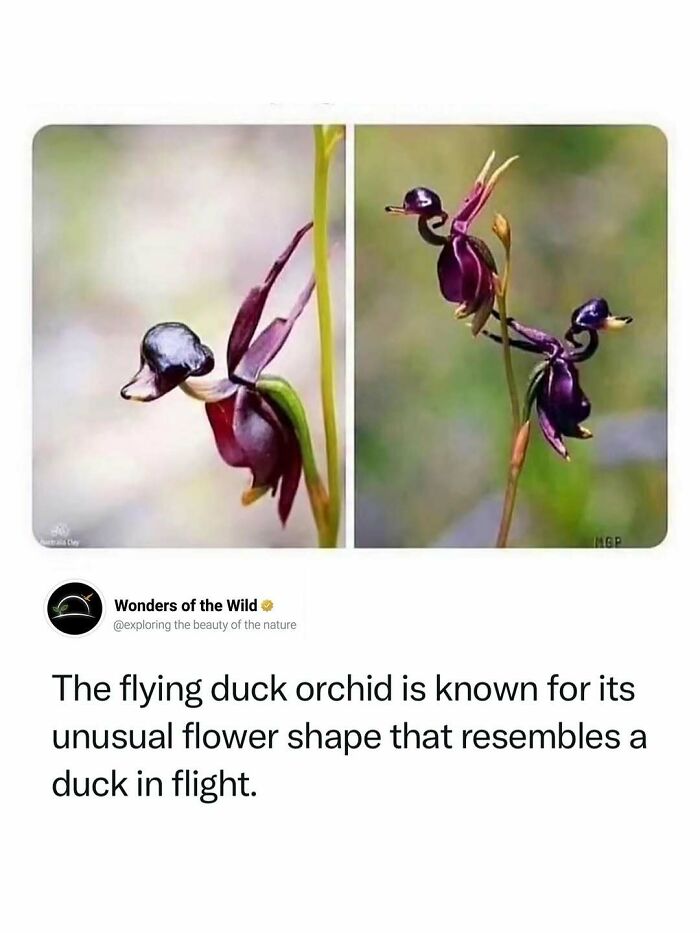
Image source: wonderzofthewild
#6
A bear known as Chunk was recorded consuming 45 salmon in a single 10.5-hour feeding session, an intake estimated at roughly 135,000 calories. During salmon runs, bears enter a period of intense feeding where they focus almost entirely on catching and eating fish to build fat reserves for survival. This process is essential for enduring long winters when food becomes scarce and energy demands remain high. Feeding behavior like this highlights the extraordinary efficiency of apex predators when resources are abundant, allowing them to rapidly accumulate energy in a short window of time.
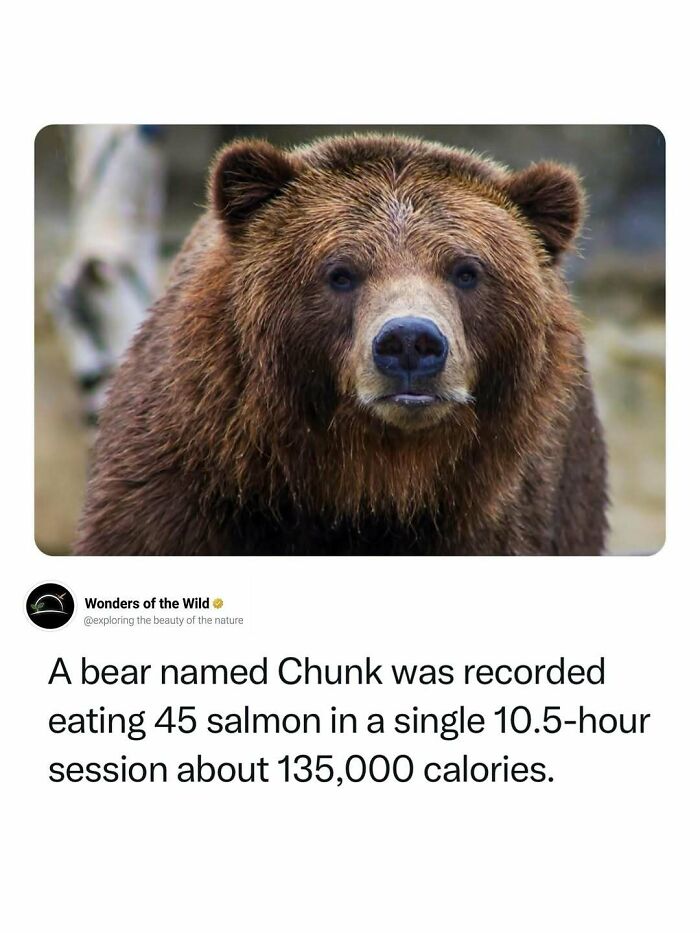
Image source: wonderzofthewild
#7
The Arctic Fox is one of the most adaptable animals in the Arctic, perfectly designed to survive extreme seasonal changes. As winter fades, it begins to shed its thick white coat, gradually revealing a thinner, lighter summer fur that helps it blend into the tundra’s rocky and moss-covered landscape. This seasonal transformation is more than just appearance, it’s survival. The Arctic fox changes its coat to match its environment, staying hidden from both predators and prey as the frozen world shifts into warmer months. Small, resilient, and perfectly in tune with nature’s rhythm, the Arctic fox is a living example of adaptation at its finest.
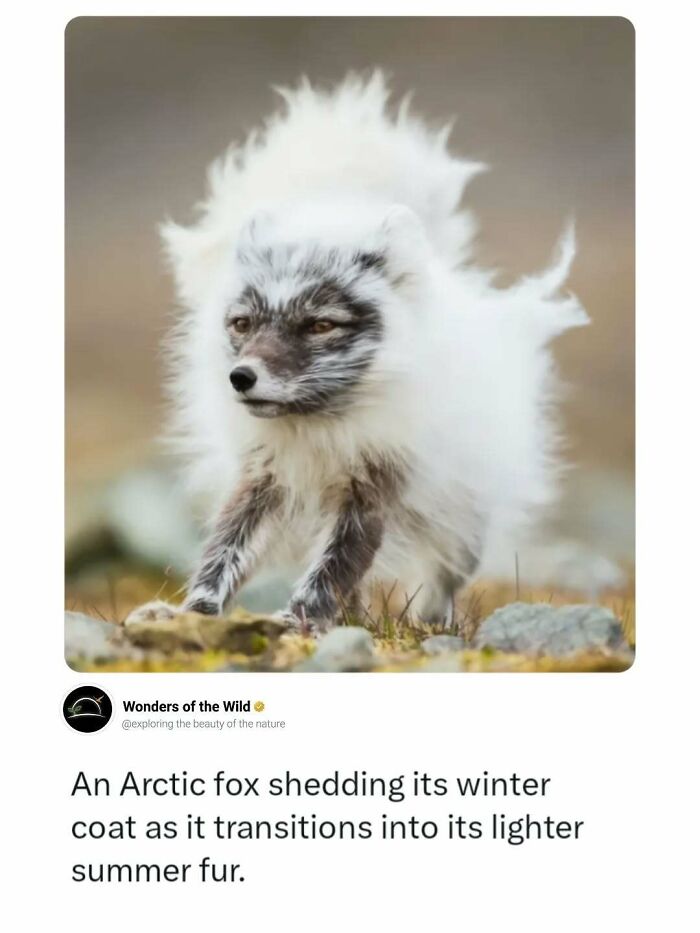
Image source: wonderzofthewild
#8
A Hummingbird enjoys a playful bathing moment, interacting with a flower petal as if it were a miniature bathtub. In quick, delicate movements, it flutters, splashes, and hovers around the bloom, using water droplets and petals to clean and refresh its tiny feathers. Hummingbirds are highly energetic birds with extremely fast metabolisms, so they frequently bathe to keep their feathers in top condition for flight. What looks like a charming, playful “bath time” is actually an essential grooming routine, though it often appears as one of the most adorable and whimsical sights in nature.
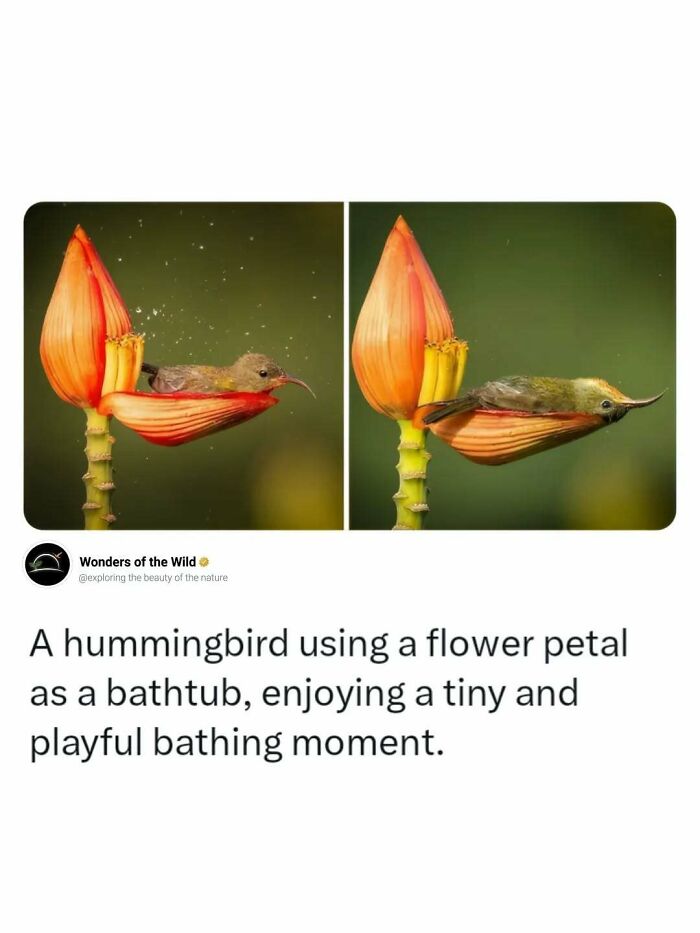
Image source: wonderzofthewild
#9
Some sharks have a surprisingly cat-like response to stress. The pyjama shark, for example, is known to curl its body into a tight ball when it feels threatened or uneasy. This defensive posture helps protect vulnerable parts of its body and makes the shark appear more difficult for predators to handle. It’s a fascinating reminder that even some of the ocean’s most iconic predators have unexpected behaviors that seem oddly familiar
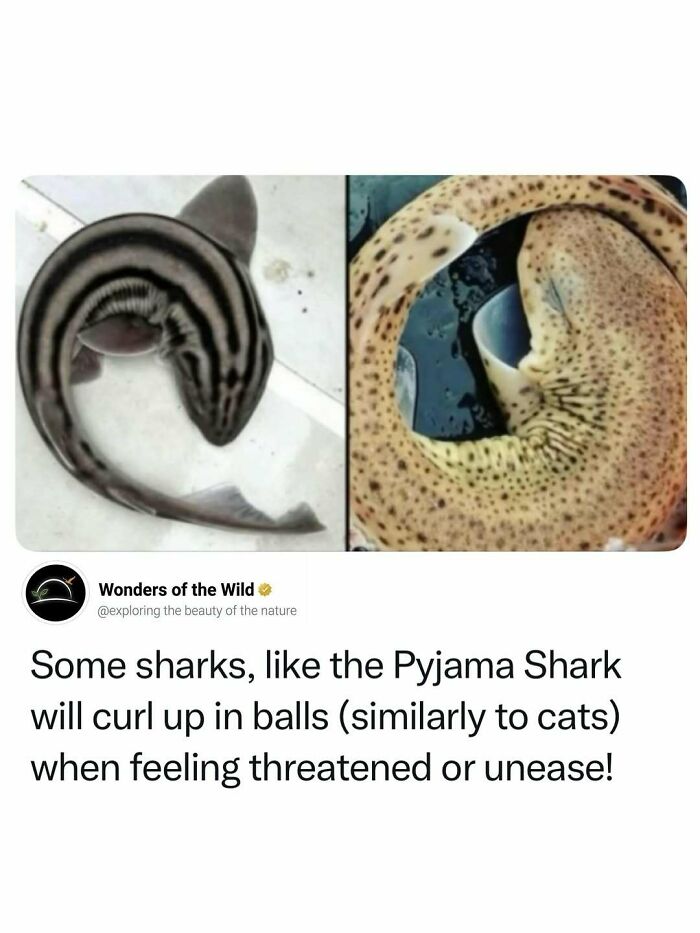
Image source: wonderzofthewild
#10
This created a breathtaking and unusual encounter. Its striking white-and-brown patchy coat makes it stand out dramatically from typical moose, turning an ordinary setting into something extraordinary. Sightings like this are rare because piebald coloration is an uncommon genetic variation in wild populations. Moments like these remind us how unpredictable nature can be, sometimes showing up right at your doorstep in the most unexpected way.
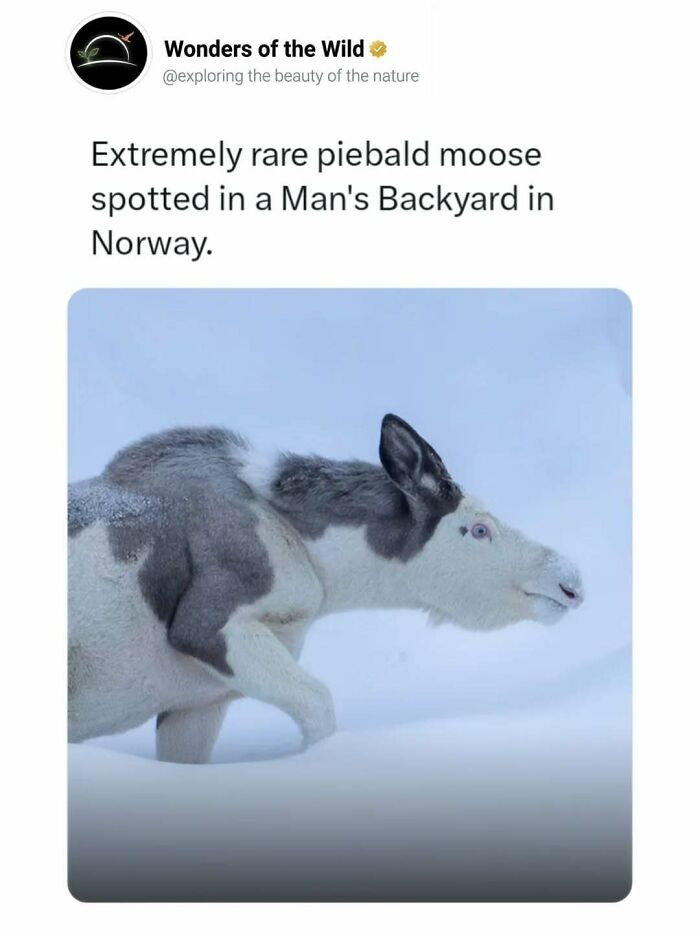
Image source: wonderzofthewild
#11
Valais Blacknose sheep are often called the cutest sheep in the world, and it’s easy to see why. With their fluffy white coats, distinctive black faces, button-like noses, and irresistibly expressive features, they have an appearance that seems almost designed to charm. Native to the mountains of Switzerland, these sheep are known not only for their unique looks but also for their calm and friendly nature
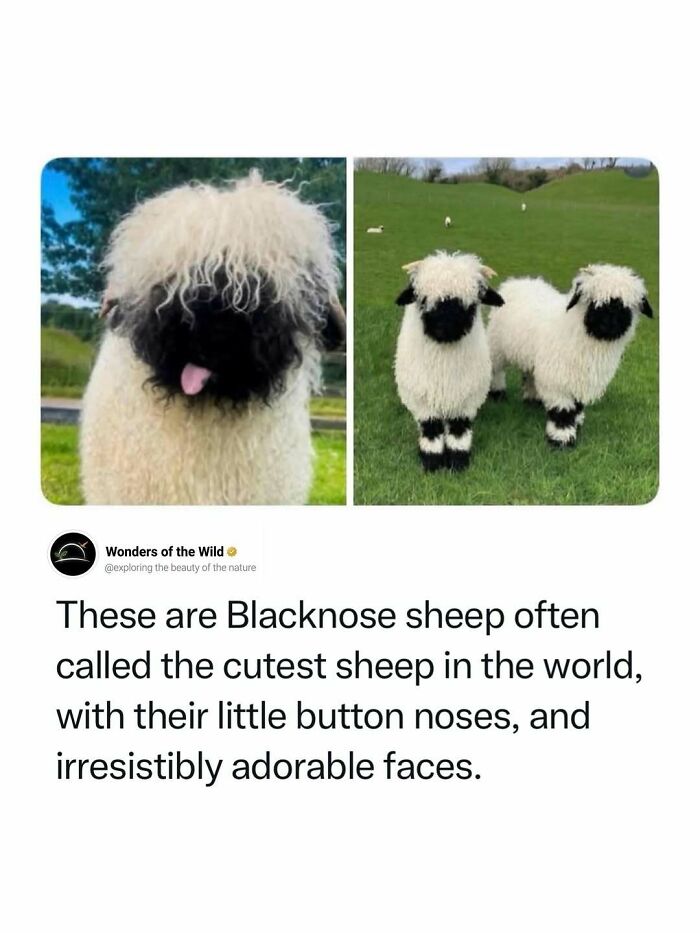
Image source: wonderzofthewild
#12
A huge male orca is seen swimming alongside his mother and younger sister, moving together as a tightly bonded family unit. Despite their massive size and role as apex predators, male orcas maintain lifelong relationships with their mothers, often staying within the same pod and relying on strong social bonds for stability and survival. These family groups are highly cooperative, with communication and coordination forming the foundation of their behavior.
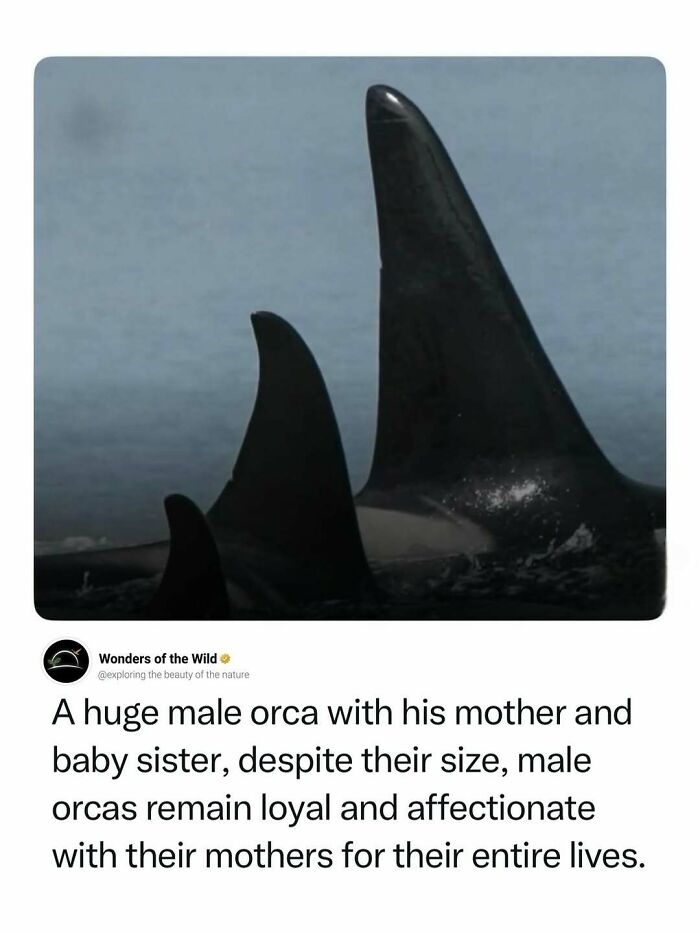
Image source: wonderzofthewild
#13
The Serval is already one of Africa’s most striking wild cats, instantly recognizable for its long legs, oversized ears, and golden spotted coat. In extremely rare cases, melanistic individuals often called “black servals” may appear, giving the cat a deep, dark coat that enhances its mysterious presence in the wild. Built for precision hunting, servals rely on exceptional hearing and explosive vertical leaps to catch prey in tall grasslands. Whether in its classic spotted form or rare melanistic variation, this agile predator remains a master of stealth, timing, and power in the African savanna.
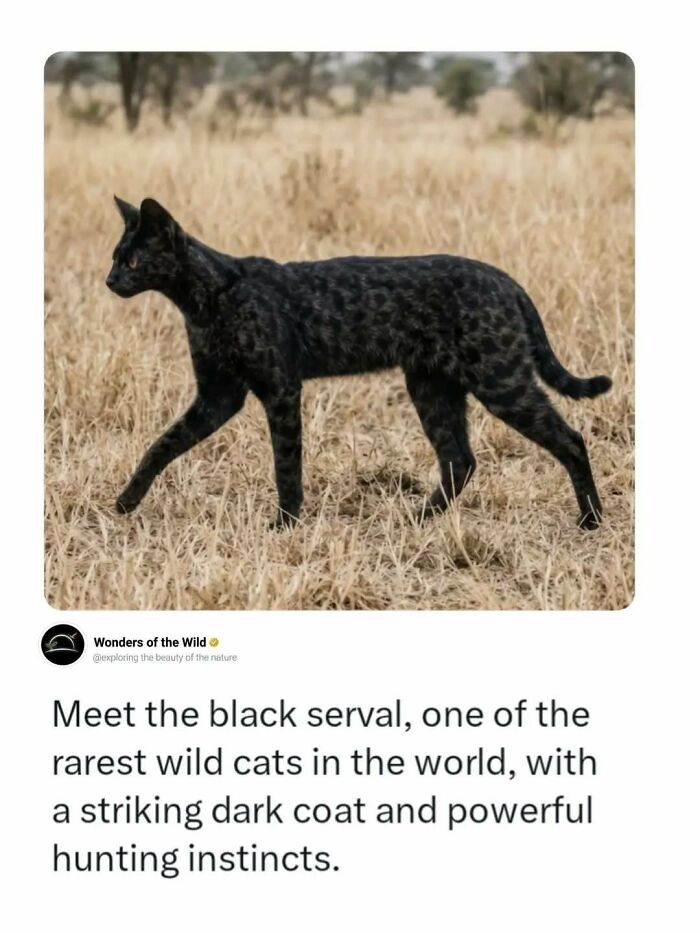
Image source: wonderzofthewild
#14
The Pufferfish skeleton reveals an extraordinary natural structure that looks almost engineered, with intricate geometry that supports both flexibility and protection. Once the soft tissues are removed, what remains is a delicate yet complex framework that highlights how evolution can produce incredibly efficient designs for survival. Pufferfish are known for their unique ability to inflate when threatened, turning themselves into nearly spherical shapes to deter predators. This skeletal structure works together with that defense mechanism, allowing rapid expansion while maintaining internal support. It’s a striking reminder that nature often builds systems more advanced than anything we could imagine.
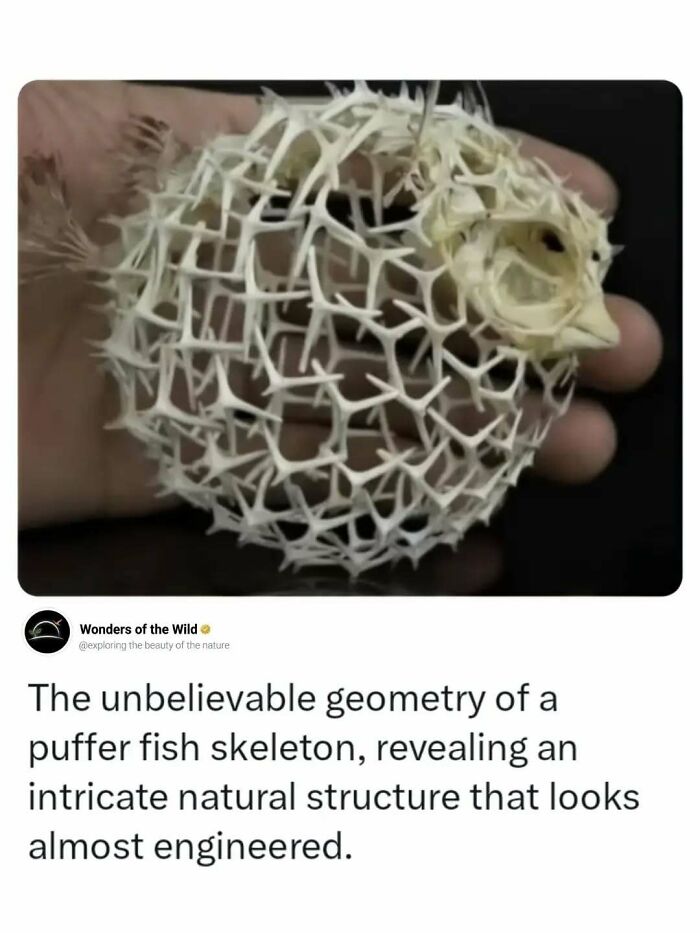
Image source: wonderzofthewild
#15
Tigers in India have been observed doing something remarkable: raising orphaned cubs that aren’t their own. While tigers are often seen as solitary predators, there have been rare cases where adults, particularly females, have accepted and cared for unrelated cubs, giving them a chance to survive. It’s a powerful reminder that even among some of nature’s most formidable hunters, compassion can sometimes outweigh instinct.
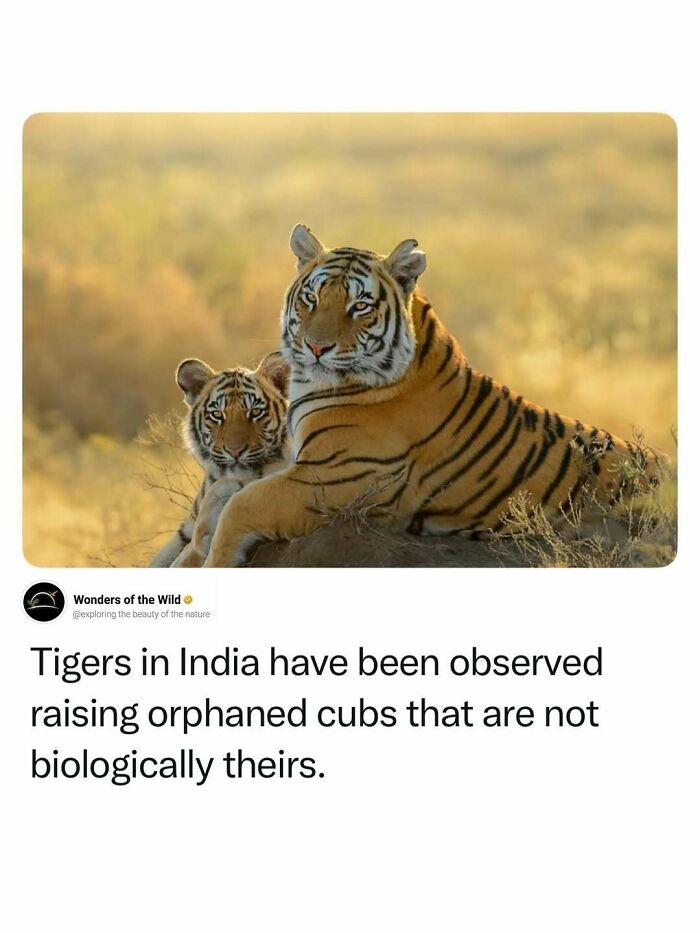
Image source: wonderzofthewild
#16
The Lykoi is a real cat breed that looks remarkably like a tiny werewolf. Its distinctive patchy coat is caused by a natural genetic mutation that reduces the number of hair follicles, giving it its unique, scruffy appearance. Despite their wild looks, Lykoi cats are affectionate, intelligent, and playful companions. Their unusual appearance has made them one of the rarest and most fascinating domestic cat breeds, proving that nature can create some truly extraordinary designs.
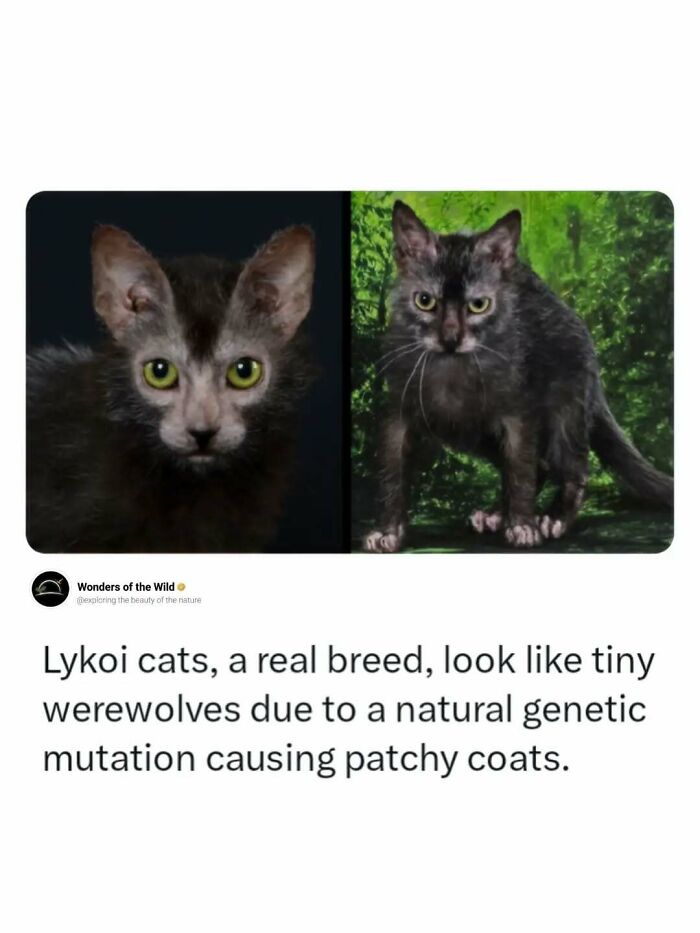
Image source: wonderzofthewild
#17
This butterfly is a bilateral gynandromorph, a rare natural phenomenon where a single organism develops both male and female characteristics split down the middle. In cases like this, each side of the body expresses different genetic sex traits, often visible in wing coloration, patterning, and subtle structural differences. The result is a striking, perfectly divided appearance that looks almost symmetrical but genetically represents two developmental pathways in one body.
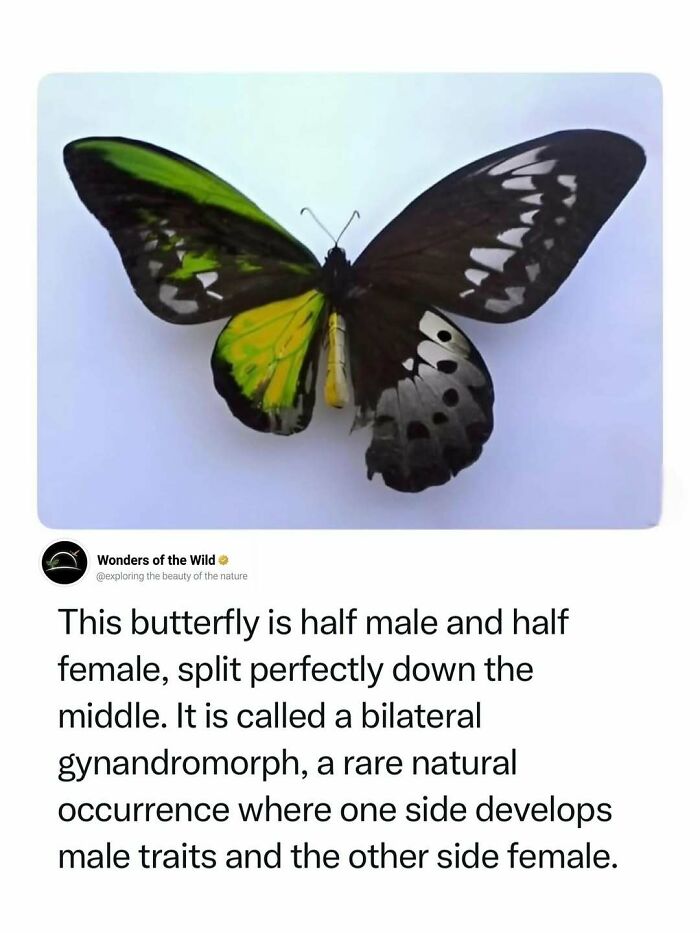
Image source: wonderzofthewild
#18
A new study suggests that viewing images of baby elephants can significantly improve mood and reduce stress levels, making them a surprisingly effective “quick reset” for a bad day.
The effect is often linked to the strong emotional response humans have to infant animals, combined with the gentle and social nature of elephants themselves. Their expressive faces, playful behavior, and close family bonds tend to trigger feelings of calmness and comfort.
In short, baby elephants consistently rank among the most universally “wholesome” animals when it comes to emotional impact.
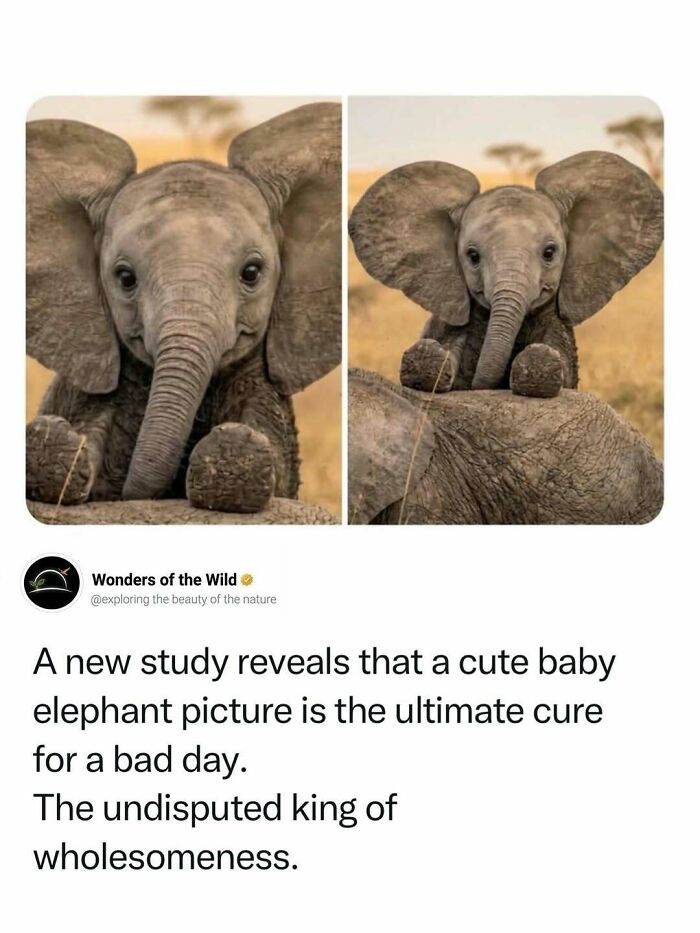
Image source: wonderzofthewild
#19
Often called the “happiest animal in the world,” the Quokka wears a natural smile that has captured hearts across the globe. With its round face, bright eyes, and gentle expression, it looks almost permanently cheerful, a tiny marsupial that seems to radiate positivity wherever it goes. Native to Australia, especially on islands like Rottnest, quokkas are curious, social, and surprisingly fearless around humans. But beyond the smile lies a resilient survivor, adapted to tough environments and living a simple life rooted in foraging and calm. Sometimes, happiness really does look this simple.
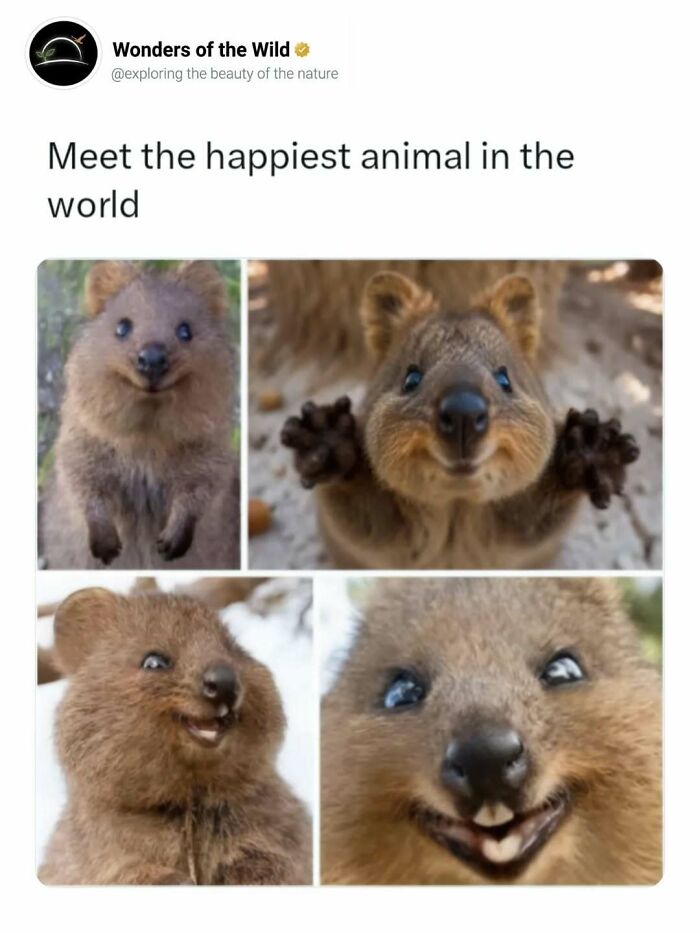
Image source: wonderzofthewild
#20
A Gray Wolf and a Brown Bear were documented traveling, hunting, and even sharing food together over a period of 10 days, an unusual pairing that defies typical predator behavior in the wild. While wolves and bears are often competitors in many ecosystems, nature can occasionally produce surprising moments where boundaries blur due to shared opportunity, food availability, or environmental conditions. Both animals are highly intelligent and adaptable, capable of recognizing when cooperation or tolerance is more beneficial than conflict. Rare interactions like this remind us that the wild is not always predictable even among apex predators, survival sometimes creates unexpected moments of coexistence.
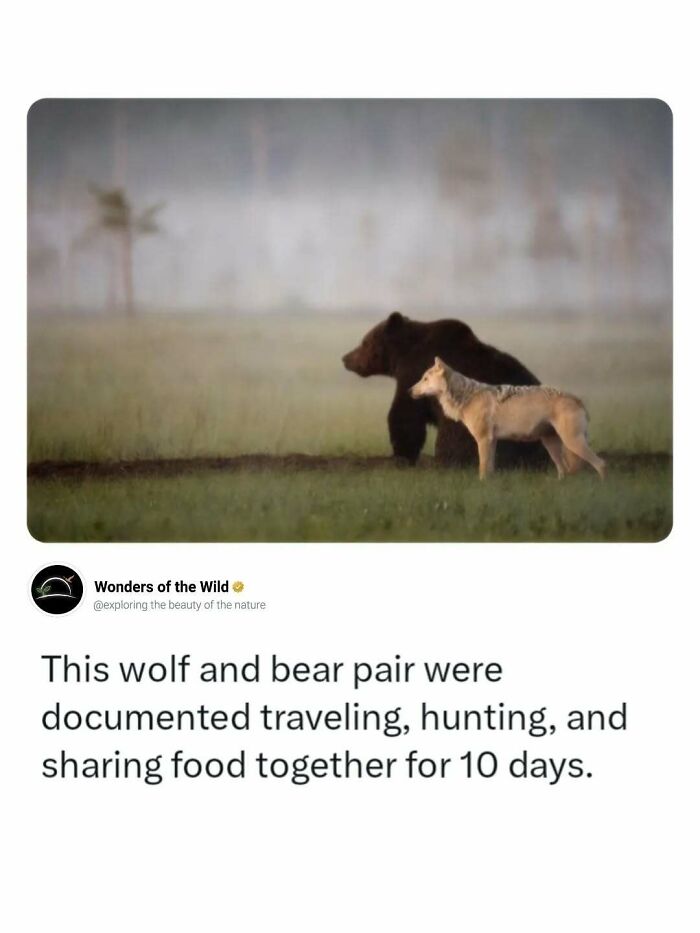
Image source: wonderzofthewild
#21
A Reindeer with leucism looks almost ghostlike moving through snowy landscapes, its pale white coat blending so perfectly into winter that it feels more mythical than real. Unlike albinism, leucism reduces pigmentation in the fur while still allowing normal eye color, creating a stunning and incredibly rare appearance. Built for survival in some of the coldest regions on Earth, reindeer migrate across vast frozen terrains using powerful hooves to dig through snow for food beneath the ice. Seeing a leucistic reindeer in the wild is like witnessing a living winter spirit silent, rare, and breathtakingly beautiful against the Arctic landscape.
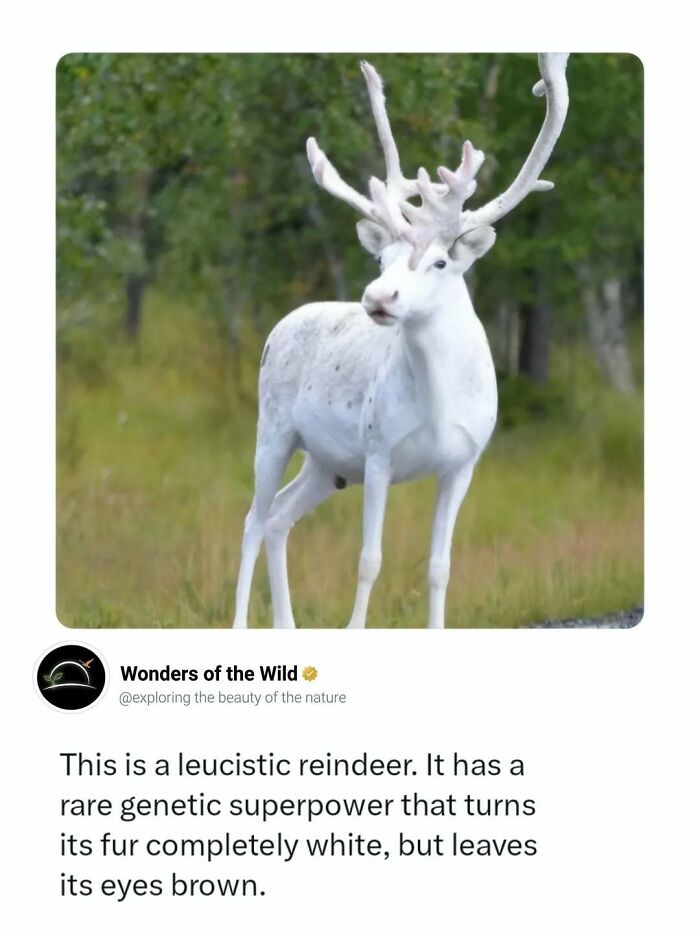
Image source: wonderzofthewild
#22
A remarkable story from the wild highlights the resilience of a 17-year-old lioness who lived for several years after losing her sight. Despite her blindness, she was not left behind by her pride. Her daughters continued to stay close, assisting her in movement, protection, and access to food, allowing her to survive far longer than would typically be expected in such harsh conditions. Lion prides are built on strong social bonds, and this case shows how cooperation and family structure can play a crucial role in survival, especially for older or vulnerable members.
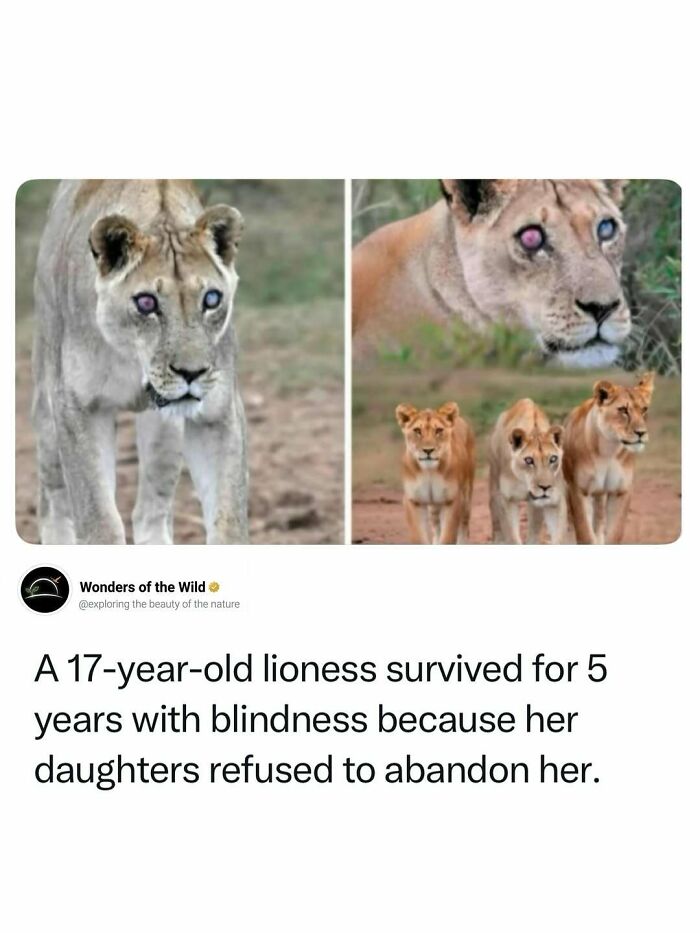
Image source: wonderzofthewild
#23
A young Deer begins life with surprisingly long eyelashes, a small but important adaptation that helps protect its eyes from dust, grass, and debris while moving through dense vegetation. These gentle features also enhance its sensitivity to the environment, helping it stay alert in its earliest and most vulnerable stage of life. In the wild, every detail matters for survival, and even something as subtle as eyelashes plays a role in keeping a fawn safe as it learns to navigate its surroundings. Combined with its natural camouflage and cautious behavior, these early traits help ensure it can grow strong under the protection of its habitat and herd.
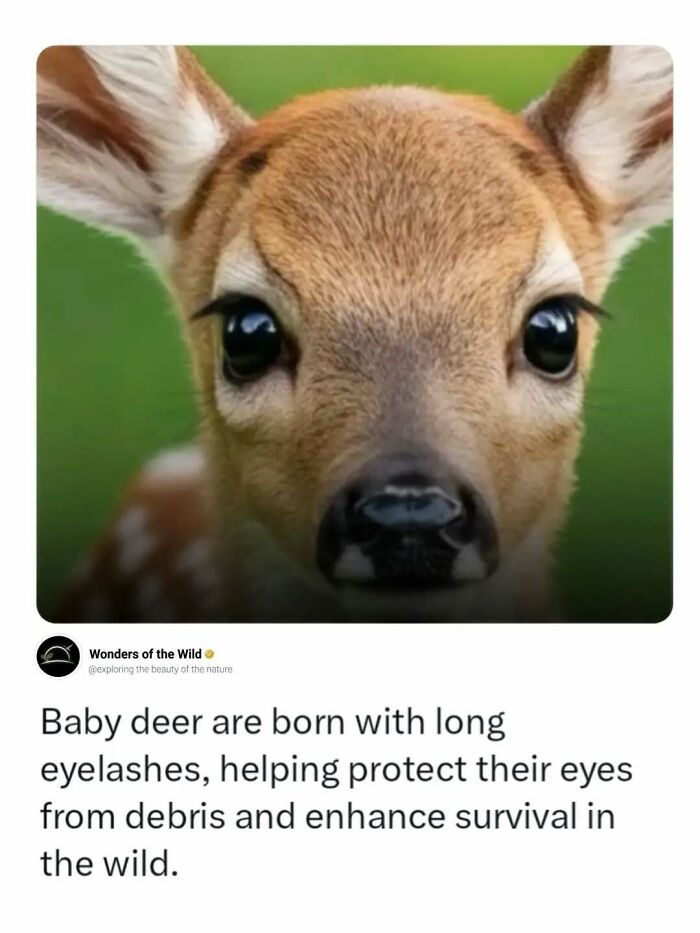
Image source: wonderzofthewild
#24
The aim is to reduce hunting pressure and allow these predators to maintain their natural roles in local ecosystems. Supporters of the proposal argue that protecting top and mid-level predators helps preserve ecological balance, biodiversity, and long-term environmental health. The discussion reflects the ongoing challenge of finding harmony between wildlife management, conservation, and human activity.
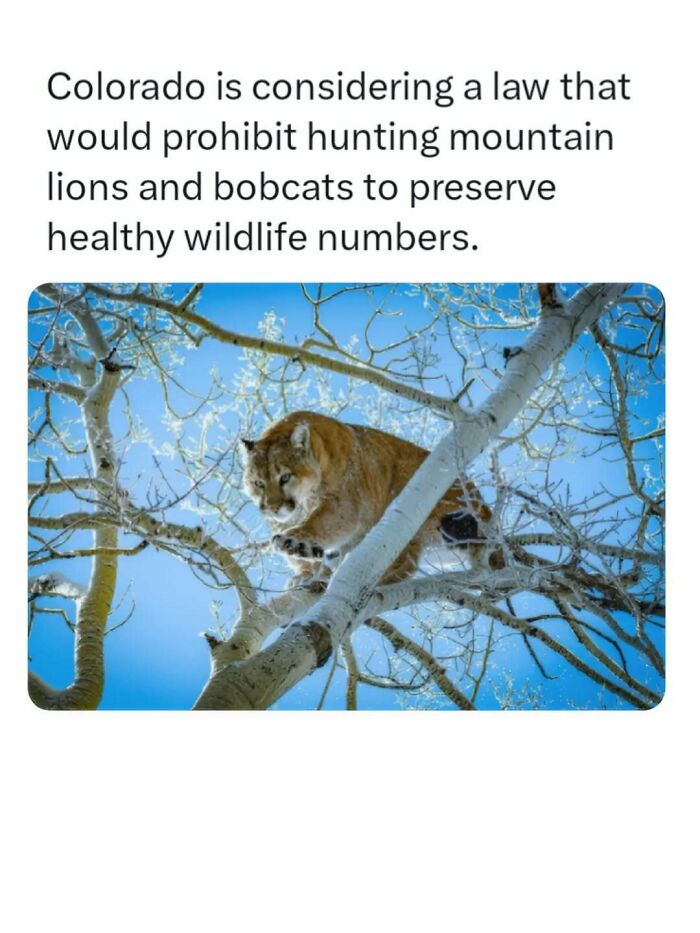
Image source: wonderzofthewild
#25
The Knabstrupper is one of the world’s most striking horse breeds, instantly recognized by its dramatic spotted coat that often resembles the patterns of a leopard. Originating in Denmark, these elegant horses combine eye-catching beauty with strength, intelligence, and calm temperament. Knabstruppers are known not only for their unique appearance but also for their versatility and gentle nature. They excel in riding, dressage, circus performance, and companionship, forming strong bonds with humans through trust and responsiveness. Graceful, powerful, and visually unforgettable, the Knabstrupper feels like a living piece of art in motion.
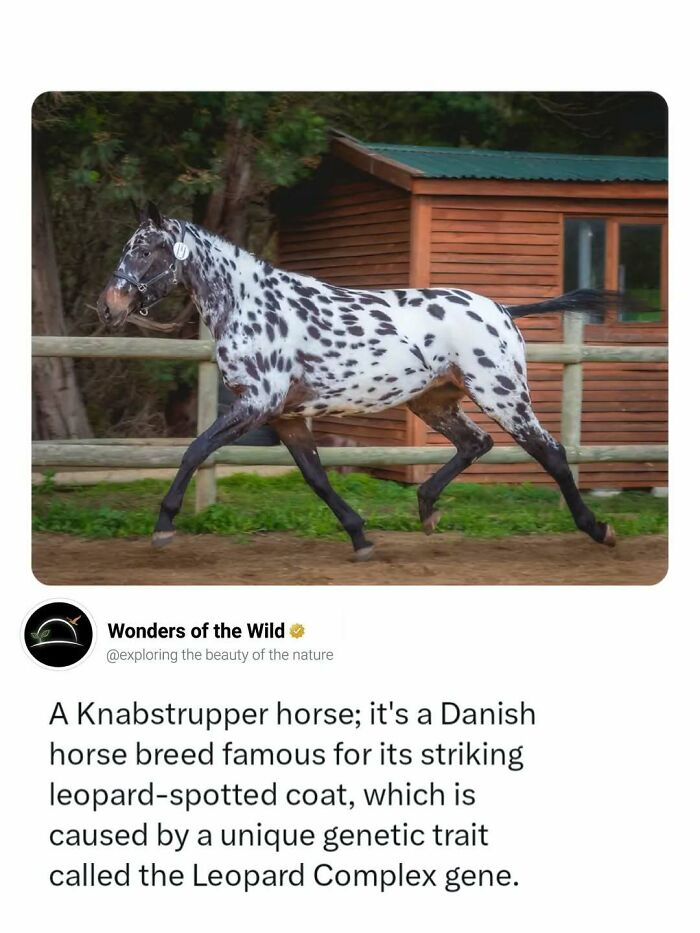
Image source: wonderzofthewild
#26
This is the silky anteater, the smallest anteater species in the world. Its tiny size, fluffy appearance, and oversized eyes make it look more like a cartoon character than a wild animal. But when threatened, it adopts a distinctive defensive posture, raising its forelimbs and preparing to strike. Despite its harmless appearance, the silky anteater possesses powerful curved claws that it uses for climbing and self-defense. These claws can inflict serious injuries on predators that get too close, making this tiny mammal far tougher than its appearance suggests. It’s a reminder that in nature, the cutest animals can sometimes come equipped with surprisingly effective defenses.
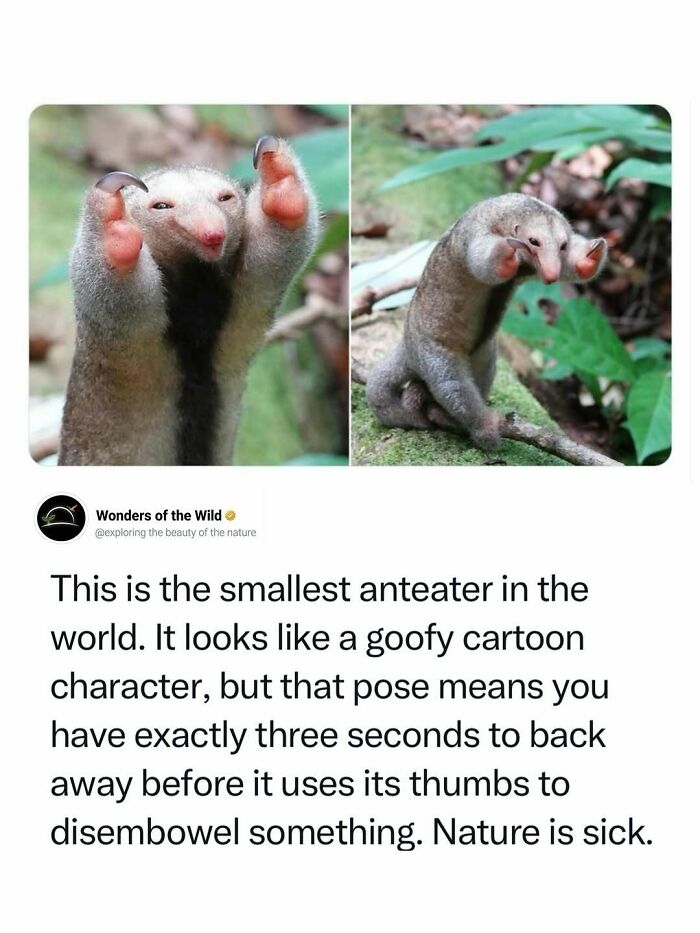
Image source: wonderzofthewild
#27
Meet Itzae, one of the very few recorded albino pumas in history, and a truly rare sight in the wild. Albinism in big cats is extremely uncommon, resulting in a striking pale appearance due to the absence of melanin pigment. In animals like pumas, this condition can also come with challenges in survival, making documented sightings exceptionally rare and remarkable.
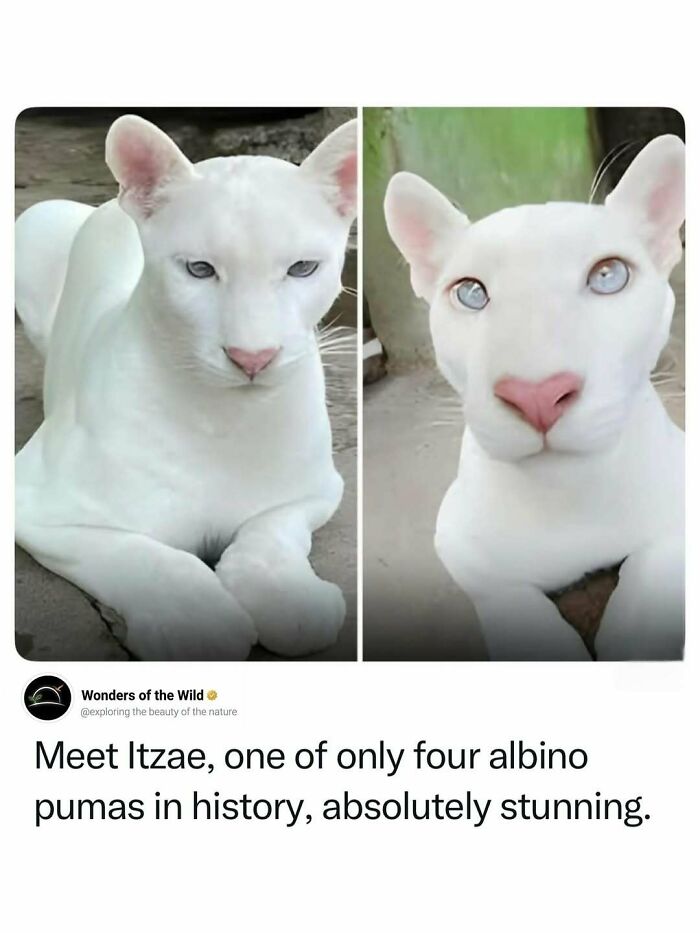
Image source: wonderzofthewild
#28
A Lion’s Mane mushroom drifting in the water looks less like a fungus and more like something pulled straight from forest folklore. Its cascading white tendrils create an almost ghostly appearance, giving it the look of a mythical creature floating through a hidden woodland stream. Nature has a way of producing forms so unusual that they seem more at home in fantasy than in the real world.
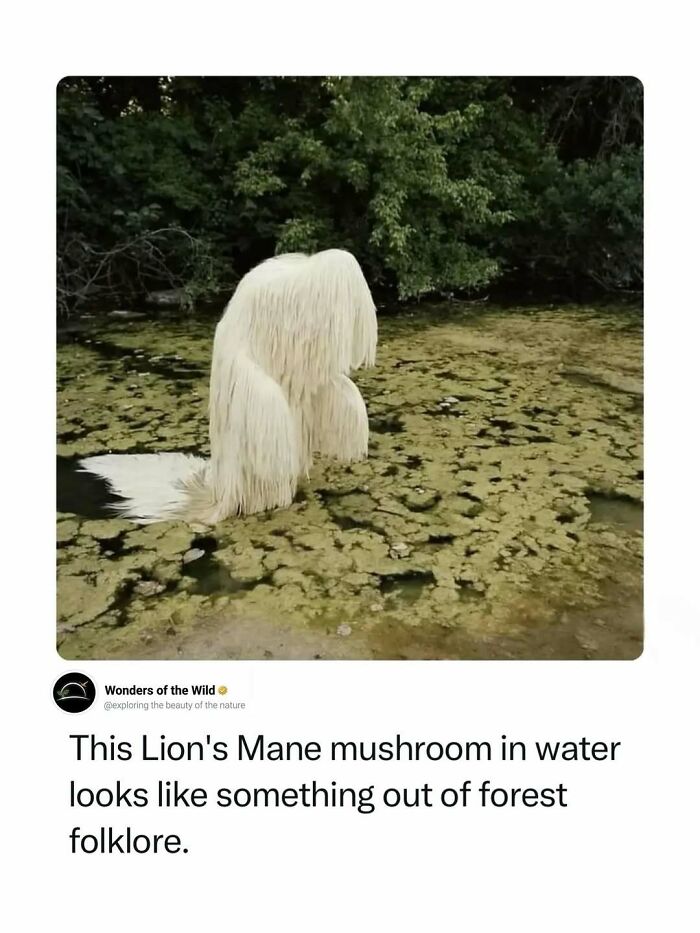
Image source: wonderzofthewild
#29
Bees actually sleep between 5 and 8 hours a day, and sometimes they even do it tucked inside flowers. During rest, they can enter a light sleep state where their bodies become still and less responsive. Some bees also rest in groups, occasionally gripping onto each other with their legs while they sleep, especially when clustered in safe spots away from predators and weather. It’s a small but fascinating reminder that even the busiest insects in the world need downtime too.
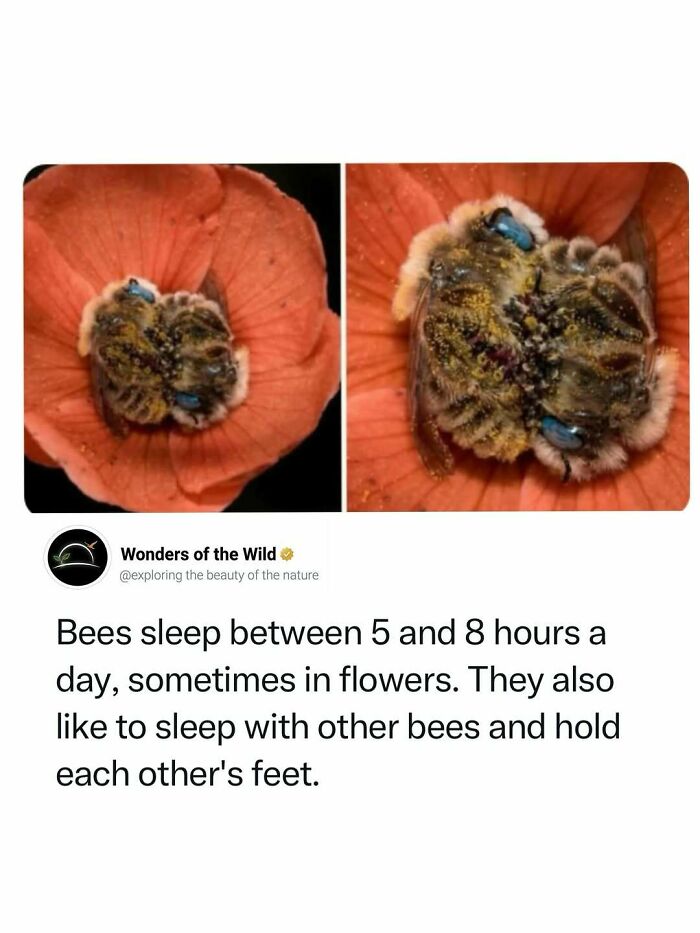
Image source: wonderzofthewild
#30
The Arabian sand boa is one of those animals that looks almost too simple to be real, often compared to a child’s drawing of a snake. Adapted for life beneath desert sands, its short, thick body allows it to burrow and ambush prey with minimal movement. Instead of chasing, it waits just under the surface, using stealth and surprise to catch small animals that pass by. Its unusual shape is not a flaw, but a specialized design shaped by extreme desert life.
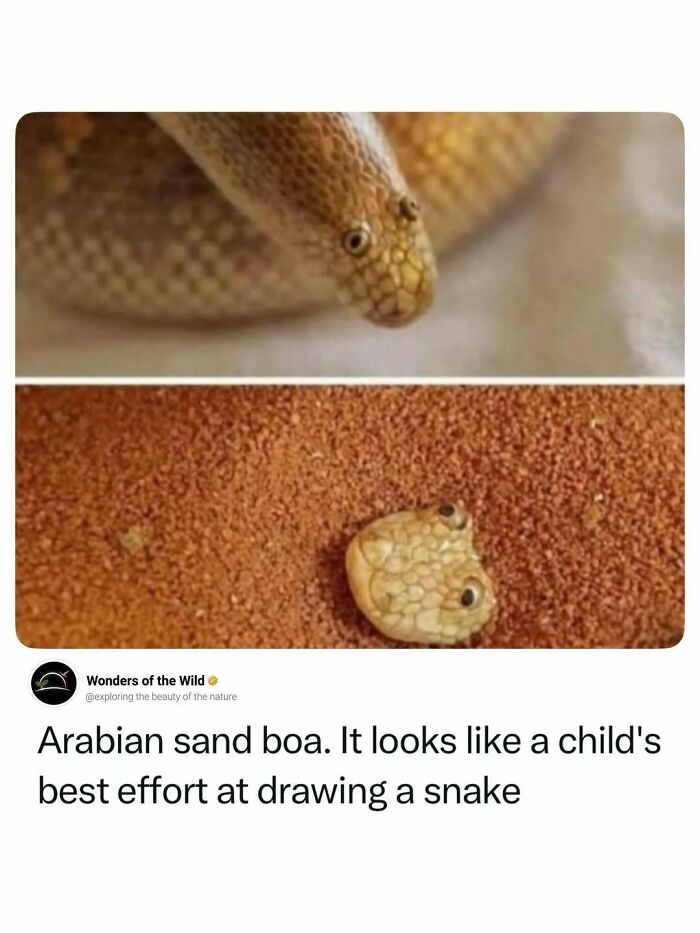
Image source: wonderzofthewild
#31
Female cats can carry kittens from multiple fathers in the same pregnancy, a phenomenon known as superfecundation. Because a female cat can release multiple eggs during a heat cycle, those eggs may be fertilized by different males if mating occurs more than once. This is why kittens within the same litter can sometimes look noticeably different from one another, varying in coat color, pattern, and even size.
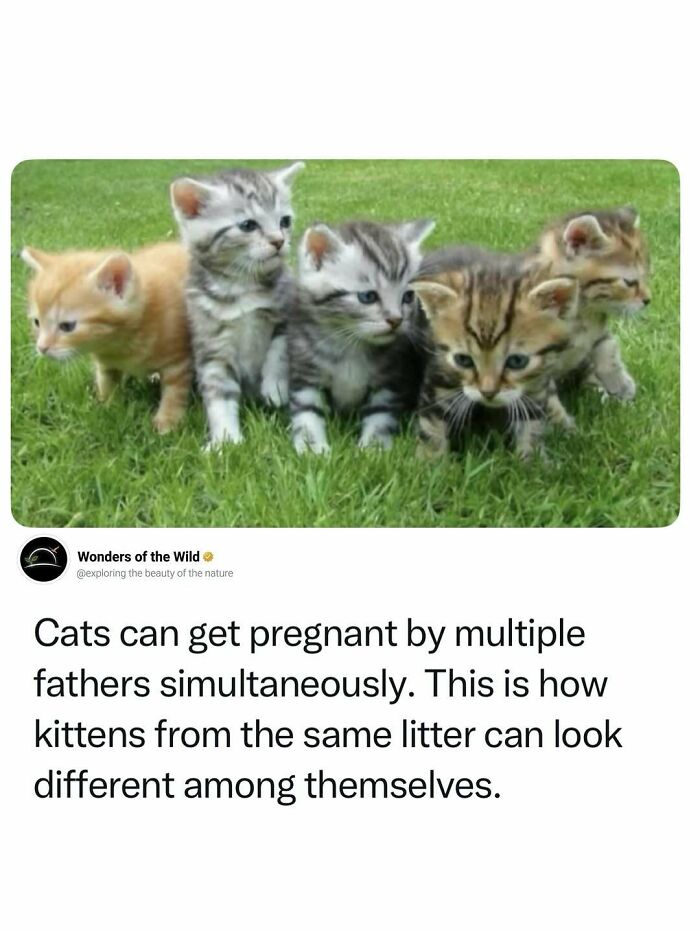
Image source: wonderzofthewild
#32
This is Jonathan, the oldest known living land animal on Earth. A giant tortoise, Jonathan is believed to have hatched around 1832, making him approximately 194 years old. Over the course of his remarkable life, he has witnessed nearly two centuries of human history, spanning multiple generations, technological revolutions, and global events. Despite his extraordinary age, Jonathan continues to be a symbol of longevity and resilience, offering a rare glimpse into just how long some species can live under the right conditions.
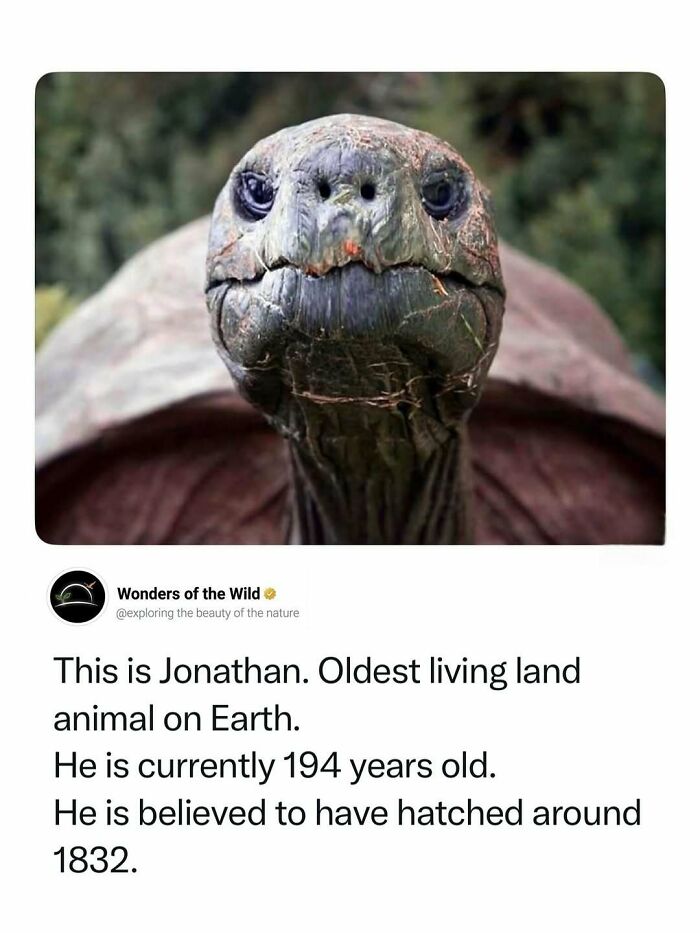
Image source: wonderzofthewild
#33
The Resplendent Quetzal is a true jewel of the cloud forests, and seeing one near Cobán is an unforgettable sight. Its shimmering emerald-green plumage, vibrant red chest, and elegant flowing tail feathers create a display of color and beauty that seems almost magical against the lush forest backdrop. Often regarded as one of the most beautiful birds on Earth, the quetzal spends its life among misty mountain forests, feeding on fruits, insects, and small animals. Revered by ancient Mesoamerican cultures and celebrated as a symbol of freedom and natural beauty, it remains one of the most iconic birds in the Americas. Graceful, elusive, and breathtakingly colorful, the Resplendent Quetzal is a living masterpiece of the natural world.
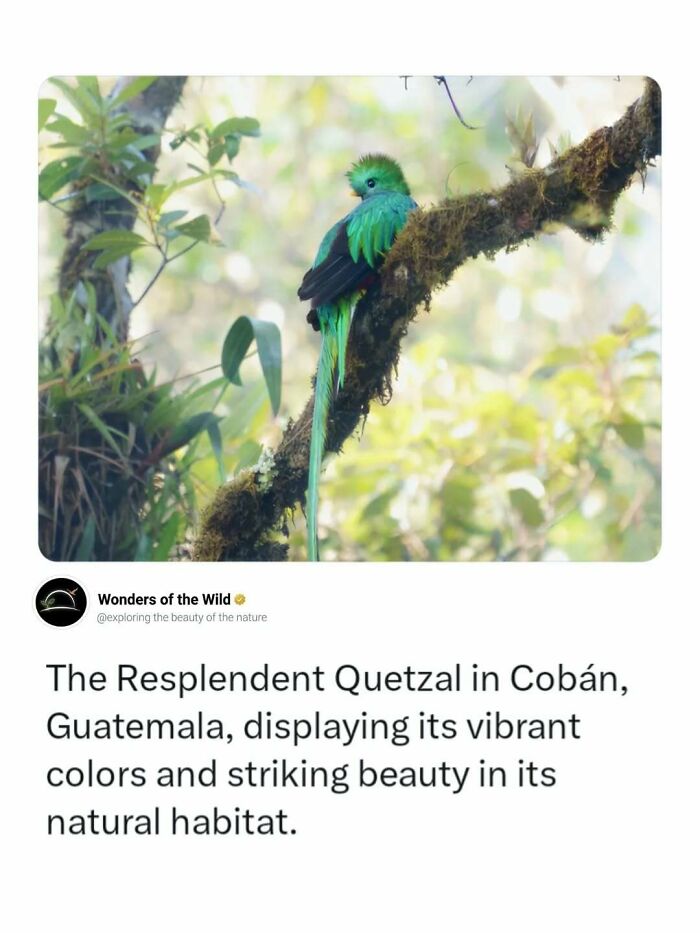
Image source: wonderzofthewild
#34
The Silky Anteater sleeps peacefully, curled tightly into a tiny ball as it rests among the forest canopy. Its silky golden fur and compact shape allow it to blend seamlessly with branches and leaves, making it almost invisible while it conserves energy during the day. Despite its delicate appearance, this miniature anteater is perfectly adapted to life in the trees. Nocturnal and solitary, it moves with surprising skill at night, feeding mainly on ants and small insects. In this quiet moment of rest, the silky anteater shows the softer side of survival stillness, safety, and perfect camouflage in the wild.
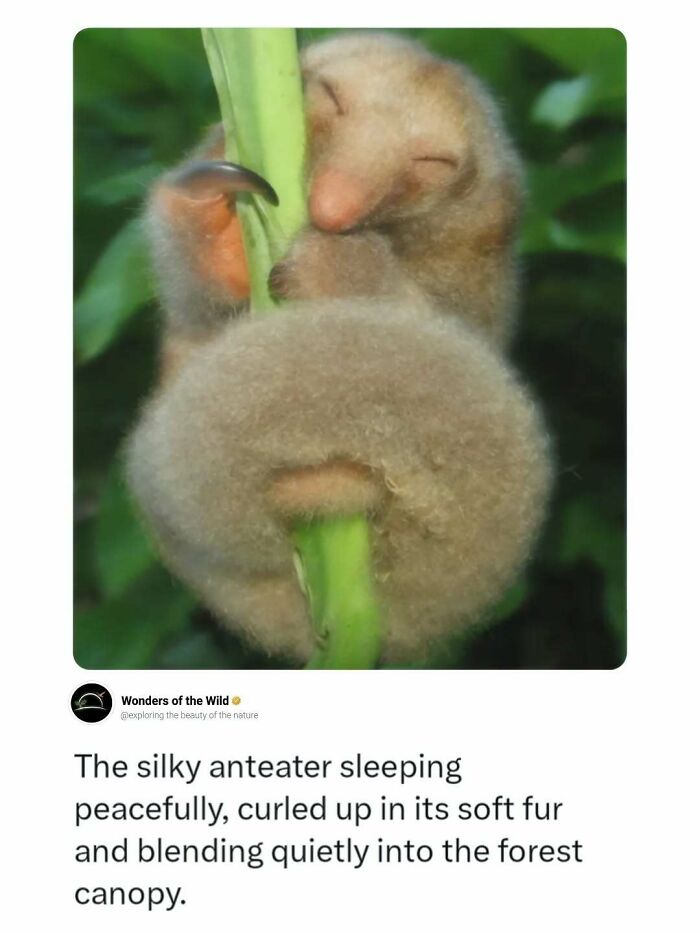
Image source: wonderzofthewild
#35
A baby Pangolin is seen curled up in a peaceful nap, resting safely on its mother’s tail as she moves through the forest. Wrapped in her protective embrace, the tiny pangolin clings gently while being carried along, completely at ease in the quiet rhythm of the wild. Covered in soft, developing scales, the baby depends entirely on its mother for warmth, protection, and movement during its early days. Pangolins are shy, nocturnal creatures that rely on camouflage and their armored bodies for survival, but in this tender moment, strength is replaced by pure care and connection between mother and child.
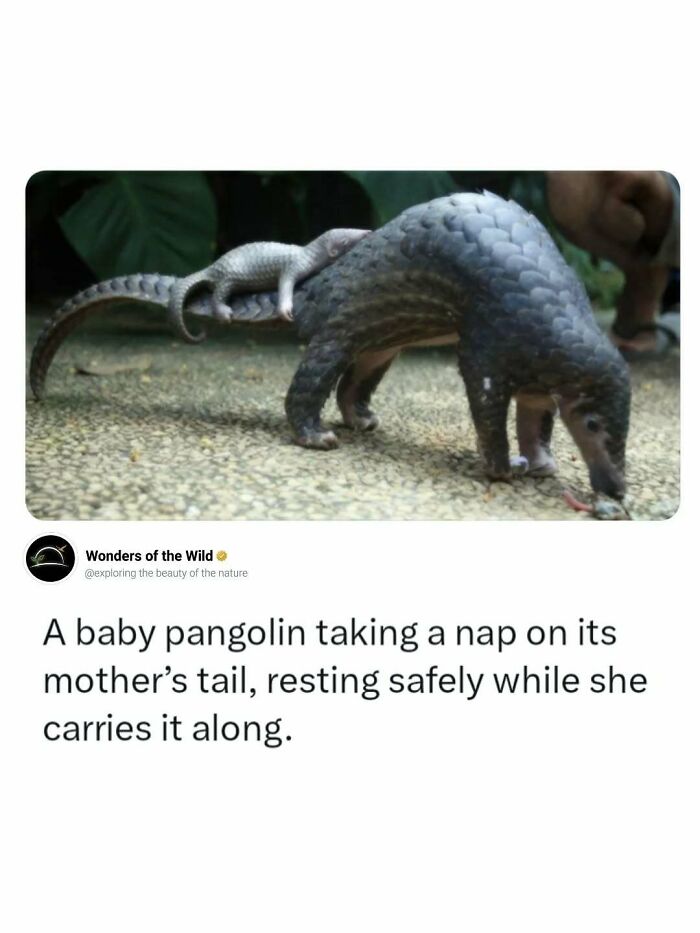
Image source: wonderzofthewild
#36
House Finch couples are known for their strong pair bonds and are often seen staying close to one another throughout the day. Whether feeding, resting, or exploring their surroundings, these devoted birds frequently remain side by side, strengthening a partnership built on trust and cooperation. During the breeding season, mates work together to raise their young, with the male often feeding and protecting the female while she incubates the eggs. Their constant companionship and gentle interactions make them one of nature’s most heartwarming examples of loyalty and teamwork. Small in size but big in devotion, house finches remind us that some of the strongest bonds are built through simply staying close.
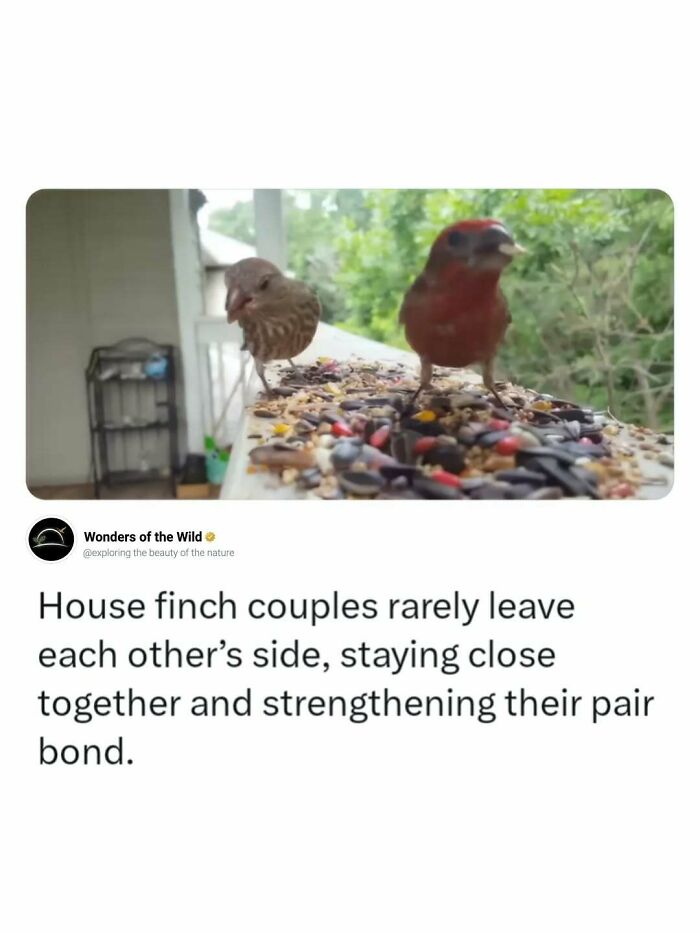
Image source: wonderzofthewild
#37
Soneca, a female Jaguar, became widely known after a memorable rehabilitation moment where she took an unusually long time to fully recover from anesthesia before being released back into the wild. Her calm, delayed awakening inspired her name, which reflects that slow, resting recovery phase. Jaguars like Soneca are powerful apex predators of the Americas, but stories like hers highlight the careful work involved in wildlife rescue, veterinary care, and reintroduction programs. After recovery, she was successfully returned to her natural habitat, where she could once again roam forests and river systems as a symbol of resilience and conservation success.
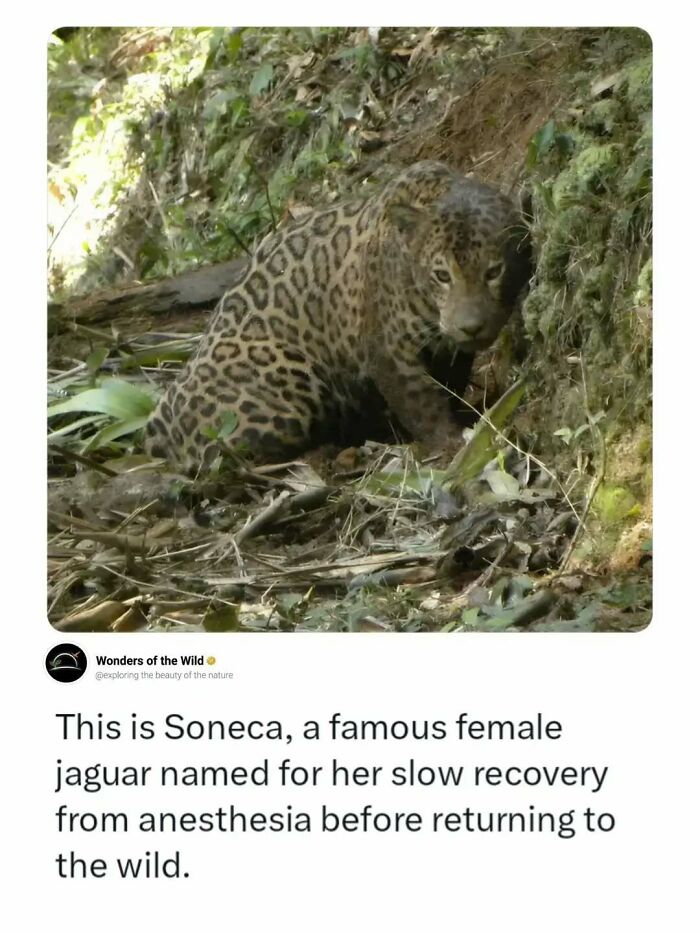
Image source: wonderzofthewild
#38
The Groundhog, also known as the whistle-pig, is a stout and resourceful rodent famous for its loud, high-pitched whistle used to warn nearby animals of danger. Living in elaborate underground burrows, groundhogs spend much of their time foraging, digging, and keeping a watchful eye on their surroundings. Like other rodents, groundhogs have continuously growing incisor teeth that must be worn down through constant gnawing. They are herbivores, feeding on a wide variety of plants, grasses, flowers, and vegetables. Calm, cautious, and surprisingly vocal, these skilled diggers play an important role in their ecosystems while thriving through awareness and adaptability.
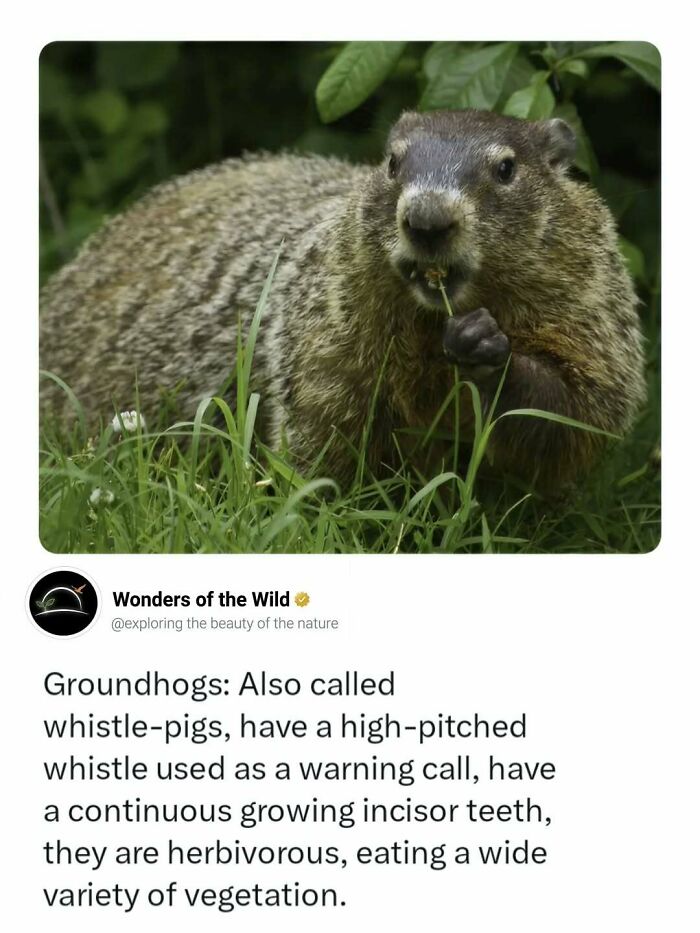
Image source: wonderzofthewild
#39
A Rosefinch perches gracefully among the branches, its vibrant plumage standing out beautifully against the natural landscape. With soft shades of pink, red, and brown, this charming songbird brings a splash of color wherever it appears. Known for their sweet songs and gentle nature, rosefinches are often found in woodlands, shrubs, and mountain habitats, where they move quietly through the foliage in search of seeds and berries. Elegant, delicate, and full of character, the rosefinch is a reminder that some of nature’s greatest beauty comes in the smallest packages.
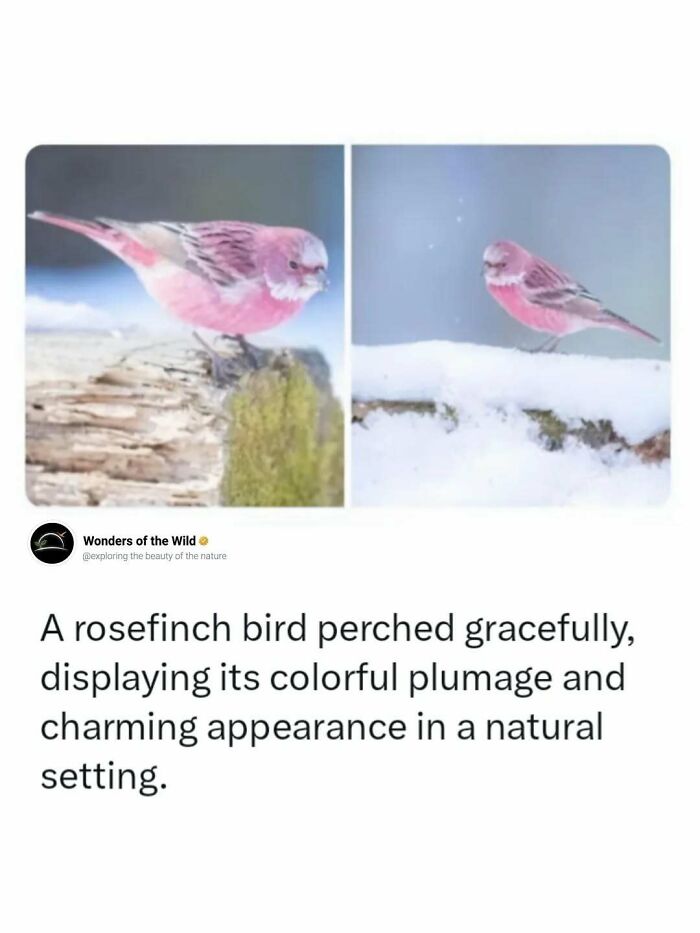
Image source: wonderzofthewild
#40
The Reindeer has one of the most remarkable visual adaptations in the animal kingdom. During the bright summer months, its eyes appear golden, but as winter approaches and darkness dominates the Arctic, they gradually shift to a deep blue color. Scientists believe this change helps reindeer make better use of the limited light available during the Arctic winter. The blue coloration increases light sensitivity, allowing them to detect predators, food, and movement more effectively in snowy, low-light conditions. It’s a fascinating example of how animals evolve extraordinary solutions to survive in some of the harshest environments on Earth
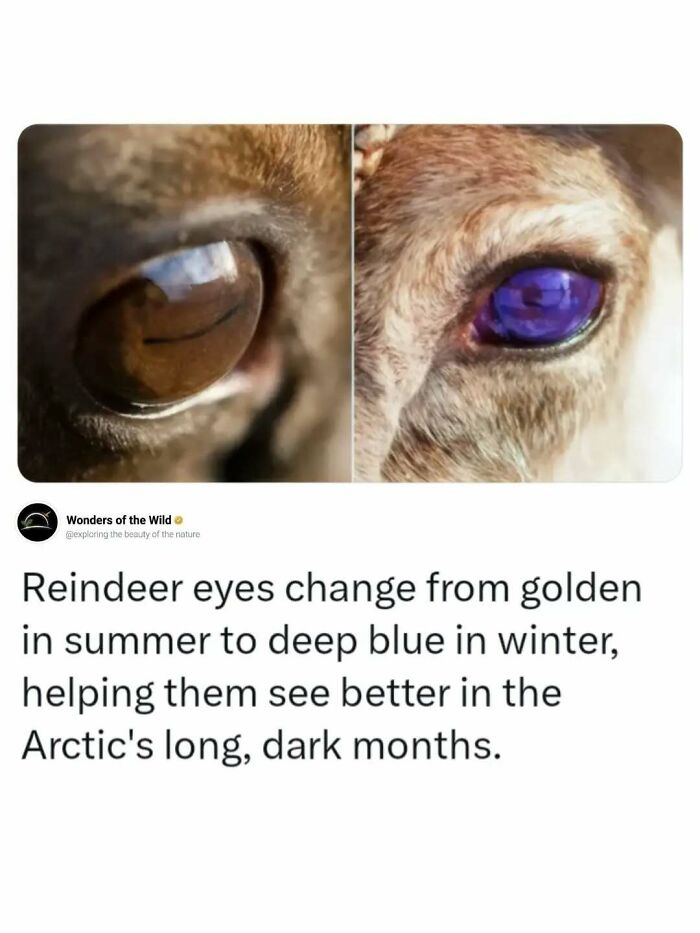
Image source: wonderzofthewild
#41
Meet Fat Albert, one of Alaska’s largest bears, weighing an incredible 1,500 pounds. Bears like this grow massive through intense seasonal feeding, especially during salmon runs, building fat reserves to survive long winters. In harsh northern environments, that size isn’t just impressive, it’s survival, helping them endure food shortages and compete for resources.
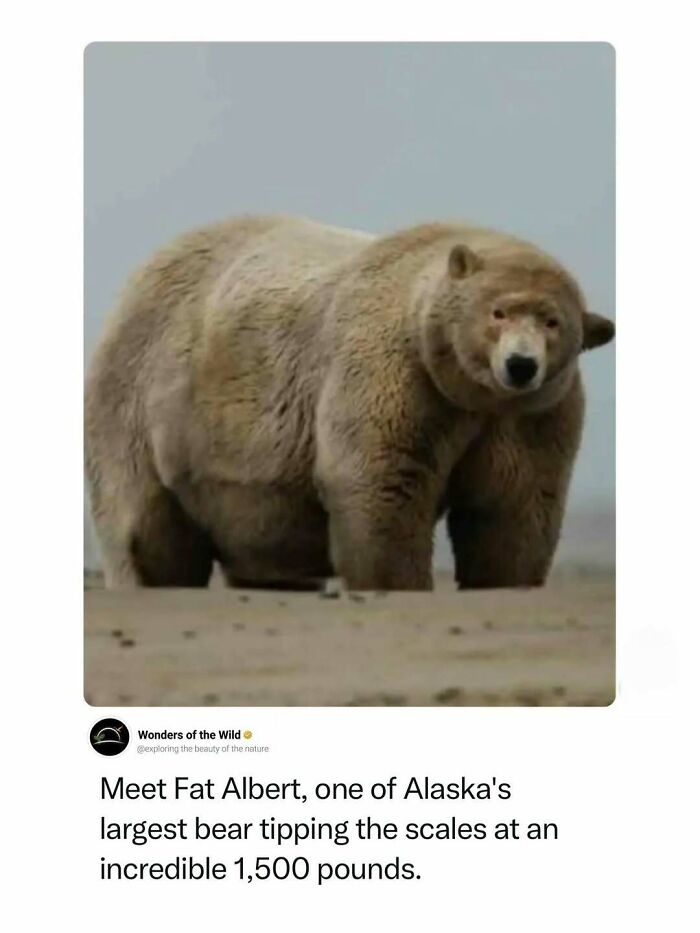
Image source: wonderzofthewild
#42
A common misconception about turtles is that they “live inside” their shells, when in reality the shell is a part of their body. A turtle’s shell is made up of over 50 fused bones, including parts of the rib cage and spine, meaning it is structurally integrated into their skeleton rather than something they can separate from. The outer layer is covered in scutes made of keratin, the same material found in human nails. Because of this anatomy, turtles cannot leave their shells, as it functions as both protection and a permanent part of their internal structure.
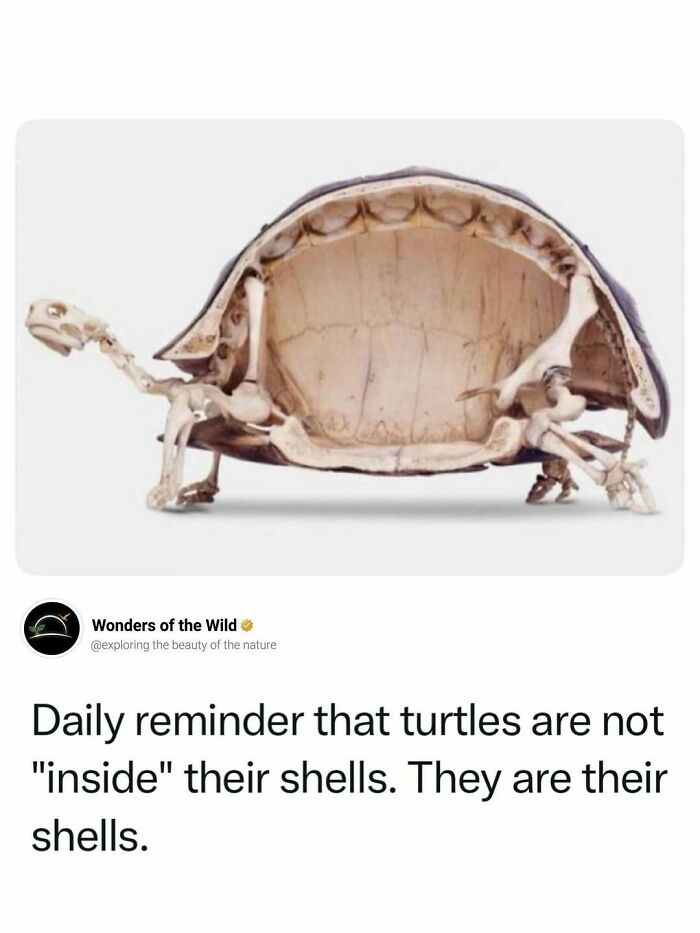
Image source: wonderzofthewild
#43
Say hello to Qizai, the world’s only known brown giant panda. Unlike the iconic black-and-white pattern we’re all familiar with, Qizai’s fur is a beautiful mix of chocolate brown and cream, making him one of the rarest animals on Earth. His unique coloring is believed to be the result of an extremely rare genetic variation. Proof that even nature likes to make one-of-one masterpieces.
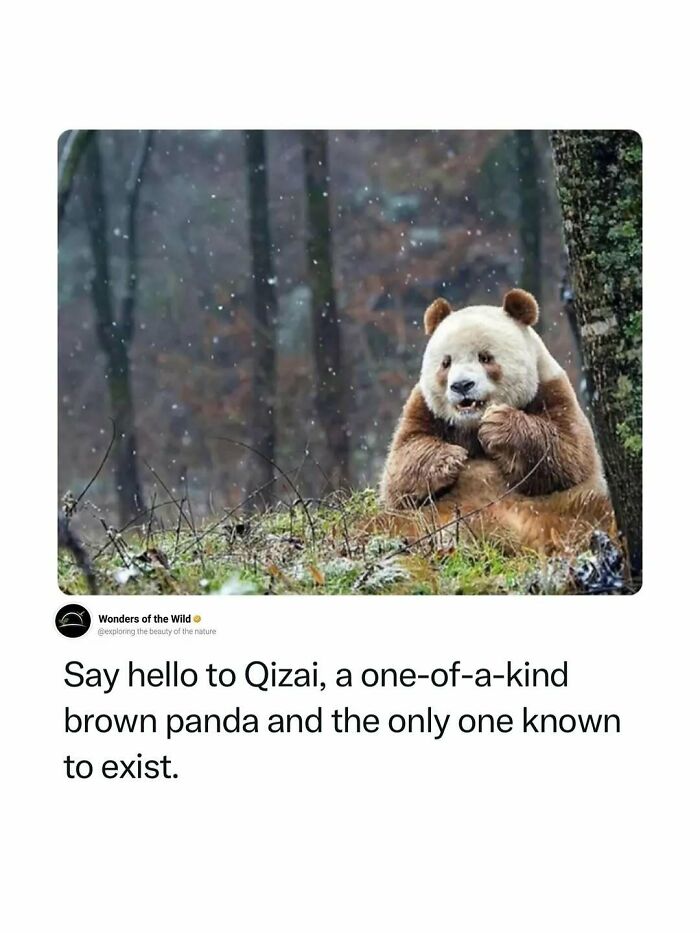
Image source: wonderzofthewild
#44
Crows have a habit of pulling other animals’ tails and sometimes they’re not even trying to steal food. They’ll often tug a tail to distract an animal long enough to snatch a meal, but researchers and observers have also seen them doing it with no obvious reward at all. Whether it’s clever strategy or just a bird enjoying a bit of harmless chaos, crows continue to prove they’re among the smartest troublemakers in the animal kingdom.
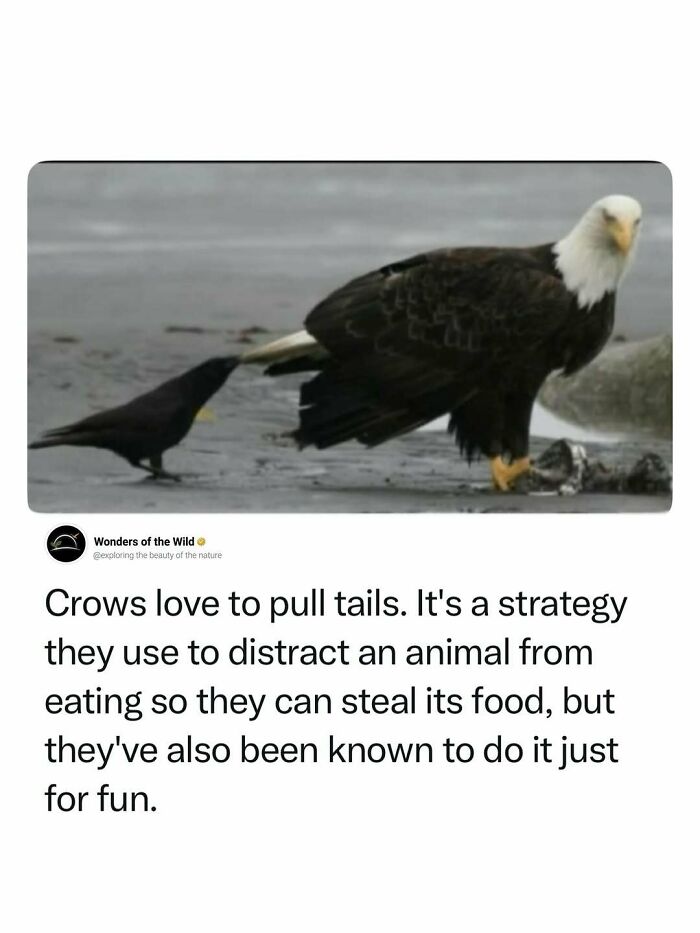
Image source: wonderzofthewild
 Follow Us