Helping out one’s sibling is a perfectly normal part of a family relationship. The only questions one typically asks is how to best actually assist or what they need. But, as it turns out, “will my help offend her useless husband” is also a question one has to ask now and then.
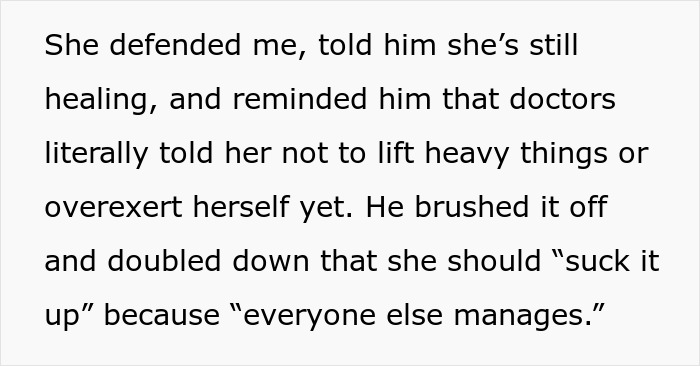
A woman asked the internet if she was wrong for going to her sister’s house to help take care of her after she gave birth. How could this be wrong, one might ask, as it turns out, the sister’s husband was too busy to help (his words), but also was under the impression that it was embarrassing for his sister-in-law to be “acting like a maid.”
A person who just gave birth tends to need some help around the house

Stockbusters / Magnific (not the actual photo)

But one woman ended up causing drama between her sister and husband for doing just that


magnific / Magnific (not the actual photo)


magnific / Magnific (not the actual photo)


TriangleProd / Magnific (not the actual photo)
Boundaries are more than just lines that should not be crossed
Most people think of family boundaries as a way to keep relatives at a distance, yet this story shows they are just as much about deciding who steps in, when, and on whose terms. On paper, an aunt cleaned a house, folded laundry, and prepped a few meals. In practice, that visit landed in the middle of a couple’s private arrangement about who does what, and it exposed a gap between what one partner expected and what the other could physically manage.
Start with the medical picture, because it frames everything else. A cesarean is major abdominal surgery, and according to Hackensack Meridian Health, full recovery can take six to eight weeks, with heavy lifting and strenuous exercise off the table in the meantime. At two weeks out and with twins to care for, the mother in this story is nowhere near that finish line. In that light, a clean kitchen and a stocked fridge look less like a favor and more like part of the recovery plan. It also explains why her relief ran so deep, since a calmer space can make healing feel more manageable.
The husband’s reaction deserves a fair reading too. Fathers of newborns are adjusting to a major life change as well, a point Endeavor Health makes in its advice on supporting new mothers, and work pressure can make that adjustment feel even heavier. His remark about looking bad suggests he heard the visit as a verdict on his effort, which can happen when outside help shows up unannounced. Understanding that feeling does not settle whether his response was fair, but it does show where the real conversation sits. The issue is less about who did the dishes and more about what each partner believes the other is responsible for.
Research on that question points in a consistent direction. A longitudinal study from the University of Minnesota found that women took primary responsibility for most household tasks after giving birth, and that their satisfaction with a partner’s contribution was tied to their own mental health. Endeavor Health’s guidance for partners leans the same way, suggesting they share laundry, cleaning, and shopping while the mother recovers. None of this means every couple must split chores evenly. It means the split deserves to be discussed out loud, ideally before exhaustion turns every unspoken expectation into an argument.
Sometimes it can be hard to understand exactly how to help family

lookstudio / Magnific (not the actual photo)
The aunt’s side of the boundary matters as well. She acted without being asked, and while her instincts were kind, a household belongs to the couple living in it, not to the relatives who visit. MindBodyGreen describes new parenthood as a time when family roles get reshuffled, which makes it useful to be clear about which relationships come first. For a helper, that usually means offering rather than assuming. Asking what would be most useful, and including both partners in the answer, keeps help from reading as a replacement.
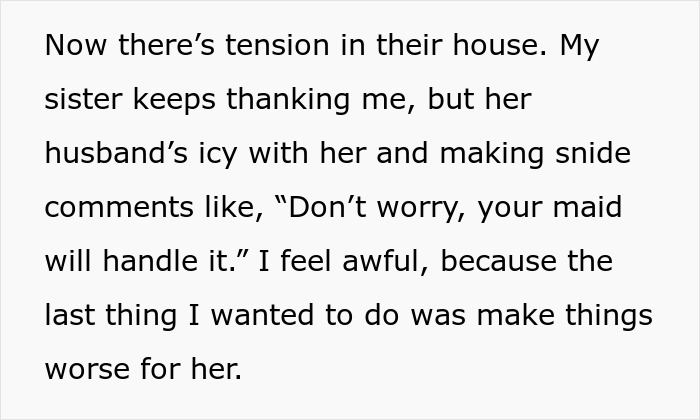
The new mother’s position is the most delicate. She defended her sister, absorbed the chill afterward, and now gratitude comes mixed with tension. When a relative becomes the subject of a couple’s disagreement, the conflict can start routing through that third person instead of between the two people who live there. Stepping back from the middle, while staying available, gives the couple room to talk directly. Discharge instructions from the doctor can serve as a neutral reference point, since they come from neither side of the family.
Guilt after helping is understandable, but it is not proof that helping was wrong. Other routes exist too, such as a meal train from friends, a one time cleaning service, or a postpartum doula, any of which can ease the load without becoming a point of friction. Still, the most useful boundary in this story is probably an internal one, a clear agreement between two parents about who handles what over the next several weeks, so no visiting relative has to carry that weight.
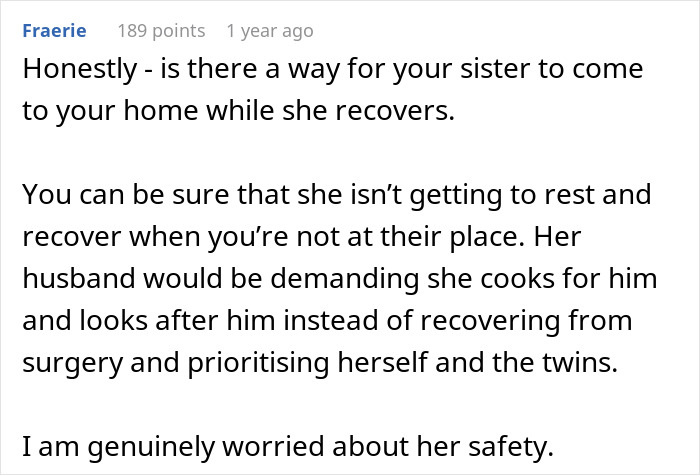
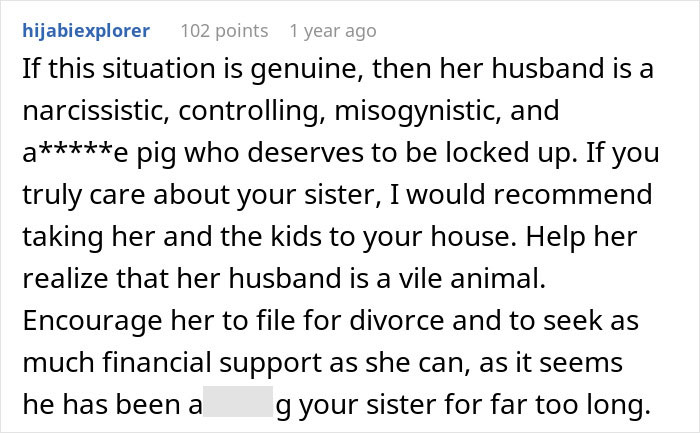
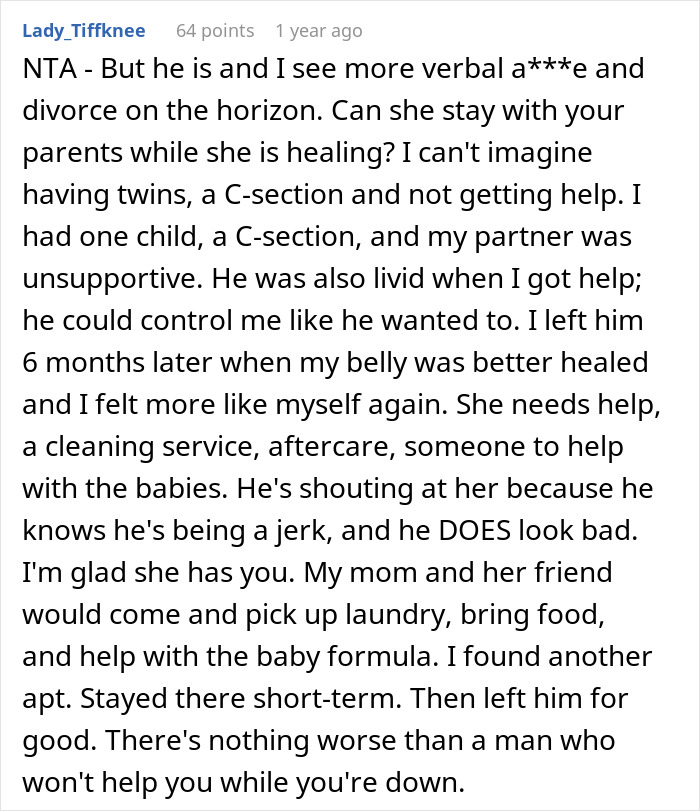
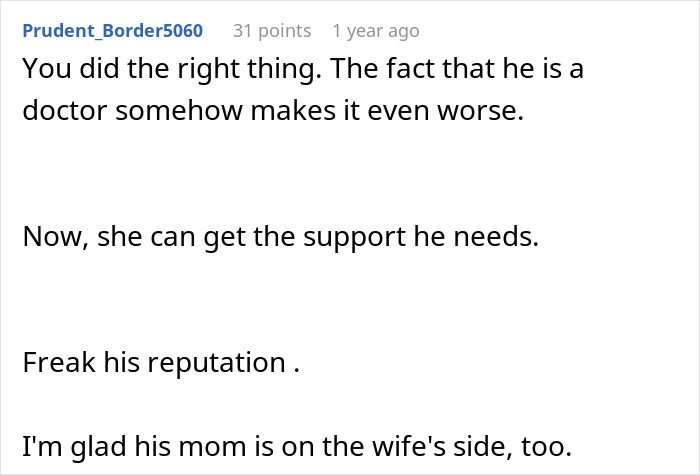
Readers thought the husband was way out of line








Stockbusters / Magnific (not the actual photo)
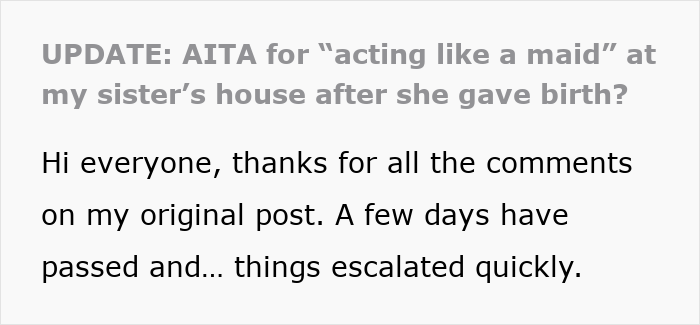
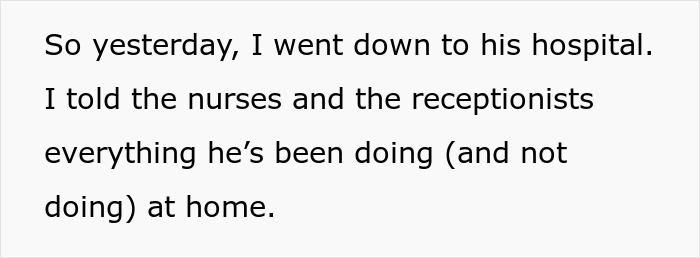
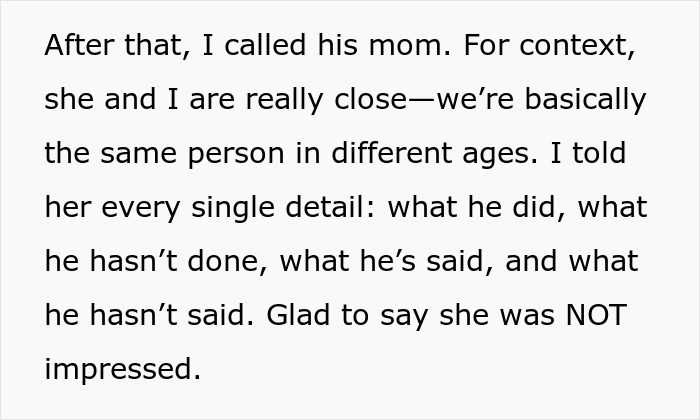
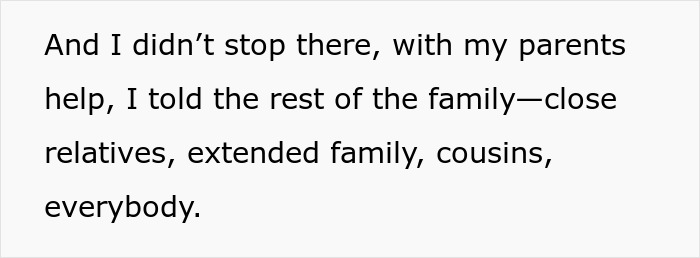
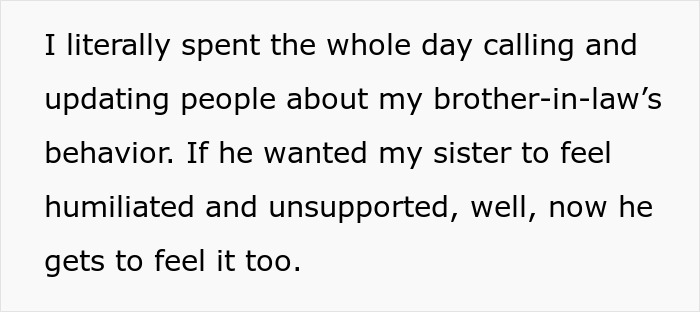
She later shared a sizable update







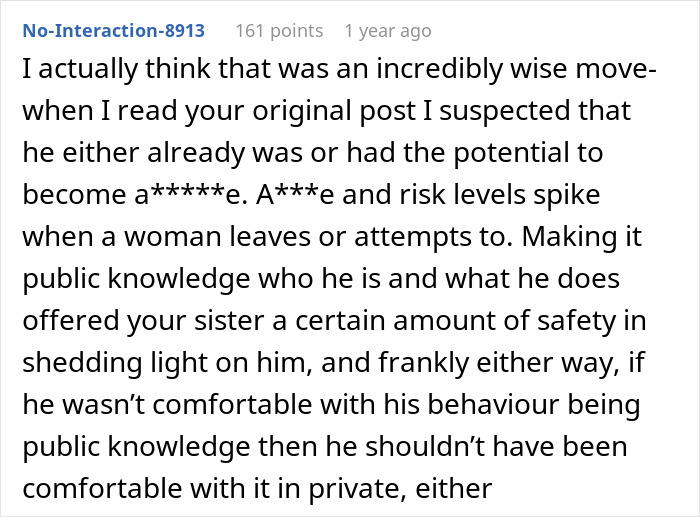
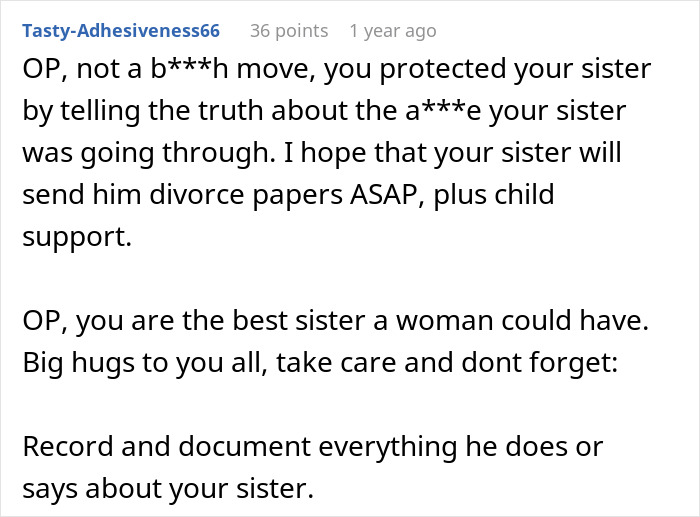
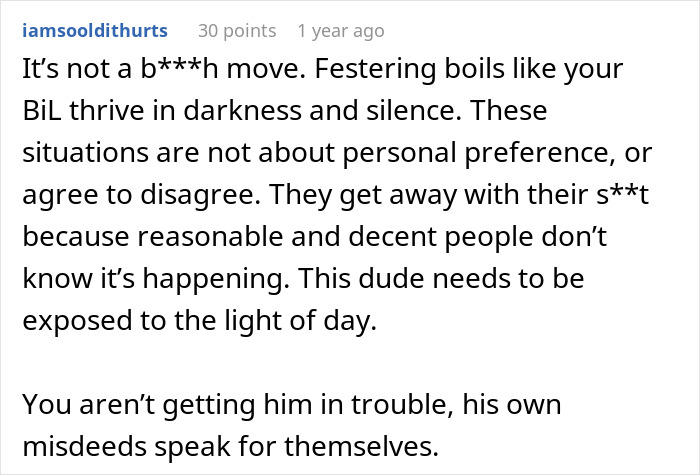
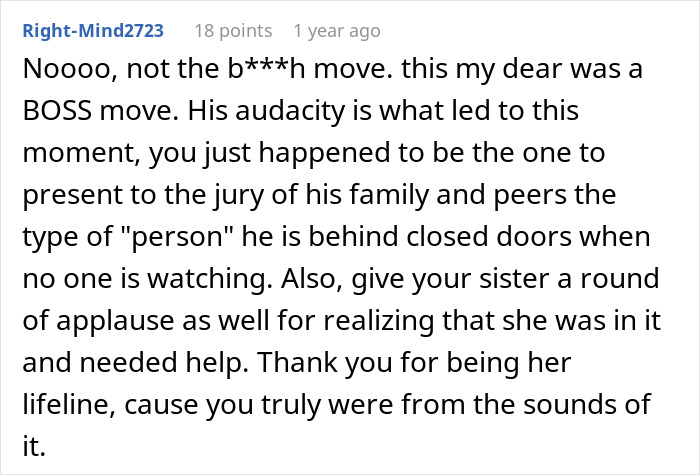
The comments were full of support for her




















 Follow Us