Zach Cregger’s 2026 Resident Evil pulled in the kind of money that makes studio executives do little dances in their offices. In addition to making $60 million in North America on opening weekend and breaking a 24-year-old franchise record, the reviews are suspiciously good, too. 96% on Rotten Tomatoes and a 92% audience score confirm just how highly critics and audiences alike think of the movie. What splits audiences is the ending.
Bryan (Austin Abrams) spends pretty much the entire runtime trying to deliver a stabilizing agent the lab needs to make the cure, and the movie pays him back by turning him into the very thing the cure was meant to stop. Half the internet feels cheated out of getting the happy ending they feel the movie deserved after roughly 90 minutes of tension. The other half strongly believe that the movie couldn’t have ended any other way. Somehow, both sides have a point. A rare, but true phenomenon in Hollywood.
Why Bryan’s Infection Undercuts the Hope the Whole Movie Built Toward
Notably, the cure works. Carl (Zach Cherry) and his team make it, and Bryan does make it to the lab. No one’s racing the clock here, not really. The problem is that Bryan transforms before they can help him. He kills most of the scientists in the process, and when the last scientist tries to run, Bryan’s mutated body pulls him in too. The vial containing the cure goes down with the struggle, and no one ever gets to use it.
That moment stings mostly because of what Bryan was trying to achieve, and the hope the movie sold audiences early on. He spends part of the movie trying to reach his pregnant girlfriend, Michelle (Sara Paxton), by phone. At one point, he even leaves a panicked voicemail from a farmhouse where he’s failing to reach emergency services while a mutated dog and its infected owners close in on him.
The argument for the people who weren’t too pleased with that ending is that if the clock had run out on Bryan, it would have felt clean. Almost noble, like he had come up short. But falling short of his goal because the infection finally caught up with him in the nick of time? That’s just bad luck, and bad luck doesn’t sit right after 90 minutes of tension. It’s probably why many people ended up angry instead of gutted.

Why the Resident Evil Ending is the Only Honest Way This Story Works
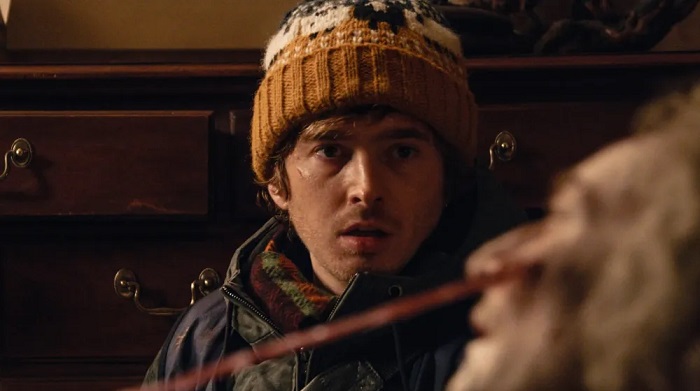
What no one seems able to take into account when they’re busy being angry is the fact that Bryan is largely responsible for how things end for him. He’s bitten by an infected girl inside an RV in one of the film’s tunnel sequences. Rather than stop to deal with it, he continues on his journey to the hospital as the wound spreads. By the time he reaches the parking lot outside Raccoon General and realizes how far the infection has progressed, he’s convinced enough that he won’t make it that he stops to record a goodbye message for Michelle instead of turning back.
The choice to keep moving is what seals his fate. The scientists do get the cure ready once he arrives, but things had gotten to the point where it was too late for anyone to administer it. Perhaps the part that makes this ending make sense the most is that everyone familiar with the Resident Evil franchise already knows where the movie is heading. Raccoon City turns into a full-blown Umbrella disaster. And Cregger has said that his movie is meant to play out on the outside of that outbreak rather than rewrite it.
If Bryan had left unscathed with a working cure, the disaster that follows wouldn’t match what the franchise already established. So Cregger didn’t pick the harsher ending because he enjoyed ruining people’s Friday nights. He picked the only ending that didn’t seriously mess with the story everyone already knows.
What Zach Cregger Changed From Other Resident Evil Movies’ Formula
Every other live-action version of Resident Evil, going back to Paul Anderson’s 2002 original, followed the same playbook: a recurring hero in Milla Jovovich’s Alice. She played the character across six films and kept coming back from the dead every time, just so the story could continue. The 2021 reboot, Welcome to Raccoon City, went the opposite direction and pulled Claire and Chris Redfield straight from the games, with Kaya Scodelario and Robbie Amell playing it completely straight.
Cregger didn’t try to copy either playbook. Bryan isn’t a soldier or a legacy character. Cregger describes him as having no combat skills whatsoever. Someone closer to Frodo stumbling into Mordor than a trained survivor, and exactly the kind of protagonist a franchise built on sequels doesn’t usually kill off on purpose. The bigger break from tradition has more to do with structure.
The camera stays focused on Bryan’s POV, like the newer games do, instead of the flashy stuff from the Jovovich era. Cregger also keeps the whole thing to just over 90 minutes. There’s also none of the mid-credits, post-credits, or sequel-setting scenes that closed out nearly every earlier installment. And that alone gives the impression that, like it or not, Cregger meant every second of how this movie ended.
 Follow Us