Publicists started throwing around the term “Prestige TV” sometime around the Mad Men and The Sopranos era. Critics now use the term as shorthand for shows that behaved like novels instead of network filler. But long before award shows started handing out trophies for grim anti-heroes and slow-burn mysteries – essentially prestige TV work – a handful of shows, including the five on this list, had already used those same ideas to good effect.
They simply didn’t have the fancy label and publicists to toot their horns. And so they aired in the shadow of reruns and cop procedurals, years before HBO turned “quality” into a marketing word. They built sprawling mythologies, killed off any illusion of a weekly reset button, and trusted audiences to keep up.
1. Twin Peaks (1990 – 1991)
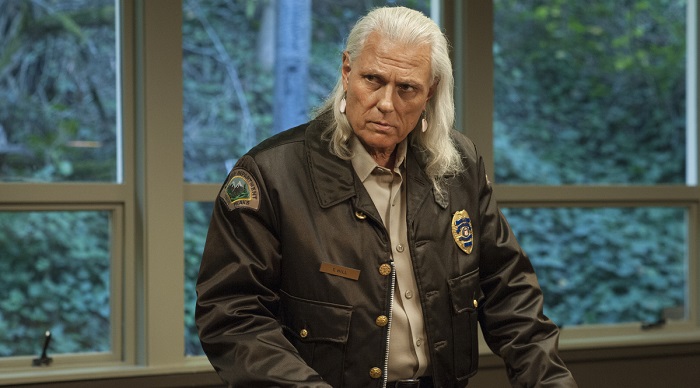
Back in 1990, network TV didn’t get to murder a homecoming queen and then take 14 episodes to explain who did it. That wasn’t the deal. The deal was Murder, She Wrote: tidy, polite, and resolved before the next commercial. Then David Lynch, fresh off the art-house hit Blue Velvet, walked into ABC with a pitch that must have sounded like a prank. A small town, a log lady, and a dancing dwarf who talked backward. The network said yes, probably because the pilot was so weird they thought no one would watch, and they could cancel it quietly.
Instead, the pilot pulled in nearly 35 million viewers, a third of everyone watching TV that night. Credit goes to Lynch’s co-creator, Mark Frost, who anchored the serialized plotting as head writer while Lynch and a rotating slate of directors gave the show a cinematic look no other network drama had in that slot. The show lost its steam and ratings collapsed once the killer was revealed, but for one glorious season, viewers were glued to the front of their TVs trying to find out who killed Laura Palmer (Sheryl Lee).

2. Homicide: Life on the Street (1993 – 1999)
In the season 1 episode “Three Men and Adena,” two detectives spend nearly the entire screen time locked in an interrogation room with a single murder suspect, and NBC let it air anyway. Cop shows in the early 1990s followed pretty much the same blueprint: bad guy does something bad, cops make sarcastic jokes while trying to catch the bad guy, bad guy eventually gets caught, and everyone gets a high five. It was clean. It was safe. And it was easy to digest with comfort food. Homicide: Life on the Street had no interest in that blueprint. The show was adapted from David Simon’s nonfiction book about a year spent riding with Baltimore’s real homicide unit.
Producers Barry Levinson and Tom Fontana made the unusual decision to shoot the show on a Super 16mm with handheld cameras and borrow jump cuts straight from the French New Wave. That interrogation scene, pitting detectives Pembleton (Andre Braugher) and Bayliss (Kyle Secor) against a suspect in the murder of 11-year-old Adena Watson (Eboni Gentry), ran so long and so uncomfortably quiet that it sometimes felt like watching real life. Simon would later build The Wire out of an entirely different book, but this episode alone earned Fontana an Emmy, on a network that also carried Seinfeld.
3. The X-Files (1993 – 2018)
For most fans still growing up when the show premiered on Fox, back in 1993, there were two kinds of The X-Files episodes. The ones that were so scary that most people who watched them slept with the lights on, and the ones that immediately didn’t make sense to the viewer. The scary ones were the “monster of the week” episodes: a mutant in the sewer, a vampire in the suburbs, a family with something truly unsettling under their farmhouse floor. Those were fun. People could watch them, scream, and move on. But the other episodes, the “mythology” episodes, were a different beast.
They followed a creeping alien conspiracy that showrunner Chris Carter admitted he never fully plotted out. He just kept adding one messy layer after another, and viewers kept watching and trying to connect dots that may not have existed. That split format, standalone episodes for casual viewers and serialized breadcrumb episodes for the obsessed, is exactly what most streaming and “prestige TV” shows do today. The only difference was that back then it only aired on Friday nights because network TV thought fans wouldn’t care. But they did care; a lot.
4. Babylon 5 (1993 – 1998)
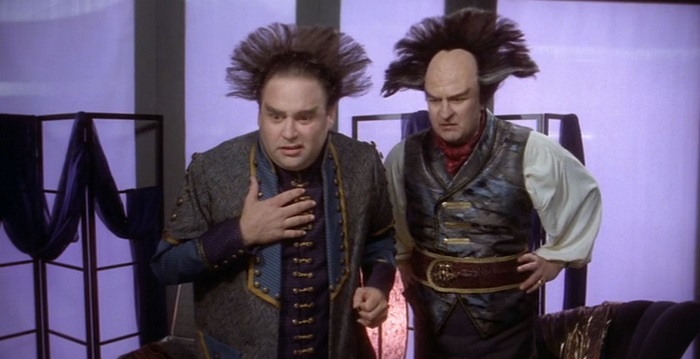
Explaining the plot of Babylon 5 to a newbie sounds like a made-up fairy tale. Even before they filmed the very first episode, creator J. Michael Straczynski had already mapped out five full seasons of the story, including who would die, who would betray whom, which alien races would ally, and which would go to war. Things weren’t done that way in 1993. Most shows made up next week’s episodes while filming this week’s
But Straczynski wrote 92 of the 110 episodes himself, and he faithfully stuck to his plan. Characters died and stayed dead, and this was years before Game of Thrones pulled up with its “no one is truly safe” marketing gimmick. When the show almost got cancelled after season 4, TNT stepped in at the last second just so Straczynski could finish the story he’d already mapped out.
5. Oz (1997 – 2003)
Tom Fontana spent years on Homicide: Life on the Streets sending killers off to prison and not thinking twice about what happened to them. Years later, he started wondering what happened to them, and that curiosity led to pitching a maximum-security prison drama to HBO. Before then, the network was famous for three things: boxing matches, the occasional Chris Rock special, and movies that had already been in theaters. Never a scripted hour-long drama. Oz got the green light anyway.
No advertisers meant no restrictions, and Fontana used every inch of it. No character was safe, violence went uncensored, and a wheelchair-bound inmate named Augustus Hill (Harold Perrineau), who was serving a life sentence for killing a police officer during his arrest, narrated the whole thing to the camera like a court-appointed witness. The Sopranos arrived about a year and a half later and is often credited with kick-starting the “Golden Age of Television.” The timeline says otherwise.
 Follow Us


