Wes Craven was a true trailblazer in horror cinema. Across four decades, he redefined the genre multiple times, even systematically dismantling the very slasher tropes he helped build himself. But his ultimate masterstroke came in the winter of 1996 when he released Scream.
This meta-fueled slasher classic changed the landscape of horror forever. Screenwriter Kevin Williamson served up a script so self-aware, hyper-literate, and sharply satirical that it breathed new life into an expiring genre and launched a $1 billion global franchise that is still thriving today. So, in honor of its 30th anniversary, let’s pull back the mask on this cultural phenomenon and trace its journey from inception to cemented horror masterpiece.
The Real-Life Terror: The Gainesville Ripper
Scream has become iconic for its meta-humor and cinematic self-awareness. Craven knew that in order to revitalize a tired genre, he had to poke fun at what was once its strongest elements. Despite its mild humor that provides relief after the tense moments, when the horror kicks in, it’s fierce and uncomfortable. And sadly, its foundation is rooted in pure, real-world dread.
The idea for Ghostface didn’t come from a brainstorm about horror tropes; it came from a real-life monster. In August 1990, a quiet college town in Florida was paralyzed by fear. Over a gruesome three-day period, a man named Danny Rolling – later dubbed “The Gainesville Ripper” – brutally murdered five students in their off-campus apartments. Rolling’s methods were intentionally theatrical and designed to shock. He slipped through locked doors, caught his victims off guard, and meticulously posed the crime scenes to maximize the psychological horror for whoever discovered them.
Fast forward to 1994. Screenwriter Kevin Williamson was working as a novice writer, housesitting a friend’s secluded home in Palm Springs. While watching a disturbing TV news special about the Gainesville murders, Williamson creeped himself out so much that he began pacing the apartment while on the phone to his friend. The conversation soon turned to hypothetical “what would you do?” scenarios. Unable to calm his nerves, Williamson instead channelled his nervous energy into the page and crafted an 18-page script treatment. That adrenaline-fueled treatment became the foundational blueprint for the iconic opening scene featuring Drew Barrymore‘s Casey Becker.

The Barrymore Bait-and-Switch
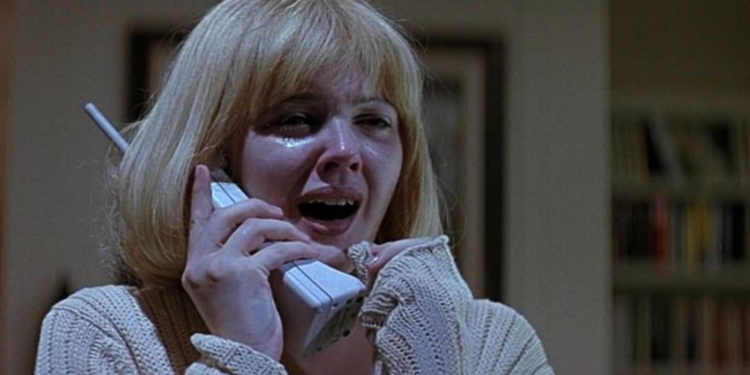
Nowadays, movie fans hate it when a big name actor acquires top billing and barely makes it to the screen for longer than 10 minutes. While this is often a savvy marketing decision, Drew Barrymore’s short screen time was intentional. Initially, Barrymore was set to play Sidney Prescott (ultimately played by Neve Campbell). She was riding the wave of child actor turned megastar, so casting her as a horror lead would have drawn in big crowds.
Instead of becoming the ultimate scream queen, Barrymore was killed off in the very first scene. This was intentional. And it was her idea. When approached to star in the movie, Barrymore convinced Craven to let her play Casey Becker instead. She knew that brutally killing off the movie’s biggest marquee star in the first ten minutes would shock audiences, completely shattering the “rules” of cinema safety. It worked, and it wound up being another reason this film was considered such a trailblazer.
The Miramax Title Feud
The Scream you now know and love nearly had a very different but recognizable title. The movie actually wrapped production under Williamson’s original title, Scary Movie. However, the now-disgraced studio head Harvey Weinstein despised it. He allegedly forced the name change to Scream after hearing the Michael Jackson song of the same name while riding in his car. The cast and crew initially fought the change, fearing it sounded too generic. However, the big wigs got their way in the end. But this decision set up one of the funniest, most bizarre full-circle moments in Hollywood history.
Four years later, in 2000, Dimension Films dusted off that exact abandoned title to launch Scary Movie – a box-office hit that directly lampooned Scream. This created a fascinating loop of cinematic inception: a slapstick comedy poking fun at a horror masterpiece, which itself was already a razor-sharp satire poking fun at the slasher genre. Without that studio-mandated title change, we never would have gotten the ultimate parody franchise of the 2000s.
Hidden Easter Eggs & Horror Homages
Scream doesn’t just reference the horror films that came before it – it is practically built out of their DNA. You’re probably aware that Wes Craven makes an appearance as Fred, the high school janitor. But examine his outfit. He is dressed explicitly in the iconic red-and-green striped sweater and brown fedora worn by Freddy Krueger – a brilliant, self-referential nod to Craven’s other horror masterpiece, A Nightmare on Elm Street, released in 1984.
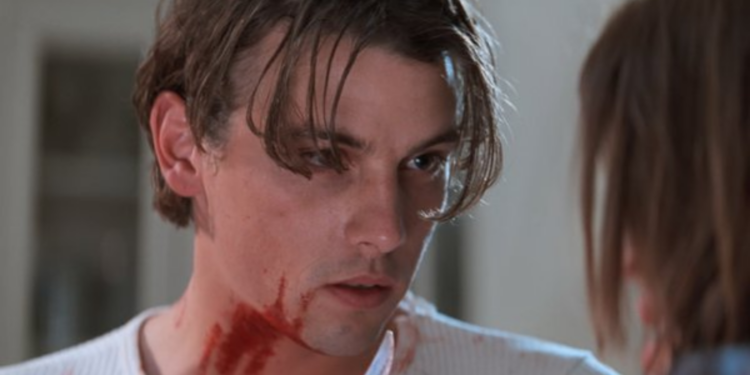
Scream also anchors its plot heavily to Alfred Hitchcock‘s Psycho. Billy Loomis’s (Skeet Ulrich) last name is a direct tribute to Sam Loomis, the boyfriend of Marion Crane in the 1960 classic. To drive the point home, Billy even explicitly quotes Norman Bates late in the film: “We all go a little mad sometimes.”
Read Next: Stand By Me 40 Years Later: BTS, Easter Eggs & More
 Follow Us