Two decades later, Blood Diamond remains one of those rare cinematic achievements that seamlessly balances Hollywood action with a sharp social critique. It earned Leonardo DiCaprio his third Oscar nomination, further cementing him as a solid leading man. More importantly, it forced the world to look into the facets of its own jewellery box.
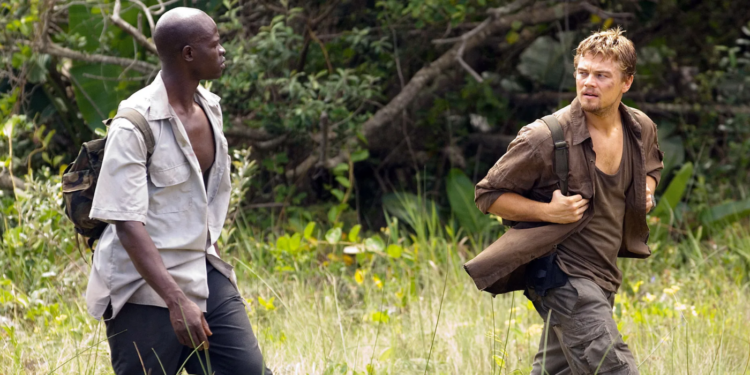
Hitting movie theaters in 2006, Blood Diamond is a searing and explosive political war thriller set against the intense backdrop of the Sierra Leone Civil War. Directed by Edward Zwick, the story follows Danny Archer (Leonardo DiCaprio), a Rhodesian smuggler who forms an unlikely alliance with fisherman Solomon Vandy (Djimon Hounsou) as they try to track down a rare pink diamond that could save Solomon’s family and offer Archer a way out of the continent. As well as garnering a wealth of praise from critics, Blood Diamond has helf up extremely well with audiences. So, to celebrate its 20th anniversary, let’s go deep behind the scenes to reveal real-life events that shaped the movie, easter eggs, and other things you may have missed.
Is Blood Diamond Based on a True Story?
Blood Diamond is not based on a true story, rather it is based on a spec script by American screenwriter Charles Leavitt and C. Gaby Mitchell. The film was originally titled Okavango. After years of development hell, Leavitt was brought in by Warner Bros. in February 2004 to rewrite the script, meaning Mitchell was left with a story credit. While the film is a work of fiction and Archer and Solomon didn’t exist, they were composites designed to represent the real people caught in the Sierra Leone Civil War.
The rebels in the movie, the Revolutionary United Front (RUF), were a real insurgent group. The horrific scenes where they amputate the hands of villagers were based on their actual, chilling signature tactic. They would ask victims, “Long sleeve or short sleeve?” – referring to whether they wanted their arm cut off at the wrist or the elbow – to prevent them from voting in upcoming elections.

The De Beers Controversy
Prior to the film’s release, De Beers Group, the largest player in the diamond trade, expressed reservations that the film would reduce public demand for diamonds. Jonathan Oppenheimer, a De Beers executive, reportedly pushed the filmmakers to attach a disclaimer stating the events were fictional, in the past, and that conflict diamonds were now extremely rare. However, De Beers later denied this. Either way, the filmmakers flatly refused to append the note. De Beers then hired a high-profile Hollywood crisis PR firm and launched a multi-million dollar counter-campaign to “educate” consumers.
Blood Diamond Was Not Shot in Sierra Leone
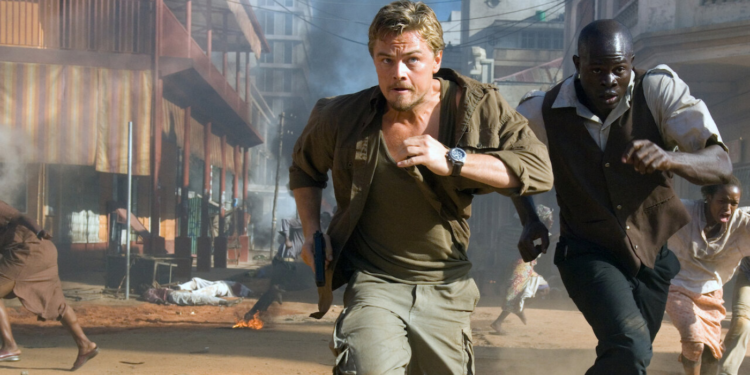
Edward Zwick is a filmmaker renowned for his authenticity, and while he initially intended to shoot on location, it simply wasn’t possible. The production team determined that Equatorial West Africa lacked the infrastructure and logistical capacity to support a massive, Hollywood-scale film crew. Instead, Blood Diamond rolled cameras in several African countries, including South Africa and Mozambique, which doubled for Sierra Leone. Maputo, the capital of Mozambique, served as a substitute for Sierra Leone’s real capital of Freetown, where the film’s chaotic showdown takes place.
The Airport Cameo
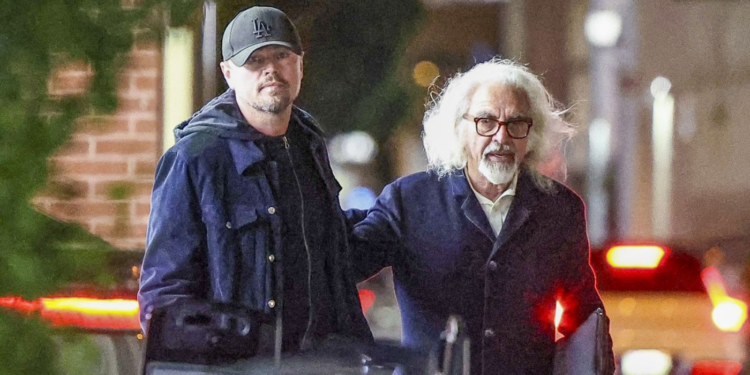
Look closely and you will see the first time Leonardo DiCaprio ever shared the screen with his family. In the scene where Danny Archer arrives in South Africa, two women stand at the front of the airport as he walks by. These women are DiCaprio’s mother and grandmother. While this was his first on-screen collaboration with family members, in the 1990s, DiCaprio hired his father, George DiCaprio, as his creative advisor. Then, after DiCaprio founded his production banner, Appian Way Productions, in 2001, George was brought in as a producer and creative executive, specifically focusing on documentary filmmaking.
The Freetown Battle Was a Massive Logistical Puzzle
The explosive fall of Freetown is one of the most exhilarating scenes in the whole movie, but capturing it was far from easy. Director Zwick noted “it had to appear chaotic, but you cannot do that chaotically. It required extensive planning and focus.” The complex sequence took weeks to film and Zwick had to work closely with special effects supervisor Neil Corbould to choreograph the timing and placement of explosions.
The impact of the battle scenes on Maputo inhabitants, some of whom had strong recollections of their own civil war in Mozambique, was never taken lightly by the filmmakers. Leaflets were handed out and a media campaign was started to let people know that what they were about to witness was all for show. The goal was to minimize any needless trauma. When the cameras stopped rolling and the crew broke down the sets, most of the props, construction materials, costumes, and even personal belongings were distributed to local orphanages and hospitals.
Read Next: From Dusk Till Dawn: Revisiting the Vampire Crime Flick 30 Years Later
 Follow Us