On October 4, 2018, officers watching a couple in Ecatepec, Mexico, saw what appeared to be an ordinary domestic scene.
Juan Carlos Hernández and Patricia Martínez were walking through the Jardines de Morelos neighborhood while pushing a baby stroller.
They had four children, sold clothing and household goods, and were known to transport bags through the streets as part of their work collecting and reselling discarded materials. To their neighbors, the stroller attracted little attention.
There was no baby inside.
When police stopped the couple and searched it, they found a human torso.
The discovery exposed a house of horrors where the couple attacked and ate as many as 20 women.
The couple became known as the “Monsters of Ecatepec,” one of the most gruesome criminal partnerships in Mexican history.
The “Monsters” were the product of childhoods ruled by humiliation and violence

Juan Carlos Hernández Béjar was born in 1985 in Lázaro Cárdenas, Michoacán. Some accounts place his birth on March 1.
He was reportedly raised mainly by a single mother in a home marked by physical and psychological torment.
According to statements Hernández later gave investigators, his mother dressed him in girls’ clothing to humiliate and control him. He also claimed she brought men into their home and made him watch her encounters through a curtain separating the sleeping areas.
Hernández said an adult woman entrusted with his care took advantage of him during childhood.


At school, he performed poorly, struggled to learn, and endured bullying. He later claimed that when he was around 10, he fell from a second floor and suffered a serious head injury.
Hernández said the incident made him “capable of understanding things other children could not.”
Head injury or not, by the time Hernández was an adult he already harbored a deep-seated and irrational hatred towards women.


Attempts at integrating into society failed for the most part. Hernández drifted between jobs, working as a waiter, street collector, and salesman but struggled to remain employed.
He then tried joining the Mexican military and was reportedly assigned to the Second Battalion of the Presidential Guards Corps. His time inside was no different, and he was expelled shortly after.
Hernández later told people that the military had nicknamed him “The Green Terror.” After his arrest, he specifically requested that reporters use the name.
He returned to civilian life with no stable career, no clear place in society, and an appetite for presenting himself as more powerful than he was.
Patricia Martínez had learning disabilities and grew up without safety or affection

Patricia Martínez Bernal was born in 1980 in the same Michoacán city, five years before Hernández.
Her childhood unfolded in poverty and instability. Reports described violence and neglect inside the family, along with limited educational opportunities.
When Martínez was around six, a cousin took advantage of her.
She struggled in school and was later described as being “intellectually disabled.” Those who reconstructed her life portrayed her as submissive, easily influenced, and desperate for affection after growing up without feeling wanted.
As an adult, Martínez reportedly worked in restaurants or bars in the State of Mexico. Some sources also claimed she also dabbled in adult entertainment.

According to forensic psychologists, she appeared to seek security through relationships, particularly with men. Her tendency to submit, however, did not make her a passive observer once the homicides began.
Investigators would eventually find that she selected victims, gained their confidence, helped restrain them, participated in the violence, concealed evidence, and in at least two cases may have carried out the fatal blows herself.
Before any of that became known, Martínez met a customer who appeared to offer the stability she had spent her life seeking.
Hernández impressed her with money and stories of violence

El Financiero Bloomberg/YouTube
The most frequently reported account places their meeting in 2008.
Martínez was working as a waitress in the State of Mexico when Hernández became a regular customer. He spent conspicuously and claimed to have substantial money and criminal connections.
Hernández allegedly told her that he worked as a contract agent for a local criminal organization. The story was false, but Martínez was not frightened away. Instead, the image of power appears to have drawn her closer.
They began dating and soon moved into a shared room in Ecatepec.


The relationship gave both something they had lacked.
Hernández found a partner prepared to accept his claims and eventually help him act on his violent impulses. Martínez found someone who offered companionship and the appearance of protection.
They had four children.
To survive, the couple sold clothing, phones, perfume, and food. They also collected aluminum and other materials for recycling.
Neighbors regularly saw them transporting black bags through the neighborhood. The activity appeared consistent with their work.
The family eventually lived near Playa Tijuana Street in Jardines de Morelos. The residence would later become known as Mexico’s “house of horrors.”
A false job offer allegedly brought the first victim inside

El Financiero Bloomberg/YouTube
According to one version given by Martínez, the couple’s first crime together occurred around 2010.
They placed a notice seeking a woman to perform domestic work. A 22-year-old reportedly answered the advertisement and entered their home expecting employment.
Hernández took her into the bathroom, where he did whatever he wanted with her and then took her life. Martínez allegedly remained outside with the children before helping dispose of the body.
Martínez later claimed the couple cooked and consumed parts of the victim.

Another early prosecution concerned a woman who disappeared in January 2012 after responding to a similar employment offer. The couple eventually received an additional 40-year sentence for that crime in 2020.
The exact relationship between the 2010 account and the January 2012 case remains unclear. They may have involved separate victims, or later reconstructions may have placed the first crime at different points.
What became clear was the method.
Martínez could approach women without immediately appearing threatening. She offered work, clothing, household products, food, or assistance. Because she was another woman and frequently had children nearby, victims had little reason to expect danger.
Once they crossed the threshold, Hernández took control.
Two years passed before the couple claimed their second victim and refined their method

On April 12, 2012, the couple lured a woman known as Luz del Carmen to their home.
Prosecutors said Hernández attacked her with a sharp weapon while Martínez participated and helped conceal what had happened.
The crime remained unresolved for years. It later became the most consequential conviction against the couple, resulting in life sentences in February 2021.
As the years passed, the pair refined their system.

El Financiero Bloomberg/YouTube
Their targets were often economically vulnerable women living nearby. Some were mothers. Others struggled with substance dependence or unstable housing. They were people whose disappearances might not produce an immediate and coordinated police response.
One victim reportedly lived close to the couple and suffered from solvent dependence. Martínez and Hernández lured her with food and money.


According to Martínez’s later statement, she helped restrain the woman before Hernández attacked her. The couple then disposed of the remains.
By 2015, they had moved to another residence.
There, they invited a former neighbor to visit, intoxicated her, and took her life. Martínez described that woman as their third victim.
The violence soon expanded to relatives of women they had already targeted.
The couple dabbled in dark magic, selling the remains of their victims for rituals
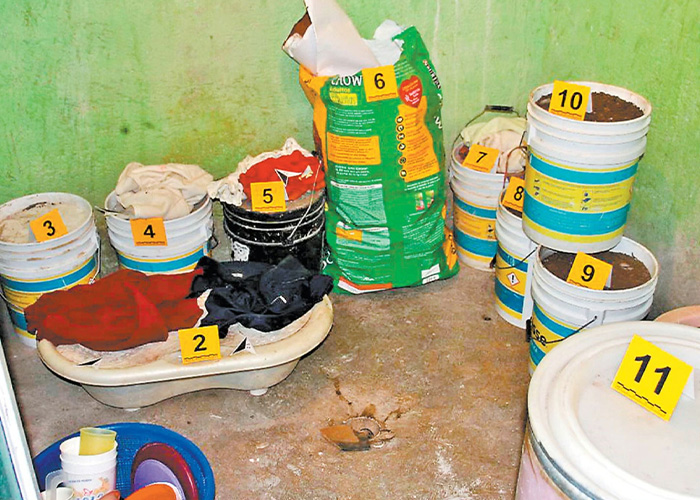
As the number of victims grew, Hernández and Martínez allegedly began treating their remains as objects that could be consumed, sold, discarded, or incorporated into their own ritual practices.
Martínez reportedly brought one woman and her daughter into the house under false pretenses. The mother’s body was abandoned in a vacant lot.
By then, the couple’s crimes had developed an additional and particularly disturbing element.
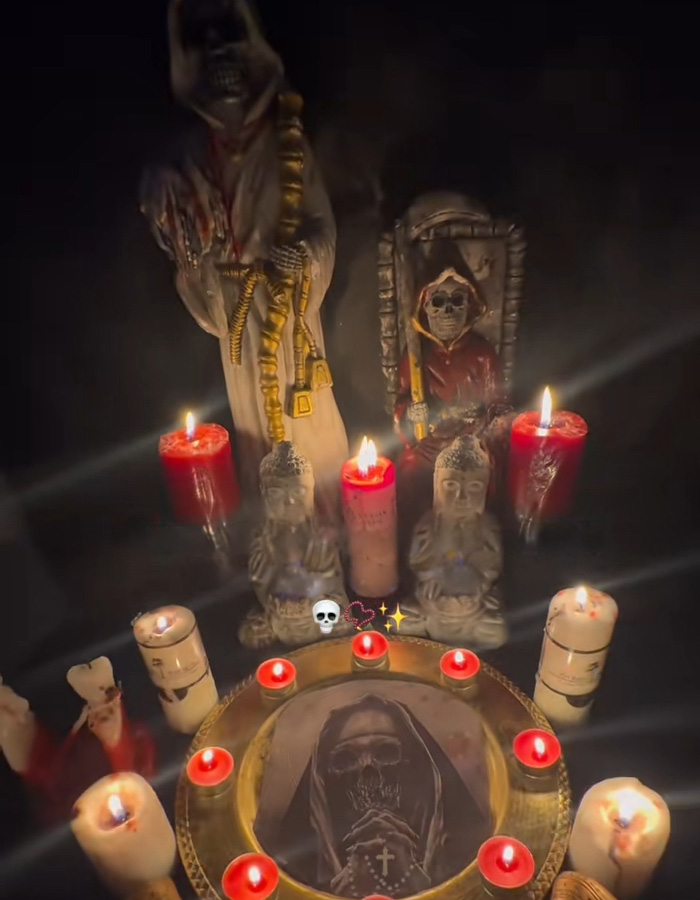
ritualesparaelamor777/TikTok (Not the actual image
Hernández and Martínez claimed they consumed portions of some victims and fed other pieces to their dogs. Yet not every part of the bodies was destroyed or abandoned.
Some had value.

Investigators and later court reporting indicated that the couple sold human bones to people interested in occult practices, including individuals described as fetishists and santeros.
Other remains were reserved for rituals Hernández associated with Santa Muerte, or “Holy Death.”
Reports stated that Hernández preserved organs, including hearts, inside jars filled before offering them to Santa Muerte. Other remains were stored inside a freezer in the family home. Their children were strictly forbidden from opening it.
The couple’s downfall began with them selling a kidnapped baby for approximately $900

In 2018, three women vanished within months of one another.
Arlet Samantha Olguín Hernández disappeared in April, with April 25 frequently cited as the date.
Arlet lived near the couple and was believed to have gone toward their residence during an errand involving a child or family matter. Her family’s search later helped investigators connect her disappearance to the house.
On July 26, Evelyn Rojas Matus disappeared.
Evelyn was a mother of two. Reports said she had been contacted through an offer involving used clothing and went to meet the seller.
She never returned.



Then, on September 6, 28-year-old Nancy Noemí Huitrón Solorio left home with her two-month-old daughter, Valentina.
Martínez had reportedly offered to give Nancy clothing for the baby. The promise brought Nancy into the couple’s house.
Hernández took advantage of her and k*lled her. Her remains were stored until the couple could move them.
The baby was kept alive.

Rather than return Valentina to her family, Hernández and Martínez sold her to another couple for approximately 15,000 Mexican pesos.
The buyers, identified only as Adrián and Ana Laura, attempted to register the infant as their own. A midwife or intermediary was later accused of helping produce the necessary documentation.
Nancy’s family was now searching for both a missing woman and a missing newborn.
The urgency surrounding the baby forced investigators to examine the recent disappearances more closely.
Clothing offers connected the missing women to one address

Police discovered that Arlet, Evelyn, and Nancy had all interacted with a woman who sold or gave away clothing.
Telephone records placed their final communications in the same area of Ecatepec.
By triangulating the devices, investigators focused on a property at 530 Playa Tijuana Street in Jardines de Morelos.
The residents sold clothing.
Police began watching Hernández and Martínez.
On October 4, after weeks of surveillance, officers saw the couple pushing the stroller through the street.
The remains inside gave police the direct evidence they needed.
Searches of the residence and other connected properties uncovered human remains, clothing belonging to missing women, and signs that bodies had been dismembered and stored there.
Investigators also found evidence leading them to Valentina. The baby was recovered alive from the couple who had purchased her.
The ordinary family from Playa Tijuana Street had been exposed.
Hernández claimed he and Martínez had taken the lives of 20 women
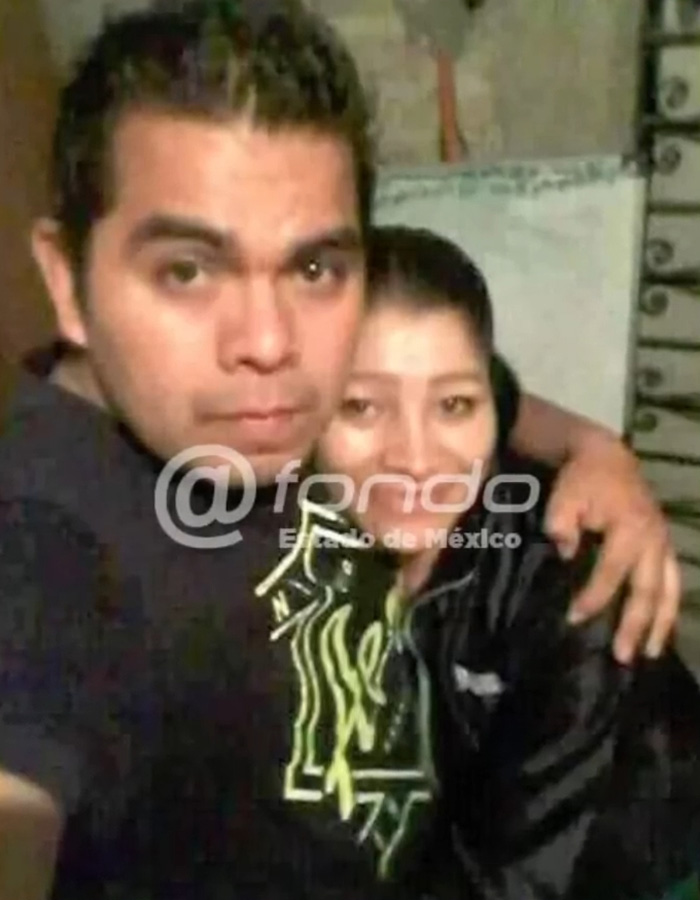
After his arrest, Hernández spoke openly during psychological and medical evaluations.
He admitted having taken the lives of approximately 20 women. Martínez gave a lower estimate, usually reported as 10.
Hernández described the violence without visible remorse. He claimed he hated women, threatened to do it again if released, and discussed consuming their remains.
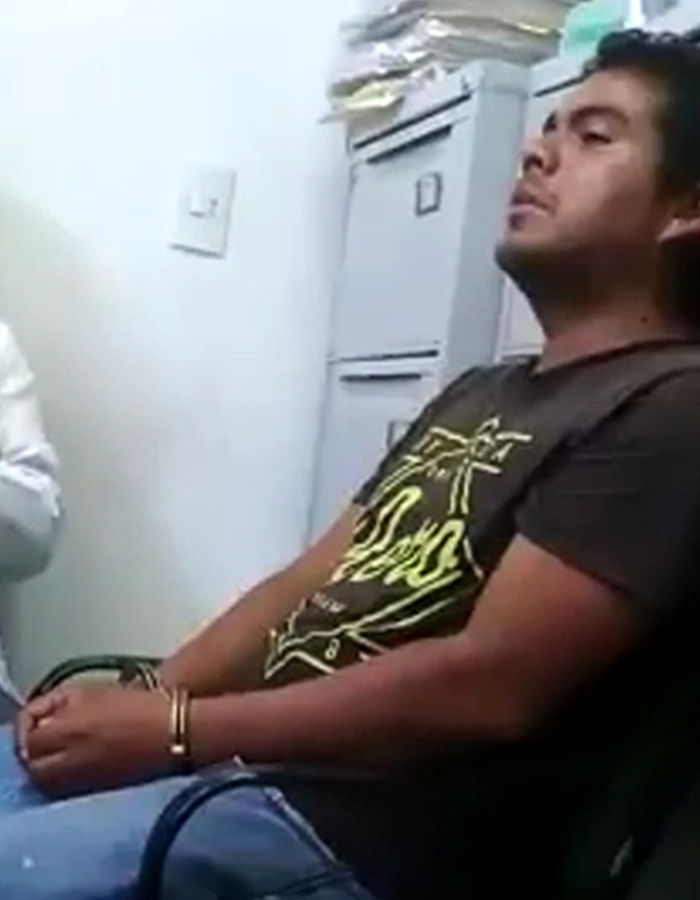
He also said he experienced unbearable headaches that only homicides could cure. At other times, he claimed he needed to drink human blood every three months and described part of himself as a “demon.”
When explaining his relationship with Martínez, Hernández compared them to a lion and lioness.
The female, he said, brought food to the male.


Martínez gave accounts that minimized parts of her role while still acknowledging that she had helped select, restrain, and conceal victims.
By late November 2018, authorities had isolated approximately 10 specific cases. Genetic profiles connected several remains to missing women, while other alleged victims existed only in confessions or descriptions.
The true total remains uncertain.
A leaked interrogation created another crisis
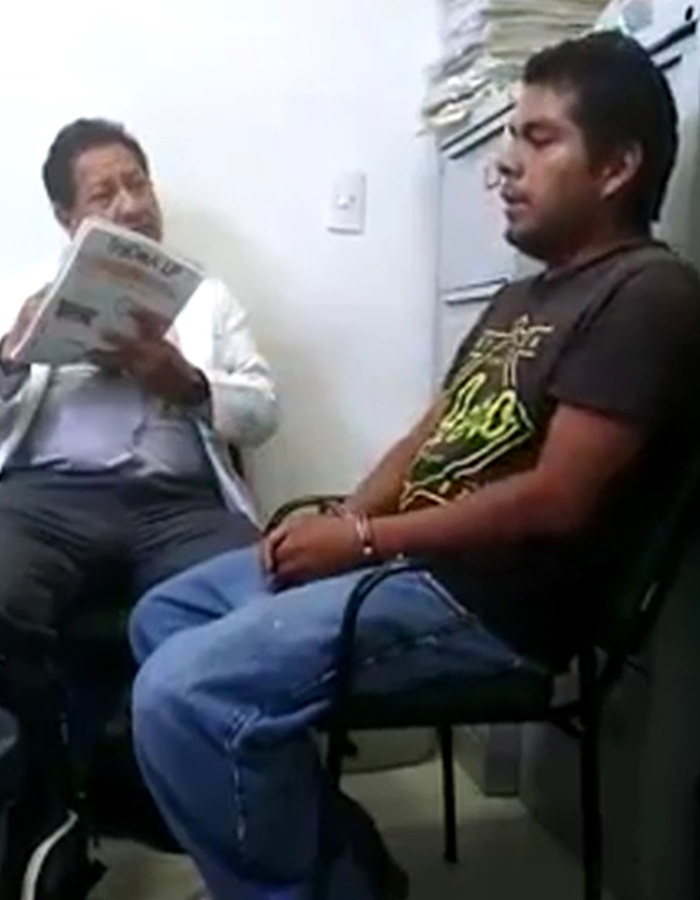
On October 10, 2018, footage from one of Hernández’s evaluations appeared online.
The State of Mexico Human Rights Commission determined that releasing the video violated his rights and issued a recommendation to prosecutors.
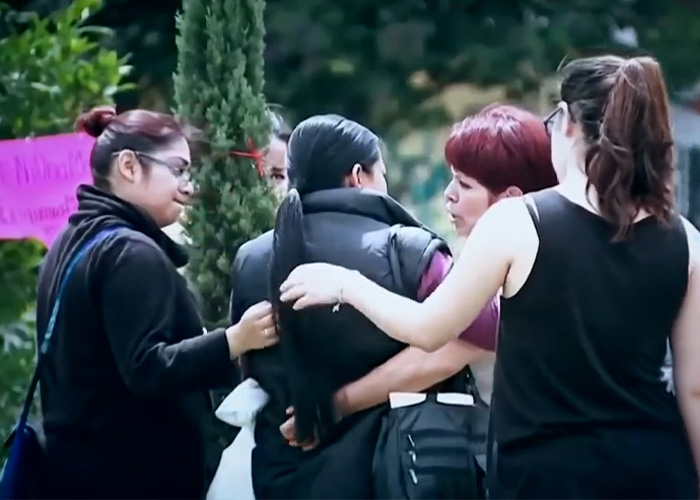
Families of victims feared the leak might be used to invalidate the proceedings. They gathered outside the prison during the couple’s first hearings, demanding that neither suspect be released because of a procedural error.
State Attorney General Alejandro Gómez said the leak would not be enough to destroy the case.
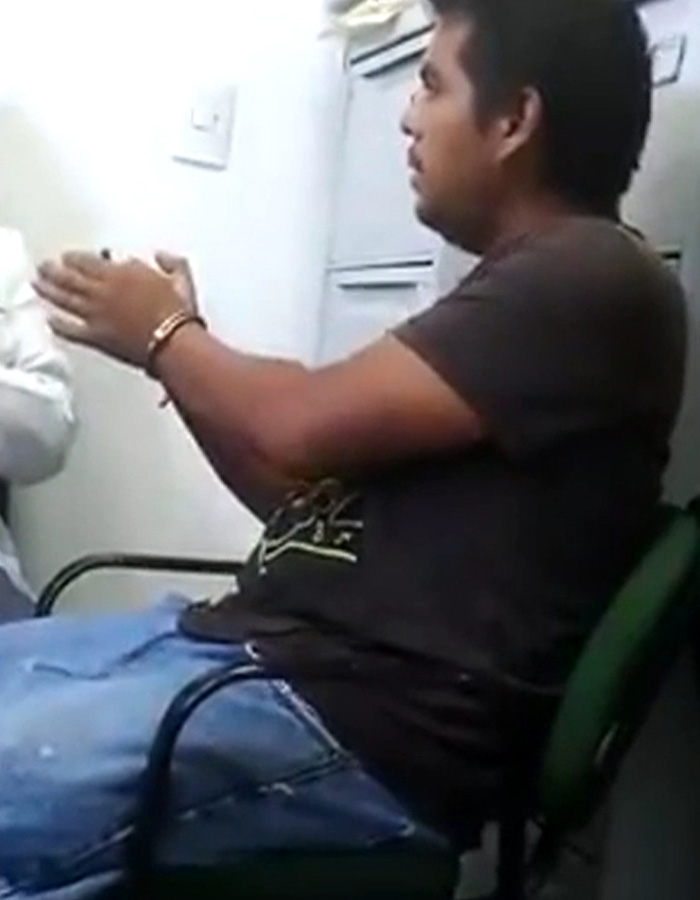
The person responsible was never publicly identified.
Psychological assessments portrayed Hernández as having personality and psychotic disorders. Criminal psychologist Juan Pablo Ramírez Herrera pointed to his childhood head injury, early physical and intimate torment, as well as illegal substance use.
Hernández reportedly experienced visual hallucinations and claimed during one interview to see a dog.
Neuropsychologist Feggy Ostrosky described him as psychopathic.

Criminologist Mónica Ramírez Cano viewed Martínez as more than a manipulated follower. Her intellectual limitations and emotional dependence may have influenced the relationship, but the evidence showed deliberate participation.
The specialist believed both would likely have engaged in criminal behavior separately. Together, however, each intensified the other.
Their sentences grew until they exceeded any possible lifetime

The convictions began accumulating in 2019.
On April 24, Hernández and Martínez received 30 years each for concealing or illegally disposing of remains connected to two victims.
On May 20, they received four years and six months for trafficking Valentina through an illegal adoption.
On June 11, each received 40 years for Nancy’s feminicide.
Another 40-year sentence followed on June 19.

On August 7, they received 70 years for the homicide of a woman and her family. Another 40 years was added on August 20.
In September, separate convictions added reported sentences of 53 and 40 years. Another 40-year term followed on October 1.
By then, each had accumulated approximately 327 years, although totals varied depending on which rulings and related offenses were included.


A 2012 employment-related homicide brought another 40-year sentence in March 2020, pushing some official calculations to approximately 367 years.
In February 2021, the couple were sentenced to life imprisonment for nine femicide convictions, a trafficking conviction, and additional penalties for concealing remains and related crimes.
They would not leave prison.
Families pleaded with streaming platforms not to turn the “Monsters of Ecatepec” into entertainment
Hernández and Martínez remained associated with the Chiconautla penitentiary in Ecatepec after the life sentences, though prison placements are not always publicly updated.
The case became inseparable from broader anger over the treatment of missing women in Ecatepec.
For years, victims disappeared in the same area without authorities recognizing that one couple was repeatedly using ordinary neighborhood transactions to lure them into a home.
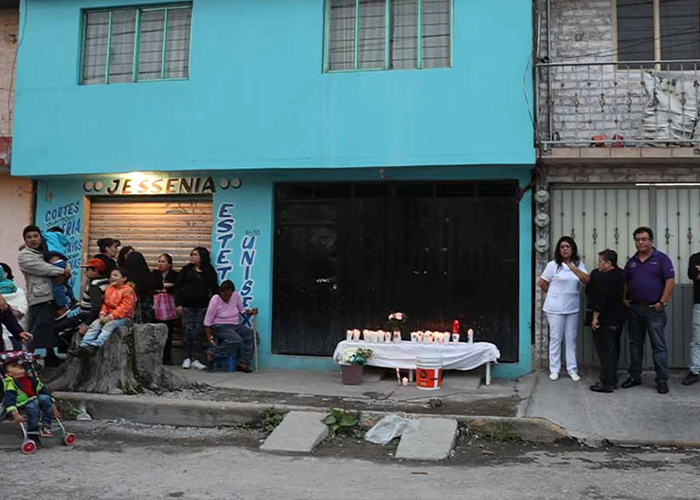
In 2023, relatives asked lawmakers and streaming platforms not to turn the crimes into a dramatized series.
They argued that portraying Hernández and Martínez as sensational characters would exploit the victims and force their families to relive the crimes.
Unlike internationally notorious serial criminals such as Jeffrey Dahmer and Ted Bundy—whose crimes inspired major scripted television and film adaptations—the “Monsters of Ecatepec” have not, as of August 2026, been the subject of a major scripted TV series or feature-film adaptation.
“How can this demon still be alive?” a reader asked










 Follow Us