A cancer diagnosis always marks a difficult time for a family. While parents are no doubt affected by their child’s cancer diagnosis, siblings can also find it hard to cope. According to one study, 63% of siblings experience adjustment difficulties during cancer treatment.
This teen got in a fight with his father after his step-sibling was diagnosed with cancer. The family decided to move to another state, but the teen refused; he would turn 18 soon and move out anyway. So, he stayed behind with his grandparents, but faced harsh reactions from both his dad and his stepmom, the latter of whom even expressed disgust.
A teen refused to move to another state for his step-sibling’s cancer treatment

Image credits: EvgeniyShkolenko (not the actual photo)

He stayed with his grandparents but faced harsh words from his father and his stepmother
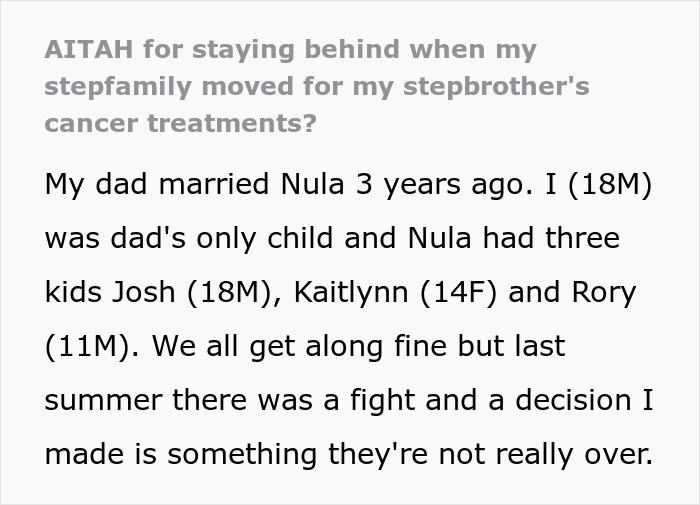
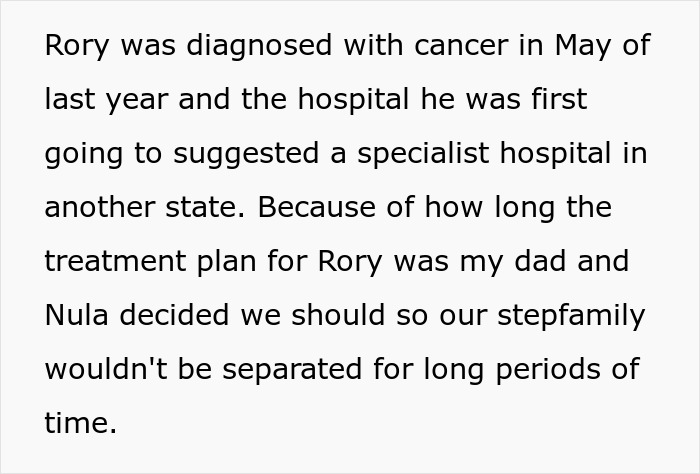
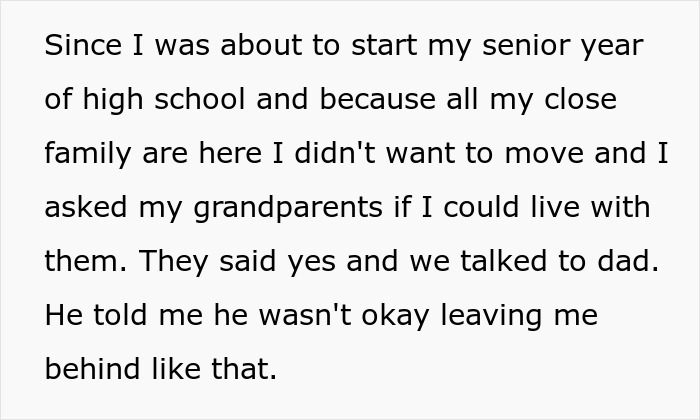
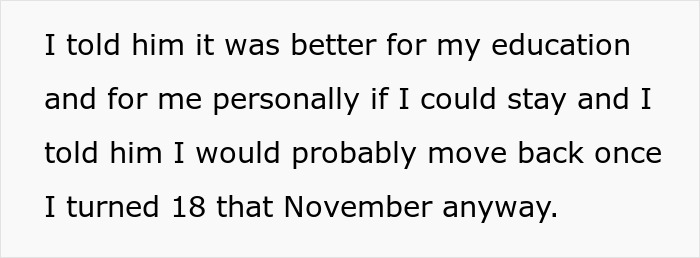



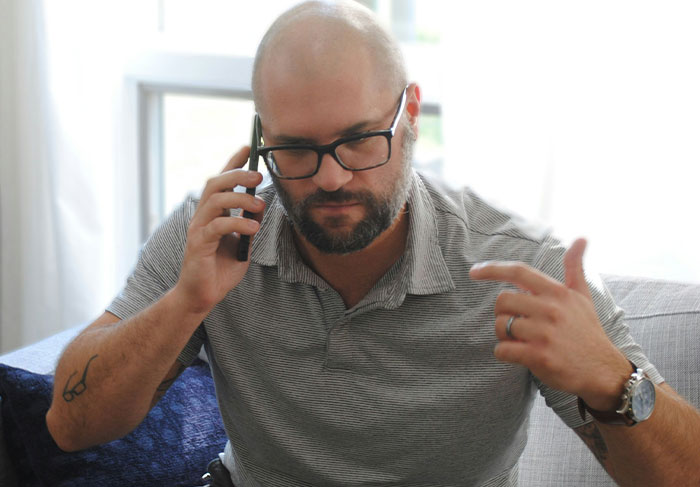
Image credits: sarah b (not the actual photo)
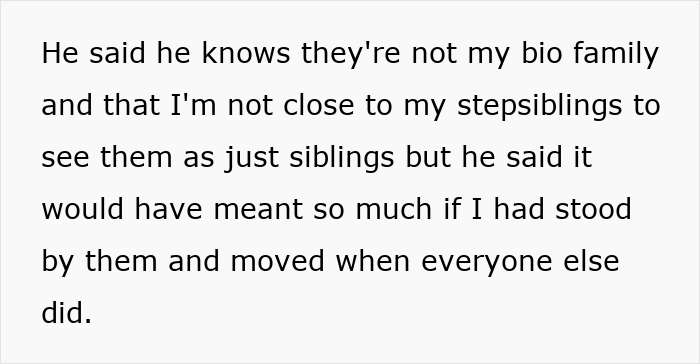

Image source: CorryNunya
Families living far away from cancer treatment centers are a worldwide phenomenon, so moving is a common solution
Having cancer can be expensive, especially in the U.S. According to a survey from the American Cancer Society Cancer Action Network (ACS CAN), 64% of cancer patients and survivors say they were surprised by the cost of treatment, and 54% said they were unprepared for these expenses.
It’s not uncommon for people to go into debt just to be able to afford cancer treatments. Seventy percent of patients and survivors say they had to make significant lifestyle changes. These changes include delaying bigger purchases, depleting savings, going into credit card debt, and borrowing money from family and friends.
But money isn’t the only hurdle cancer patients face; geography is another major challenge. Sometimes, as it happened in this story, patients have to seek treatment far away from where they live. Studies show that the chances of survival can depend on whether a person lives in a rural or urban area.
A 2025 study by researchers at the University of Nebraska Medical Center found that pediatric cancer patients in rural counties had a 9% higher risk of not surviving. Another study in the same year showed that 27% of children in rural areas succumb to cancer within the first year of diagnosis.
So, moving to another state makes a lot of sense. This is a worldwide phenomenon as well. According to a 2020 Saudi Arabian study, almost a third of childhood cancer patients live about 250 miles (400 km) away from treatment centers. It’s understandable why the family moved, but pressuring their teen to do so even after he would leave a year later seems a bit unreasonable.
The lives of siblings often get pushed to the periphery when one child gets diagnosed with cancer
When a child is diagnosed with cancer, parents will do anything to make the child healthy again. In that process, they might overlook the needs of their other children in favor of the sick child. One need only remember the 2009 movie My Sister’s Keeper as a cautionary tale of what happens when parents fail to address the needs of all their children.
This teen decided to move in with his parents until he leaves for college, but this situation is quite common in families that are dealing with childhood cancer. A 2025 study showed that siblings are often cared for by others, primarily grandparents.
The researchers also found that siblings often feel sidelined in favor of the child with cancer. Children report having “their needs subordinated” and feeling like their role in the family becomes a peripheral one.
In this story, the father and the stepmother are demanding that the teen show support for his stepsibling at the cost of his education. They interpret his absence as a sign he doesn’t care about “Rory,” but that isn’t necessarily the case. A comprehensive review of existing literature on the topic found that the healthy child’s relationship with their parents deteriorates after the sibling’s cancer diagnosis. While it is difficult, parents need to keep in mind that healthy siblings need support and fair treatment, too.
“I should have been willing to be there with them anyway and show a united front and all of that,” the teen said, explaining his father’s perspective
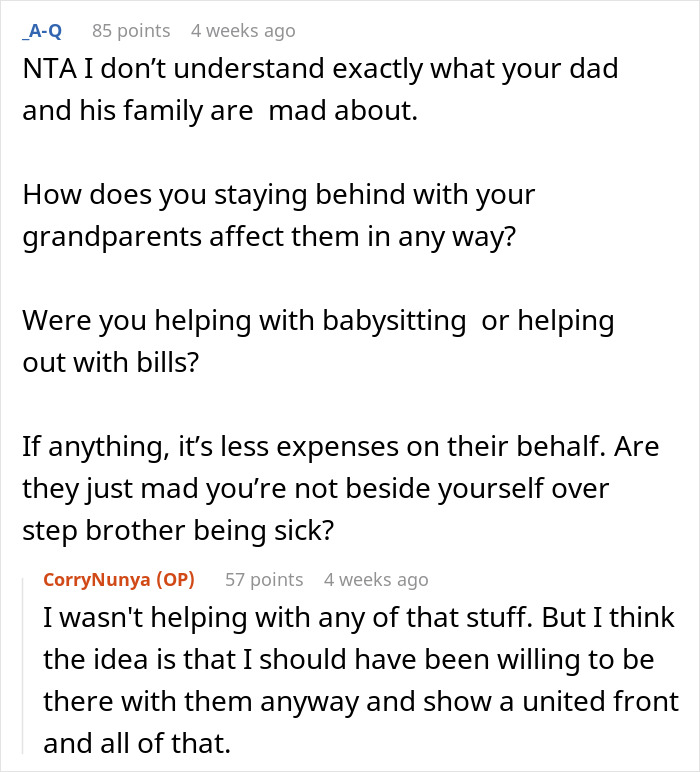
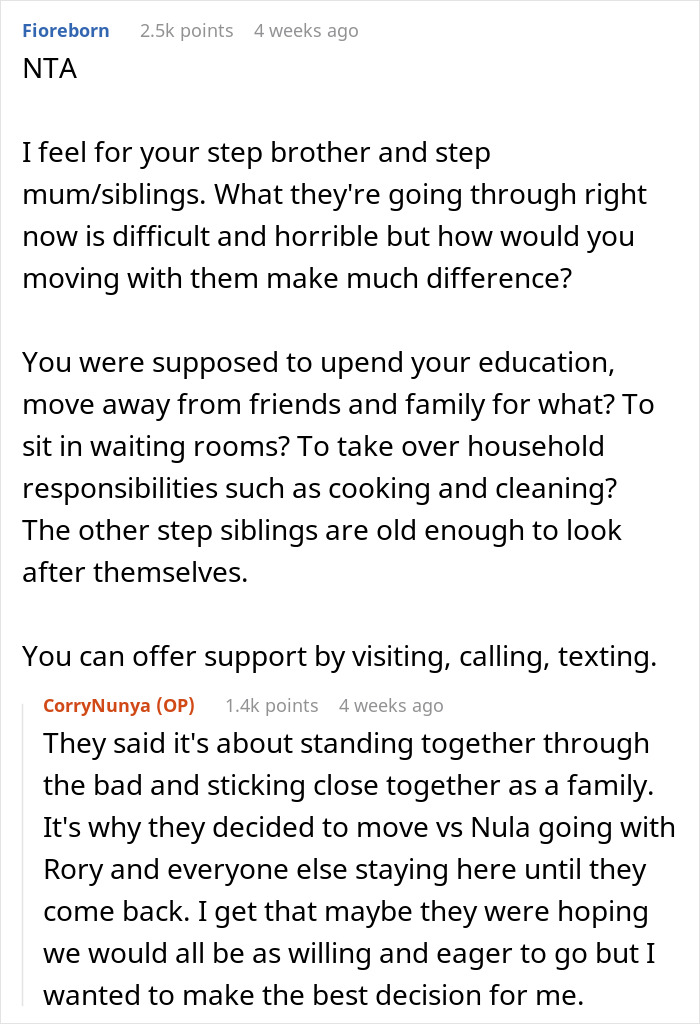
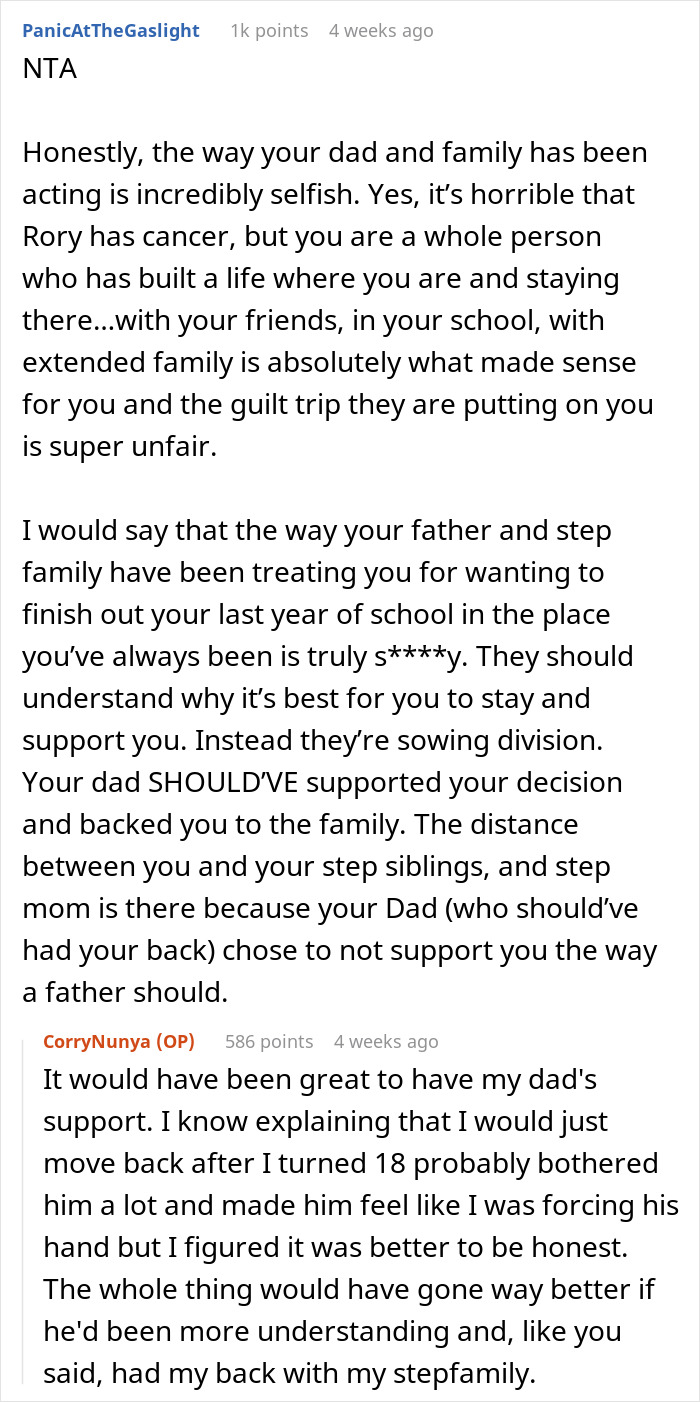


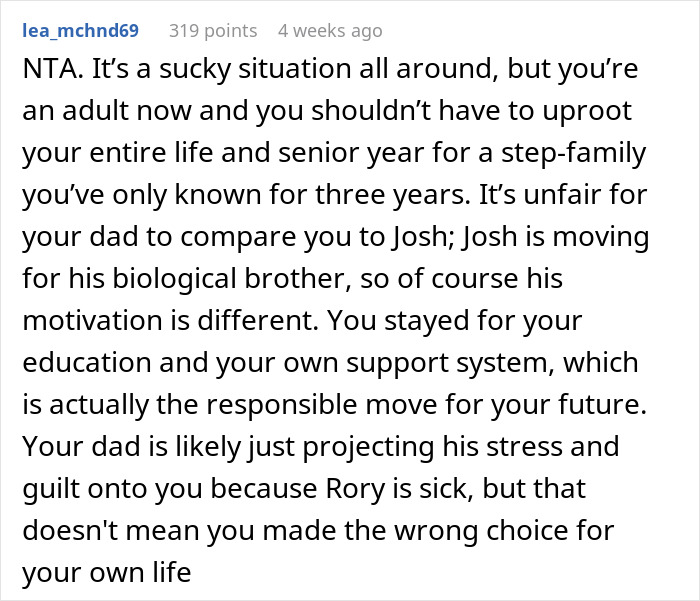
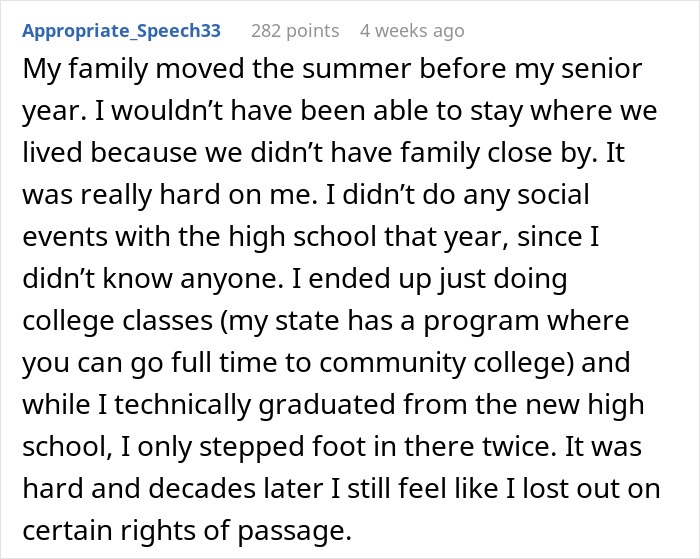
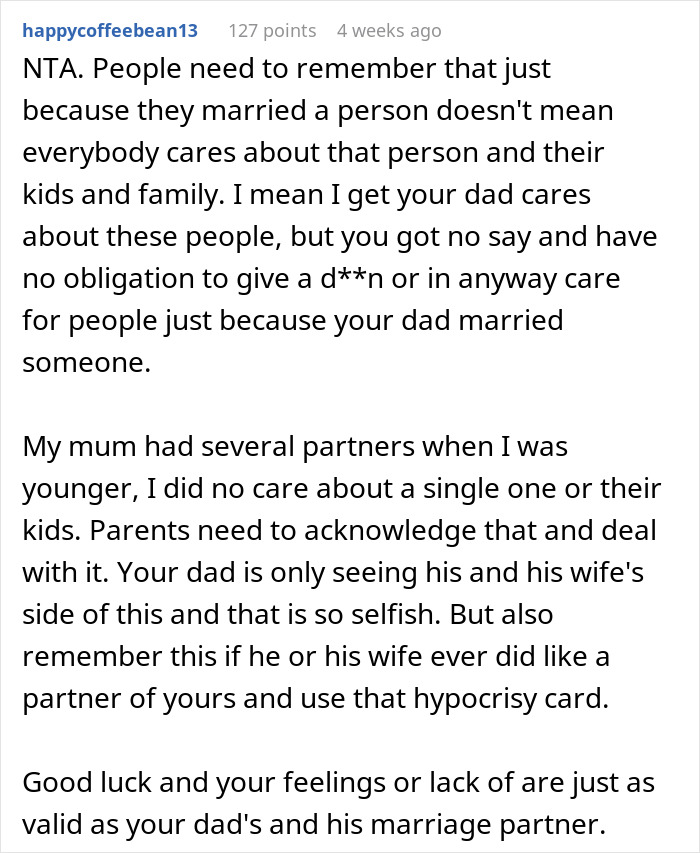
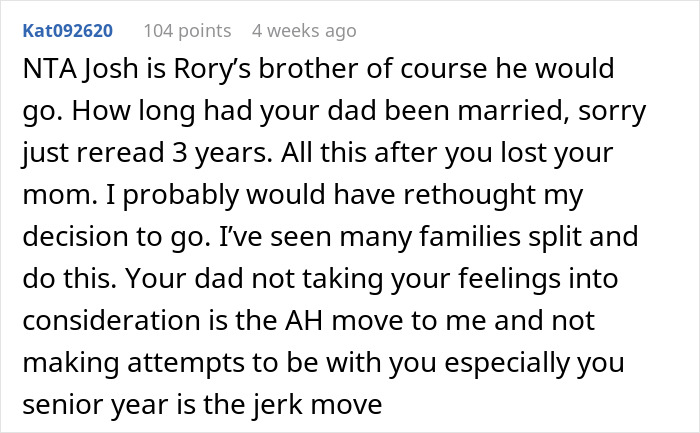
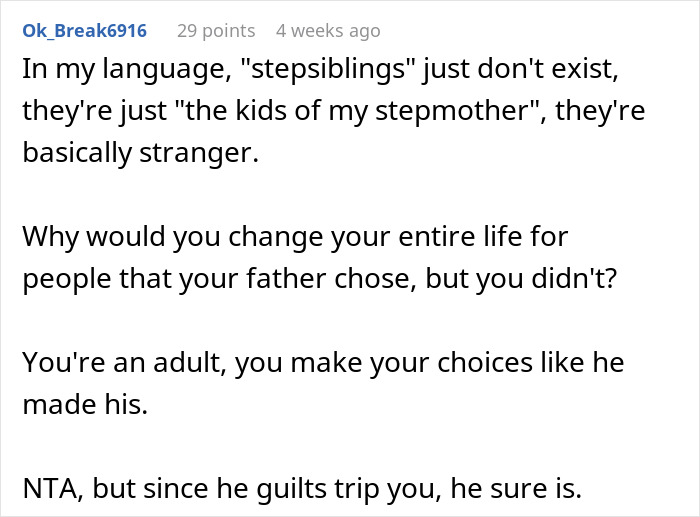
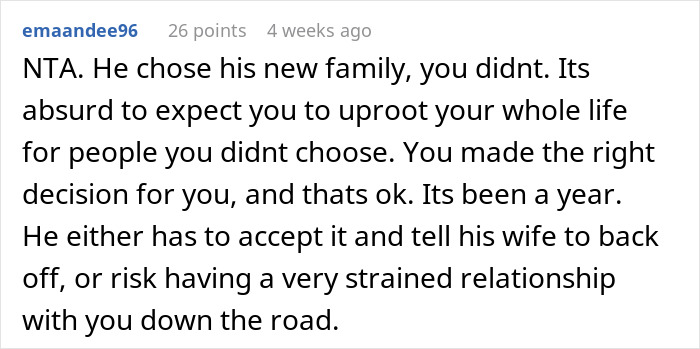
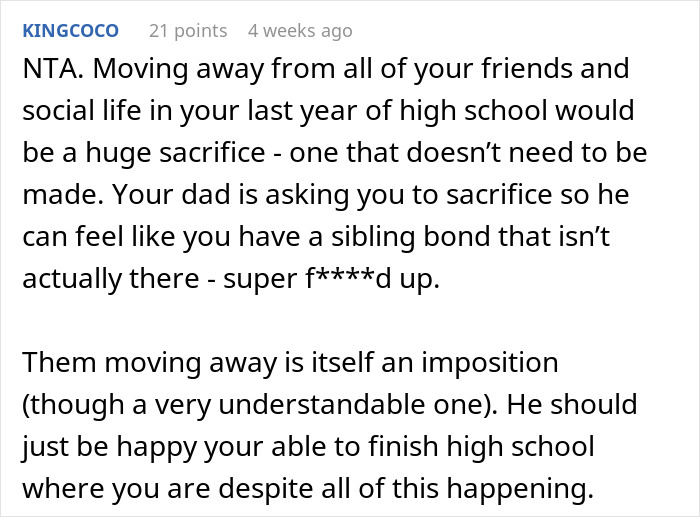
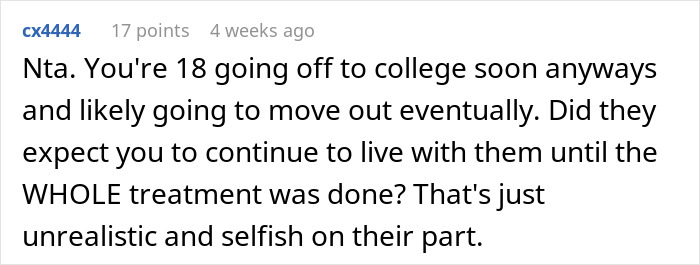
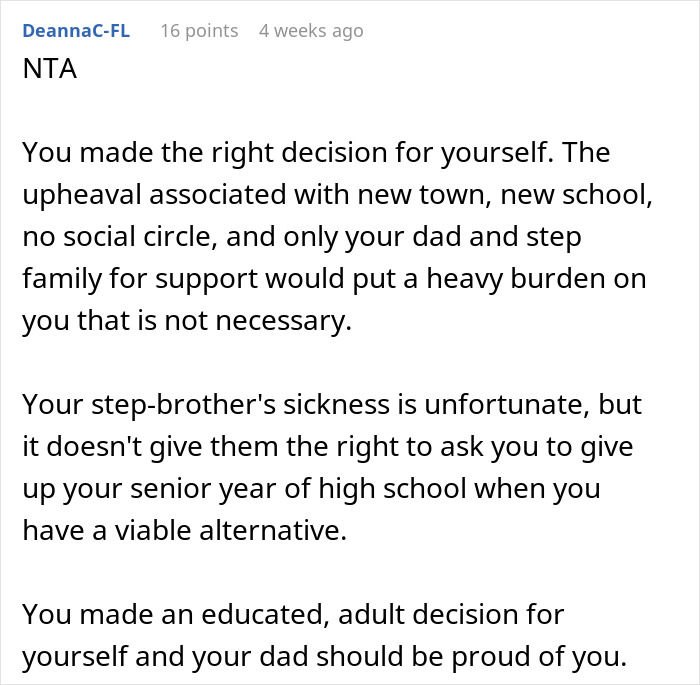
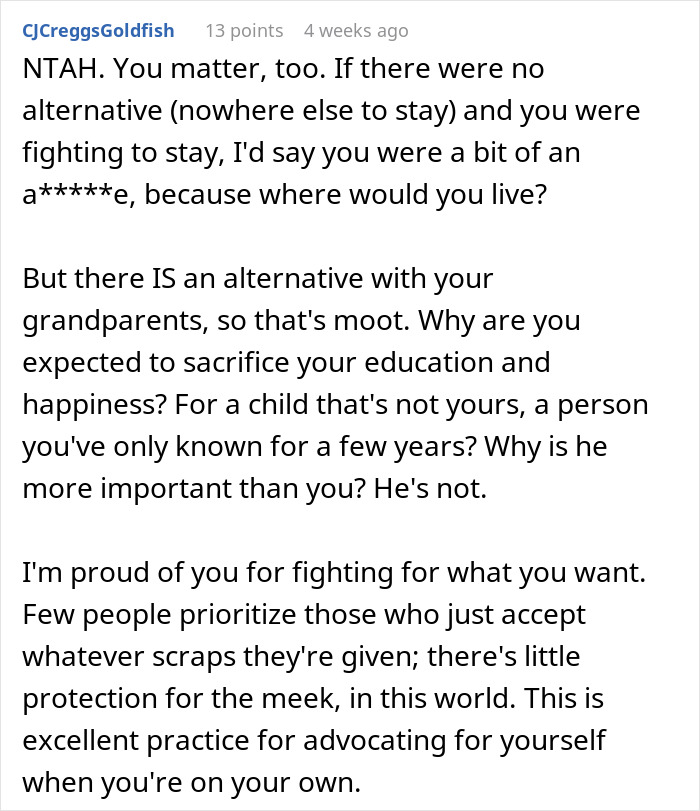
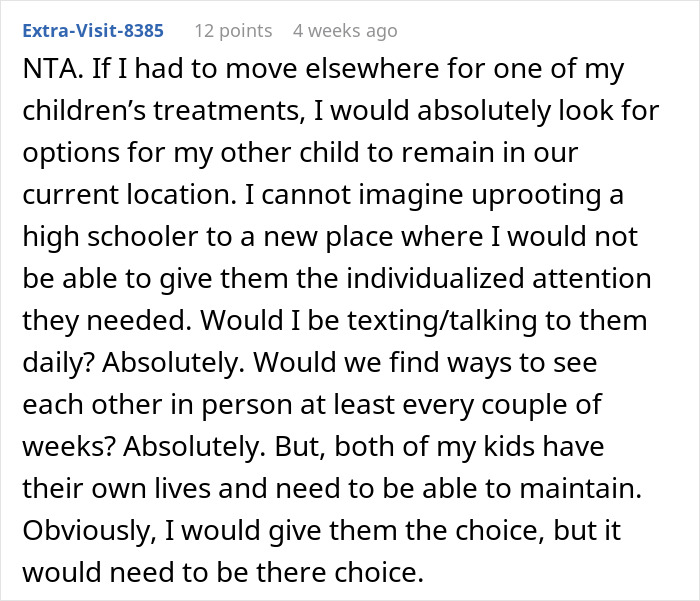
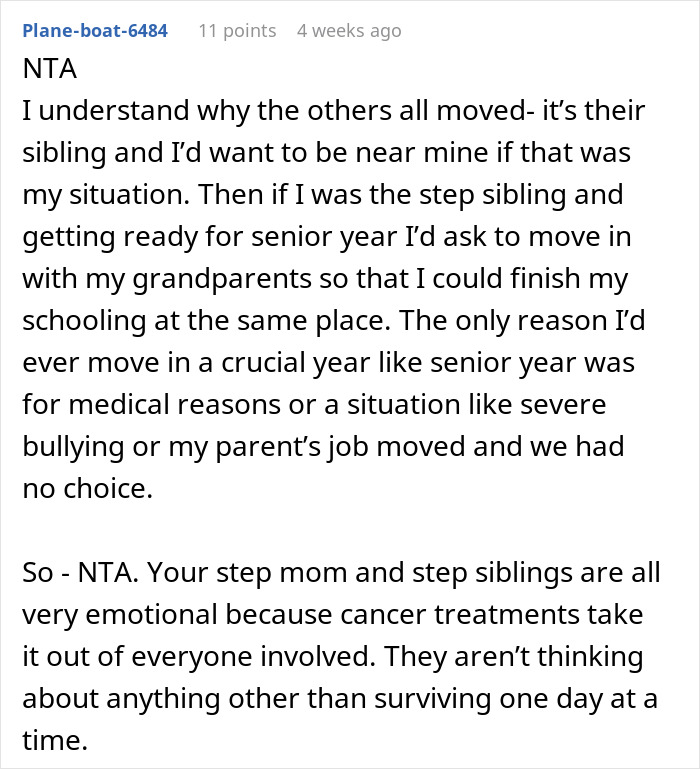
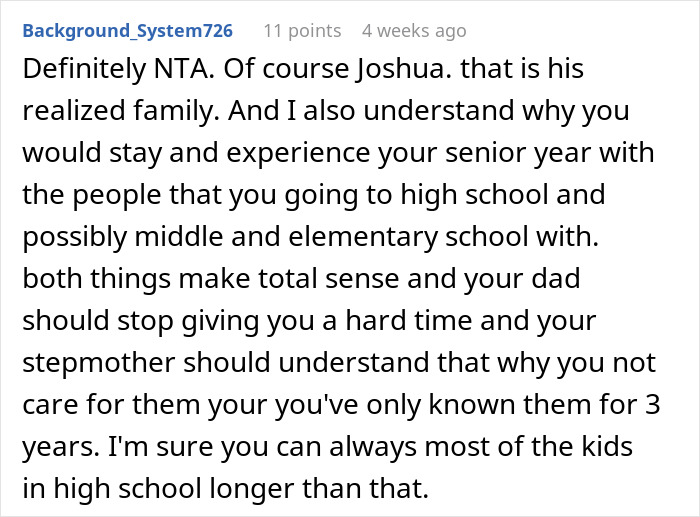
Some commenters sided with the teen: “There was no need for you to upend your life for a stepbrother you’ve known for a few years”








 Follow Us